

How Guangdong, Jiangsu, and Shandong Lead China’s 753 High-Performing Community Health Centers
Community health service centers are the frontline units that directly provide basic medical care and essential public health services to the public. Public satisfaction and trust are the prerequisites and foundation for guiding patients to seek care at the primary level, and they serve as the guarantee for establishing an orderly healthcare-seeking pattern and promoting the implementation of the tiered diagnosis and treatment system.
Twenty-one years ago, when the state first established community health service centers, their functional role was clearly defined as that of “health gatekeepers.” Today, although community health service centers are widespread across China, few truly deliver high-quality medical services to residents, and public trust in them remains low.
At this year’s Two Sessions, issues such as poverty caused by illness and the shortage of general practitioners in primary healthcare were once again brought to the forefront. As one of the core institutions in primary healthcare, what is the positioning of community health service centers? Which regions have performed well? What best practices can be learned? What are the emerging trends? VCBeat (WeChat ID: vcbeat) has compiled an analysis on these topics.
In 1997, the Central Committee of the Communist Party of China and the State Council promulgated the Decision on Health System Reform and Development (hereinafter referred to as the “Decision”), making the important policy decision to “reform the urban health service system, actively develop community health services, and gradually establish a health service network with rational functions and convenient access for the public.”
“The Decision” points out that primary healthcare institutions should take communities and families as their service targets, carrying out work such as disease prevention, diagnosis and treatment of common and frequently occurring diseases, medical and disability rehabilitation, health education, family planning technical services, and healthcare for women, children, the elderly, and persons with disabilities.Integrate community medical services into employee health insurance.,Establish a two-way referral system. Systematically redirect medical personnel and organize community-based healthcare professionals to set up health service outlets in residential areas, integrating them into the community health service system.
From today’s perspective, 21 years ago the state clearly defined the functional role of primary healthcare institutions and charted their development direction, while also proposing that healthcare institutions establish an operational mechanism characterized by accountability, incentives, constraints, competition, and vitality through reform and stringent management.Implement and improve the director responsibility system for hospitals (institutes, stations). Further expand the operational and managerial autonomy of healthcare institutions. Continue to deepen reforms in personnel and compensation systems, leverage appropriate policy guidance, ideological education, and economic incentives to break egalitarianism and mobilize the enthusiasm of healthcare professionals.
Accelerate the formulation of standards for the establishment of health institutions and staffing quotas, regulate fiscal investment in health institutions, and reform and improve the pricing system for health services. Adjust the revenue structure of medical institutions, reduce the proportion of drug revenue in their total income, reasonably control the growth rate of medical expenses, and implement separate accounting and management for medical and pharmaceutical revenues and expenditures.
Under the premise of ensuring the completion of basic public health service tasks, medical institutions may provide services related to their operations, including preventive healthcare institutions.Appropriate fee-based services may be offered to meet diverse societal needs, while strengthening supervision and management.
Subsequently, active pilot programs were launched across China, leading to rapid development in community health services. According to data released by government departments,At the end of 2016,There are a total of 993,000 medical and health institutions in China, including 29,000 hospitals. Among these hospitals, there are 13,000 public hospitals and 16,000 private hospitals.There were 931,000 primary healthcare institutions, including 37,000 township health centers, 35,000 community health service centers (stations), 217,000 outpatient departments (clinics), and 642,000 village clinics; there were 29,000 specialized public health institutions, including 3,484 centers for disease control and prevention and 3,138 health inspection institutes (centers).At the end of the year, there were 8.44 million health technical personnel, including 3.17 million licensed physicians and licensed assistant physicians, and 3.50 million registered nurses.
Currently, community health service centers continue to face challenges related to the service models for basic medical care and essential public health services, the education and training of community health workforce, the essential medicines system, the policy of separating revenue from expenditure, family doctor contract services, chronic disease management, appropriate community health technologies, and the preventive treatment of disease in community traditional Chinese medicine.
To this end, last year, the Department of Primary Health Care of the National Health and Family Planning Commission launched an initiative to establish “Model Community Health Service Centers for High-Quality Services Satisfying the Public” based on 2017 construction standards. Following procedures including local applications, document review, and on-site re-evaluation, 753 candidate community health service centers recommended by the provincial (autonomous region and municipality) health and family planning commissions were officially designated as “Model Community Health Service Centers for High-Quality Services.”
The high-quality service demonstration community health service centers selected for this initiative are guided by the core criterion of public satisfaction, aiming to further strengthen the foundation of the grassroots health service network and enhance grassroots health service capabilities. These centers must conduct self-inspections and implement corrective measures in accordance with established standards and requirements, placing particular emphasis on improving diagnostic and treatment services, standardizing service practices, strengthening medical quality and safety, and enhancing residents’ experience. By leveraging this initiative to drive development, we aim to continuously increase the utilization rate of and public trust in grassroots medical and health institutions.
Meanwhile, we must highlight the key priorities of community health centers and effectively enhance their medical and healthcare service capabilities. Guided by public needs, we should solidify family doctor contract services, refine the content and procedures of these services, and improve their quality and effectiveness. It is essential to continuously strengthen the capacity of primary healthcare institutions in providing outpatient, emergency, laboratory, and diagnostic services; place emphasis on improving the inpatient care capabilities of township health centers; encourage the development of specialized departments where conditions permit; and simultaneously reinforce core medical systems to ensure medical quality and safety. We should vigorously promote appropriate technologies of Traditional Chinese Medicine (TCM) and ethnic medicine, actively providing the public with TCM and ethnic medical services that are simple, convenient, effective, and affordable. Basic public health services must be delivered in a standardized manner, with timely identification of health issues among residents in the jurisdiction, focusing on improving the performance of basic public health services. Furthermore, we should fully leverage the role of information technology in enhancing service capabilities and other areas.
What are the criteria for the selection of community health service centers? Which community health centers are included?
The community health service centers selected for this initiative have developed work plans in accordance with the Notice on Launching the Community Health Service Improvement Project and the Guiding Opinions on Further Standardizing Community Health Service Management and Enhancing Service Quality.
The selection scope is limited to community health service centers that are registered with the local health and family planning administrative department and have legally obtained the "Medical Institution Practice License," in accordance with local regional health planning and medical institution establishment planning. In 2017, the number of institutions recommended by each province (autonomous region, or municipality directly under the Central Government) was capped at no more than 10% of the total number of community health service centers in that province (autonomous region, or municipality) from the previous year.
Selection criteria are based on the “Community Health Service Quality Evaluation Index System (2015 Edition),” to identify community health service centers that have achieved outstanding performance in service capacity, service quality, management capability, and support conditions, provide high-quality services, and serve as models. The following conditions must also be met:
Registered under the primary name of Community Health Service Center, and passed the medical institution verification on schedule.
Compliance of business premises area with the served population size (1,400 square meters for a population of 30,000–50,000; 1,700 square meters for a population of 50,000–70,000; 2,000 square meters for a population of 70,000–100,000).
Designated medical institutions under the Urban Employee Basic Medical Insurance and the New Rural Cooperative Medical Scheme (or the Urban and Rural Resident Basic Medical Insurance), with no history of fraudulent activities or illicit claims against medical insurance funds.
No medical malpractice incidents for which the technical appraisal concluded a Level II or higher severity with primary liability have occurred within the past two years.
Note: Failure to meet any one of the above criteria shall disqualify a community health service center from being recognized as a Model Community Health Service Center for Quality Care.
Community health service centers participating in the evaluation shall first conduct self-assessments. In accordance with the requirements of the Implementation Plan for the Community Health Service Improvement Project, they shall perform benchmarking inspections, implement targeted improvements based on actual conditions, and progressively meet the established standards. Centers that have already met the standards shall further innovate and refine their services to achieve higher levels of quality and performance.
Next is the evaluation and recommendation at the district (county) level. The health and family planning administrative departments of each district (county) shall organize evaluations, progressively submit outstanding community health service centers to municipal and provincial health and family planning administrative departments, and subject them to review.
Subsequently, provincial and municipal review and public announcement. The health and family planning administrative departments of each province and city will review the reported institutions, and the review results will be publicly announced for no less than 5 days. After listening to public opinions, the best candidates will be reported in equal numbers according to the quota.
Finally, the national authorities will review and announce the results. The Chinese Community Health Association is entrusted with reviewing the documentation of community health service centers recommended by various regions and organizing experts to conduct on-site sampling re-evaluations. After deliberation, the list of high-quality service demonstration community health service centers will be made public in an appropriate format following its publication for public notice.
According to the list, there are a total of 753 high-quality community health service centers nationwide. Guangdong Province ranks first with 61 awarded institutions; Jiangsu Province ranks second with 54; and Shandong Province ranks third with 48.
The specific list is as follows:


Taking Guangdong Province as an example, a total of 61 community health service centers were selected this time, covering the areas of Guangzhou, Shenzhen, Zhuhai, Shantou, Shaoguan, Foshan, Maoming, Zhaoqing, Huizhou, Meizhou, Dongguan, and Chaozhou. Among them, 19 centers were selected in Guangzhou, and 13 in Shenzhen.
In Guangzhou, we have found that these award-winning community health service centers each have their own distinctive features. Some boast sophisticated health information technology systems, others have established green channels for two-way referrals, some retain healthcare professionals at the primary care level by offering competitive salaries, and still others excel in integrating medical care with elderly care. For example, the Baiyun Street Community Health Service Center in Yuexiu District, Guangzhou, isThe first pilot unit for a digital immunization demonstration clinic in Yuexiu District,The system officially went into operation in May 2015. Not onlyEstablished "green channels" for two-way referrals with multiple Grade A tertiary hospitals; conducted health assessments and created health records for residents within the jurisdiction, implemented regular follow-up tracking, and provided free physical examinations and health education for key populations. The center also delivers a comprehensive range of public health services, including child healthcare, women’s healthcare, elderly healthcare, chronic disease management, severe mental disorder management, immunization, infectious disease prevention and control, collaborative health supervision, and emergency response to unexpected incidents, as well as injury surveillance among residents in the jurisdiction.
In terms of integrated medical and elderly care, the Shilou Town Community Health Service Center in Panyu District has been exploring the feasibility of a semi-close integration model since 2014, in collaboration with the town’s nursing home. The center assigns a general practitioner to provide daily on-site consultations for residents of the nursing home, establish personal health records, conduct health management for the elderly, and deliver public health services such as medical management and health education for those with chronic diseases. For eligible seniors in need, the center establishes home-based hospital beds, conducts regular visits and management in accordance with standards, and arranges weekly clinical guidance and ward rounds by key medical professionals from the center.
Over the past three years, a total of 51,840 ward rounds and clinic visits were conducted, 2,340 patients were diagnosed and treated, two home hospital beds were established with 567 follow-up visits, and 173 elderly inpatients received free medical examinations.
In Shenzhen, the Luohu model of healthcare reform is highly regarded. On one hand, it has enabled public health insurance agencies and public medical institutions to establish a new public contractual relationship through negotiation and consultation. The crux of this relationship lies in the adoption of new payment systems by health insurance agencies, such as global budgeting or capitation-based payments. On the other hand, medical consortiums have been established to promote tiered diagnosis and treatment as well as family doctor services. This approach decentralizes medical resources, keeps common ailments within community hospitals, thereby alleviating the patient burden on large hospitals and allowing specialists at these major institutions to focus on managing complex and refractory cases.
In early December 2015, Luohu Hospital Group launched a nationwide recruitment campaign for 50 general practitioners, offering annual salaries of up to RMB 300,000. By March 2016, the high compensation package had helped attract ten family doctor teams to its Dongmen Street Community Health Service Center (including two subordinate sub-centers). Each team comprised general practitioners, community nurses, and public health physicians, supported by an expert guidance group, totaling 50 personnel. The center currently employs 115 medical and technical staff, including 15 with senior professional titles and 36 with intermediate professional titles.
Its affiliated community health centers have well-developed information technology infrastructure, withSmart Pharmacy、Health Luohu APP,Wearable Devices,Vaccine Bao,Remote Imaging Diagnosis,Health Kiosk、Remote expert consultation and teaching.In terms of integrating medical care with elderly care, home-based hospital bed services have been established.Since 2015, Luohu District has fully implemented integrated medical and elderly care home bed services, leveraging information technologies such as the Internet, Bluetooth, cloud computing, and 3G mobile communications to establish a comprehensive big data platform for integrated medical and elderly care, thereby strengthening connectivity among various service models.
In Jiangsu Province, Nanjing had the highest number of awardees, encompassing 12 community health service centers across districts such as Xuanwu, Qinhuai, Qixia, Jiangning, Yuhuatai, Gulou, and Jianye.
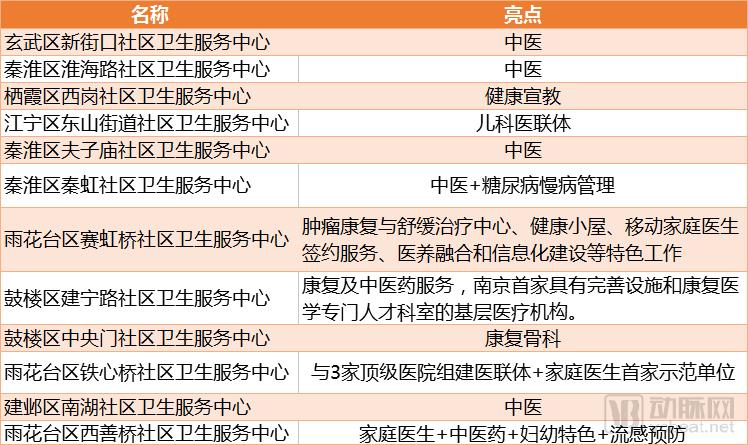
As can be seen from the list, these award-winning community health service centers in Nanjing have all developed specialized disciplines: seven specialize in Traditional Chinese Medicine (TCM), two focus on chronic disease management, and two have established medical consortiums. In May 2011, the hospital was transformed into the Xinjiekou Community Health Service Center of Xuanwu District. It provides public health and basic medical services to more than 40,000 residents under the jurisdiction of three neighborhood committees—Changjiang Road, Beimenqiao, and Xiangpuying—in the Xinjiekou Subdistrict. The center has established multiple responsible physician teams, staffed with full-time community medical personnel. By integrating with the center’s outpatient services, it has formed service teams with a rational allocation of service capabilities and complementary service content. Through the “Teams Entering Communities” initiative, led by responsible physicians, the center delivers services to residents within its jurisdiction, including health education, health interventions, chronic disease management, infectious disease prevention and control, rehabilitation guidance, referral coordination, and regular follow-up visits for elderly individuals living alone without family support, as well as for recipients of civil affairs preferential treatment. The center is recognized as a Model Urban Community Health Service Center in Jiangsu Province and a Jiangsu Province Community Health Service Center with TCM Characteristics.
The center currently has 17,000 square meters of clinical space, with 176 approved beds and 187 beds actually available. It comprises six inpatient wards, including Internal Medicine, Surgery, Rehabilitation, Oncology, and Gynecology, as well as departments such as General Practice, Traditional Chinese Medicine (TCM), Stomatology, and Public Health. The center also features specialized diagnostic and treatment centers, including an Endoscopy Center and a Diabetes Center. In 2015, the Departments of Gastroenterology and Rehabilitation were recognized as distinctive specialties of grassroots medical institutions in Nanjing; in 2016, the Departments of General Surgery and Gynecology received the same distinction.
It also assumes responsibilities for emergency support within the Xuanwu District health system, management of public health emergencies, and medical rehabilitation services. The organization oversees the Xuanwu District Physical Examination Center, the Xuanwu District Medical Laboratory Center, and the Xuanwu District Sterile Supply Center, providing related services to the district’s entire health system. This has achieved a win-win situation for residents, healthcare institutions, and the government, truly realizing the goal of making “smart healthcare” convenient, beneficial, and accessible to the public.
In Qingdao, Shandong Province, the highest number of awards were granted, with eight community health service centers recognized across four districts: Chengyang, Licang, Laoshan, and Huangdao.
It must be acknowledged that Qingdao City has performed remarkably well in the dissemination of community health services. Taking the Yongqing Road Subdistrict Community Health Service Center in Licang District as an example, the center launched the “Health Education Caravan” initiative within the community to provide high-quality health education services to residents. This program offered health education outreach, blood pressure monitoring, and free clinical consultations. Additionally, outdoor movie screenings were organized for community residents, attracting significant participation and earning high recognition for this model of community health service delivery. More than 200 community residents participated in the event.
In Laoshan District, primary healthcare institutions have aimed to enhance the level and quality of community health services, thereby improving residents’ perception and acceptance of such services. Fully implementing the spirit of deepening healthcare system reform, these institutions have accelerated the rollout of family doctor contract services and promoted the establishment of a tiered diagnosis and treatment system. They have strictly standardized community health service management and improved service quality by strengthening internal management, optimizing service environments, providing home-based nursing care, expanding family doctor contract services, advancing medical consortium development, and leveraging smart healthcare technologies and WeChat platforms. These measures have met the public’s healthcare needs, enhanced patient experience, fostered harmonious doctor-patient relationships, and achieved year-on-year improvements in public satisfaction.
As living standards improve, public attention to health has become stronger than ever. As the grassroots component of the preventive healthcare system, community health service institutions must make substantial efforts to address how to effectively disseminate health education knowledge and promote healthy lifestyles among community residents.
At this year's Two Sessions, health education was mentioned multiple times. Yong Mei, a member of the National Committee of the Chinese People's Political Consultative Conference and a general practitioner, believes thatPopular science education is crucial.“Physicians’ diagnostic guidance for patients is helpful in preventing serious chronic diseases. Given the extremely low ratio of medical resources to population in China, it is unrealistic to expect physicians to devote substantial time to individual patients during outpatient visits. In this context, disease prevention holds greater significance than treatment after onset. By employing the aforementioned measures to reduce gaps in healthcare delivery and ensure symptomatic and etiologically appropriate treatment, we can help alleviate poverty caused by improper medical management.”
On March 21, 2018, the Central Committee of the Communist Party of China issued the Plan for Deepening the Reform of Party and State Institutions. In the healthcare sector, the National Health Commission was established, underscoring that the health of the people is a significant indicator of national prosperity and strength.
To promote the implementation of the Healthy China strategy, establish the concept of comprehensive health and wellness, shift the focus from disease treatment to people’s health, prevent and control major diseases, actively respond to population aging, accelerate the development of undertakings and industries for the elderly, and provide all-around and full-cycle health services to the public, the responsibilities of the National Health and Family Planning Commission, the Office of the Leading Group for Deepening the Reform of the Medical and Healthcare System under the State Council, and the Office of the National Working Committee on Aging have been integrated with the lead responsibility of the Ministry of Industry and Information Technology for implementing the WHO Framework Convention on Tobacco Control, as well as the occupational safety and health supervision and administration responsibilities of the State Administration of Work Safety. Accordingly, the National Health Commission has been established as a constituent department of the State Council.
Its primary responsibilities include formulating national health policies, coordinating and advancing the deepening of healthcare system reforms, organizing the development of the national essential medicines system, supervising and managing public health, medical services, and health emergency response, overseeing family planning management and services, and formulating policies and measures to address population aging and integrate medical care with elderly care.
On March 26, the official website of the “National Health and Family Planning Commission of the People’s Republic of China” was officially renamed to that of the “National Health Commission of the People’s Republic of China,” and a notice clarifying the agency’s functions and responsibilities was officially issued, requiring all regions and departments to earnestly implement it in light of their actual conditions.
From this perspective, public health services, medical care, health emergency response, and integrated medical and elderly care remain key priorities, with the responsibility for fulfilling these functions falling squarely on community health service centers. The award-winning high-quality community health service centers may offer insights into the future development trends of such centers.
First, the informatization iteration of community health service centers,From pre-consultation, during consultation, to post-consultation, the new information system helps medical staff complete the entire process of medical services;
Second, improve the internal operational mechanisms of healthcare institutions, strengthen the training of general practitioners, and promote the overall improvement of community health services.It is necessary to establish an internal competitive mechanism, deepen the reform of personnel and distribution systems, and form an internal operational mechanism that promotes survival of the fittest, rewards diligence while penalizing laziness, and ensures promotion for the competent and demotion for the underperforming. By combining short-term intensive training with centralized full-time study, we will systematically and comprehensively acquire knowledge in general practice, while actively recruiting talent to enhance the overall quality of community health services.
Third, explore new models and methods for community health services, continuously analyze, study, and address emerging situations and issues, and encourage community health service centers to develop specialized departments with distinctive features, such as traditional Chinese medicine, pediatrics, and gynecology.For key populations in the community, such as children, women, individuals with disabilities, and patients with mental disorders or chronic diseases, establish basic information records and implement systematic and dynamic management. In terms of service delivery, adopt a team-based approach comprising general practitioners, community nurses, preventive care specialists, and public health physicians. This model emphasizes geographic zoning, divided responsibilities, clear functional lines, and individual accountability. Establish standardized regulations for community health services to comprehensively advance the overall level of service quality.
Fourth, implement the family doctor contract signing system.We continue to explore and develop service models such as home healthcare contracts, household-registration-based family doctor services, home nursing, and community rehabilitation; implementing new service models and methods tailored to different levels and needs, including home care, hospice care, and palliative care.
5. Exploring pathways for integrating medical care with elderly care.With the continuous increase in the elderly population, population aging has become a major issue in contemporary society. Improving the life quality and quality of life of older adults has generated substantial demand for community health services and presented new challenges;
Sixth, prioritize service projects focused on health education and promotion.From the perspectives of science popularization and health promotion, a series of activities covering diet, physical exercise, mental health, and nutrition are conducted among residents to enhance the service capacity of primary healthcare institutions. This facilitates the transition of community health service centers from a model of separated medical care and disease prevention to an integrated approach, achieving the goal of treating diseases when present and promoting health when absent.