

Yanshi Medical Skincare: Building a Boutique Aesthetic Chain Focused on Skin Rejuvenation in Shanghai
Health Intelligence Valley is China’s first industrial cluster complex centered on incubating and accelerating health industry ventures and innovating health service models. Leveraging Meinian Onehealth, the largest health-focused traffic gateway and big data platform in China, it provides innovative enterprises with access to samples, data, markets, and capital support.
Currently, Health Intelligence Valley has implemented a strategic layout across six major parks, cumulatively investing in and incubating nearly 100 startup teams, and fostering dozens of high-potential “dark horse” enterprises in the health sector with valuations exceeding RMB 100 million. This article is part of a series profiling companies within Health Intelligence Valley’s parks, featuring Yanshi Medical Aesthetics: an emerging brand in skin management, headquartered in Shanghai, pioneering a standardized model for control, services, and medical chain operations.
Headquartered in Shanghai and specializing in skin management with two stores, Ye Jiaming, founder of YS PLUS Yanshi Medical Skincare Center (hereinafter referred to as “Yanshi”), believes that she has seized the opportunity presented by the trend toward skin rejuvenation and possesses the capability to build Yanshi into a distinctive light medical aesthetics brand.
As early as 2014, the medical aesthetics industry began transitioning from surgical plastic surgery to minimally invasive procedures. At that time, Korean skin care management centers were just starting to gain popularity in China, yet they remained relatively scarce.
After visiting plastic surgery clinics in South Korea, Japan, Australia, and Taiwan, China, Ye Jiaming believes that this relatively underserved market holds significant future potential.
In 2015, together with two close friends—a plastic surgeon from Teito University in Japan and an entrepreneur who owns multiple restaurant and coffee chain stores—he began to enter the field of skin rejuvenation.
Yanshi aims to establish a branded chain in the highly competitive non-surgical aesthetic medicine sector, featuring a standardized management system, service protocols, and medical quality control framework.
So, since its inception, how has Yanshi built itself into a small yet exquisite brand institution, earning patient recognition through word-of-mouth? VCBeat (WeChat ID: vcbeat) interviewed its founder, Ye Jiaming.
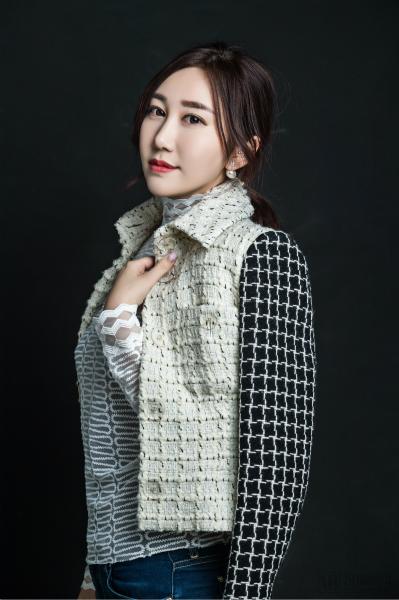
Founder: Ye Jiaming
The medical aesthetics market has reached saturation in certain regions, particularly in popular cities such as Shanghai, Shenzhen, and Chengdu. Even in second-tier cities like Changsha, there were more than 130 registered medical aesthetic institutions by the end of 2017, excluding a large number of unlicensed facilities that are difficult to quantify.
The medical aesthetics industry, particularly the non-surgical segment, is experiencing fiercely intense competition.
This is partly because young people’s skincare concepts have significantly improved, leading to greater acceptance of photoelectric devices for skin maintenance.
Another reason is that large plastic surgery hospitals tend to focus on surgical procedures, while skin-related treatments are often less profitable or serve primarily as customer-retention initiatives. Consequently, a significant number of light medical aesthetics clinics have entered the market. However, many brands have blindly followed this trend, leading to a decline in service quality at numerous institutions—a situation that is difficult to avoid.
Ye Jiaming also acknowledged the existence of market disorder. She stated, “In times of intense competition, institutions must develop their own distinctive features and areas of focus. Anti-aging, skin brightening, and skin refinement have become standard offerings for young people seeking aesthetic enhancements. The key lies in how institutions establish a comprehensive set of service process standards, management systems, and medical quality control standards.”
“Furthermore, as an international metropolis, Shanghai serves not only the local region but the entire country, boasting a sufficiently large consumer base. Many institutions fail to fully meet consumers’ expectations for skincare services, experiences, and outcomes—for instance, by offering treatments with excessive hydration or charging exorbitant prices. Yanshi aims to change this status quo. Time will reveal all; through natural selection, superior brands will attract more consumers from across China to Shanghai for skincare treatments.”
It has been learned that Yanshi’s operational projects include photoelectric skin rejuvenation, Ultherapy, Picosecond laser, Venus radiofrequency lipolysis, and Thermage.
“Popular treatments such as Korean HydraFacial, MTS microneedling, and skin boosters are widely available, while established high-end procedures like Ultherapy, UltraShape, and picosecond lasers remain highly favored. We prioritize a personalized, results-driven professional service system,” said Ye Jiaming.
In the medical aesthetics sector, public hospitals and large branded chains represent a significant force that cannot be overlooked. “The currently prevalent ‘1+N’ model—comprising a flagship hospital plus satellite clinics—allows public hospitals to leverage their established reputation and authority, resulting in lower promotional costs and greater consumer acceptance. These institutions serve as regional leaders, holding even stronger market positions than typical branded chains.”
However, such hospitals and brand chains exhibit severe polarization.
“There are few medical aesthetic institutions with more than 10 branded chain stores. Moreover, large beauty groups operate single stores with areas exceeding 10,000 square meters, resulting in very high costs for labor, property, and promotion. They prefer to use skin care treatments as a customer acquisition strategy, which then leads to surgical procedures,” Ye Jiaming analyzed the current business landscape of medical aesthetic institutions.
Large chain brands rely on comprehensive service chains to gain consumer recognition. In contrast, small and specialized clinics offer distinctive treatments and relatively reasonable pricing structures, providing highly personalized and humanized customer experiences that cater to privacy needs and focus on addressing patients’ skin concerns.
Ye Jiaming stated, “Our model is akin to laser clinics in the United States and Japan, focusing on treatments for skin rejuvenation. Concerns such as wrinkles, skin laxity, enlarged pores, acne, and other acne-related conditions can be effectively addressed at Yanshi. We are staffed with professional dermatologists and nurses, and our current pricing structure is designed to be exclusive and refined.”
“With more doctors from public hospitals starting their own businesses and the opening of multi-site practice policies, doctors can also open clinics on their own. ‘Across China, at least 400 light medical aesthetics clinics can be spawned annually, and in the future, chain clinics with an area of 200-500 square meters will definitely become a trend.’”
Yanshi has established a professional, efficacy-driven service system encompassing consultant services and equipment procurement. “We are significantly differentiated from roadside beauty salons that lack fundamental skincare expertise, while simultaneously addressing the shortcomings of large chain establishments in building strong client relationships.”
Focusing on niche segments within dermatology and then securing the brand’s position in consumers’ minds through service is the operational principle of Yanshi.
Currently, Yanshi operates two stores in Shanghai—a modest number—with one located at Health Intelligence Valley in the Daning Circus City area of Jing’an District, generating monthly revenue in the millions of yuan. The founding team also includes partners from Japan and Hong Kong, China.
Sixty percent of our clientele comes from Shanghai, while the remaining 40% originates from other regions. “Many patients travel from Singapore and Tokyo for same-day round trips, not to mention those coming from Inner Mongolia or nearby cities such as Suzhou, Hangzhou, and Ningbo. In Shanghai, we do not intend to rapidly expand by opening more outlets. We aim to avoid a mass-market, street-side store model and instead preserve our brand’s distinct identity, which requires dedicated, meticulous cultivation.”
Ye Jiaming revealed that the company plans to expand its chain presence in popular second- and third-tier cities in the future. “Although many consumers in these cities still associate brand positioning with large store footprints, aesthetically pleasing interiors, and high-profile advertising, their future consumption potential and brand awareness are no lower than those in first-tier cities. Our current priority is to establish our brand and standardized operational system in Shanghai. From the outset, brand building has occupied a crucial position in the development of Yanshi.”
Skin care institutions possess inherent advantages in establishing chain operations. First, in terms of institutional structure, large-scale chain departments are relatively cumbersome, making it impossible to establish a standardized replication model for single-product services, while also incurring high management costs.
From the patient’s perspective, individuals who previously had to rely on surgical or minimally invasive cosmetic procedures can now achieve aesthetic enhancement through non-invasive skin care methods that offer faster results and lower costs.
“Yan Shi, a branded and standardized light medical aesthetics institution characterized by low costs and rapid market expansion, is highly suitable for chain operations,” said Ye Jiaming. He noted that light medical aesthetics will increasingly present significant opportunities in this era of rapid change, adding that “chain operations can achieve economies of scale by sharing procurement of pharmaceuticals and medical devices as well as information management platforms, thereby offering cost advantages.”
Although the trend toward transparency in the medical aesthetics industry is becoming increasingly evident, information asymmetry persists, and many institutions continue to rely on traditional, outdated practices.
“Many medical aesthetic institutions still rely on channel-based models, primarily converting clients from beauty salons, but this approach has become increasingly difficult. Previously, direct-to-consumer (DTC) clients were often overlooked; however, with the proliferation of online platforms for patient education—such as medical aesthetic apps, Weibo, WeChat, and live-streaming services—which offer low customer acquisition costs, many institutions have begun transitioning toward a DTC model.”
Yanshi’s customer acquisition strategy primarily relies on referrals from existing clients, online promotion, and cross-industry collaborations. Ye Jiaming revealed, “Medical aesthetics apps, Helijia, Xiaohongshu (Little Red Book), and Weibo host large communities of young users who often provide recommendations. Moreover, nearly half of our new customers come through word-of-mouth referrals from existing clients. In terms of cross-industry brand partnerships, we also target consumer segments aligned with our brand positioning. For instance, we have established long-term collaborations with luxury brands and wellness institutions, which has attracted numerous influencers and celebrities to visit our clinic for treatments.”
“At Yanshi, for skincare treatments, many clients have commented that we don’t engage in sales pitches and are very genuine. I consistently emphasize to all our consultants and practitioners not to make indiscriminate product recommendations; instead, they should only advise consumers on what they truly need. We prioritize personalized customer experience services and focus on maintaining strong client relationships. Currently, many consumers choose us specifically for our physicians, resulting in a high rate of repeat visits.”
In terms of site selection, Yanshi favors commercial districts, which is also the reason for its collaboration with Health Intelligence Valley located in the Daning commercial district. “Medical aesthetics is gradually becoming an experiential form of consumption. We have also introduced Venus Concept, a globally renowned manufacturer of anti-aging technological beauty devices, as one of our flagship experiential offerings. Commercial districts, with their high foot traffic and fast-paced consumer behavior, are well-suited for light medical aesthetic brands.”
Regarding future development, Ye Jiaming revealed that the company does not rule out introducing external capital. “Currently, we are entirely self-funded; however, some clinics and plastic surgery hospitals have expressed interest in forming strategic alliances with us. Should suitable acquisition targets or resources become available, we may also consider acquiring certain clinics.”