

MedChain Files IPO Prospectus: Aiming to Onboard Millions of Medical Records with Nearly 100 Doctors Already On-Chain and Collaborations Expanding to Over 1,000 Physicians via Medical Associations
Patients often enter hospitals with a preconceived notion that, having sought medical care, they should experience immediate and complete resolution of their conditions under the physician’s treatment. They fail to recognize that physicians are also human beings who are continuously learning and improving; sometimes arriving at diagnoses through multidisciplinary consultations, and other times drawing on experience from previous patient cases. However, the lack of interoperability in traditional healthcare systems makes it difficult for physicians to access relevant information or communicate with other doctors who have previously diagnosed the patient.
On the other hand, hospitals and third-party enterprises strictly control the usage rights of medical data, trading patients’ personal data as commodities. This situation is poised to change; emerging trends will drive progress, empowering patients with greater voice and agency.
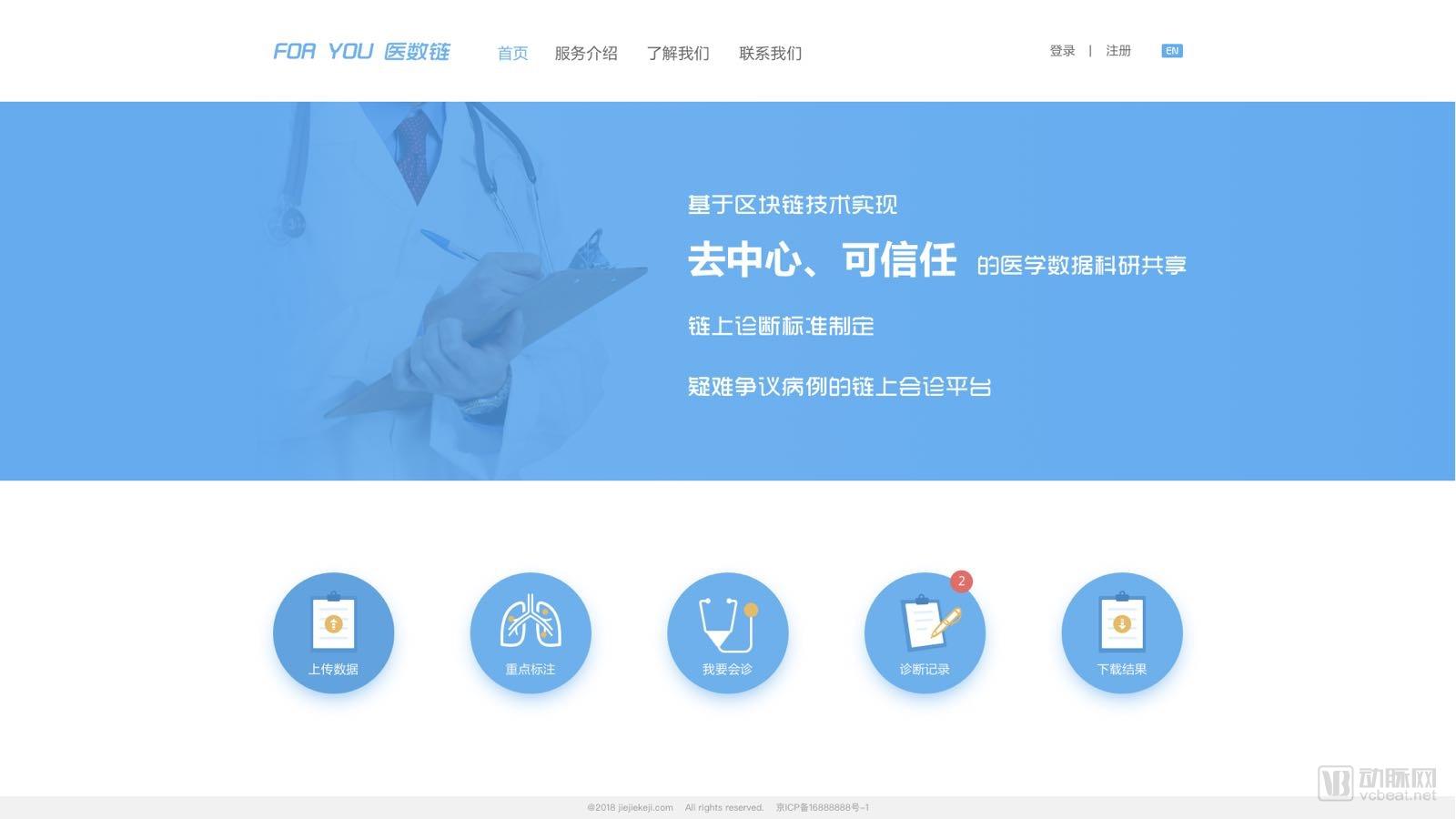
How to adapt to the times, return data ownership to patients, and promote data sharing among hospitals has become a critically important issue. “MedDataChain” addresses these current challenges by leveraging blockchain technology to bridge the gaps between information stakeholders. While cloud storage can achieve this, from a privacy perspective, cloud computing resembles a “black box”: you remain unaware of what exactly occurs during the data circulation process. MedDataChain aims to start with pneumoconiosis, gradually expand the scope of on-chain data, resolve information silos among institutions, and restore control of personal health records to patients.
Occupational diseases remain a niche category compared to other conditions, as most patients working on the front lines of production come from lower socioeconomic backgrounds; even when afflicted, they often lack the willingness, financial resources, and time to pursue treatment.
Meanwhile, there are numerous types of occupational diseases with varied clinical manifestations. Many physicians, particularly those not affiliated with tertiary hospitals, lack sufficient experience to guide treatment, often necessitating a multidisciplinary approach to manage individual patients.
Driven by years of experience in the healthcare industry and concerns about the current state of patients with occupational diseases, Yin Haijian, CEO of Yishulian (MedDataChain), decided to focus on occupational diseases by importing existing medical data into Yishulian’s blockchain system. This initiative aims to facilitate research data sharing among physicians and enhance diagnostic standards for occupational diseases.
Of course, integrating occupational diseases onto the blockchain is merely the beginning; a single spark can start a prairie fire. The goal of MedDataChain is to onboard more doctors and patients onto the blockchain, ultimately establishing a comprehensive blockchain-based medical ecosystem that facilitates interactions among doctors, between doctors and patients, and among patients themselves.

The blockchain technology behind YiShuLian is not overly complex: it establishes an electronic platform based on blockchain, upon which a peer-to-peer network is built for encryption. However, compared to other competitors, YiKuaiLian enjoys distinct advantages—namely, a vast amount of ready-made data that requires only final processing before being uploaded to the chain.
To date, Yishulian has secured over 10,000 sets of gold-standard data for occupational diseases, nearly 10,000 sets of CT data for pulmonary nodules, approximately 100,000 sets of lung CT data, and nearly 100,000 sets of thyroid ultrasound data. The platform has onboarded nearly 100 physicians, engaged in negotiations with thousands of medical institutions and physician associations, and achieved nationwide coverage across China, with a strategic focus on Beijing, Sichuan, Guangdong, Shanxi, Inner Mongolia, and Jiangxi.
The electronic health records of MedData Chain feature the following characteristics:
1. Disrupting Medical Data: MedChain has transformed the storage and sharing of medical data, resolving the paradox of medical data (the need to protect privacy while simultaneously enabling data sharing). It addresses the trust issues inherent in the traditional internet and connects isolated information silos. The greatest appeal of blockchain lies in its ability to ensure that, during communication, only the two participating parties are involved; no third-party institution can access the content of their exchange.
2. Transforming the Doctor-Patient Relationship: Decentralization, disintermediation, consensus mechanisms, voting mechanisms, redundant distributed storage of medical records, token incentives, and mining rewards all ensure that patients benefit from the profit margin reductions and price dividends of pharmaceutical companies.
3. Shortening Physicians’ Learning Curve: The consensus and voting mechanisms ensure that each on-chain consultation serves as a guideline-based diagnostic and therapeutic process, thereby narrowing the proficiency gap among physicians and significantly reducing misdiagnosis rates.
4. Incentive Challenges: The traditional healthcare system lacks effective incentive mechanisms, whereas the inherently superior incentive structure of blockchain technology addresses issues related to data upload, sharing, decentralization, and disintermediation.
MedDataChain’s founding team brings together seasoned professionals from the fields of big data, healthcare, and pharmaceuticals. Its seed-stage founders include multiple alumni of the Tsinghua University Life Sciences and Healthcare Association as well as senior executives from publicly listed pharmaceutical groups.
Yin Haijian, CEO of MedDataChain, is a graduate of Renmin University of China. He previously served as Regional Marketing Director at Kingdee Software and has many years of entrepreneurial experience in enterprise-level big data for listed companies and AI-driven medical imaging in the healthcare industry. He has made multiple investments in cutting-edge technologies within the healthcare sector.
Zhou Xuehua, the team’s Marketing Director and former Marketing Director at Pfizer Pharmaceuticals, brings twenty years of extensive experience in the healthcare industry.
According to an interview with VCBeat, MedChain has no plans for an Initial Coin Offering (ICO) in the near future. Yin Haijian, CEO of MedChain, stated in the interview: “The blockchain and P2P encryption technologies employed by MedChain are already mature. Our focus is on integrating existing data into these established systems, which aligns with our company’s name.”
“The rationale for introducing tokens is to incentivize data sharing among physicians, between physicians and patients, and among patients. Our objective in implementing tokens is to boost the engagement of both doctors and patients and invigorate the platform’s ecosystem, rather than engaging in mere ICO-driven coin speculation; the sole purpose is to enhance practical application.”
“Currently, we are focusing on pneumoconiosis and thyroid-related diseases, using them as a foundation to expand into other areas. As data continues to accumulate on the platform, more disease types will be recorded on the blockchain in the future, and the speed of recording will increase.”
Data complementarity is another objective of the Medical Data Chain. Currently, hospitals already possess relatively advanced artificial intelligence capabilities and comprehensive databases. In the future, the Medical Data Chain will develop with interoperability as its goal, facilitating the integration of enterprise AI with the Medical Data Chain and accelerating the process of onboarding data onto the blockchain.
MedDataChain plans to establish on-chain diagnostic criteria for pneumoconiosis in 2019 and improve the pneumoconiosis consultation blockchain; in 2020, it will upload case data for eight disease types onto the chain, expanding the entire blockchain into a medical blockchain integrating data storage, on-chain consultations, and offline patient referral for treatment; in 2021, it will achieve data sharing among 200,000–400,000 doctors on the chain, onboard 1,000 medical institutions, and begin piloting its B2B model; in 2022, medical AI solutions, 1 million doctors, and 5,000 hospitals will be gradually onboarded onto the chain; by 2023, MedDataChain will initially form an on-chain smart hospital.
Yishulian Technology (Beijing) Co., Ltd. is currently in the fundraising stage and looks forward to welcoming more like-minded individuals to join.