

China Private Association Establishes Health Education Committee and Launches 'Health Coach' Initiative Led by Spring Rain International
In recent years, with the significant improvement in national living standards, the incidence of various health issues characterized by the “three highs” (hyperlipidemia, hyperglycemia, and hypertension) has continued to rise, becoming a major factor affecting the overall health status of the population.
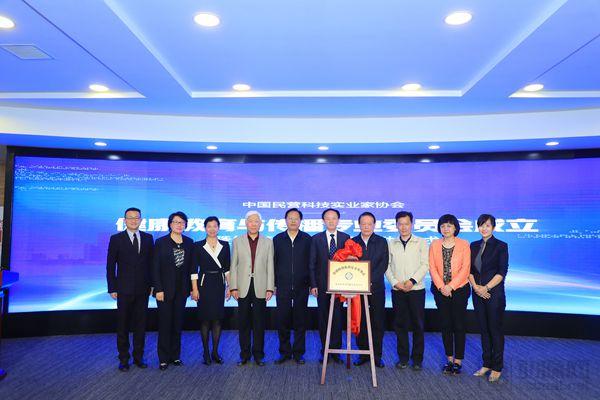
To implement the Outline of the “Healthy China 2030” Plan and meet the substantial societal demand for health education and fitness services, the China Private Science and Technology Industrialists Association, at the initiative of the Innovation Laboratory of the School of Journalism and Communication at Peking University, established the “Health Education and Communication Professional Committee of the China Private Science and Technology Industrialists Association” (hereinafter referred to as the “Professional Committee”) and launched the “Health Coach” project, which aims to promote healthy lifestyles and enhance the public’s health management capabilities.
On March 28, the inaugural ceremony of the Special Committee and the launch event of the Health Coaching Program were officially held at the Digital Broadcasting Control Hall of People’s Daily. Industry experts analyzed and discussed current health challenges facing society in their speeches, proposing new approaches and solutions.
Expert Analysis of the Three Major Contradictions in Public Health Issues
Contradiction 1: Unprecedented Demand for Health Services vs. Severe Shortage of Industry Supply
As national living standards have improved significantly, the incidence of "affluence-related diseases"—driven by factors such as increased consumption of junk food, excessive nutritional intake, and physical inactivity—has risen sharply. Various chronic conditions, primarily characterized by the "three highs" (hypertension, hyperglycemia, and hyperlipidemia), pose a serious threat to people's lives and have become a major factor affecting the overall health of the population. Public demand for health services is growing day by day, and the health industry, with a focus on disease prevention through health management, is gradually playing an increasingly important role in modern society.
Zhang Shouyin, Deputy Editor-in-Chief of People’s Daily and Director of its Theory Department, pointed out that General Secretary Xi Jinping proposed the “implementation of the Healthy China Strategy” in his report to the 19th National Congress of the Communist Party of China. This represents a significant strategic arrangement by the CPC Central Committee with Comrade Xi Jinping at its core, made from the perspective of long-term development and at the forefront of the times, to uphold and develop socialism with Chinese characteristics in the new era. To improve the health of the population, the state actively advocates prioritizing prevention, extensively promoting national fitness programs, encouraging healthy and civilized lifestyles, and fostering autonomous and self-disciplined health behaviors.
Yin Dakui, former Vice Minister of the Ministry of Health and advisory expert to the Special Committee on Health Education and Communication, pointed out that it is unimaginable for a developing country with a population exceeding 1.3 billion to rely entirely on hospitals for public health. The medical system alone cannot solve all problems. Intervening and providing treatment only after illness occurs is essentially a remedial measure. “Focusing solely on treatment without prevention leads to increasing burdens.” It is imperative to conduct health education for the public. Reducing the number of patients is a crucial approach to alleviating the current healthcare predicament in China. For ordinary people, prevention outweighs treatment; the best doctor is oneself, and the best medicine is health preservation. Providing high-quality healthcare services to the public can efficiently and cost-effectively improve overall population health.
However, China’s health industry is still in its nascent stage, and the contradiction between the overall insufficiency of health service supply and the continuously growing demand remains prominent. Zhu Defu, Secretary-General of the China Private Science and Technology Industrialists Association, pointed out that developing the health service industry and improving public health levels are imperative requirements for the coordinated economic and social development in the new era.
According to statistics, China's health industry accounts for less than 5% of its GDP, representing a significant gap compared with developed countries. Industry experts predict that the scale of China's health industry will reach RMB 4.9 trillion in 2017; however, this figure still falls short of the RMB 16 trillion target set by the “Healthy China” strategy for 2030, indicating that the industry’s potential remains to be further tapped.
Contradiction 2: High Public Attention to Health Information vs. Low Levels of Health Literacy
Despite the public’s strong willingness to acquire health knowledge, channels for obtaining such knowledge and skills remain limited. Results from the Sixth National Survey on Health Literacy of Urban and Rural Residents in 2016 showed that the health literacy level among Chinese residents was 11.58%. Overall, health literacy in China remains low, with uneven development across urban and rural areas, regions, and population groups. Public awareness of various health issues is also imbalanced, and improvements in health-related lifestyles and behavioral literacy have been slow.
Wu Tianhong, President of Life Times, pointed out that public concern about health issues is growing. On one hand, the public’s enthusiasm for learning health knowledge is increasing day by day; on the other hand, numerous unproven health “remedies” and weight-loss “tricks,” lacking scientific validation and practical evidence, continue to emerge. Social media platforms, particularly WeChat Moments, have become hotbeds for health-related rumors. Due to the lack of scientific health guidance, the public is highly susceptible to misinformation, which can ultimately harm their well-being. There is a pressing need for scientifically sound health guidance, as well as established channels and social mechanisms that enable the public to consistently access accurate health information.
Contradiction 3: Widespread Anxiety Triggered by Chronic Diseases VS Difficulty in Practicing Health Concepts
Although public demand for healthcare, wellness, and physical activity has expanded rapidly in recent years, with household spending on fitness continuing to rise, the prevalence of chronic diseases among residents continues to climb. Currently, China has 100 million hypertensive patients, 160 million individuals with dyslipidemia, approximately 120 million patients with fatty liver disease, and 92.4 million diabetic patients.
As public health awareness gradually awakens, people are increasingly recognizing the need to change their lifestyles to improve their health status. A balanced diet, moderate exercise, smoking cessation and alcohol moderation, and psychological balance constitute the four cornerstones of health. However, most individuals find it difficult to meet these requirements through self-discipline alone. Effective health management requires not only sufficient health knowledge but also the overcoming of inherent physiological and psychological weaknesses, demanding sustained effort. The public needs a working mechanism that ensures the implementation of correct health concepts, providing them with systematic and standardized assistance and guidance from external sources.
Establishing a Health Knowledge Education System
Pete Williams, founder of the American Life Coach Academy, once pointed out, “If you could have done it independently, you would have already accomplished it.” Research has found that health awareness among Chinese citizens is gradually increasing. Among respondents, 81.8% expressed a desire for health intervention services to improve their unhealthy lifestyles and habits, indicating that more and more people in China recognize the importance of leveraging external support to achieve their fitness goals.
“Hiring a professional to help achieve better health” has become a fitness approach chosen by an increasing number of people. In the United States, practitioners in the health industry have established a system and mechanism for training health coaches, significantly improving the utilization rate of professional resources. For instance, the “IDEA” Health & Fitness Association, founded by Davis and his wife, has cultivated a professional team of 20,000 members across more than 80 countries worldwide. Its membership includes personal trainers, body-shaping specialists, program and fitness instructors, and group fitness leaders, who have introduced professionalism, standardization, and educational rigor into the healthcare and fitness industry.
Yin Dakui stated that health education must strive for the integration of “knowledge, belief, and action.” It is essential not only for the public to understand correct practices but also to grasp the scientific principles behind health, thereby enabling them to change their lifestyles in daily life. The Professional Committee on Health Education and Communication, along with the Health Coach Project, addresses the challenge of how individuals can effectively implement and execute health knowledge once they have acquired it. He expressed great satisfaction in seeing cross-sector collaboration among enterprise associations such as the China Private Science and Technology Industry Association, academic and research institutions like Peking University, and the nation’s most authoritative media outlets, all working together to conduct health education and communication for the public.
Zhu Defu, Secretary-General of the China Private Technology Entrepreneurs Association, pointed out that the establishment of the Health Education and Communication Professional Committee by the association aims to build a state-of-the-art health education and communication system amid current historical and market opportunities. This initiative seeks to meet the public’s demand for a better quality of life while promoting the sound, healthy, and orderly development of China’s fitness industry, thereby achieving a win-win outcome in both social and economic benefits.
Ms. Xiong Juan, President of the Health Education and Communication Committee under the China Association for Popularizing Science (CAPS) and CEO of Chunyu International, pointed out that the committee’s mission is threefold: first, to address the public’s substantial demand for health knowledge by correcting misconceptions and disseminating accurate health information; second, to integrate advanced international medical research findings with traditional Chinese medicine and China’s national conditions to serve public health; and third, to leverage education, communication strategies, and internet technologies to encourage individuals to proactively adopt healthy lifestyles.
Introducing International Medical Achievements, Revolutionizing Health Service Concepts
Xiong Juan, President of the Special Committee, introduced that Chunyu International originated from Chunyu Doctor and has been dedicated to providing international high-end medical and health services to various clients. Over the past few years, it has provided overseas medical treatment services to thousands of high-end clients, evolving into a leading enterprise in China’s international medical sector. Upholding its social responsibility to improve the health standards of Chinese citizens, Chunyu International is not content with merely “sending out” patients; it is also actively exploring ways to “bring in” advanced international medical achievements, aiming to enable more Chinese people to benefit from the most advanced outcomes of global medical research.
In 2016, Chunyu International exclusively introduced the health management model of CHA, a teaching hospital affiliated with Harvard University in the United States. By integrating globally leading medical technological advancements with the traditional Chinese philosophical concept that “the superior physician prevents disease before it occurs,” Chunyu International aims to leverage the most advanced international medical research findings to provide clients with scientific chronic disease management and metabolic balance management. The company advocates for clients to adopt healthy lifestyles, reduce the incidence of chronic diseases, and shift the focus of disease prevention and control from treatment to prevention, thereby implementing the “Healthy China” strategy emphasized by President Xi Jinping at the 19th National Congress of the Communist Party of China.
All education and publicity efforts must ultimately culminate in “implementation.” Enhancing public adherence to health guidance is the key determinant of the success of health education. To this end, the Special Committee has introduced an internationally advanced health coach certification system, which has been adapted and refined to suit China’s national conditions, thereby establishing the country’s first health coach training and certification framework. By recruiting health coaches and guiding them through a scientifically structured training program, the Committee aims to cultivate a cohort of health coaches capable of exerting a radiating influence on their surrounding communities. This initiative seeks to position health management experts within everyone’s immediate reach, helping more individuals overcome the burden of chronic diseases and improving the overall health status of the population.
According to VCBeat (WeChat ID: vcbeat), the Health Coach training program will officially launch on March 30. The first cohort, comprising approximately 60 trainees, will undergo the training. Upon passing the assessment, they will become China’s first group of certified professional Health Coaches (HCC).