National Health and Family Planning Commission Renamed to National Health Commission; CDR Policy Launched, Boosting Capital Markets
For weekly industry updates, read the VCBeat Weekly.

Work | "The Transfiguration of Christ", also known as "The Transfiguration"
Author | Raphael Sanzi
Medical History in Pictures | Issue 20180401
The historical development of Christianity is, in essence, a reflection of humanity’s evolving understanding of disease progression and pathology.
This painting depicts a classic history of medical development, reflecting the contemporary understanding of medicine and disease: namely, that disease was viewed as a punitive process resulting from sins committed in one’s current or past life.The power of religion can heal diseases. Thus, the image depicts Jesus appearing to heal humanity.
This week, the official website of the “National Health and Family Planning Commission of the People’s Republic of China” was renamed to that of the “National Health Commission of the People’s Republic of China.” The shift from “Health and Family Planning Commission” to “Health Commission,” though differing by only one character in Chinese, better aligns with the vision of “Healthy China” in terms of government functions and reflects the elevation of nationwide health management to a basic national policy. Health cannot rely solely on medications; the era of non-pharmacological treatments has arrived.
The State Council has approved the pilot program for innovative enterprises to issue stocks or Chinese Depository Receipts (CDRs) domestically.
Boao Super Hospital, China’s First Platform-Based For-Profit Hospital Operated by Social Capital, Officially Opens
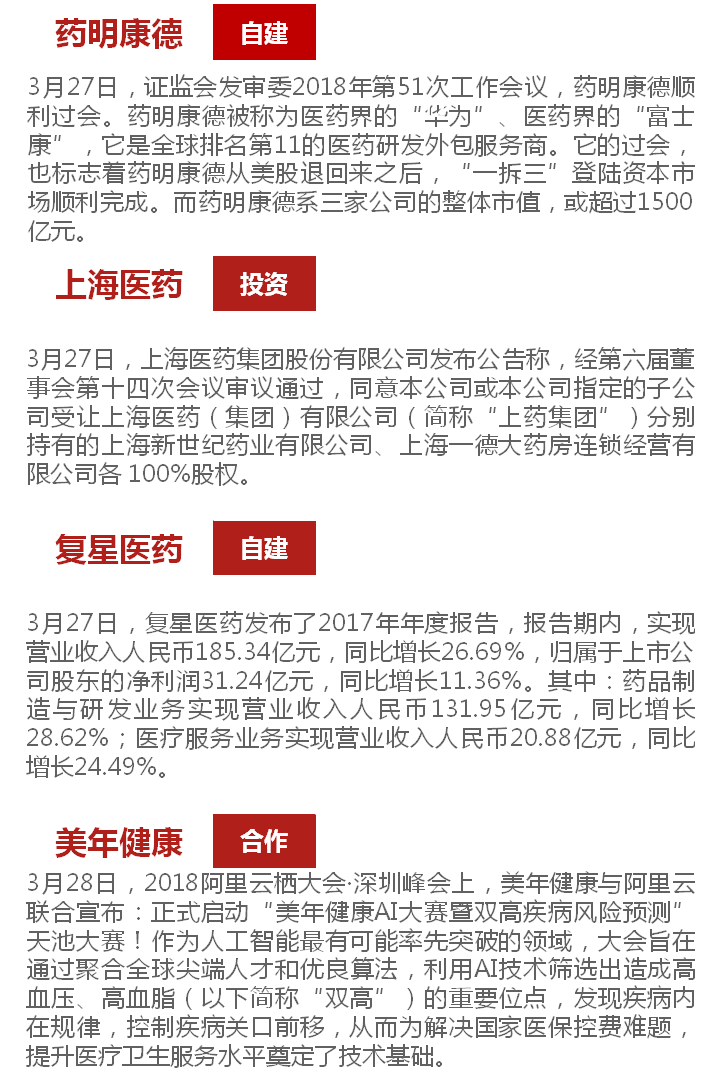
WuXi AppTec’s “one-into-three” spin-off successfully completed, with total market capitalization potentially exceeding RMB 150 billion. Alibaba Health undergoes senior management changes: Wang Lei steps down as CEO, and former AliExpress General Manager Shen Difan assumes the role.
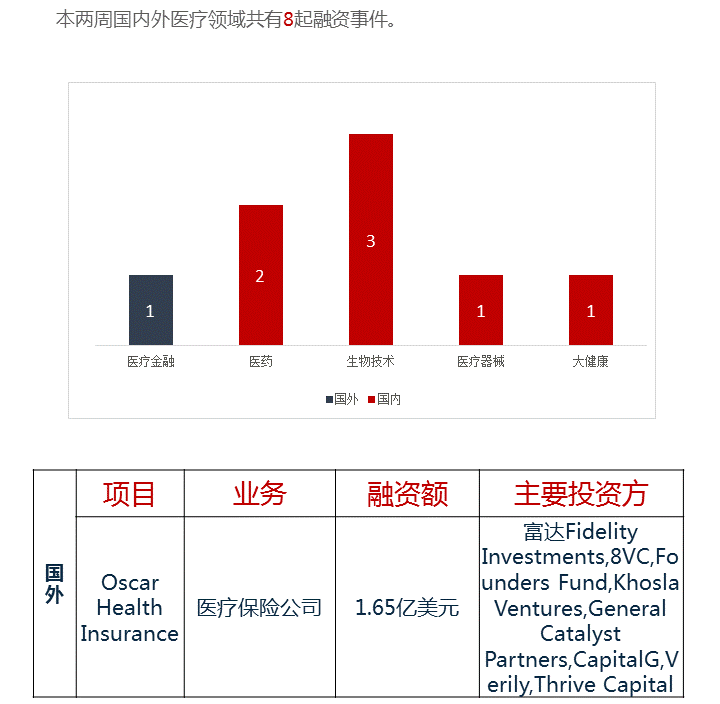
U.S. health insurance unicorn Oscar Health raised $165 million in a new funding round. The Health Education and Communication Professional Committee of the China Folk Literature and Art Association was established in Beijing, while Chunyu International launched its health coach model.
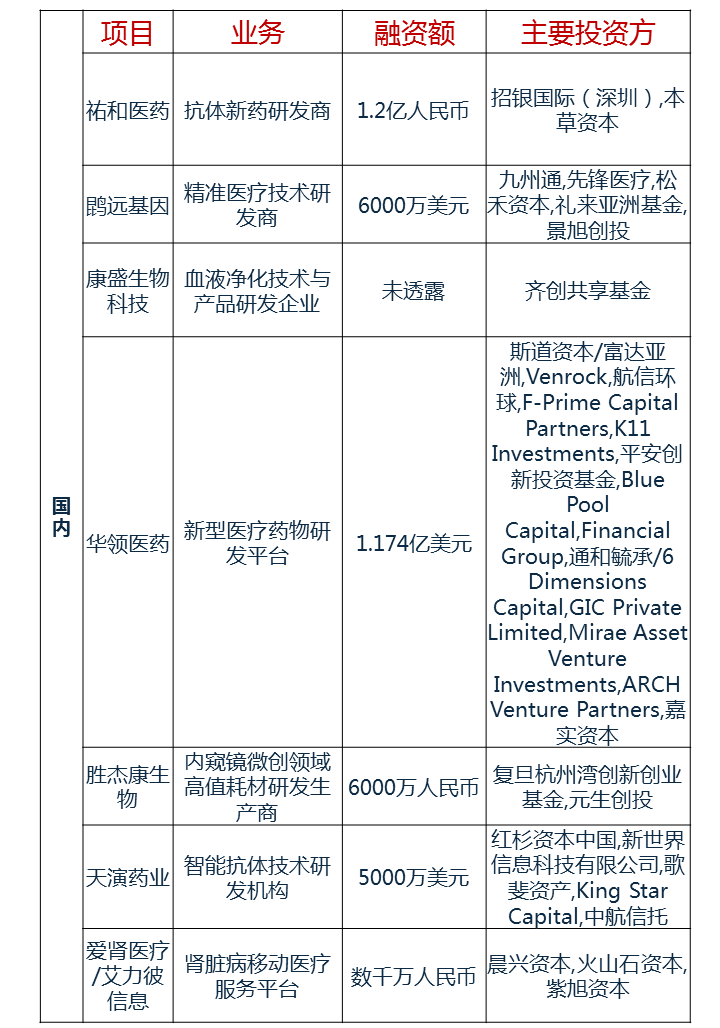
On March 27, WuXi AppTec successfully passed the review at the 51st working meeting of the Issuance Review Committee of the China Securities Regulatory Commission (CSRC) in 2018. Adagene announced the successful completion of its $50 million (approximately RMB 320 million) Series C financing. Visionary Technology secured RMB 60 million in Series A financing... Get a grasp of the week’s industry developments in ten minutes with the VCBeat Weekly Report.
Monday:A Review of China’s Medical “Unicorns”: These Companies May Enter the IPO Fast Lane
To support the listing and financing of high-quality innovative enterprises and to attract “BATJ” companies already listed overseas back to the A-share capital market, the China Securities Regulatory Commission (CSRC), the Shanghai Stock Exchange (SSE), and the Shenzhen Stock Exchange (SZSE) have taken proactive measures. By drawing on international capital market experience, reforming listing regulations, and enhancing institutional inclusivity, these steps have collectively established a “green channel” for unicorn companies to list on the A-share market.
Why the intensified push to embrace unicorns now? What measures will be adopted to support them? Which unicorns are set to enter the fast track for IPOs? VCBeat (WeChat ID: vcbeat) aims to answer these questions.
Tuesday:2018 German iF Design Award: Full List—Mindray, BGI, and Neusoft Take on GPS; Who Is the Winner?
China has achieved significant success this year, with a total of 32 products winning awards, surpassing Germany and the United States to rank first. In terms of product categories, monitoring devices, particularly intensive care equipment, were the most numerous, while sleep and beauty products also received high acclaim from the judges.
On March 26, the official website of the “National Health and Family Planning Commission of the People's Republic of China” was renamed to “National Health Commission of the People's Republic of China.”
From the “National Health and Family Planning Commission” to the “National Health Commission,” a single-character change in Chinese better aligns with governmental functions under the “Healthy China” initiative, reflecting the elevation of population-wide health management to a basic national policy. Health cannot rely solely on pharmaceuticals; the era of non-pharmacological interventions has arrived.
What are the functions of the two newly established ministries? How do experts evaluate them? And how do medical entrepreneurs view these changes? With these questions in mind, VCBeat interviewed Zhu Hengpeng, Deputy Director of the Institute of Economics at the Chinese Academy of Social Sciences; Miao Yanqing, Researcher at the Health Development Research Center of the National Health and Family Planning Commission; Lin Yuming, Chairman of the Board of HeMei Medical; and Li Changjiang, Founder of Chongqing Jiaxing Medical, in an effort to provide answers.
Amid growing attention to men's health, what is the current state of China’s andrology diagnosis and treatment industry? What are the future development trends for this sector in China? VCBeat, in collaboration with Chunyu Gangwan, an internet-based andrology diagnosis and treatment platform, has conducted a comprehensive review and study of China’s men’s health and andrology disease management landscape, along with an analysis of Chunyu Gangwan’s operational data. This effort aims to draw broader insights from specific findings and shed light on the progress of andrology disease diagnosis and treatment in China.
Although China and the United States differ significantly in their policies and market conditions regarding mobile health, vigorously developing telemedicine has become a key focus of China’s future healthcare reforms. As the largest telemedicine company in the United States, Teladoc’s operational data merits our attention. Therefore, VCBeat has tracked and summarized Teladoc’s business activities in recent years, hoping to provide valuable insights for our readers.
From the perspective of the capital market, domestic medical 3D printing companies are actively seeking investment. With the introduction of supportive policies by the China Food and Drug Administration (CFDA) for medical 3D printing and the increasing maturity of technological applications, medical 3D printing companies represented by orthopedic implants and organ tissues may usher in a wave of capital investment in 2018.
Nebula: Viewing the Future Gene Market Through Blockchain Technology
Consumer Healthcare:Yanshi: Based in Shanghai, focused on skin care and maintenance, building a small yet exquisite chain of light medical aesthetics clinics.
Health Management:SLEEPON: Capturing 80% of the Mild-to-Moderate Sleep Apnea Population by Quantifying Sleep Data with a Smart Ring
Biological Genetics:Ruiyi Bio: Bonded with “Stool,” Three Years of Cultivation Yield Two Rounds of Financing
For more content, please visit the VCBeat Knowledge Base!