

XiHetero and West China Hospital Forge a Unique Model for Commercializing Medical AI
As a company specializing in the research and development of medical AI technologies, Hisi Yigou relocated from Beijing to Chengdu in early 2017 and initiated in-depth collaboration with West China Hospital. Over the past year or more, Hisi Yigou and West China Hospital jointly established the “West China-Hisi Medical Artificial Intelligence R&D Center,” successfully launched the world’s first AI-powered digestive endoscopy system, and achieved numerous R&D breakthroughs in collaboration with West China Hospital across multiple departments, including CT, MRI, ultrasound, dermatology, cardiology, and pathology. Recently, the two parties cooperated to build the “West China No. 1 Medical AI Supercomputing Center,” which boasts the most powerful computing capabilities among healthcare institutions in China.
Focus on deep collaboration with a single hospital affiliated with West China Hospital, rather than simultaneous partnerships with multiple hospitals., yet it has still achieved numerous results. In particular, it has recently explored a development model suited to C-HEALTH’s heterogeneous architecture on its commercialization path, which warrants industry attention. To this end, our reporter interviewed Song Jie, Founder and CEO of C-HEALTH, to gain insights into the company’s strategic thinking.
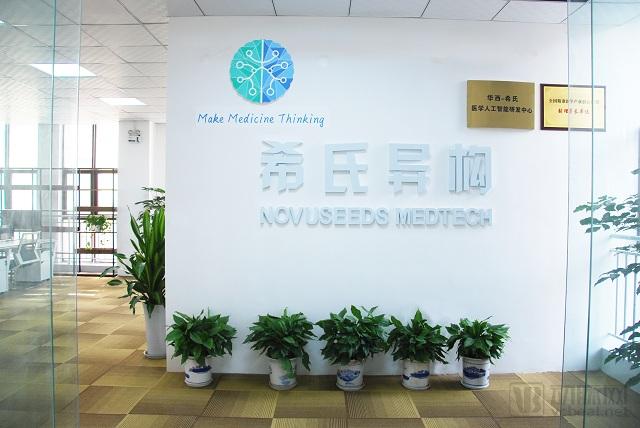
Image source: Heterogeneous
8 Major Issues in the Emergence of Medical AI
Song Jie stated that with the rapid development of medical artificial intelligence (AI), the strategic direction of AI companies has undergone significant changes. Before late 2017, most companies were primarily concerned with securing data for preliminary research. As certain technologies have matured, some leading companies this year have already devoted substantial efforts to exploring business models.
Song Jie believes that there are many problems in the field of medical AI, and only by correctly avoiding them can we possibly do better; especially for hospitals, it is necessary to first address their concerns.
In-Depth Collaboration with West China Hospital
On the website of West China Hospital, it was reported that on the morning of March 21, 2018, Chen Fang, a member of the National Committee of the Chinese People's Political Consultative Conference and Vice Chairman of the Provincial Committee of the Chinese People's Political Consultative Conference, led a delegation of 14 members to visit West China Hospital to conduct research on the “West China–CisMed Artificial Intelligence Center.” Attendees included Wu Mei, Deputy Director of the Scientific Research Academy of Sichuan University; Shen Bin, Deputy Secretary of the Party Committee of West China Hospital, Sichuan University; as well as directors and experts from relevant clinical departments, including Gastroenterology, Radiology, Pathology, Ultrasound, and Dermatology.
The West China-His Medical Artificial Intelligence Center, which participated in this survey, is an AI R&D center jointly established by West China Hospital and His Heterogeneous. In previous interviews, VCBeat learned that during the initial phase of the center’s establishment, His Heterogeneous and West China Hospital engaged in thorough communications on numerous issues critical to long-term development, including scientific research, medical data applications, translation of research achievements, intellectual property rights allocation, and subsequent promotion and application.
Leveraging the platform of West China Hospital, both parties can jointly conduct medical AI scientific research in relevant specialties, aligned with the hospital’s comprehensive strategic layout. During the R&D process, Xiishi Yigou will provide top-tier algorithm teams and computing power, with the resulting intellectual property owned jointly by both parties. Furthermore, Xiishi Yigou’s specialized capabilities in AI chips and cloud architecture will enable the rapid translation of R&D outcomes into marketable products. It is conceivable that, as co-owned products, these solutions can be rapidly deployed across medical institutions within the sphere of influence of West China Hospital, thereby significantly reducing promotional pressures.
Song Jie had his own reasons for forging a deep partnership with a top-tier hospital rather than pursuing widespread expansion:
First,"Broad cooperation is not as good as going deep in one area.". For top-tier medical institutions, their resources are sufficient to achieve significant results through mutual collaboration; however, if they spread their efforts too thinly across multiple partnerships, they may ultimately fail to secure even one hospital committed to genuine cooperation;
Second,Collaborating with a hospital can effectively address future issues related to intellectual property rights and data security.. If multiple hospitals are involved, delineating property rights becomes highly challenging. Furthermore, if the research outcomes are unrelated to the partner hospitals, their enthusiasm will be significantly dampened. Data security is also a major concern. An exclusive partnership ensures that data remains within the hospital, thereby mitigating institutional risk, while simultaneously providing the hospital with opportunities to participate in and lead research, development, and application efforts;
Third,Stimulating the Research Enthusiasm of Physicians and Hospitals. By partnering with a single hospital, physicians recognize their ownership of the research findings and view the product as a tool for their future practice, thereby fostering deep engagement from both the hospital and its medical staff;
Of course, given that the technology was co-developed in collaboration with a medical institution, many people are concerned about the future generalizability of the product. Song Jie stated that this concern is unfounded. For top-tier medical institutions, the quality, quantity, and statistical representativeness of their medical data are not issues. Moreover, the significance of their research and application is even greater.
On one hand, top-tier medical institutions themselves encompass collaborative resources with hundreds of other healthcare facilities, representing both a vast pool of technical collaboration opportunities and a massive application market. On the other hand, the ultra-high-performance computing center built by Xishi Yigou based on Dr. Wu Ren’s architecture (such as the “Huaxi No. 1” supercomputing center established in partnership with West China Hospital) can simultaneously meet the computational demands of research across multiple fields, enabling earlier entry into interdisciplinary medical AI research and development. From this perspective, such achievements would likely be unattainable without exclusive, in-depth collaborations with top-tier hospitals.。
Application is the ultimate goal.
Many medical AI research teams still lack a proper grasp of application prospects. Much of the research remains confined to the academic level; for instance, AI diagnostic technologies targeting single diseases often lack practical clinical value due to their limited coverage or narrow applicability, which ultimately restricts the long-term viability of such R&D efforts. In reality, unclear application objectives, lacking implementation pathways, absent commercialization prospects, and insufficient capabilities in hardware performance and service productization all constrain their development.
Hisense Heterogeneity focuses its R&D efforts on medical sub-specialties with clearly defined “pain points.” For each selected direction, we conduct multi-disease research to ensure that our outcomes are not merely academic but can be directly applied in clinical practice. This approach is consistently applied across our work in digestive endoscopy, ultrasound, pathology, CT, and MRI.
Meanwhile, leveraging its proprietary AI chips and cloud technology capabilities, Hishi Heterogeneity can rapidly launch device-based products and cloud-enabled medical service offerings. With collaborative resources such as West China Hospital, Hishi Heterogeneity is able to work with partners to deploy its products across medical consortiums and departmental alliance platforms.
Hishi Yigou has multiple profit models, the most basic of which is:1. Leveraging its robust hardware capabilities, it has deployed offline AI systems to market AI-enabled device products, such as AI-powered gastrointestinal endoscopy equipment, while also providing technology licensing to traditional medical device manufacturers; 2. It offers cloud-based services by hosting AI-assisted diagnostic systems on the cloud to serve a broader range of healthcare institutions. Additionally, in specialized fields such as dermatology and cardiology, Xishi Yigou has launched a series of consumer-facing (C-end) products.
Currently, Xishi Yigou’s products have begun the regulatory submission process based on existing CFDA standards, while the company is also actively participating in the formulation of national standards for AI medical devices, presenting a highly optimistic outlook.
Multidisciplinary Integrated Development Is the Direction of Medical AI
>>>>
The goal of medical AI is not a simple replication of physicians’ capabilities.
Beyond collaboration models, Song Jie also holds his own views on the R&D objectives of medical AI. According to Song Jie, many people mistakenly believe that medical AI simply “learns” physicians’ capabilities, replicating their skills to provide humanity with highly efficient and low-cost medical resources. While this may have been the initial goal of AI development, the true allure of AI lies in accelerating human understanding of diseases. In other words, AI should help humans achieve medical capabilities surpassing current human levels. The development of such “capabilities” inevitably requires large volumes of high-quality medical big data and deep, multidisciplinary collaboration among medical experts. Theoretically, collective participation by more healthcare institutions would foster better technological advancement; however, considering various practical factors, for well-resourced healthcare institutions, engaging in deep collaboration with a single partner may hold greater practical significance.
Finally, Song Jie synthesized the concept of He Shi Yi Gou: We will not “greedily” scour everywhere for data, nor will we tightly cling to our achievements. Instead, we will commit all our capabilities and resources to focused co-development with our partners—top-tier hospitals—and share in the future together.