

CaiLifang Files IPO Prospectus: Leading China's Digital Dental Implant Guide Market with Over 10,000 Flawless Cases
Digital dentistry aims to further enhance the scientific rigor of diagnosis and the precision of treatment, with the goal of reducing surgical risks, alleviating patient suffering, and improving treatment accuracy.
Digital surgical guides are an indispensable technology in digital implant restoration. They represent an interdisciplinary, multi-field comprehensive technology that integrates oral medicine, imaging, computer software development, and 3D printing. As one of the earliest companies in China to adopt this technology, Color Cube has gained widespread acceptance among experts, department heads, and clinicians within the industry.
To this end, VCBeat (WeChat ID: vcbeat) interviewed Gao Rongna, General Manager of Tianjin Hendasheng Technology Co., Ltd. (brand name: Cailifang; hereinafter referred to as “Cailifang”), who will share how Cailifang has seized the prime window of opportunity in dental digitalization to carve out its own niche through innovations in products, services, technology, and business models.
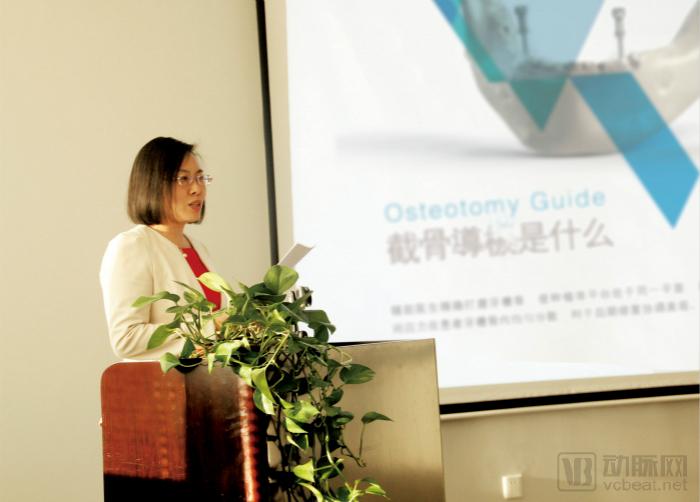
Gao Rongna, General Manager of Tianjin Hengdasheng Technology Co., Ltd.
The predecessor of Cailifang was dedicated to the application of 3D printing technology. In 2009, based on extensive market research, it initiated an independent R&D project focused on applying 3D printing technology in the field of dentistry.
Gao Rongna revealed, “Our ability to independently develop these products stems from our capabilities in both software and hardware. Cailifang has its own software company, so the surgical guide software is developed in-house. Moreover, Cailifang possesses advanced industrial-grade 3D printing equipment with a precision of up to 0.016 mm. In addition, the digital dental implant surgical guides manufactured by Cailifang are made from medical-grade photosensitive resin materials and have passed domestic biocompatibility testing, which is relatively rare in the industry.” The software for Cailifang’s implant surgical guides has undergone hundreds of revisions to continuously meet clinical needs.
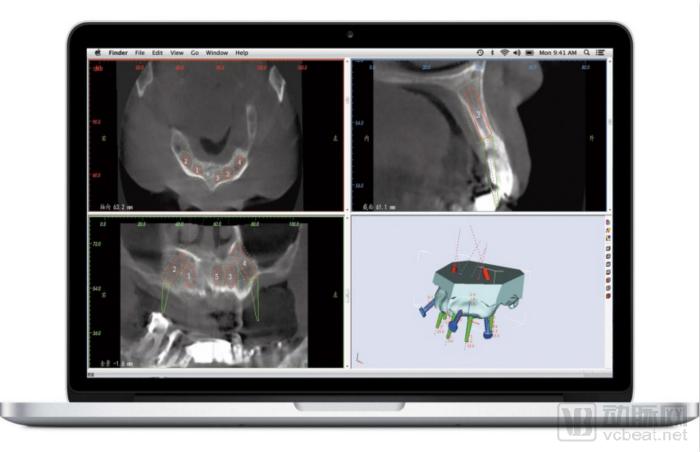
Self-developed Guide Plate Software
Gao Rongna stated that many renowned domestic experts are using the ColorCube guide software. Zhou Lei, former Deputy Director of Guangdong Provincial Stomatological Hospital, demonstrated the operation of ColorCube’s software on-site while serving as a judge in a digital design case competition. He noted that, to some extent, ColorCube’s software is more user-friendly and better aligned with the operational habits of Chinese clinicians compared to foreign alternatives.
Nowadays, the benefits of using surgical guides in clinical practice are widely recognized. During the dental implant procedure, they help surgeons mitigate surgical risks, achieve precise positioning, and facilitate prosthetic restoration. To some extent, they make implant placement simpler and more scientific.
Five years after its market launch, the brand “Cai Lifang” has become a flagship for digital surgical guides. Today, from both clinical and market perspectives, awareness of digital guides has advanced significantly in terms of market feedback, brand building, and academic promotion.
Promotion: Emphasizing Academia and Clinical Practice to Build Brand Identity
Cailifang’s digital surgical guides were initially positioned for academic promotion and clinical feedback, leveraging academic engagement to drive brand development. Upon launch, implant specialists across China were invited to conduct clinical validations of the product. Experts endorsed its performance in software design functionality, interface menu layout, data compatibility, product precision analysis, clinical support, and response speed. Additionally, valuable recommendations from these clinical experts laid a solid foundation for Cailifang’s rapid advancement.
In the academic arena, Caifang actively participates in various large-scale academic forums, such as inviting experts to deliver lectures and promoting digital development. It independently organized the “1st Caifang Digital Case Design Competition” to advance clinical pathways for standardized diagnosis and treatment. Furthermore, as a partner of BITC, it has continuously promoted digital technologies across various regions over the past few years.

The First Digital Case Design Competition by Cailifang
From a clinical perspective, ColorCube commits to providing on-site surgical support for every client’s first case to ensure procedural success. Each case is accompanied by a detailed surgical report that outlines the position, angulation, and depth of each implant, along with the corresponding drill bit length and relevant surgical precautions. The report is both professional and user-friendly. As one dentist remarked, “I simply post this surgical report on the wall for quick reference during surgery—it’s incredibly convenient.”
Currently, the Cailifang software consists of a design version and a production version. Gao Rongna told VCBeat reporters, “Initially, the design and production versions were not separated; they formed a single integrated software suite. Later, to meet marketing needs, the design version was made open and available for free installation. Doctors can use the Cailifang software to import patients’ CBCT data, perform various measurements using its features, and observe the patient’s jawbone condition in 360 degrees within a three-dimensional environment. Since the design version is provided free of charge to end users with lifetime free upgrades, it has been highly beneficial for rapidly capturing market share and promoting brand awareness. This is something no foreign software has been able to achieve.”
The triad of academia, clinical practice, and technology has propelled the “Cai Lifang” brand to prominence as a dark horse in the field of dental implantology.
With the advancement of dental technology, both clinicians and patients prioritize optimal restoration of masticatory function, superior aesthetic outcomes, long-term implant stability and durability, and minimization of complications. Consequently, the demand for digital surgical guides is increasing, drawing greater attention to their accuracy.
To ensure the precision of every surgical guide, Cailefang has established strict standard operating procedures covering patient data acquisition, case design verification, selection of guide fabrication equipment, clinical surgical application, and the provision of professional toolkits.
“On certain key issues, while we generally respect the judgment of clinicians, we will definitely communicate with them on matters of principle. For example, in edentulous jaw surgery, we now firmly refuse to proceed without a radiographic guide. Deviating from standardized protocols and operational procedures compromises precision, rendering the guide ineffective.”
“By adhering to such high standards, Caifang has maintained a flawless record across tens of thousands of cases since its market launch. Leveraging extensive clinical experience, we understand the specific roles surgical guides should play in different cases and provide guidance on critical technical aspects. Furthermore, we meticulously review every case designed by clinicians, examining factors such as anatomical structures and adjacent teeth, which are fundamental to minimizing surgical risks.”
Cailifang pledges to assist with clinical case design, ship products within 48 hours, provide on-site support for the first case, and offer free software training. Such services are regarded as an industry benchmark. However, Cailifang did not rest on its laurels. Starting in 2017, the company began developing its own 3D printers. After a year of debugging and experimentation, the printing precision of its digital surgical guides became comparable to that of foreign 3D printers. “Most importantly, the costs of materials and machine maintenance have been significantly reduced, enabling chairside printing in hospitals and clinics and accelerating the turnaround time for personalized, digital products to same-day completion.”
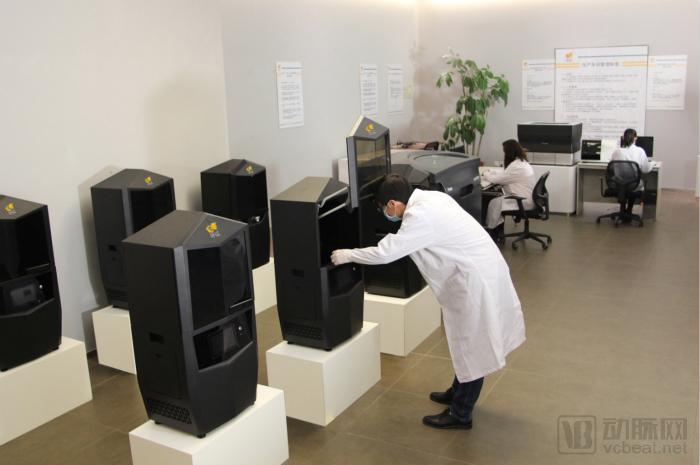
The company began developing its own 3D printers in 2017.
Cailefang currently boasts self-developed software, proprietary hardware, a professional design team, and comprehensive technical training, all of which have laid a solid foundation for the rapid development and service delivery of chairside solutions.
In 2018, Cailifang entered its second five-year phase. Gao Rongna revealed, “The plan for the second five-year period is to expand institutional collaborations and increase market share. Furthermore, we will leverage the Cailifang Cloud Platform and big data technologies to enhance the functionality and intelligence of our software, thereby strengthening our service capabilities.”
In addition, Gao Rongna stated that the Cai Lifang Cloud Platform enables the storage of medical cases, allowing physicians to access patient records at any time. This facilitates long-term academic accumulation and enhances the quality of services provided to doctors. The company aims to establish a digital training platform to disseminate advanced digital technologies, including clinical skills, to a broader base of physicians through expert-led training programs.
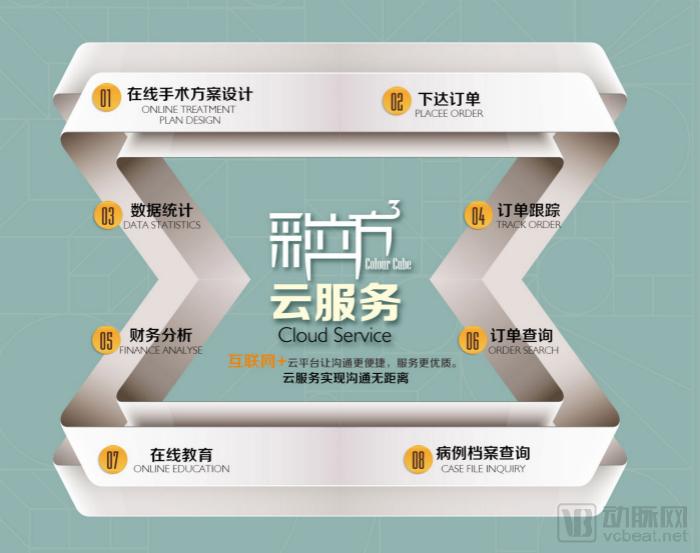
Cailifang Cloud Platform
Regarding new product development, reporters learned that new digital products will also be rolled out successively during the second five-year period, covering fields such as endodontics and oral and maxillofacial surgery.
Cailifang’s goal is to truly provide clinicians with a one-stop digital dentistry solution, encompassing products, technologies, software, services, and even management tools and training.
Regarding industry development, Gao Rongna stated, “Amid the wave of digitalization in dentistry, the dental implant guide industry has become a hot spot. However, I am more committed to fostering the healthy and sustainable growth of this market. Every enterprise should shoulder the responsibility of advancing new technologies, adhere to the principles of evidence-based medicine, collaborate with clinicians to ensure patient care, and collectively contribute to the advancement of China’s dental technology.”