

Aidoc Medical Files IPO Prospectus: AI-Powered Radiology Workflow Solution with CE Certification

Aidoc
AI Medical Imaging Diagnosis and Analysis Service Provider
In the 21st century, artificial intelligence has emerged as a novel solution to some of the critical challenges facing the medical field, including medical imaging, clinical decision-making, and drug delivery and monitoring.
In certain scenarios, artificial intelligence outperforms human physicians in diagnostic tasks requiring rapid judgment, such as identifying abnormal lesions. A study published in JAMA (Journal of the American Medical Association) in December 2017 demonstrated that deep learning algorithms diagnosed metastatic breast cancer more quickly than experienced human radiologists. For many emergency patients, the duration of diagnosis is directly linked to survival.
Artificial Intelligence Has Entered Hospitals Worldwide, Providing a Wide Range of Services to Doctors and Patients.
Current Status of the Department of Medical Imaging: Abundant CT and MRI Scans, Shortage of Radiologists
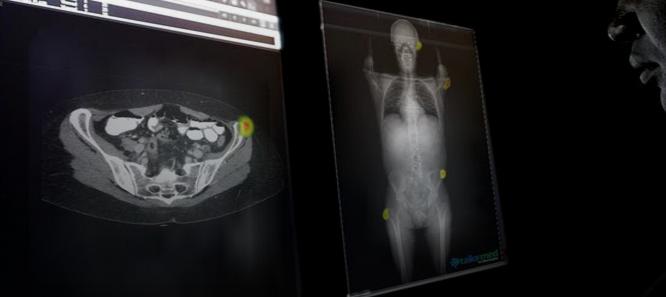
In modern medical diagnosis and treatment, CT and MRI are playing an increasingly important role. The demand for these imaging modalities from both physicians and patients continues to rise. This growth is further accelerated by the rapidly aging population. However, the pace of training professional medical imaging personnel falls far short of the surging demand. To some extent, the workforce size has stabilized, leading to insufficient staffing across various regions and consequently reducing diagnostic and therapeutic efficiency.
Radiologists (who analyze medical imaging scans such as X-rays and magnetic resonance imaging) use medical imaging technologies to collect and review patient-related information, analyze findings, and diagnose patients’ conditions. Typically, a radiologist reviews dozens of cases per day, with the reading order usually determined by the time at which the scans were completed. In reality, however, the severity of a patient’s condition is not correlated with the scan completion time. Delaying optimal diagnosis and treatment can lead to severe consequences.
Although artificial intelligence cannot yet replace physicians, numerous studies have demonstrated its indelible role in assisting doctors with diagnosis and treatment. In the field of medical imaging, AI and computer vision technologies can be employed for medical scan and image analysis, thereby facilitating the work of radiologists and other clinicians.
A startup operating in this field is AIdoc Medical. The company was co-founded in 2016 by CEO Elad Walach, CTO Michael Berginsky, VP of R&D Guy Reiner, and Yale University radiologist Gal Yaniv.
Elad Walach describes AIdoc as a medical AI company capable of detecting visual anomalies in medical scans. The AIdoc team comprises multiple deep learning experts and radiologists who leverage computer vision technology to enter the medical imaging sector. By employing deep learning techniques to assist physicians with image analysis, the company aims to enhance the diagnostic accuracy and efficiency of radiologists.
Elad Walach stated: “We aim to add value to the essence of time—because saving time can mean saving lives.”
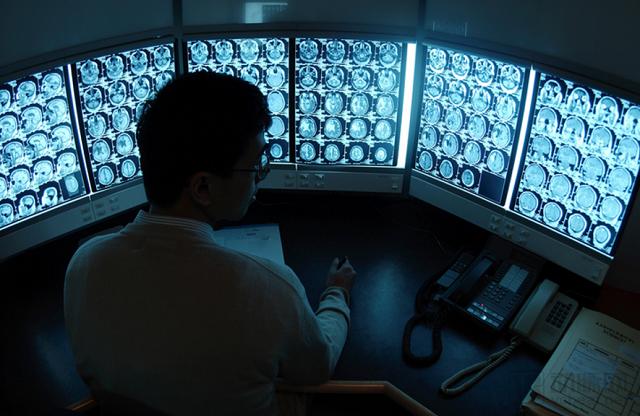
Aidoc Leverages Deep Learning to Enhance Radiologists' Workflows
It is unrealistic to completely replace doctors with artificial intelligence; however, this new technology can indeed contribute to improving efficiency in the healthcare industry.
Aidoc Technology/Products—Deep Learning Technology Tailored for Medical Imaging Diagnosis
Walach: “From numerous conversations with radiologists in the past, we have learned that a significant challenge for American radiologists is the need to process a large volume of scanned images within an extremely short timeframe. Such pressure can lead to catastrophic consequences, such as misdiagnosis resulting in inappropriate treatment plans. We recognized this as our team’s entry point and breakthrough opportunity.”
To address this issue, Aidoc has adopted new artificial intelligence technologies based on deep learning to build an image analysis and diagnosis platform specifically tailored for medical imaging. By leveraging conventional methods to identify certain abnormalities, the platform targets various types of diseases rather than focusing on a single case.
Its main technical principles are as follows:
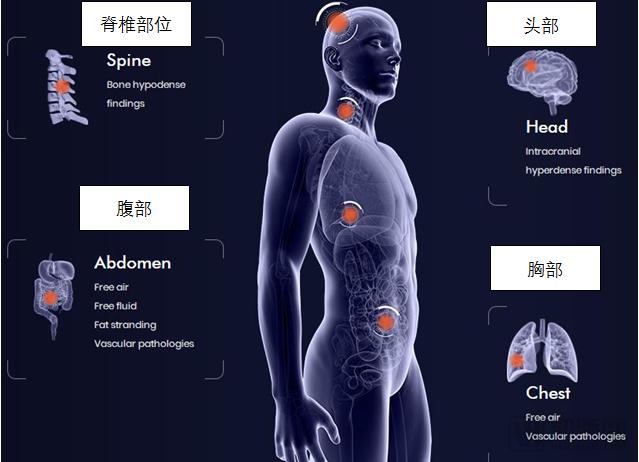
Through extensive deep learning, Aidoc’s AI system not only completes analyses in a short period but also achieves enhanced accuracy. For radiologists, Aidoc’s AI system optimizes their workflow by shifting away from the traditional model of analyzing images only after they are fully acquired. With the assistance of the AI system, abnormalities can be detected and flagged in real time during CT or MRI scans. The system prioritizes cases based on the severity of the abnormalities. For instance, when Aidoc’s algorithm detects an anomaly in a scan, the case is escalated in priority, highlighting the most critical findings for the radiologist and precisely guiding their focus during interpretation.
Therefore, radiologists need only focus on what they do best—analyzing diseases and making clinical decisions. This significantly reduces the time physicians spend detecting abnormal lesions and formulating decisions, thereby maximizing the time available for patient diagnosis and treatment. Furthermore, the platform continues to re-examine regions where no abnormalities were initially detected.
Based on the aforementioned theoretical technologies, the company has developed a support system for radiologists to help them extract core information from the large volume of received scan images, thereby streamlining the medical imaging diagnostic workflow.
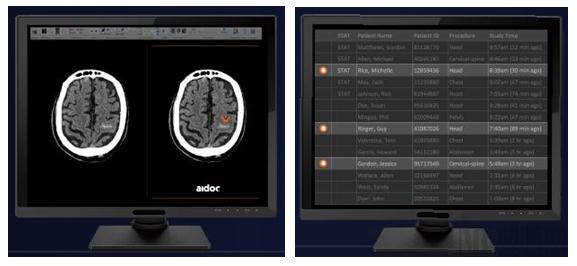
Aidoc’s PACS (Picture Archiving and Communication System) and Worklist Desktop App (for prioritizing input cases)
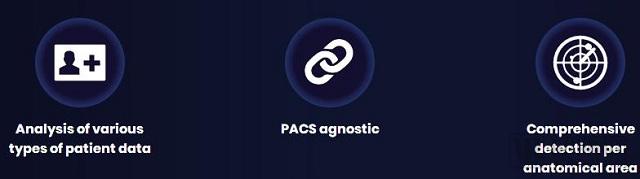
Comprehensive Analysis of Different Data Types from Various Anatomical Sites
To date,Aidoc primarily focuses on the head and neck region—a major area in medical imaging—leveraging deep learning to comprehensively detect abnormalities in head and neck imaging, thereby accelerating radiologists’ workflows and enhancing diagnostic accuracy., bringing good news to trauma patients, for whom time is life and every second counts.
In the United States, Cedars-Sinai Medical Center in Los Angeles evaluated Aidoc’s solution in early 2017. According to the company, the trial yielded positive results.
“Dr. Barry Pressman, Director of Imaging at Cedars-Sinai Medical Center and a fellow of the American College of Radiology, stated, ‘In our clinical trials, Aidoc’s technology has demonstrated its ability to streamline radiologists’ workflows by prioritizing abnormal scans for more thorough review. My experience leads me to believe that this technology has the potential to significantly enhance the efficiency and accuracy of our radiologists, enabling us to perform at our best—a revolutionary victory for both physicians and patients.’”
Although the system is currently limited to research use in the United States, Aidoc is working toward obtaining approval from the U.S. Food and Drug Administration (FDA), with the aim of launching it as a fully commercialized product in the U.S. in 2018.。
Paul J. Chang, MD, of the University of Chicago Medicine: “By combining clinically relevant deep learning with deeply integrated workflows, Aidoc has become one of the few AI companies that deliver true value to radiologists.”
Company Development and Financing Status – Diversified Growth, Analyzing and Managing Various Rare Diseases
As a company, we must create real value. Technology should serve medicine and help doctors work more efficiently, and Aidoc’s innovations meet the genuine needs of physicians.

In 2016, shortly after its establishment, the company defeated a field of strong competitors to claim first place in Geektime’s 9th Annual Techfest Startup Competition.
On October 1, 2016, Aidoc secured $3.5 million in seed funding, led by Magma Venture Partners;
On January 26, 2017, Aidoc received a round of non-equity assistance with an undisclosed amount;
On April 26, 2017, Aidoc Medical Ltd. completed a $7 million financing round led by Israeli venture capital firm TLV Partners, with participation from Magma Ventures and Emerge. Aidoc plans to use the new funding to expand its core R&D team, customer service team, and marketing teams in the United States and Israel.
Rona Segev, Co-Managing Partner at TLV Partners, stated: “Advancements in artificial intelligence technology, the open-sourcing of data, and the widespread adoption of digital technologies in today’s society have enabled the extensive application of AI across multiple traditional industries. We are delighted to embark on this journey with Aidoc, leveraging artificial intelligence to capture the vast market for medical imaging diagnostics.”
Aidoc’s technology can have a significant impact on radiology workflows, providing more cost-effective treatment solutions for the entire healthcare system. In November 2017, Aidoc announced that it had received the world’s first CE certification for a commercial deep learning medical imaging solution for the head and neck, thereby opening up the entire European market and achieving commercialization in Europe.。
Regarding competitors, Elad Walach identified IBM Watson Health as its biggest rival. However, he noted, “While Watson Health is also doing something remarkable, its focus differs from ours. IBM aims to leverage its artificial intelligence technology to automate the entire analysis pipeline. To achieve this, they must concentrate on specific diseases, meaning, in a sense, they have gone very far down a very narrow path. We appreciate the route they have chosen, but we are targeting a different market. Our goal is to serve as a support partner for radiologists, helping them manage massive volumes of imaging data.”
Another company in this field is Zebra Medical Vision, which primarily focuses on the retrospective analysis of incidental findings to help insurers identify patients with anomalies who may require additional treatment in the future.
In contrast, Aidoc offers more basic and broader services.Radiologists are compensated for analyzing scans, so any product that can assist them is highly lucrative. AIDoc’s business model involves direct sales to radiology departments using a Software-as-a-Service (SaaS) framework. Customers obtain software usage rights by purchasing licenses and paying an annual fee, which is all-inclusive, meaning users do not need to pay additional installation or service charges.。
Elad Walach: “We recognize that countless patients worldwide are suffering from a variety of medical conditions. To make a meaningful impact, we cannot focus solely on one or two diseases; instead, we must adopt a more comprehensive approach, leveraging our technology to address the challenges faced by a broader patient population.”