

Li Tiantian: Dingxiang Garden Is Value-Driven, Not Traffic-Driven, and Is Preparing for IPO
According to VCBeat (WeChat ID: vcbeat), on March 29, at the “2018 Healthcare Investment Excellence Summit,” Li Tiantian, founder of DXY, shared his perspectives on the integration of technology and healthcare.
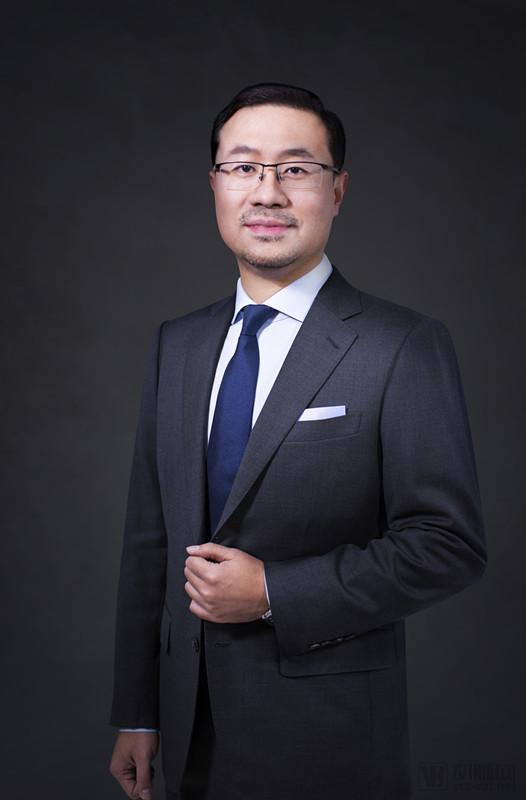
Li Tiantian, Founder of DXY
DXY, founded in 2000, is China’s largest connector in the healthcare sector and a leading provider of professional digital services. Over the past 17 years, it has established the country’s largest medical academic forum and a suite of mobile products, and has fully funded the development of offline clinics.
Through a professional and authoritative content-sharing platform, extensive and comprehensive data accumulation, and standardized, high-quality medical services, DXY connects hospitals, physicians, researchers, patients, biopharmaceutical companies, and insurers. It serves tens of millions of general users and has 5.5 million professional users, including 2 million physicians. Currently, DXY Clinics have been established in Hangzhou and Fuzhou, with plans to expand to more cities.
Last year, the Central Committee of the Communist Party of China and the State Council issued the “Outline of the Healthy China 2030 Plan,” which first proposed that health is an essential requirement for promoting all-round human development and a fundamental condition for economic and social development. Achieving national health and longevity is an important indicator of national prosperity and ethnic revitalization, as well as the common aspiration of people of all ethnic groups across China.
This indicates that China’s healthcare industry is shifting from a disease-centered model to a health-centered one. Li Tiantian believes that against this backdrop, disease management constitutes only a part of the broader health industry, while pre-diagnosis and post-diagnosis services remain largely untapped. Pre-diagnosis care focuses on health cultivation, whereas post-diagnosis care involves chronic disease management and the integration of medical treatment, elderly care, and nursing services—areas that are currently underdeveloped. Moreover, these services are generally beyond the scope of what large public hospitals can effectively provide.
Whether in health education or chronic disease management, there are ample opportunities for internet-native companies to explore and experiment. “We are not a hospital and cannot diagnose or treat patients; we are not a pharmaceutical company and cannot manufacture drugs; nor are we a medical device manufacturer and cannot sell equipment. We must choose the field that best leverages our strengths and focus on doing it with specialization and precision. Therefore, we have chosen the broader health and wellness sector.”
“In terms of product development and technology, our starting point is to ensure that the product and technology are closely aligned with business needs,” said Li Tiantian.
Si Tingyou, General Manager of Buchang Asset Management, once stated, “New technologies do not necessarily mean that new business opportunities have arrived; in fact, there may still be a very long road ahead.”
For startups, short-term growth can be driven by fundraising, but long-term development requires that technology and products remain closely aligned with business operations.
DXY is now a company in the late stages of financing, preparing for an IPO, with a heightened focus on revenue, growth, scale, and profitability. How does it ensure that its products and technology remain closely aligned with its business operations?
“All of our technical and product staff participate in product discussions, even meet with clients and users, and are deeply involved in the R&D, production, operation, and maintenance of all our products and services, following them all the way to the market.” This is the answer provided by Li Tiantian.
He further stated that the healthcare industry is not a sector where capital can rapidly force maturity or clear out competitors. Financing and IPOs serve merely as fundamental safeguards for corporate development, rather than the key to success. The crucial factor lies in clearly recognizing one’s value within the industry.
Previously, there was a persistent misconception that for internet healthcare companies or enterprises in the medical and health industry, traffic represents value. In reality, traffic does not equate to true value.
Li Tiantian stated that due to information asymmetry and disparities in service experience, it is difficult to capture the entire market share solely through capital investment or a single technology. While traffic is undoubtedly important in the healthcare sector, it is not the sole determining factor; more critical is the underlying value—specifically, what problems you can actually solve for patients, even if they are minor issues.
For instance, before we launched our patient services, I never imagined that so many people would be concerned about how to whiten their skin. From a physician’s perspective, such concerns are typically disregarded. However, upon entering this industry, we recognized the enormous market potential driven by patients’ and the general public’s demand for these health-related solutions. Ultimately, if you can address even minor issues and generate some revenue—even without substantial traffic—you will observe customers repeatedly making purchases on your platform.
In such cases, which are common on knowledge platforms, these individuals are referred to as “super users.” For example, on Zhihu, Dedao, and Ximalaya, you will observe them repeatedly making high-value purchases.Li Tiantian believes that these are true value-driven users, rather than the traffic-driven users of the past.
Therefore, whether we are developing technical products or conducting R&D, we adhere to three core principles: first, prioritizing health as the central focus, which is our most fundamental requirement; second, targeting value-driven users; and third, maintaining close alignment with business operations. We have built our services in accordance with these three basic principles, achieving notable results along the way. From my current perspective, the outcomes have largely met our initial expectations. Throughout this process, we have observed continuous growth in both revenue and user base.