

So Young CEO Jin Xing: How to Enter the Aesthetic Services Market Amid Upgraded Consumer Demand
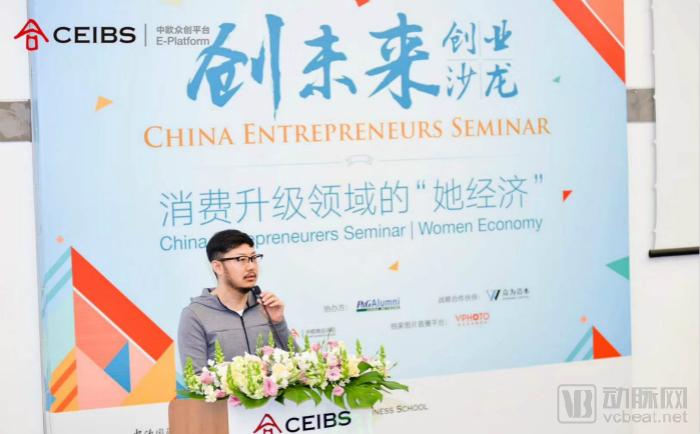
Recently, the “She Economy” event in the consumer upgrade sector, part of the “Create the Future” Entrepreneurship Salon series hosted by CEIBS Mass Innovation Platform and co-organized by the P&G (China) Alumni Association, was grandly held at the Shanghai campus of China Europe International Business School (CEIBS).
The conference invited Dr. Lin Chen, Professor of Marketing at CEIBS; Jin Xing, Founder and CEO of So-Young; and Qian Zhuang, Founder of KnowYourself, to serve as co-keynote speakers, exploring “New Opportunities and Challenges in the Era of the ‘She Economy’.”
During the event, Jin Xing delivered a keynote speech titled “Community Operations and Product Logic Behind the Beauty Economy.” With nearly 20 years of experience in the community sector, Jin has launched three startups, all centered around women’s communities; SoYoung is the company founded as his third venture. In early 2018, SoYoung secured RMB 600 million in Series D financing, marking the largest funding round in the medical aesthetics industry in recent years.
The core points of Jin Xing's speech include:
1. Consumption upgrading is not just a phenomenon in China but a global trend; the greater opportunities for consumption upgrading in the future may lie in sectors such as services and healthcare;
2. Chinese women’s acceptance of minimally invasive procedures and medical aesthetics is rising, yet the penetration rate still lags significantly behind that of South Korea, the United States, and Japan, creating the backdrop for an explosive growth in the medical aesthetics industry;
3. Define the roles of each segment in the industry chain, identify key bottlenecks, and thereby determine the entry point for entrepreneurship;
4. Product differentiation is difficult; operations are the key. Only by following the four steps of cold start, atmosphere building, lowering barriers, and ecosystem construction can a community achieve spontaneous and healthy operation.
Below is the transcript of Jin Xing's speech:
It is a great honor to be invited by CEIBS to share with you all the community operations and product logic behind the beauty economy.
SoYoung was founded in 2013 and completed a RMB 600 million Series D financing round earlier this year. We currently have 25 million users, with partnered medical aesthetic institutions covering over 95% of licensed medical aesthetic service providers in China. Additionally, we have onboarded medical aesthetic institutions from South Korea, Japan, Thailand, and other countries. Last year, the platform achieved an online gross merchandise volume (GMV) of RMB 6 billion and has accumulated 3.5 million authentic plastic surgery diaries written by users themselves.
Today’s topic is consumption upgrading. Beyond the various upgrades we observe in fast-moving consumer goods, I believe greater opportunities in the future may lie in sectors such as services and healthcare.
Early this year, I joined Tencent on a visit to Japan. During the trip, we met with prominent Japanese groups such as 7-Eleven, FamilyMart, and drugstore chains, who shared insights indicating that Japan is currently undergoing consumption upgrading.
I was quite surprised at the time, as I had previously assumed that consumption upgrading in China was driven by the rise in per capita income from historically low levels. I did not expect to see Japan also facing a trend of consumption upgrading. This led me to believe that consumption upgrading may be a global trend, rather than a phenomenon unique to China.
The reason is that several decades ago, there was actually a global shortage of supply relative to demand, so any product manufactured could be sold immediately. However, we are now in a situation of oversupply, meaning consumers have already purchased nearly all the goods they need.
For any product, consumers have hundreds of brands to choose from. Instead of striving to own more things, they are now willing to pay a premium for better quality—a trend that may be sweeping the globe.
From this perspective, we observe that China’s product landscape has been developing at a remarkably rapid pace in recent years. However, there remains a significant gap between China and foreign countries in the service sector and healthcare industry, not only in terms of quality but also in overall scale.
In developed countries, taking the United States as an example, 60% of its GDP is contributed by the tertiary industry, namely the service sector. However, in China, this proportion is only slightly above 30%.
Consumers are willing to pay more for superior products, essentially to enjoy a better range of services, including those in tourism, dining, and healthcare. In these sectors, the gap between China and foreign countries is even more pronounced.
SoYoung is relatively fortunate, as it sits precisely at the intersection of beauty and healthcare. It belongs to both the healthcare sector (as medical aesthetic institutions are classified as healthcare facilities) and the service industry (what we refer to as the healthcare services sector).
Unlike general service industries, patients typically cannot demand specific services in conventional medical care. However, in the field of medical aesthetics, private institutions account for more than 80% of the market. Coupled with increasingly fierce competition in recent years, medical aesthetic services are considered elective rather than essential. Consequently, consumers expect hospitals to provide excellent communication, high-quality service, and comprehensive post-procedure care.
In 2017, the entire medical aesthetics industry achieved a growth rate of 40%, approximately six to seven times the average growth rate. Few industries in China have experienced such rapid expansion. This surge is closely linked to the substantial increase in household income, which serves as a prerequisite for consumption upgrading.
In terms of penetration rate, an increasing number of women in China are becoming more accepting of minimally invasive procedures and medical aesthetics. However, when measured as a proportion of the total population, there remains a significant gap compared to countries such as South Korea, Japan, and the United States. This disparity underpins the current explosive growth of the industry.
SoYoung was relatively fortunate to enter the medical aesthetics market during a brief window of opportunity. Initially, virtually no one on our team had prior experience in the medical aesthetics industry.
I have spent nearly two decades in the internet industry, with no prior exposure to medical aesthetics or even the broader healthcare sector. From our perspective, we see significant opportunities in this field. However, how to launch a venture and select the right entry point are critical considerations.
We selected our entry point by initially mapping out the entire industry chain. The analysis we conducted at that time was highly complex; here, we can only provide a brief review.
First, let’s examine the key players across the broader industry. At a high level, these may include consumers, media outlets, physicians, hospitals, upstream equipment manufacturers, and downstream financial institutions. However, a more detailed segmentation reveals a far more complex landscape.
After analyzing this industry, we then look at the entry point. In fact, any intermediate link in the chain presents an opportunity for an internet company to engage in. For example, our current approach is to enter through the media sector.
In fact, in other areas of internet healthcare, Haodf.com approaches the market from the physicians’ perspective by building a physician community, while Chunyu Yisheng directly connects consumers with doctors to provide one-on-one online consultations.
Other potential entry points include: building B2B platforms, providing training for physicians and hospitals, offering recruitment services, facilitating installment payment plans for medical aesthetics, and acting as intermediaries for cosmetic surgery. In fact, there are numerous entrepreneurial opportunities in this space.
How should we choose our entry point? We conducted extensive financial analysis to understand how cash flows throughout the entire industry.
According to the publicly disclosed financial statements of medical aesthetic institutions listed on the National Equities Exchange and Quotations (NEEQ) in 2016, the average net profit margin across 11 institutions was 8.7%, with three reporting losses and eight posting profits.
This reality differs from what many people imagine. While the medical aesthetics industry is often perceived as highly lucrative, a net profit margin of 8.7% does not qualify as exorbitant, although it remains relatively favorable compared to traditional sectors. For instance, in Japan, 7-Eleven’s net profit margin appears to be around 1%, while FamilyMart and Lawson report net profit margins of merely 0.2% to 0.3%.
However, in traditional sectors, such as the food and beverage industry, the rate may reach 8%, 10%, or even higher. Although we did not have access to such data when we launched So-Young in 2013, we conducted numerous similar surveys.
We can also observe that operating costs account for 40% of the expenses at medical aesthetic institutions. This comprises roughly equal shares of 20% each for pharmaceuticals and equipment, and for physician and staff salaries.
Another marketing cost accounts for 36%. Companies listed on the New Third Board are those with a certain brand recognition in the industry, and the marketing costs of some remaining small and medium-sized medical aesthetic institutions may be even higher.
Why do we analyze the revenue-to-cost ratio of medical aesthetic institutions? Because looking solely at output value across the entire industry chain holds limited significance, as production capacity within the chain is subject to double counting. For instance, if a hospital generates RMB 1 million in monthly revenue, it might allocate RMB 200,000 to wages and RMB 200,000 to purchasing upstream pharmaceuticals and equipment. The calculated output value would then sum up to RMB 1 million plus RMB 200,000 plus RMB 400,000, and so forth, resulting in inflated figures due to double counting.
However, we calculate a different figure: the revenue of all medical aesthetic institutions, which essentially serves as the primary source of funds available for distribution across the entire industry.
Therefore, by examining the revenue of medical aesthetic institutions and then analyzing their cost structures, we observe that the total revenue across all such institutions in China amounted to over RMB 170 billion last year.
If we apply this proportion to their revenue—for instance, allocating 36% to marketing—what is 36% of RMB 170 billion? Thus, it becomes evident that the most profitable entities in this industry are neither the owners of plastic surgery hospitals, nor the pharmaceutical and medical device manufacturers, nor the physicians themselves. Rather, the greatest profits are captured by the platforms that provide advertising and marketing services to these plastic surgery hospitals.
Furthermore, we know that a portion of Baidu’s revenue comes from the medical aesthetics industry. This RMB 170 billion market is not large compared to other major sectors, such as home renovation, real estate, building materials, education, automotive, digital products, tourism, and finance. There are numerous industries far larger than the medical aesthetics sector; yet, it is the medical aesthetics industry that contributes the most advertising revenue to Baidu.
I recall that in 2016, it contributed nearly RMB 10 billion in revenue, supplemented by offline outdoor advertising placements from medical aesthetic institutions. People have noticed that when traveling to second-tier cities for business, the most prevalent advertisements are those for plastic surgery hospitals.
Thus, we see that within the entire industry chain, the largest and most promising segment is marketing.
We chose to enter the market through marketing. Meanwhile, we believe that the medical aesthetics industry in China has been quite chaotic for many years, with a poor reputation among consumers, largely due to excessively high marketing costs.
The customer acquisition cost for a plastic surgery clinic to bring in an in-store patient is approximately RMB 3,000–5,000. If you were the owner of such a clinic, what would your mindset be? A customer walks into your clinic, and before you have even started to generate revenue, RMB 5,000 has already been spent. What would you do? If the customer only receives an RMB 800 masseter-reducing Botox injection, you would definitely incur a loss. Therefore, you would certainly seek ways to upsell, encouraging them to undergo higher-ticket procedures.
However, consumers have their own judgment; they will inevitably feel dissatisfied, and attracting them back to the store next time will incur higher costs. This creates a vicious cycle, where the costs are ultimately passed on to the consumers.
For us, significantly reducing marketing costs would first lower consumer spending. Coupled with the widespread adoption of technology, this would enable more consumers to experience the benefits of tech-enhanced aesthetics, thereby expanding the market and fostering healthy industry development.
Since the launch of our platform a few years ago, prices for minimally invasive cosmetic procedures have dropped by two- to threefold. In 2013 and 2014, a single hyaluronic acid injection cost RMB 6,000–8,000, whereas it now costs approximately RMB 1,000–2,000.
Second, we have established a third-party evaluation system that provides consumers with clear criteria, enabling them to make transparent and informed choices when selecting institutions, thereby allowing high-quality providers to naturally emerge.
In fact, this approach addresses the root cause of the industry’s challenges, serving as our entry point for marketing channels. Furthermore, from a business perspective, it features a highly direct and well-defined business model.
To assist consumers in making informed decisions, So-Young pioneered the "Plastic Surgery Diary" product format, in which users share their before-and-after photos in a serialized manner—for example, on post-operative days 3, 5, 40, and 80, potentially extending to day 180 to document the entire continuous recovery process. Our platform currently hosts 3.5 million such Plastic Surgery Diaries.
When aggregated, these plastic surgery diaries effectively form a rating system for doctors and hospitals, akin to Dianping in this field, enabling consumers to make informed decisions based on these reviews.
Many people ask: Since most individuals who undergo plastic surgery prefer to keep it private, why would they share their surgical journey diaries? This is almost invariably the first question posed by every investor. Others speculate whether we are paying for these diaries, fabricating them, or employing a large editorial team to produce such content. In reality, even with an editorial team, it would be impossible to create diaries of this nature.
This is, in fact, a serialized series of updates; the images from the day of surgery and the first few postoperative days are inherently authentic and cannot be fabricated or digitally altered.
How did we do it? The core strategy still relies on operational tactics. We generally divided the process into four stages: first, cold start; second, creating a vibrant atmosphere; third, lowering the barrier for user sharing; and fourth, building the entire platform ecosystem.
First, Cold Start. When the platform community was first launched, it had no users; consequently, no one was willing to share content, which in turn meant no one came to view it, creating a vicious cycle.
From the outset, we adopted a PUGC (Professional User-Generated Content) strategy. When we launched SoYoung in 2013, we observed that Chinese consumers were still relatively resistant to plastic surgery, whereas South Koreans had a much more open attitude toward it. As a result, Korean online forums were filled with plastic surgery diaries shared by Korean users. We therefore hired dozens of Korean international students to locate these diaries on the forums, translate them into Chinese, and post them on our own platform with accompanying images and text.
In the first step, we compiled 8,000 plastic surgery diaries, which serve as a valuable reference for Chinese consumers. For instance, individuals considering cosmetic procedures are naturally interested in understanding the recovery process and outcomes. These diaries, written by Korean patients, are particularly useful because Koreans share similar physical features with Chinese people, thereby attracting significant readership.
Second, create an atmosphere.After attracting users to browse, we also wanted to encourage them to share. However, direct sharing proved too difficult. Therefore, we launched a free cosmetic surgery campaign.
Cosmetic surgery is actually quite challenging; many consumers desire these procedures but find them prohibitively expensive. We negotiated with cosmetic surgery hospitals, leveraging our platform’s large user base of individuals interested in such treatments. Under signed agreements, these users would post serialized diaries documenting their surgical journeys, serving as live advertisements for the hospitals. As a result, several cosmetic surgery hospitals launched promotional campaigns on our platform. These campaigns were extremely popular, with individual events attracting thousands of registrants.
For these internet users, it can save a lot of money. He certainly knows that these hospitals use him as a model for promotion. He thinks that since you are using me for advertising and publicity, you must do an excellent job for me. They feel more assured, so many people participate in this activity.
How to select from such a large number of applicants? It was somewhat similar to the open auditions for “Super Girl” back in the day. Each participant was required to post online, stating, “I am participating in the free plastic surgery campaign at [Name] Hospital.” Applicants had to write about why they should be chosen and provide their reasons for participation. Initially, everyone kept their submissions brief, but as competition intensified, participants began putting considerably more effort into their entries.
As a result, the atmosphere within the entire community quickly became more vibrant; members began to actively post content and engage in mutual vote-canvassing.
At the time, we had a rule: the candidate with the most votes would be given priority. Therefore, you needed to like other people’s posts, and I asked for your support as well, which led to this reciprocal arrangement.
The entire community became more personable, transforming from a space where users interacted as cold, impersonal IDs into a vibrant, living community. Later, one free plastic surgery procedure was offered per week; this increased to two, then three, and eventually four sessions per week, rapidly heating up the community atmosphere.
Third, lower the threshold.We stimulate interest in registration through our campaigns, but our ultimate goal is to encourage users to share genuinely valuable content—specifically, their own real-life experiences with plastic surgery. We believe such content holds true reference value.
In reality, the psychological barrier for users to share their experiences is extremely high. They often worry about how others might perceive them and have many concerns. Our consumer research revealed an interesting mindset: when consumers first begin to consider cosmetic surgery, they are actually excited, thinking, “I’m going to become more beautiful.”
However, in reality, as the process unfolds, he begins to do his homework, gather information, and communicate with those around him. His anxiety gradually intensifies because people around him raise concerns about potential poor outcomes, many express lack of support, and he encounters online reports of failed cases. Even after consulting with doctors and hospitals, physicians cannot guarantee specific results. Consequently, this process slowly becomes somewhat anxiety-inducing.
This anxiety peaked at the moment he completed his plastic surgery. The post-operative recovery period is critical, lasting from one to three months, with more extensive procedures potentially requiring an even longer recovery time.
At this stage, you are actually experiencing significant inner turmoil. You may encounter numerous postoperative issues, leading you to wonder: Is the wound infected? I have scarring in this area; will it gradually fade or persist indefinitely? Is the shape what I desired? Is the width what I wanted? In truth, you are fraught with many questions, yet there is no one to provide answers. You may feel uncertain about whom to trust. It is even possible that your husband might say, “See? I told you not to undergo the procedure in the first place.”
Therefore, this is when users experience the highest level of anxiety. Is it possible to provide them with some assistance at this stage? To address this, we developed a feature called the Postoperative Recovery Calendar.
If such records are provided to patients—for example, following double eyelid surgery—detailing the duration of severe swelling and mild swelling, as well as which days fall within the normal recovery window. For instance, minor oozing on postoperative day 3 is considered normal, whereas persistent oozing on postoperative day 10 is abnormal. The records should also include specific care instructions and precautions, such as whether makeup application is permissible, and whether consumption of spicy foods or seafood is allowed after double eyelid surgery.
In addition, users can upload photos. If they have time each day, they may take selfies to alleviate anxiety. The purpose of taking these selfies is to compare the current day with the previous one to assess whether swelling has subsided and whether scarring has improved. Therefore, we enable photo uploads in this section, creating a continuous postoperative recovery record. By maintaining such a record, patients can clearly track their recovery progress.
At that time, we introduced a feature whereby, after you uploaded and submitted your photos, the system would recommend to you plastic surgery diaries from other users who had undergone the same procedure and were at the same postoperative day. For instance, if your face was still significantly swollen after mandibular angle reduction, seeing that others in similar circumstances experienced even more severe swelling would provide reassurance.
Thus, this approach shifts users’ mindsets. Many internet users decide which cosmetic procedures to undergo by reading others’ shared plastic surgery diaries; after their own procedures, they in turn share their experiences. This has become part of the community’s cultural ethos, establishing a consistent behavioral pattern among its members.
Fourth, build an ecosystem.For the first three steps, we still need to devise various strategies to encourage user sharing. By the fourth step, we launched an e-commerce platform. However, there is always a digital barrier between us and online users; I cannot see them or know their identities. If I want to maintain patient journals, I still have to rely on diverse operational tactics. But who can have direct, face-to-face contact with these patients?
It’s actually the doctors and hospital staff. If we could mobilize them and encourage them to share their diaries, wouldn’t that be a tremendous help to us? But the problem is that doctors and hospitals ask, “Why should we do this?”
You can certainly tell him that as more netizens share your content, your reputation within the community will grow, leading to an increasing number of clients seeking your plastic surgery services. While some may believe in this approach and act on it, the majority remain skeptical, deeming it unattainable. Much like how not everyone can become a verified influencer on Weibo, they perceive such success as distant and difficult to achieve, and thus are unwilling to pursue it.
When we say that if we can show him the quantified effects, and if some netizens read the diary and it directly brings you results, wouldn't that be considered done? So we created an e-commerce platform for medical aesthetics, where consumers can directly pay and book appointments online. This is our innovation.
After implementing such measures, the results proved to be significant. As some pioneers—certain hospitals and physicians—adopted this approach, their sales volumes increased. Witnessing these tangible outcomes, other hospitals and physicians were motivated to follow suit.
Gradually, once the rules are established, hospitals and doctors operating on our platform will engage in competition, potentially through tactics such as offering cashback incentives for writing reviews or employing various other strategies.
Once we accomplish this, you will see it evolve into an ecosystem. After successfully building the ecosystem, it can operate virtuously with minimal strategic intervention.
Summary of Our Experience in Community Building:
Step 1: Population Selection.Prior to our entry, China lacked a truly successful medical aesthetics community, making user-driven growth extremely challenging. In contrast, communities centered around subcultures or marginalized groups are often easier to establish. For instance, Blued, the gay community platform that emerged in earlier years, addressed a significant need for communication and interaction among its users, who faced substantial social pressure and were unable to engage openly on this topic within mainstream society.
The greater the social pressure a population faces, the stronger its tendency to form a community. When such groups develop their own language and communicate in their unique ways, the resulting community exhibits strong vitality.
Second is content production.When building a community, it is challenging to encourage online users to share content with you. However, there is a well-known ratio in community dynamics: 1:10:100. Typically, in traditional communities such as Weibo and Tianya, only 1% of the total user base posts content on a daily basis. Therefore, if you can successfully engage that 1% of users who are willing to contribute content, your community can be established and function effectively.
Thus, you reduce the difficulty of building a community by a hundredfold; you do not need everyone to contribute content—finding just 1% of users who do so is sufficient.
"Today, many people have undergone plastic surgery. Are any of you here who have had plastic surgery willing to share your experiences? It’s okay; even if only one or two people are willing to share, we can still interact and exchange ideas. In fact, meeting this proportion is sufficient."
Next, providing tools significantly lowers the barrier to entry. Why is Douyin so popular? It’s because it offers modular components. The next step is to establish benchmarks; every successful community has its own set of benchmarks.
In those days, bloggers like Han Han were hugely popular. On Weibo, early adopters such as Yao Chen paved the way, attracting more celebrities to join. Creating a vibrant atmosphere is also crucial; every community fosters its own unique interactive environment and culture—for instance, Zhihu offers a distinct user experience. Moreover, incentive mechanisms are indispensable.
And then there’s commercialization. Many people perceive online communities as spaces for free discussion among users, devoid of any commercial undertones. Introducing commercial elements may lead users to feel that the environment has become overly commercialized. However, my perspective is that you need to clearly define what kind of community you aim to build.
I believe that communities like ours are essentially consumption-driven. Users come to such platforms with a single objective: to gather sufficient information to quickly and affordably complete their cosmetic procedures and post-operative care, then leave. To them, the platform is merely a tool.
This type of community differs from emotion-focused communities, where users discuss various relationship issues. Our communities, including automotive and digital technology forums, are consumption-oriented. They also address how to consume. With the integration of e-commerce, pricing has become transparent, enabling users to complete purchases quickly. For consumers, this enhances rather than detracts from the user experience. Therefore, there is no need for excessive concern regarding commercialization.
From a broader perspective, a thriving community must have an ecosystem in which roles are mutually interdependent. This includes community operators, content creators, topic participants, and readers who disseminate information, with potential for even more granular and diverse role definitions.
Everyone has their own interests. Having vested interests is not a problem; in fact, it drives the creation of high-quality content and fosters community vibrancy. However, as an ecosystem, it also possesses distinct characteristics, such as diversity, interdependence, and fragility. Those who have read *Wolf Totem* will understand that disrupting a single link in this chain can make recovery extremely difficult.
Medical aesthetics apps, whether community-based or e-commerce-oriented, are essentially B-side platforms. In contrast, on beauty and cosmetics platforms, users can actively engage on their own, making content contributors and advocates self-sustaining.
However, on medical aesthetics platforms, when a consumer asks about the various methods for breast augmentation, along with the pros, cons, and risks of each method, users cannot provide such answers. Only doctors and hospital staff are qualified to respond. Therefore, it is a two-sided platform that requires integrating both consumers and service providers.
The B-side is the most critical segment for platform development. How can high-quality B-side users be surfaced to continuously drive premium content? This is a key issue, as they are the true producers of content.
We have conducted extensive operational efforts in this area. First, we established a business school to train merchants. While many hospital physicians are well-versed in medical practice, they lack expertise in engaging with online users. We provided them with hands-on guidance. To build a thriving ecosystem, it is essential to teach them how to effectively operate and invigorate the platform.
Then, we need to provide them with tools. Those familiar with the medical aesthetics industry will notice a lack of data analytics concepts and limited understanding of how to leverage internet technologies.
Our backend provides a wide array of merchant tools. We have refined this funnel model to guide partners on the key metrics they should monitor while operating on our platform. The system compares their conversion rates against those of peer hospitals; if a rate falls below the benchmark, a red alert is triggered to indicate potential underperformance at that specific stage.
In this way, we train hospitals and physicians on platform operations. We build data models for them, establishing such a model for each hospital to visualize conversion rates at every stage, thereby identifying industry averages and healthy benchmarks for these metrics.
We also provide merchants with operational templates, advising them to establish a dedicated e-commerce department within the hospital. These templates outline the requisite personnel profiles and their respective responsibilities, such as forming a case study team specifically tasked with compiling patient diaries, which may be a critical component.
When users are initially reluctant to write, how do you recruit models? What characterizes high-traffic diaries? How do you produce blockbuster content, and what methods and techniques are involved? How do you manage operations and define the overall style? These are all areas where we provide support.
SoYoung also assists merchants in building their brands. As hospitals tend to be homogeneous and competition grows increasingly fierce, we help them establish differentiated positioning—for instance, highlighting a hospital’s expertise in European-style or mixed-heritage aesthetic styles—identify the unique selling points of their services, and provide guidance on conducting online consultations.
We will provide them with a comprehensive template outlining weekly tasks for the first three months, requiring them to submit assignments and monthly reports. We will review their performance to identify successes and shortcomings, offering hands-on guidance. Only by helping them operate effectively can we motivate them to better serve consumers and expand the overall market.
It is difficult to differentiate internet products, as features can be quickly replicated by competitors, leading to a high degree of homogeneity among many internet offerings over time. However, operational excellence is the key differentiator and the true source of sustained competitive advantage for internet companies.