

Fanxing Aesthetic Files for IPO: Building the 'Starbucks' of Warm, Personalized Minimally Invasive Beauty
Fanxing Light Medical Aesthetics is a star brand in the light medical aesthetics sector. Based in Xi’an, it eschews traditional advertising and does not acquire customers through beauty salon channels.
In 2017, the sales volume of injectable medical aesthetic products sold through formal channels in China exceeded 10 million units, while the sales volume in the informal market was two to three times that of the formal market. Fanxing is committed to changing this status quo.
In the words of its founder, Liu Tengfei, “These illegal clinics are two to three times the size of legitimate institutions, with a rampant proliferation of counterfeit drugs, gray-market products, and knockoff equipment. We aim to provide consumers with safe, high-quality, and transparent services through aesthetically appealing, high-quality, and cost-effective products, while establishing sustainable, low-cost customer acquisition capabilities as well as scalable single-store replication and management systems.”
What sets this light medical aesthetics clinic, which focuses exclusively on minimally invasive procedures and facial rejuvenation, apart? To find out, VCBeat (WeChat ID: vcbeat) interviewed Liu Tengfei, founder of Fanxing Light Medical Aesthetics, who shared how the company leverages internet methodologies to serve a new generation of young aesthetic seekers who place greater emphasis on brand reputation and service experience, aiming to become the “Starbucks” of the medical aesthetics industry.
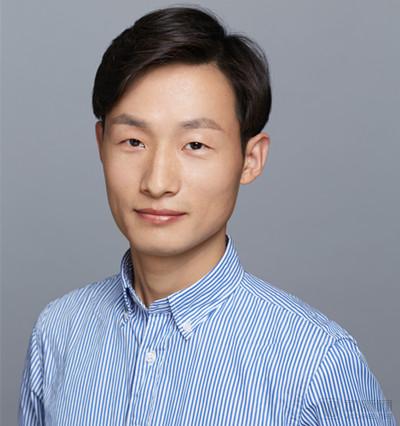
Liu Tengfei, Founder of Fanxing Light Medical Aesthetics
In the eyes of Liu Tengfei, founder of Fanxing Light Medical Aesthetics, the medical aesthetics industry remains a growth market, still in its early stage of rapid expansion and market capture. He stated, “There are two dimensions to assessing an industry’s prospects: first, whether there is a growth dividend, and second, whether there is an M&A dividend. The medical aesthetics market possesses both.”
Specifically, the concept of scientific aesthetic enhancement has taken root among the younger generations born in the 1980s and 1990s, whose trust in and acceptance of medical aesthetic technologies are steadily increasing. “Currently, the scale of illegal clinics is actually two to three times that of licensed institutions, reflecting a situation where demand far outstrips supply. As national policies begin to strictly regulate and crack down on these illegal practices, this segment of consumers will return to compliant medical aesthetic institutions. This shift is one of the key drivers behind the sustained growth of the medical aesthetics industry, representing our opportunity.”
From the perspective of investment and M&A, “there are actually few non-surgical aesthetic medical institutions with high brand recognition in China. Moreover, given the strong regional characteristics of the healthcare services industry, the likelihood of a single dominant player emerging is relatively low. The sector remains in the early stages of consolidation through capital-driven M&A activities.”
Unlike other medical aesthetics institutions that begin their expansion in regions such as Beijing, Shanghai, Shenzhen, and Guangzhou, Fanxing Light Medical Aesthetics launched directly in Xi’an.
In this regard, Liu Tengfei explained, “We began preparing to enter the Xi’an market as early as 2016. The consumer spending power of women in popular cities such as Xi’an, Chongqing, and Chengdu is by no means weak. The service coverage radius and density of non-surgical medical aesthetics institutions are significantly greater than those of traditional plastic surgery hospitals. Entering from second-tier cities also offers advantages in terms of cold start and rapid expansion, particularly in obtaining medical aesthetics licenses and managing costs.”
When discussing the medical aesthetics market in Xi’an, it is impossible to overlook the Fourth Military Medical University and Gaoyisheng, both of which enjoy high brand recognition locally. “We do not currently engage in direct competition with them. Traditional plastic surgery hospitals have lengthy service chains, with the majority of their revenue derived from surgical procedures and dermatology. Minimally invasive treatments occupy an awkward position within general hospitals. In fact, we have collaborated with physicians from the Fourth Military Medical University. The entire medical aesthetics industry is calling for the emergence of a brand that offers quality assurance and serves as a trusted endorsement.”
Reporters learned that large chain brands such as Mylike and Yestar have also gradually entered the Xi’an market. “To some extent, this confirms our initial optimism about the central and western Chinese markets. Fanxing Light Medical Aesthetics positions itself as the ‘Starbucks’ of the medical aesthetics industry, aiming to win over consumers with high-quality, aesthetically appealing, and cost-effective products and services.”
Liu Tengfei revealed that Fanxing Light Medical Aesthetics’ clinics and product packaging all feature a high-aesthetic, social-media-influencer style. “In our product promotions, we avoid the gimmicks used by other institutions—such as offering hair removal experiences for RMB 88 or discounted hyaluronic acid injections at RMB 800 per syringe—to lure consumers into their stores, only to then recommend products far exceeding their actual needs. This kind of experience is truly poor.”
Fanxing captivates consumers by delivering service standards and quality on par with those in China’s first-tier cities—Beijing, Shanghai, Shenzhen, and Guangzhou—at more competitive prices. “By leveraging quickly developed, high-demand offerings to penetrate the offline medical services sector, we can rapidly capture the mindshare of younger users, earning strong word-of-mouth and high customer retention. In essence, we have been consistently capturing market share from the unlicensed or illicit micro-plastic surgery segment.”
Currently, Fanxing Light Medical Aesthetics offers four main categories of services: medical skincare, anti-aging and rejuvenation, minimally invasive contouring and sculpting, and photoelectric and radiofrequency treatments. Both clinics hold the "Medical Institution Practice License" issued by local health authorities, and all procedures are performed by licensed physicians. Each clinic achieves break-even within three months of opening, with locations primarily situated in commercial districts and near high-quality residential communities.
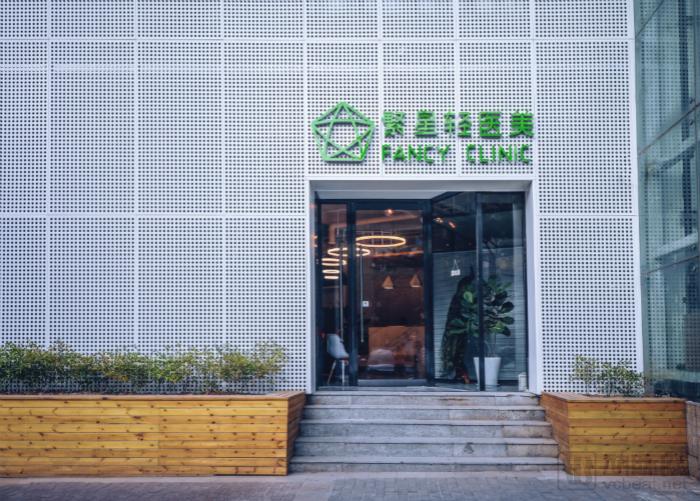
The decor style is light luxury and exquisite.
“All of our services have clearly marked prices, ensuring complete transparency in billing. All medical supplies are sourced through legitimate channels and carry CFDA certification with batch numbers. We are committed to treatment safety, price transparency, and the authenticity of our medications,” said Liu Tengfei.
Although acceptance of medical aesthetics is growing, it remains a form of affordable luxury consumption. “Moreover, it involves high-stakes decision-making; consumers will not risk injecting their faces simply because one clinic offers a discount of 100 yuan. For comprehensive plastic surgery hospitals, minimally invasive procedures and dermatology services are typically used as customer acquisition tools. However, when making actual choices, consumers do not base their decisions solely on price. High-involvement purchasing decisions test an institution’s comprehensive service capabilities and cost-performance ratio. It is not yet time for price wars.”
“In establishing standardized SOPs and managing memberships, we draw more inspiration from Starbucks; in product packaging and positioning, we may learn from Xiaomi through an internet-centric lens; and in controlling service details and processes, we look primarily to Haidilao. By integrating the strengths of each, we recognize that blindly replicating the traditional practices of conventional plastic surgery hospitals holds no future for light medical aesthetics.”
At the operational center of Fanxing Light Medical Aesthetics, personnel from the traditional medical aesthetics industry account for no more than 20%, while the remaining 80% are young professionals with cross-industry internet experience. “No construction without destruction.” Our philosophy, mindset, and positioning differ entirely from those of traditional medical aesthetics hospitals. Although conventional customer acquisition channels, such as beauty salon referrals, may drive explosive short-term growth in performance, we consider this model distorted and unsustainable.
The reporter learned that Fanxing Light Medical Aesthetics does not engage in partnerships through traditional beauty salon channels. “We focus on high cost-performance, aesthetic appeal, and high quality, passing profits directly to consumers. Fanxing Light Medical Aesthetics never advertises in elevators, on public buses, or on television. Of course, we have a professional e-commerce operations team managing our online presence on platforms such as Dianping, SoYoung, and Douyin. We also regularly conduct cross-industry collaborations with offline institutions, including postpartum care centers, banks, and automotive 4S dealerships.”
Liu Tengfei also revealed that, in the process of establishing standardization, Fanxing Light Medical Aesthetics has conducted extensive exploration and adjustments based on its specific operational circumstances. “Large-scale plastic surgery hospitals often occupy 3,000 to 5,000 square meters and employ 200 to 300 staff members. This asset-heavy model is difficult to replicate rapidly in other regions and incurs high management costs. In contrast, Fanxing’s single-clinic model adopts an efficient small-team approach, with the total number of doctors, nurses, receptionists, consultants, and the operations director kept within 10 to 15 people.”
In addition, Fanxing Light Medical Aesthetics has spun off functional departments such as marketing and customer acquisition. “These functions are not housed within individual clinics but are centralized in an operations center. In the future, we will establish one operations center in each province to support 5–8 offline clinics within that province. The operational director of each standalone clinic is responsible for the day-to-day management and operations of their respective location. Customer acquisition is continuously driven by traffic referrals from the headquarters’ operations center, allowing the operational director to focus solely on delivering high-quality service to incoming customers, improving retention, and boosting engagement. Our management structure is highly flat, representing an innovation in the industry that significantly enhances the operational efficiency of individual clinics.”
After exploration and reform of its organizational structure, Fanxing Light Medical Aesthetics has established the standardized prerequisites and foundation for rapid replication and expansion. “At present, our strategic direction is sound. By staying true to the essence of medical services, we have found this management model to be highly effective in practical operations. The synergy between the Operations Center and the light medical aesthetics clinics has optimized institutional efficiency.”
In China’s current capital market, A-share listed specialty medical chains such as Aier Eye Hospital and Topchoice Medical have demonstrated strong performance, with valuations reaching tens of billions of yuan. Liu Tengfei believes that “within the next five years, light medical aesthetics chains will also join the ‘tens-of-billions club,’ as they possess the characteristics of high frequency and high ticket size, along with conditions conducive to rapid chain expansion. Moreover, light medical aesthetics strategically isolates non-surgical procedures—including minimally invasive treatments and skin care, which account for 70% of the medical aesthetics industry—while selectively excluding the remaining 30% of more complex and difficult-to-standardize surgical procedures.”
However, Liu Tengfei also shared his perspective on the somewhat chaotic market: “The term ‘light medical aesthetics’ has become overused to the point of cliché. Many skin management centers and beauty salons have simply rebranded themselves as light medical aesthetics providers. I maintain a calm and composed attitude toward this phenomenon, viewing it as the inevitable growing pains during the industry’s consolidation phase. We do not strictly differentiate between traditional beauty services and medical aesthetic procedures in our marketing. We firmly believe that user needs should be the top priority for any enterprise. Users do not need to distinguish which treatments fall under traditional beauty care and which belong to medical aesthetics; they simply seek solutions to specific concerns.”
Fanxing Light Medical Aesthetics positions itself as “A Beautiful Space with a Medical License!”
Liu Tengfei stated, “Howard Schultz, the founder of Starbucks, first introduced the concept of the ‘Third Place.’ Beyond home and work, Starbucks serves as a Third Place for leisure and socializing. Fanxing, on the other hand, aspires to become the ‘Fourth Place’ for all women who love beauty. At Fanxing, you can not only receive comprehensive, professional light medical aesthetic services, but also enjoy exclusive member benefits—including complimentary manicures and makeup services. We hope that here you will undergo a beautiful transformation and discover a more confident and perfect version of yourself.”
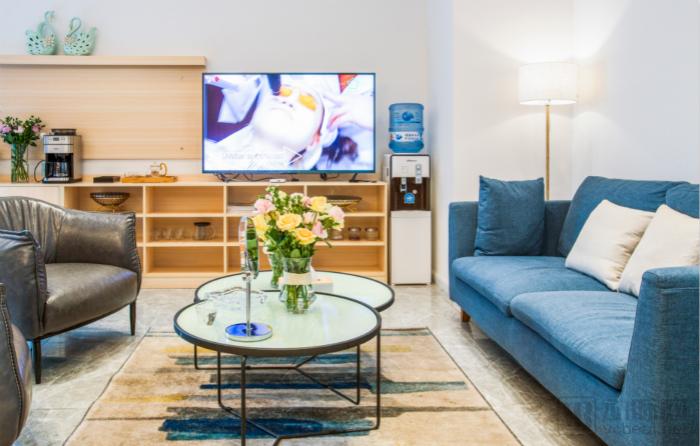
Fanxing positions itself as a “licensed beauty space.”
Regarding the key initiatives for 2018, Fanxing Light Medical Aesthetics will focus its strategic layout and relentless efforts on two core areas: “First, building a sustainable, low-cost customer acquisition capability; second, enhancing the replicability of its single-store business model. Mastering these fundamentals positions Fanxing to potentially grow into a medical aesthetics chain with a scale of 100 locations, akin to Aier Eye Hospital. The market is calling for light medical aesthetics brands that are both warm and distinctive.”