

Aokao Tech Targets Five Key Clinic Needs to Drive Paid Adoption, Expands from Tier-1 Cities with Over 2,000 Clients
What Is the Most Critical Link for a Clinic? Industry Insiders Almost Unanimously Answer: Health Insurance Reimbursement!
Is Digitalization a Prerequisite for Clinics to Connect with the Medical Insurance System?
In the healthcare system, payment is undeniably a critical factor; no private clinic can afford to overlook the complexities of medical insurance. Therefore, integration with the medical insurance system is a primary consideration for new clinic information technology products.
At present, many provinces and cities in China have relaxed medical insurance policies for privately run healthcare institutions. As an increasing number of small and micro medical facilities join the medical insurance system, the government faces growing administrative pressures. Information technology systems can effectively address this challenge. The implementation of such IT systems is a prerequisite for medical insurance integration, underscoring their critical importance.
Unlike the lengthy and rejection-prone process of clinics applying for medical insurance eligibility on their own, health IT companies are faster and more professional in integrating with government medical insurance systems.
Since both medicines and medical services covered by health insurance must adhere to the rule of “declaration first, approval before use,” IT companies, with their greater proficiency in using the system, can help avoid blind or erroneous data entries that lead to repeated rejections.
Furthermore, the government’s convenience services enable clinics to apply online for medical insurance integration. However, a significant number of clinic clients struggle with completing the required documentation, and there is also a need to develop standardized protocols for handling system malfunctions—areas in which IT companies excel.
Aokao Technology, a clinic informatization enterprise based in the Guangdong market with Shenzhen as its core, provides an end-to-end (E2E) solution for clinics’ medical insurance integration.
Leveraging this solution, Aokao Technology provides assistance, guidance, or agency services to clinics across various stages, including preparation of application materials, online appointment scheduling, on-site applications, deployment of information systems, integration testing with government social security systems, and training on the use of medical insurance systems.
It is reported that Aokao Technology was established in the second half of 2017 and currently employs more than 20 staff members. Its R&D team possesses a triple heritage spanning healthcare, internet, and IT industries, comprising professionals from medical software companies such as Tianfangda, well-known healthcare internet platforms like Jiuyi 160, and major IT corporations including Huawei, Lenovo, and Microsoft. The medical advisory team consists of chief experts from renowned Grade III Class A hospitals in China, health system officials at the local level, and information department personnel from public hospitals.
As the General Manager of Aokao Technology, Zhang Yu previously worked at Huawei, where he was engaged in wireless product R&D, project management, and product sales. He subsequently held several senior executive positions, including Senior Consultant at Jiuyi 160, Assistant to the Chairman of Guokang, and General Manager of the Minkang Business Unit at Tianfangda.
As co-founders and key technical personnel of the company, Liu Wenkui and Zheng Jianfeng both possess over 10 years of experience in software development and technical management. Previously, they served as Senior Software Engineers at prominent enterprises such as Huawei, Lenovo, Microsoft, and iSoftStone.
In February 2018, version 1.0 of the Aokao Clinic Manager Cloud HIS platform was officially launched. In March, the company achieved monthly profitability, and it is expected to continue generating monthly profits in April.
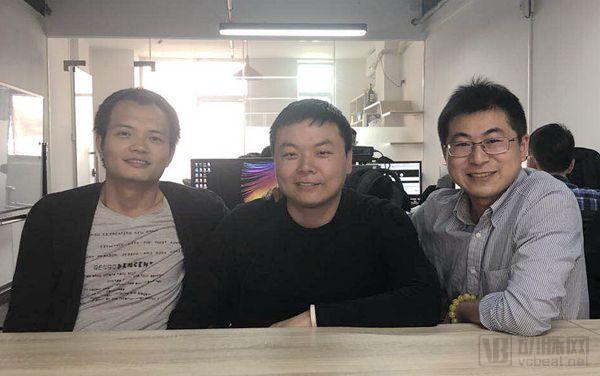
The founding team of Aokao Technology (right: General Manager Zhang Yu; center: Technical DirectorLiu Wenkui, Senior Technical Manager (left)Zheng Jianfeng)
Start by breaking into first-tier cities.
Currently, Aokao Technology’s primary markets are focused on first-tier cities and provincial capitals. Zhang Yu stated, “This market strategy is based on the generally low level of informatization in grassroots clinics, which requires physicians to change their usage habits. Relatively speaking, it is more suitable to start with first-tier cities and provincial capitals.”
In first-tier cities, physicians generally possess a strong awareness of health information technology, resulting in lower customer education costs for enterprises. However, in second- and third-tier cities, these education costs are relatively higher. As one moves further down the market hierarchy, education costs increase, making market expansion more challenging. Nevertheless, with the inclusion of clinics in medical insurance and the New Rural Cooperative Medical Scheme (NRCMS) programs, health IT has gradually become an essential prerequisite for payment processing.
Medical insurance payment procedures and conditions vary across different cities and provinces. Zhang Yu told reporters that Aokao Technology has already integrated with the government social security system, which is the most complex in terms of technical requirements. Although medical insurance payment processes differ from city to city, their core workflows are largely similar.
In response, Aokao Technology has established a dedicated medical insurance project team to focus on the development of interfaces for medical insurance systems in various cities, prioritizing development based on the company’s strategic positioning of each city.
How to Persuade Clinics to Pay?
Private clinics are required to pay for information technology products; without addressing absolute pain points, it is inevitably difficult to persuade them. Therefore, to encourage users to willingly pay, Aokao Technology has prepared these five compelling offerings:
First: Requirements for integration with the medical insurance system. Clinics must have an information technology system in place to apply for designation as a medical insurance provider.
Second: Operational and management needs. For example, in chain clinics or individual clinics (outpatient departments) with more than ten staff members, information systems can enhance managerial transparency, reduce labor costs, and simplify the calculation of physicians’ performance metrics.
Third: Learn from the expertise of specialists. The greatest difference between Aokao Technology’s information system and similar products is that it embeds the outpatient clinical experience of renowned experts into the system, empowering primary care physicians to engage in self-directed learning during their daily practice.
Fourth: The need to align with the management standards of large hospitals. For physicians who have left the public healthcare system to start their own ventures, they are already accustomed to using information technology systems, which are essential tools for this group of doctors when establishing clinics.
Fifth: Marketing needs of clinics. Private clinics place greater emphasis on service and marketing, all of which are based on patient visit data, which also requires the support of an information system.
Building on these five services, Aokao Technology also provides tailored solutions for clinics that have obtained medical insurance reimbursement eligibility and those that do not:
For clients participating in the national medical insurance program, the company primarily provides specialized training and guidance on regulatory compliance to help them avoid penalties resulting from operational errors. For non-insurance clients, the company focuses on delivering professional exchanges and training in clinical and technical areas, while optimizing system usability to enable faster prescription writing by physicians and more efficient management of pharmaceutical inventory and distribution.
Differing Needs of Traditional Clinics and New-Model Clinics
Currently, primary care clinics mainly fall into two categories. One category comprises self-established clinics, which are predominantly single-entity chains, although the trend toward small-scale chain operations is on the rise. Most chain clinics operate fewer than 50 locations, and there is no absolute market monopolist. Industry pioneers are evolving from single-specialty practices toward multi-specialty models, encompassing internal medicine, pediatrics, gynecology, dentistry, ophthalmology, traditional Chinese medicine (TCM), dermatology, proctology, and medical imaging.
Another category comprises community clinics within the government system, including urban community health service centers and village clinics.
As the sharing economy concept gained prominence, new types of clinics emerged, such as the multi-site practice platform for physicians established by Xingren Doctor and the first offline clinic launched by Dr. Zhang Qiang’s Physician Group.
From Zhang Yu’s perspective, traditional clinics have two primary informatization needs: first, integration with the national medical insurance system; second, leveraging clinical information systems to learn from expert experience during daily practice.
Entrepreneurial physicians at new-type clinics often come from public hospitals, where they have become accustomed to using information systems. For these doctors and clinics, such systems are a standard infrastructure. Meanwhile, new-type clinics typically demonstrate stronger awareness in patient services and marketing; information systems can manage electronic medical record (EMR) data and provide customer relationship management (CRM) and follow-up tools.
The Future of Clinic Digitalization: Third-Party Laboratory Testing and Pharmaceutical Supply Chain
According to Aokao Technology’s strategic plan, in the coming years, the company will expand its business scope to include third-party laboratory testing and diagnostic services as well as pharmaceutical supply chain solutions, in addition to generating profits through the sale of health informatics software.
Zhang Yu believes that the third-party laboratory testing and pharmaceutical supply chain markets present significant pain points for both enterprises and clinics.
Taking outsourced laboratory and diagnostic testing as an example, clinics often require essential test reports but cannot afford expensive diagnostic equipment. Meanwhile, companies are reluctant to serve this fragmented yet vast market, as individual clinics are geographically dispersed, generate low volumes, and entail high customer acquisition costs.
However, both diagnostic tests and medications are directly reflected in the test orders and prescriptions issued by physicians. Physicians hold absolute dominance within the supply chain system, which makes it remarkably easy for health IT companies to penetrate the supply chain market.
In contrast to the healthcare sector, other industries typically have unified system users and supply chain decision-makers. Consequently, it is extremely challenging for health IT enterprises to penetrate the supply chain market.
As of now, Aokao Technology, which focuses on the clinic informatization market, has acquired more than 2,000 clinic clients. The company has launched its Series A financing round and welcomes inquiries from investment institutions.