

BAT Embraces Blockchain: Exploring Ecosystem and Healthcare Profitability Prospects
The essence of blockchain is a decentralized (or weakly centralized) database, characterized by traceability and immutability. However, few people understand how blockchain generates profit; indeed, even many project leaders struggle to accurately assess the value of their own projects.
It has been nearly a decade since Satoshi Nakamoto introduced the concept of Bitcoin in 2009. Blockchain, the underlying technology of Bitcoin, has gradually become a household term. From the perspective of platform development, blockchain technology has matured; however, integrating this mature technology into a new domain is as challenging as repurposing gunpowder from firecrackers to firearms and artillery.
Currently, the source code of many cryptocurrencies is based on the open-source technologies of Bitcoin and Ethereum. The vast majority of blockchain developers endorse this open-source model, as it significantly reduces their workload and allows them to devote more resources to advancing blockchain development.
However, the distinction between open-source and closed-source is relative to some extent. On April 3, Tencent Cloud released the white paper on its Blockchain BaaS (TBaaS), establishing blockchain services backed by its cloud infrastructure. Although Tencent Cloud adheres to the principle of open-sourcing code, without the support of a powerful platform like Tencent Cloud, other enterprises would find it difficult to utilize the open-source code effectively. Furthermore, it is worth noting that Baidu Financial has long joined the core board of the Hyperledger project under the Linux Foundation, while Alibaba has partnered with PwC to build a transparent and traceable cross-border food supply chain. The BAT companies (Baidu, Alibaba, and Tencent) have already commenced comprehensive strategic layouts in the blockchain sector.
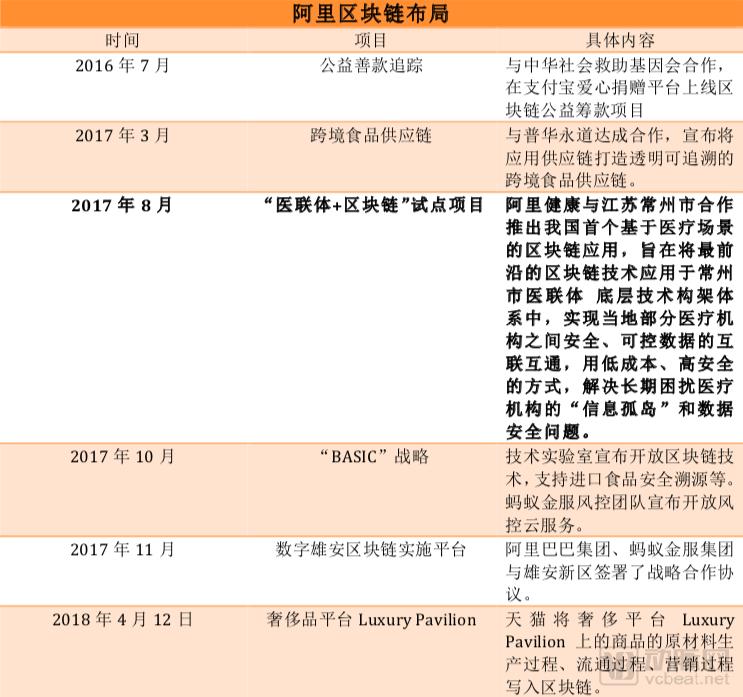
Alibaba's Blockchain Strategy
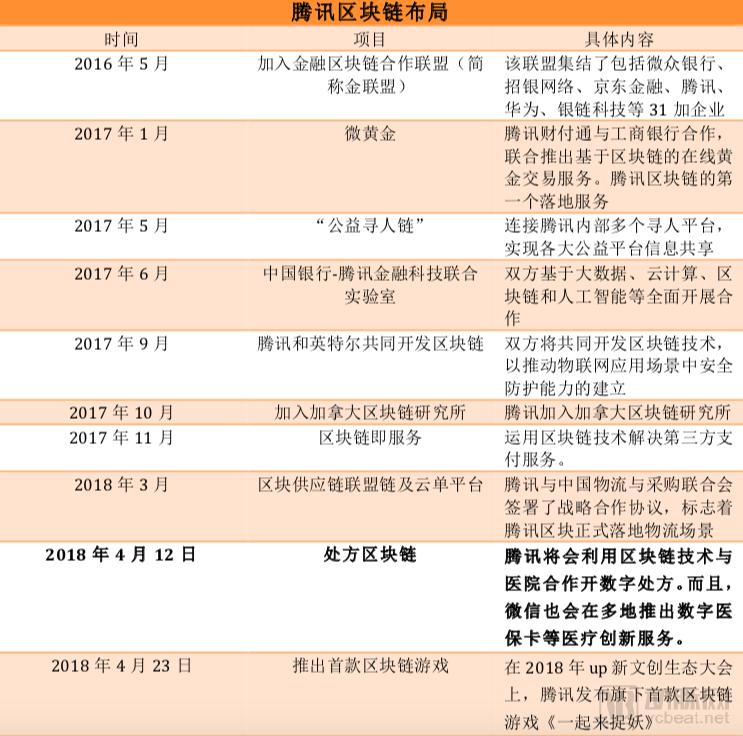
Tencent's Blockchain Strategy
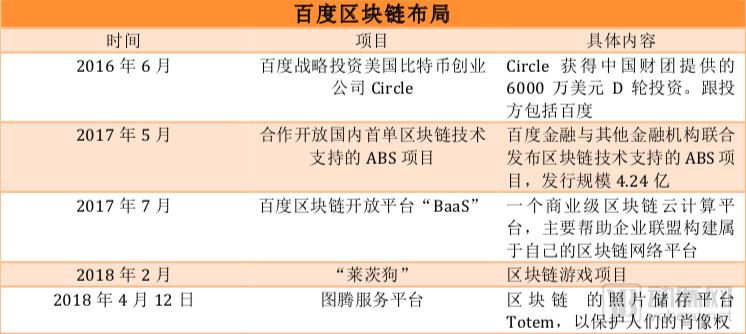
Baidu's Blockchain Strategy
Whether the open-source code model will persist or transition to closed source due to certain disruptive events remains unknown.After all, commerce does not adhere to the laws of thermodynamics; nearly all industries undergo a process of entropy reduction, evolving from dispersed disorder to concentrated order.
As blockchain technology advances at a rapid pace, let us take a step back to examine how blockchain projects around the world actually plan to generate profits.
Why Do Startups Engage in Public Blockchain Projects? Because It Presents an Exceptional Opportunity. Any enterprise has the chance to build an ecosystem that disrupts the existing landscape by leveraging its own philosophy and operations. Within this ecosystem, circulation will be conducted using a currency designated by the ecosystem owner. Since startups hold a certain amount of the currency themselves and reserve a portion for mining, while the total supply remains fixed, the faster the circulation speed within the ecosystem, the greater the demand for the currency. As more transactions chase a limited supply of coins, the currency’s value is bound to appreciate.
However, this assumption is predicated on the currency being a non-fungible asset.Currently, numerous research teams are developing cross-chain technologies to connect blockchains across different domains, ultimately enabling the free flow of currency and data streams before reaching exchanges. In this context, the impact of a currency shortage on a specific chain within the ecosystem may not be as straightforward as described by classical monetary theory; currency prices are unlikely to adhere to simple supply-and-demand dynamics. Designers must address this issue from a macroeconomic perspective.
This is also the most appealing aspect of blockchain projects: everyone has the potential to establish new rules in this emerging field and become administrators of decentralized systems. At that time,The owner of the blockchain will possess the ability to control the economy of the entire sector—dumping or accumulating digital currencies will have a significant impact on the industry.
To date, no company has achieved such a remarkable feat; even the Ethereum Alliance, backed by Ethereum and comprising a stellar lineup of members, has failed to attain a “monopoly” in the blockchain sector. Thus, while startups ostensibly retain opportunities for advancement, the associated legal and policy issues warrant in-depth exploration.
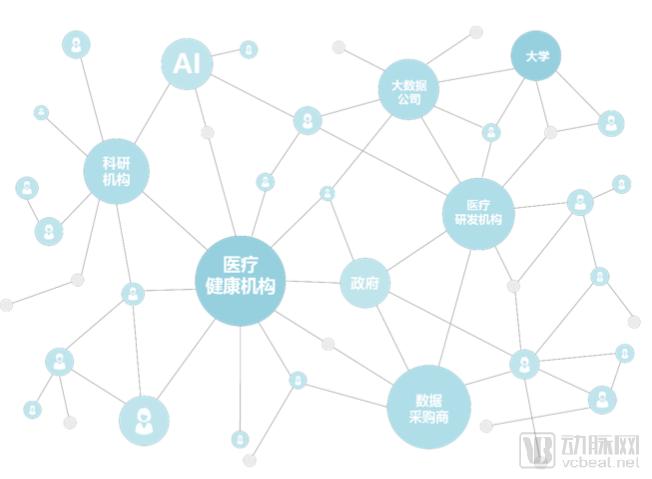
XCARE’s Target Ecosystem (Image Source: XCARE White Paper)
Providing services to enterprises is the primary revenue model for blockchain projects at this stage. Skeptics of cloud storage security are likely to turn to traceable and immutable blockchain service providers in pursuit of maximum data security.
BurstIQ is a blockchain startup that operates a data-sharing platform and the only company to have achieved profitability in the blockchain-plus-healthcare sector. Its core business involves providing clients with data storage and data trading services, thereby generating revenue through service fees and transaction charges.
There are numerous startups in China operating businesses similar to BurstIQ, such as CloudNest Intelligent Connectivity, Boundary Intelligence, and MoLian Technology. While each company possesses exceptional technology, achieving profitability may require greater efforts in operational execution. With Tencent Cloud’s TBaas now entering this space and offering services spanning multiple sectors—including finance, supply chain, Internet of Things (IoT), and healthcare—competition for acquiring and expanding the customer base is likely to become increasingly intense.
Smart contracts are akin to self-executing agreements, where machines, rather than humans, determine the validity of the contract and enforce its execution. In essence, a smart contract is a piece of code; however, the traceable and tamper-proof nature of blockchain technology ensures that this code can operate automatically in a trustless environment. Blockchain serves as the prerequisite for the operation of smart contracts.
In practice, the opportunities for profit generation through smart contracts are extensive. Health insurance serves as a prime example.
The reimbursement process for medical insurance involves a large volume of documents and specialized information, which is often cumbersome, tedious, and difficult for the general public to understand. Patients struggle to determine whether a specific service is reimbursable, how to claim reimbursement, and when it will be processed simply by reading the policy terms. Smart contracts can address these issues in a transparent manner, provided that patients are convinced of the trustworthiness of the underlying technology.
During program execution, smart contracts perform operations such as auditing and classification, eliminating intermediary interference. Records are immune to human tampering and do not suffer from issues like font blurring due to long-term storage. To some extent, however, operators of smart contracts become intermediaries themselves, automatically collecting and disbursing audit fees through the contracts. This specialized intermediary service saves customers significant costs, essentially by enhancing efficiency. This is also why enterprises are actively building platforms: we do not lack efficiency; what we lack is customers.
Beyond the healthcare sector, there is another model: the securities management service offered by Catalyst, MIT’s blockchain project. Targeting users such as fund traders, digital currency investors, and data managers, Catalyst helps them share and organize data to build profitable, data-driven investment strategies.
Throughout the process, Catalyst’s analytical procedures remain anonymous (demonstrating that closed-source models still have a viable niche in the blockchain ecosystem); its clients can only view the portfolio and cannot replicate the trading strategies through free-riding.
This profit model is similar to that of the traditional securities industry, and the healthcare sector can also draw lessons from it. Perhaps one day in the future, all diagnostic procedures could be performed by machines. Unlike the black-box operations common in the financial sector, the entire diagnostic process would be recorded. Machine learning could even enable systems to master diagnostic skills faster than physicians and uncover correlations that are imperceptible to humans.
Many enterprises have established their own specialized domains when building blockchain communities. Take the Nebula Genomics project, led by geneticist George Church, as an example. After consumers avail themselves of Nebula’s gene sequencing services, they cannot pay in fiat currency; instead, they must convert fiat currency into tokens issued by Nebula. As more people exchange fiat currency for these tokens, Nebula has successfully built a blockchain platform centered on genomic data, thereby positioning itself to better deliver precision medicine services.
Overall, this model is grounded in practical technology, generating revenue through offline services at the outset and converting fiat currency from these earnings into tokens. As the project progresses, the platform leverages data accumulated during the initial phase to deliver more precise medical services, diversifying its revenue streams while remaining firmly anchored in the physical realm.
Throughout the entire enterprise operation, the primary role of tokens is to provide incentives; token appreciation is not a concern that geneticists should consider.
Domestic medical blockchain projects also follow the same approach. YiShuLian starts from the relatively narrow field of occupational diseases, leveraging existing resources to build its blockchain initiative. Xcare is also set to launch its own dApp on its proprietary public chain, providing users with tangible medical services.
The original purpose of Initial Coin Offerings (ICOs) was to raise funds through the pre-sale of services in the market. In 2013, early ICO companies emerged in the financial sector, subsequently igniting the entire digital currency market and sparking a wave of speculation. However, this frenzy rose and fell rapidly; between 2013 and 2014, numerous projects collapsed amid hype or were directly deemed fraudulent. According to Engadget data, in 2017, 45.6% of 902 crowdfunding-based digital currencies had failed.
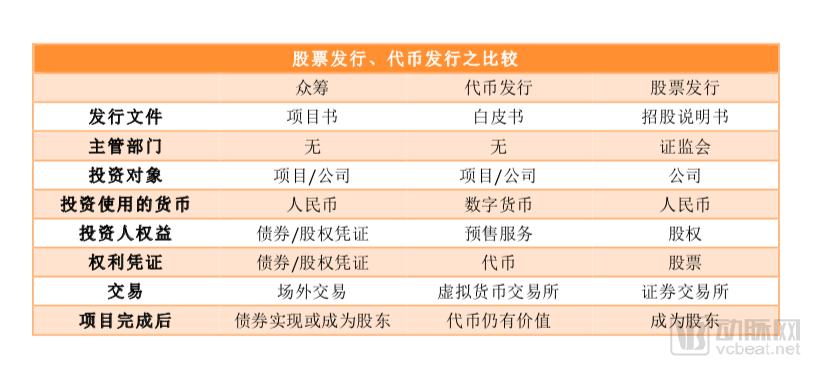
Comparison of Crowdfunding, Stock Issuance, and Token Issuance
Even so, some projects have survived; let us examine the high-quality ones among them.
Medicalchain launched its ICO on February 1, reaching its $24 million cap in less than a day.
Medicalchain’s original intent was to raise funds through an ICO and pre-sell its health services. In reality, however, the vast majority of ICO participants entered with a speculative mindset, with very few actually pre-purchasing medical services for themselves. This did not hinder Medicalchain from achieving its own objectives, as its future service roadmap provided investors with considerable confidence.
In this model, these enterprises (including those building ecosystems) place significant emphasis on the role of tokens. Token appreciation is factored into valuation calculations as part of profitability (although such valuation is nearly impossible to estimate). This is not a scheme of reaping profits without investment; rather, it is essentially akin to a company simultaneously managing financial assets (tokens) and operational assets (services), leveraging the management of operational assets to drive profitability in financial assets. However, if the proportion of “financial assets” becomes excessively large, risks inevitably arise.
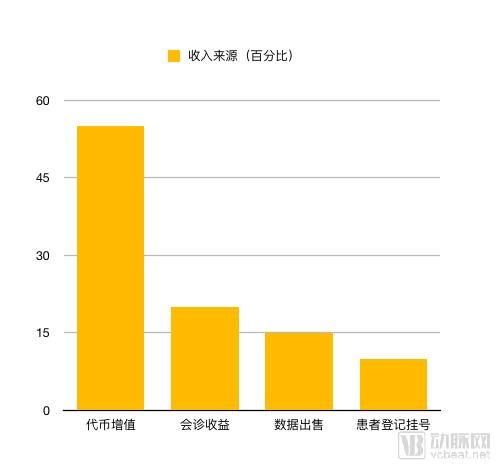
Examples of Profit Models for Leading Domestic Blockchain Projects
In March 2018, Ethereum founder Vitalik Buterin stated, “No one likes to talk about rent, but we must set this precedent.”
As the number of dApps on the underlying network continues to grow, Ethereum’s infrastructure is increasingly overwhelmed, with network congestion becoming a frequent occurrence. This will inevitably lead to either block expansion or the natural selection of dApps. Reform is urgently needed.
To date, no cryptocurrency has found an appropriate model for pricing resources, while Ethereum’s storage leasing undoubtedly represents a solid step toward future profitability for blockchain.
Moreover, this is also the key for blockchain projects to shift from virtual speculation to real-world applications. After all, how can a technology without profitability attract investment?
The foundation of the sharing economy lies in maximizing resource utilization by monitoring available resources and corresponding demand in real time and making adjustments accordingly. For unicorns like Airbnb, which already have mature management models and stable cash flows, their exploration of blockchain is driven by its potential to create a more transparent, efficient, and fair system.
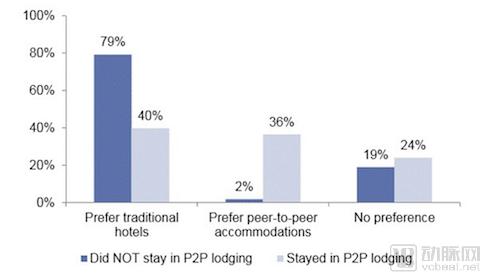
P2P accommodation is currently at the peak of its upward trajectory. According to a survey by Goldman Sachs, many users who have experienced P2P accommodation find it difficult to readjust to traditional hotel stays.
Such enterprises typically adopt private or consortium blockchains. They do not require tokens for circulation, and nodes do not operate anonymously; their focus lies in the blockchain technology itself.
Empowered by blockchain technology, the manual entry of government-issued ID information will transition to secure storage and verification of such IDs. Customers and landlords can place full trust in the content of reviews. Meanwhile, the traceability of comments prevents the deletion of negative reviews and eliminates the possibility of manipulation by paid posters.
In the healthcare sector, new giants are gradually entering the arena. On April 12, the 2018 China “Internet Plus” Digital Economy Summit was held in Chongqing, known as the “Mountain City.” At this conference, Tencent CEO Ma Huateng introduced the concept of the “Prescription Chain” when discussing the practical applications of “blockchain + healthcare.”
Ma Huateng stated, “Tencent and Liuzhou, Guangxi, have pioneered China’s first ‘out-of-hospital prescription circulation’ service, building upon existing WeChat features such as appointment registration and payment. This service enables prescriptions to be issued within hospitals, with medications purchased outside or even delivered directly to patients’ doors. As prescription circulation involves multiple stakeholders—including the National Health and Family Planning Commission, hospitals, and pharmaceutical companies—we have employed blockchain technology to ensure that prescriptions remain tamper-proof. We are also considering promoting the practical implementation of this technology.”
Airbnb and Tencent’s profit models will not change significantly as a result; therefore, their adoption of blockchain is driven by considerations of cost and efficiency, rather than by the aim of generating direct profits from blockchain technology. This model also applies to large domestic and international enterprises such as Baidu, Alibaba, and Alphabet, which are determined not to be disrupted by emerging technologies.
Mao Zemin, the initiator of the XCARE project, stated, “Not only in the healthcare sector but across all industries in the future, there will be only one or two dominant public blockchains; smaller chains will either be absorbed into these major networks or disappear entirely.” This aligns closely with the long-standing business principle of convergence from chaos to unity.
In fact, the future value of a technology lies in the magnitude of benefits it can bring to enterprises. Blockchain technology itself is difficult to make profitable, but if this technology truly develops in the direction described by many white papers, it will be a revolution for the entire industry.
But before that, investors need to stay rational. Let's ask ourselves: Why invest in blockchain technology? Why participate in ICOs?
Tencent and Alibaba have already begun to cautiously deploy blockchain technology within their self-established healthcare ecosystems. On the surface, they show no immediate intention of competing with startups in putting electronic health records (EHRs) or genomic data on the blockchain, but it is only a matter of time.
So, will it be the BAT giants that ultimately control blockchain technology and eliminate token systems, or will startups break through the barriers and successfully build a healthcare ecosystem? Everything is unpredictable. But one thing is certain: blockchain, as a pure technology, holds unlimited potential for development.