

Invisalign Reports $1.3B Annual Revenue and Explores Offline Retail Amid New Product Launches
For Invisalign, the leader in clear aligner therapy, 2018 was a pivotal year.
Currently, the two most widely used invisible orthodontic treatments in clinical practice are lingual bracket orthodontics and clear aligner therapy. The former is theoretically more discreet because it moves the brackets from the labial side to the lingual side of the teeth; however, as a type of fixed appliance therapy, it presents greater technical challenges for placement on the lingual surface.
The latter relies on transparent, removable aligners to achieve orthodontic correction and aesthetic discretion. Invisalign has become synonymous with clear aligner orthodontics and is the flagship product launched by dental industry giant Align Technology. The Invisalign system primarily consists of two components: ClinCheck software and Invisalign aligners.
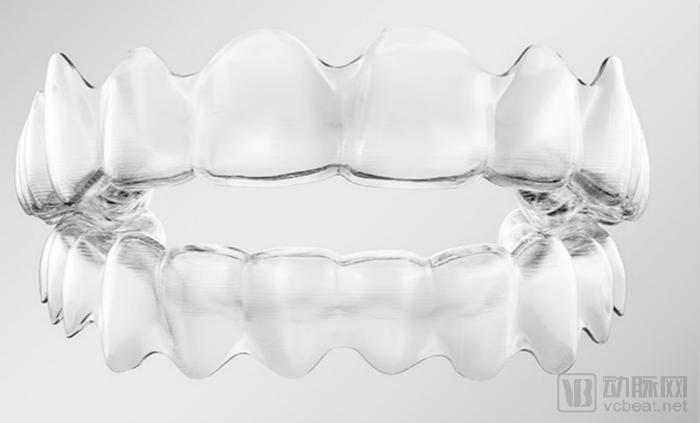
Invisalign Aligners
In 2017, Invisalign generated $1.3 billion in revenue and served over 5 million patient cases, while also opening physical retail stores in California. Joe Hogan, President and CEO of Align Technology, stated that the company’s strategic focus for the year would be on driving international expansion and increasing the adoption of Invisalign orthodontic treatment, particularly among adolescent patients. To gain insight into Invisalign’s strategic layout and planning, VCBeat (WeChat ID: vcbeat) has analyzed its product roadmap, competitive landscape, and the overall state of the clear aligner industry.
Align was founded by two dental laymen. Back in 1997, Zia Chishti and Kelsey Wirth, then students at Stanford University, conceived the idea of using clear plastic aligners for orthodontic treatment. They subsequently raised several million dollars in startup capital and established Align Technology.
In 1998, Invisalign received FDA approval; however, its subsequent business operations did not proceed as smoothly as anticipated. At that time, the clinical outcomes of Invisalign were less ideal than those achieved with traditional metal bracket orthodontics. Coupled with factors such as excessively frequent follow-up visits, gaining public acceptance for this novel treatment modality required substantial investment in promotion and marketing.
Nevertheless, Invisalign’s promotional campaigns clearly achieved tremendous success, and in January 2001, Align successfully completed its initial public offering (IPO) on the NASDAQ.
After years of operation and R&D, its Invisalign® products have gained a firm foothold in 65 countries worldwide, including China. Leveraging more than 400 registered patents in the field of orthodontics, it has left competitors far behind, capturing approximately 90% of the clear aligner market and emerging as both the pioneer and dominant player in the clear aligner industry.Successfully accumulated over 5 million successful casesOver the past decade, Align’s stock price has surged 16.7-fold, with Invisalign contributing 89% of its revenue.
However, starting from October 2017, Align could no longer rest easy relying on Invisalign, as the patent for Align’s Invisalign system had already expired under U.S. patent law.Expired last October, meaning that 40 of Invisalign’s patents are no longer protected, which will deal a significant blow to Align.
The expiration of patent protection is highly detrimental to a company’s development. Competitors, having long awaited this moment, swiftly launch identical products to disrupt the incumbent market once patents expire. This leads to repeated downward pressure on prices for similar products, making it difficult to maintain previous revenue levels—a phenomenon commonly observed in the medical device and pharmaceutical markets.
Throughout Align’s development, it has long encountered competitive roadblocks. In 2004, co-founder Zia Chishti left Align to establish OrthoClear, becoming a direct competitor in the clear aligner market. After extensive litigation with his former employer, Align ultimately acquired OrthoClear in its entirety for $20 million, allowing Chishti to exit smoothly.
Prior to the patent expiration, Invisalign’s primary competitor was ClearCorrect, whose aligners are manufactured using its proprietary wear-resistant material, Zendura, ensuring minimal deformation under occlusal forces.
Unlike Invisalign, ClearCorrect offers patients three orthodontic treatment plans: Limited 6, Limited 12, and Unlimited Aligners. These three plans primarily differ in the number of aligners used throughout the entire treatment process.
For patients requiring only minor adjustments, doctors generally recommend the Limited 6 or Limited 12 treatment plans. These options effectively reduce medical costs, serving as a more affordable alternative to Invisalign. Nevertheless, although ClearCorrect ranks second globally, its market share remains significantly smaller than that of Invisalign.
In August 2017, the Straumann Group fully acquired ClearCorrect, the world’s second-largest clear aligner brand, for $150 million. By gaining a controlling stake in the Spanish clear aligner brand Geniova and completing the full acquisition of Dental Wing, a provider of digital dental solutions, the Group formally entered the field of digital orthodontics.
However, the impending expiration of patent protection is an unprecedented challenge for Align. Rivals eyeing the lucrative clear aligner market are numerous; currently, approximately 30 companies in the United States alone are preparing to enter the field of clear orthodontics.
In the trajectory of Align's development,A key milestone is the acquisition of Cadent. Align previously acquired the Israeli intraoral scanner company Cadent in 2011, a move that generated substantial revenue for Align and represented an inevitable step in the digitalization of dentistry.
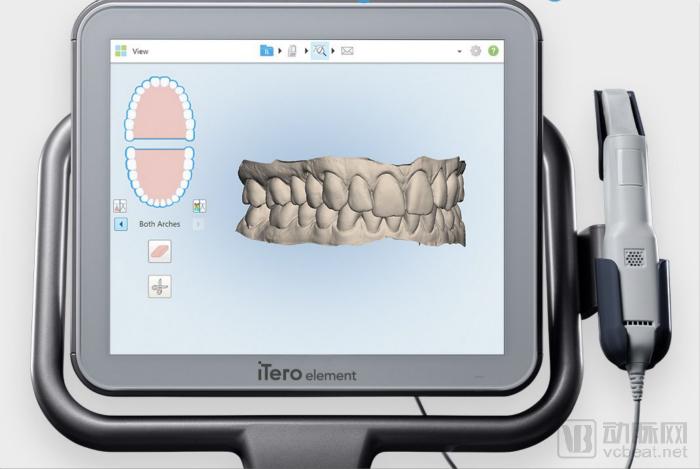
Following the acquisition of Cadent, iTero briefly became the only product on the market compatible with Invisalign aligners.
Traditional clinical orthodontic workflows are often cumbersome. First, patients must have dental impressions taken. The dentist then sends these models to an aligner manufacturer for fabrication. The company scans the physical models, formulates a treatment plan, 3D-prints aligner models for each stage of the treatment, and finally manufactures the custom aligners.
With the introduction of intraoral scanning technology, the process now only requires an initial oral scan; the scan data is then analyzed by the company to design the treatment plan, followed by 3D printing of the aligners, thereby reducing the workload by approximately one-quarter.
This highly advanced technology was once an exclusive offering from Invisalign, but many companies have now announced their entry into the field of intraoral scanning and aligner design software. For instance, 3Shape Dental has developed an intraoral scanner called TRIOS, thereby lowering the technological barrier to entry.
It is reported that an increasing number of dental laboratories are considering purchasing orthodontic appliance design software and specialized 3D printers to fabricate clear aligners in-house, with some dental clinics harboring similar intentions. This trend would enable many clinical institutions to bypass Align Technology and provide end-to-end services independently.
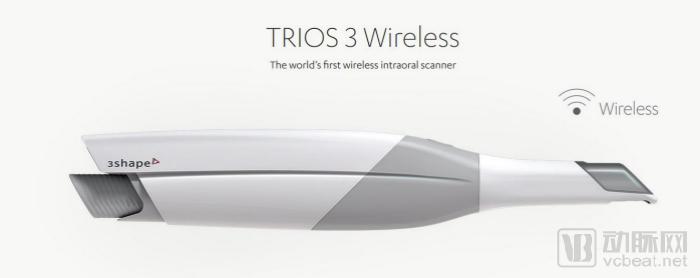
3Shape Dental's TRIOS intraoral scanner
Argen, a company founded in Johannesburg, South Africa, in 1963, initially specialized in X-ray films and precious metal jewelry. In 1985, Argen relocated its headquarters to California, USA, and began selling dental alloys to Germany and China, achieving leapfrog growth thereafter. By 1995, Argen had become the largest manufacturer of dental precious metal alloys in the United States, and by 2005, it ranked first globally in this field, supplying products to 105 countries worldwide.
In 2008, the founder’s son, Anton, took over the company. While consolidating its core business in medical alloys, he also spearheaded expansion into digital healthcare outsourcing services, collaborating with dental laboratories across the United States to provide solutions such as laboratory protocols.In 2011, Argen officially established the Argen Digital Center.。
It is precisely this established industry giant that announced its entry into the clear aligner market in March of this year, with related products scheduled for launch this fall. Notably, the company’s intraoral scanning technology is provided by 3Shape Dental, as mentioned above.
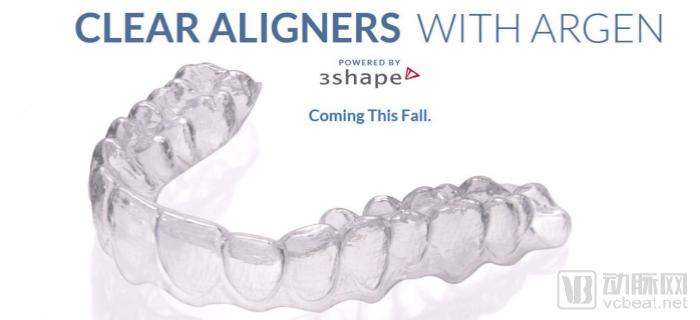
Argen's Upcoming Clear Aligners
In addition to the aforementioned companies, Dentsply Sirona, a century-old dental product manufacturer; Zimmer Biomet, an orthopedic medical device maker with annual revenues exceeding $7 billion; and Henry Schein, a comprehensive healthcare products and services provider that became the world’s largest dental equipment distributor in 1997, have all announced their entry into this fierce competition.
From a technical perspective, the barrier to entry for clear aligners is not particularly high. For industry veterans who have navigated the market for years and already possess substantial technological expertise and distribution channels, producing similar products would be a straightforward endeavor.
In its early years, Invisalign fell into the predicament of spending heavily on marketing without seeing market traction. With the appointment of a new CEO and a shift in operational strategy that precisely targeted dentists and orthodontists with prescribing authority, the company did not achieve profitability until 2004.
For dentists to offer Invisalign products to patients, they must be designated by Align Technology. Dentists are required to undergo basic Invisalign training and gain a thorough understanding of the treatment process and maintenance protocols, thereby integrating both dentists and orthodontists into its distribution network.
Dentists also receive commissions from Invisalign sales, naturally sparing no effort in promoting and recommending it to patients. Since Align Technology firmly controls the final manufacturing of aligners as well as intraoral scanning technology, dentists and Align have formed a relationship that is mutually beneficial yet characterized by mutual restraint.
However, in the face of the crisis posed by patent expirations, Align Technology has recently shown signs of intending to disrupt its relationship with dentists, a move that stems fromThey provide exclusive clear aligner supply to Smile Direct Club.。
SmileDirectClub was founded in 2014. The company aims to bypass dentists and clinics, eliminating the hassle of multiple visits for patients. Patients can take dental impressions at home, after which the company directly ships custom-made aligners based on these molds. By cutting out intermediaries, it also reduces the financial burden on patients.
Align Technology once sued SmileDirectClub for patent infringement. However, the two companies established a partnership in October 2016 when Align announced it would become the exclusive supplier of non-Invisalign clear aligners to SmileDirectClub. Align later invested $46.7 million in SmileDirectClub, acquiring a 17% stake and a board seat, thereby turning a competitor into a partner once again, following its earlier move with OrthoClear.
However, SmileDirectClub’s business model does not align well with the interests of dentists. Last October, a large number of U.S. dentists launched criticisms against Align Technology, arguing that SmileDirectClub’s orthodontic approach bypasses professional dental oversight and X-ray examinations. While it appears to save patients money and effort, it may actually pose many potential risks, such as gingival and mandibular bone recession, and even tooth loss.
Last April, the American Association of Orthodontists (AAO) also filed a lawsuit against Smile Direct Club in 36 U.S. states.
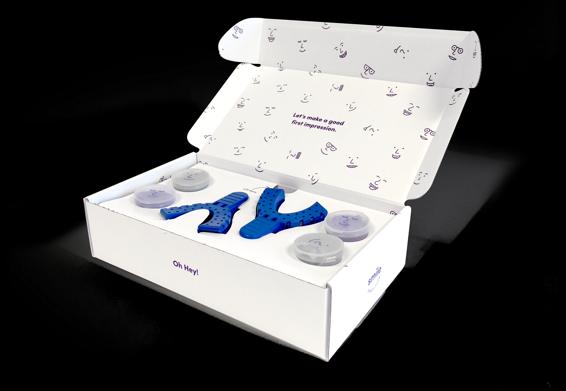
SmileDirectClub Product Schematic
In fact, the interdependent relationship with dentists also serves as an effective barrier for Invisalign against competitors. While rivals can replicate products and technologies, Invisalign has already secured a significant market share in the United States. New entrants face substantial obstacles in gaining dentists’ trust and securing placement in dental practices, which effectively slows the growth of new competitors.
However, the new business model introduced by Align Technology appears to be disrupting the orthodontists' profession, inevitably drawing skepticism from doctors.
Last November, Align Technology opened its first pilot Invisalign brick-and-mortar store in San Francisco, aiming to establish a direct relationship with patients. Consumers visiting the store can receive complimentary digital oral scans, and those who opt for Invisalign treatment will be given priority referral to local Invisalign providers.and provide installment payment plans based on consumer budgets。
Invisalign’s offline stores aim to validate, through personalized communication with consumers, theRetail MethodsCan providing consumers with Invisalign treatment information and intraoral scans further shorten their purchase cycle?
Such a pilot program can also be understood as Align’s attempt to implement a new commercial marketing model. In response, SmileDirectClub issued a statement alleging that Align had violated the non-compete clause between the two parties. However, Align maintained that this pilot would not affect SmileDirectClub’s projected revenue for 2018.
From an outsider’s perspective, it is understandable that Align has adopted a new business model to sustain its growth after the expiration of patent protections (since 2018, an average of 23 Align patents have expired annually). However, this shift is difficult for dentists and SmileDirectClub to accept in the short term. Beyond patent issues, Align appears to be facing challenges on multiple fronts.
Of course, Align still has its own strengths. Over the years, Invisalign has accumulated a substantial patent portfolio. The 40 early patents that expired in October 2017 represent only a fraction of this portfolio; another 28 patents are not set to expire until 2028. Moreover, the expiration of the older EX30 material is irrelevant, as the currently used new material, SmartTrack, is not covered by the expired patents.
Align’s President and CEO Joe Hogan confidently stated, “Our competitors’ technology is likely a decade behind ours.”
In addition to having a substantial financial cushion, Align is actively innovating its product portfolio. On April 4, Align simultaneously launched three new products and service models.
The first initiative was the launch ofThe all-new Invisalign Clear Aligner Package offers patients greater choice and flexibility., further expanding the patient population for its own products.
Starting July 1, 2018, doctors can offer patients customized Invisalign treatment plans, a package model similar to that of its competitor ClearCorrect. Invisalign primarily offers four plan options: Lite (5 aligners, available only in North America), Moderate (7 aligners), Comprehensive (14 aligners), and Unlimited Comprehensive.
The second initiative was the launch of “Invisalign First”, clear aligners specifically designed for young children aged 6-10, this type of early orthodontic treatment intervenes before all of a child's permanent teeth have erupted, with the aim of preventing more severe dental problems from developing as the child grows.
For such young patients, whose teeth are smaller, crowns are shorter, and anatomical structures differ significantly from those of adults, targeted solutions and specialized products are required. As a result, Invisalign First offers many unique features:
1. The addition of SmartForce® features makes Invisalign more suitable for younger patients with shorter clinical crowns, enhancing the predictability of arch form development;
2. Utilizes SmartStage® technology to facilitate dental arch development and maximize treatment efficiency;
3. Utilizes SmartTrack® aligner material, offering greater comfort and suitability for children by applying gentler, more constant forces to the teeth.
To date, more than 600 young patients have undergone Invisalign First treatment. Starting in July 2018, Invisalign First will be officially launched for commercial use in North America, Australia, Japan, and Europe.
The third item is the release ofVivera Post-Orthodontic Retainers with Precision Bite Ramps, this is the first customizable retainer on the market that can assist in the treatment of deep overbite. The introduction of the Precision Bite Ramps feature originated from Align Technology’s Invisalign G5 Innovations released in 2014, primarily aimed at improving the efficacy of Invisalign in treating deep overbite.
Vivera retainers differ from traditional retainers by utilizing the same advanced technology as Invisalign aligners. They are fabricated using state-of-the-art intraoral scanning techniques and proprietary clear materials, ensuring aesthetic appeal and comfort while maintaining the durability expected of a retainer. Vivera retainers are suitable for patients regardless of whether they previously underwent treatment with Invisalign aligners.
“I am delighted by the continuous expansion of the Invisalign product line,” said Raphael Pascaud, Chief Marketing Officer and Senior Vice President at Align Technology. “This provides our customers with more flexible options, enabling us to easily meet the diverse needs of patients. Invisalign not only leverages the world’s most advanced intraoral scanning and imaging technology but also offers patients the widest range of aligner combinations. Integrated with our proprietary digital workflow, Align Technology delivers unique end-to-end solutions for patients.”
Once a monopoly is broken, it is difficult to reestablish. Faced with disruption from numerous competitors, even a powerhouse like Invisalign must remain vigilant. For patients, competition among manufacturers will further drive technological innovation and service improvements, while also reducing product premiums. Let us wait and see what new landscape will emerge in the clear aligner market and whether Invisalign can successfully establish its own new model.
References:
1. https://www.invisalign.com/how-invisalign-works
2. https://www.drzdds.com/everything-you-need-to-know-about-invisalign/
3. https://mcomiedentistry.com/invisalign-patents-running-out-people-wanting-invisalign-braces/
4. https://marketrealist.com/2018/02/align-technology-and-its-smiledirectclub-partnership
5. http://www.marketwired.com/press-release/align-technology-rejects-smiledirectclub-claim-that-invisalign-store-pilot-constitutes-nasdaq-algn-2246092.htm