

Sumian Files IPO Prospectus: Tapping into the Trillion-Yuan Sleep Health Market with a Non-Pharmacological Insomnia Solution and Closed-Loop Ecosystem
In April and August 2018, the Founding Conference of the China Medical Heart Integration Alliance was held at the Guangzhou Baiyun International Convention Center.
In alignment with the “Healthy China 2030” development strategy, to promote the current concept of “broad health and comprehensive well-being,” to establish an integrated platform bridging non-psychiatric medical fields with psychiatric disciplines, and to foster innovative collaboration and academic exchange under a holistic medical model, thereby advancing the conceptual and practical paradigms of China’s healthcare system toward international trends in modern medicine, the China Medical-Psychological Integration Alliance has been established with joint efforts and support from all sectors.
The conference was presided over by Geng Qingshan, Secretary of the Party Committee of Guangdong Provincial People's Hospital. Academician Fan Daiming, Vice President of the Chinese Academy of Engineering and a renowned medical expert in China, was appointed as the Honorary Chairman of the alliance. Academician Lu Lin, an academician of the Chinese Academy of Sciences and Dean of Peking University Sixth Hospital, was elected as Chairman; Zhao Xudong as Vice Chairman; Geng Qingshan as Secretary-General; and Han Zhenya, Chairman of Sumian Innovation Technology (Shenzhen) Co., Ltd., as Deputy Secretary-General. The conference adopted the "Constitution of the China Medical-Psychological Integration Alliance."
The significance of establishing the Yixin Integrated Alliance lies in enhancing the capacity and quality of health services within China’s healthcare system, promoting the transformation of medical models, and advancing the Healthy China initiative.
The “Healthy China 2030” Outline explicitly calls for strengthened interventions in common mental disorders, such as depression and anxiety, as well as psychological and behavioral issues. Consequently, sleep disorders, which are closely linked to these conditions, are receiving increasing attention and emphasis.
Sleep is a critical function of the brain, regulated by circadian rhythms and homeostasis, and has a significant impact on learning, work, and memory. Like eating and drinking, sleep is an indispensable basic life activity for humans, closely linked to physical and mental health as well as quality of life.
Overall, the sleep status of the Chinese population is far from optimistic: statistics from the Chinese Sleep Research Society show that as many as 38.2% of Chinese residents suffer from varying degrees of insomnia, over 300 million Chinese adults experience sleep disorders, and 24.6% fail to meet adequate sleep standards. Meanwhile, the growing number of individuals with insomnia in China has also spurred the rapid development of the country’s sleep medicine and services industry.
The sleep health industry can be divided into four major categories: sleep health supplements, sleep medications, sleep products, and sleep services. According to data from CICC Qixin International Consulting, by 2015, the domestic sleep health industry had reached a scale of RMB 211.4 billion, with a compound annual growth rate exceeding 16%.
As of 2017, the sales volume of China’s hypnotic drug industry reached 1,670.51 tons, a year-on-year increase of 4.7%; as of 2015, the demand for sleep aids in China amounted to 1.5587 million units, a year-on-year increase of 10.4%.
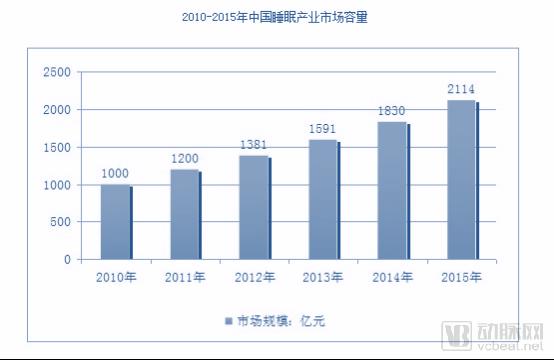
Data Source: CICC Enterprise Information International Consulting
As the capacity of China’s sleep industry continues to expand, businesses of all kinds are vying to enter the sleep healthcare and services sector, leading to a proliferation of diverse products aimed at improving sleep. However, the side effects and addiction risks associated with hypnotic medications, along with the conceptual nature and inefficacy of many sleep-aid devices, have become significant issues that the industry cannot ignore.
Addressing the current market pain points in China’s sleep industry, Sumian Technology was established to pioneer a new paradigm in sleep medicine and provide non-pharmacological medical solutions for patients with insomnia.
At the conference, Qu Di, Product Manager at Sumian Innovation Technology (Shenzhen) Co., Ltd., delivered a keynote address titled “Prospects for Brain Modulation and Stimulation Technologies.” He presented to nearly 300 renowned experts and physicians in sleep medicine, psychology, and mental health from more than 30 provinces and municipalities across China as well as from abroad, elaborating on the original vision and development journey of “Sumian Device,” a disruptive technological product in the sleep healthcare market, along with the principles of non-invasive brain activity intervention using dynamic magnetic fields and its significant clinical efficacy.
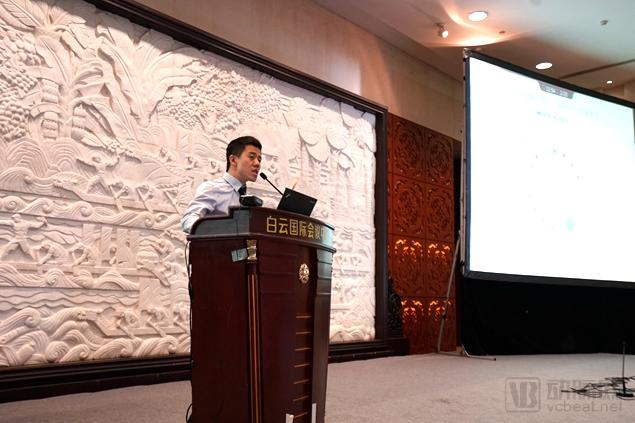
Qu Di, Product Manager at Sumian Innovation Technology (Shenzhen) Co., Ltd.
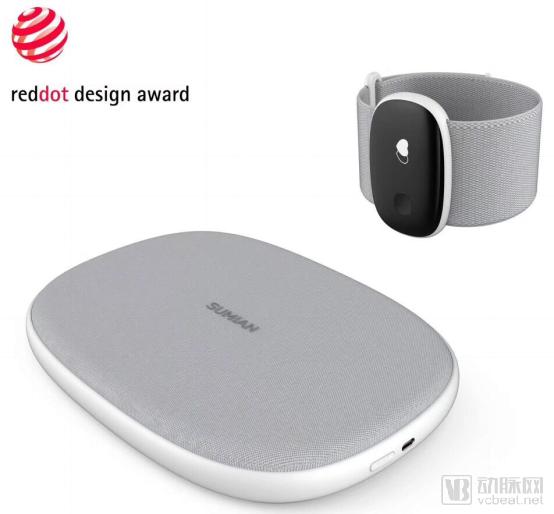
Upholding the belief of “integrating sleep resources to improve quality of life,” Sumian Technology’s expert R&D team, guided by the principle of “non-invasive energy medicine therapies,” spent nearly four years developing three proprietary core technologies: targeted technology for transcranial magnetic stimulation (TMS) therapy systems, miniaturization of large-scale medical-grade sleep monitoring devices, and the construction and operation of a sleep cloud database. The company has established the “Sumian Ecosystem,” comprising the Sumian Device, monitoring devices, a sleep management app, and a Cloud Medical Center. Through a new service model of “sleep monitoring + data analysis + physician intervention + physician follow-up,” it provides customized, non-invasive physical therapy solutions for individuals with insomnia disorders.