

2018 China Internet Plus Digital Economy Summit Kicks Off in Chongqing with Focus on Medical AI and Smart Hospitals
If three years ago “Internet Plus” was merely a concept, it has now become an integral part of our daily lives.
When you ride the Chongqing Yangtze River Cableway, you can pass through the gate within 0.2 seconds simply by using the “Tencent Ride Code” mini-program on WeChat; when you can independently issue invoices by following the Chongqing State Taxation Bureau’s official WeChat account and completing facial recognition verification; when you use WeChat to register for medical appointments, thereby eliminating the hardship of queuing at hospitals... these are all applications of “Internet Plus” in daily life.
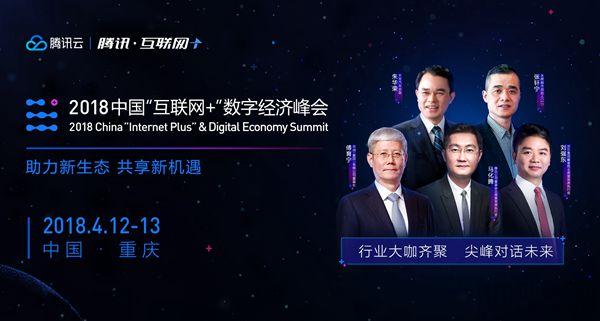
The past year witnessed the deep integration and development of “Internet Plus” with the real economy, with its reach expanding from the economic sector to broader areas such as social welfare and public livelihood. To further advance the development of the “Internet Plus” digital economy, the 2018 China “Internet Plus” Digital Economy Summit is scheduled to be held in Chongqing on April 12–13, 2018. More than 3,000 participants, including government officials, scholars, experts, and corporate representatives from across China, will attend the summit to jointly discuss development trends and innovative achievements across various industries empowered by “Internet Plus.” It is reported that Fu Yuning, Chairman of China Resources (Holdings) Co., Ltd.; Liu Qiangdong, Chairman and CEO of JD.com; Zhu Huarong, President of Changan Automobile; and Zhang Xuanning, Founder of Yonghui Superstores, will also be present at the event.
Twelve Hot Sectors Reveal the Direction of Industrial Evolution
At this summit, in addition to discussing macro-level topics related to the industry at the main forum, corresponding sub-forums were established around twelve currently popular fields to delve into the applications of “Internet Plus” across various industries.
Compared with 2017, the number of sub-forums at this year’s summit has increased, covering major categories in government affairs, manufacturing, and public livelihood. This demonstrates that “Internet Plus” has expanded from the economic sphere to all sectors. Diverse stakeholders across various fields—including government agencies, public utilities, and traditional enterprises—have become key actors in embracing “Internet Plus” and driving digital transformation.
In addition to the sub-forums on e-government, police affairs, mini-programs, tourism, mass innovation, and cloud computing that were already held last year, this year’s sub-forums have added new topics including smart cities, smart retail, finance, education, and WeCom.
Taking the Medical Sub-forum as an example, it has been further divided this year into two sub-forums: “Medical AI” and “Smart Hospital.” The Medical AI sub-forum will provide a comprehensive overview of the applications and achievements of artificial intelligence in the healthcare sector. Distinguished experts from the medical community, including Li Zhaoshen, Academician of the Chinese Academy of Engineering, and Qiao Youlin, Professor at the Chinese Academy of Medical Sciences and Peking Union Medical College, will also attend to share their insights and research findings on the use of AI in early cancer screening and auxiliary diagnosis.
Furthermore, one highlight deserves special attention: Since being selected as a “National New Generation Artificial Intelligence Open Innovation Platform” last year, the “Tencent AI Medical Imaging Open Innovation Platform” has attracted significant external interest. What does it truly mean to join the “national team”? What actions and strategic layouts will follow? At this forum, Tencent will respond to these questions for the first time and announce its future plans. Reports indicate that Tencent intends to invite more industry partners to join forces in advancing research and collaboration in AI + healthcare.
“Smart Hospitals” focuses on the development of digital healthcare, exploring how Tencent leverages AI, big data, and cloud computing to assist governments and medical institutions in building “Internet+ Healthcare” platforms and creating a new medical ecosystem.
Taking the Smart City Sub-forum as an example, technological innovation has provided significant positive momentum for urban development in recent years, while multi-party collaboration has become the main theme in jointly building smart cities and achieving win-win outcomes. Accompanying this trend is the evolution of smart city development from the 1.0 era to the 2.0 era. This forum not only invited government officials, experts, and scholars from various regions to discuss focal issues such as pain points and new approaches in smart city construction, but also launched the book *Smart City 2.0: Technology Reshaping the Future of Cities* in response to the characteristics of the times. It is reported that the book was recently published by Tencent Research Institute in collaboration with the Publishing House of Electronics Industry under the Ministry of Industry and Information Technology, with a foreword written personally by Mr. Ma Huateng.
Other sectors, such as finance and retail, have also emerged as key areas of focus this year. Dedicated sub-forums were established for these industries, featuring prominent guests including Wang Tian, Chairman of Better Life Commercial Chain Share Co., Ltd.; Xiong Xiaoge, Global Chairman of IDG Capital; and Yu Ying, Vice President and Chief Marketing Officer of Carrefour China.
Tencent’s Comprehensive Showcase of “Internet+” Business Capabilities
As the originator and practitioner of the “Internet Plus” concept, Tencent has a clear positioning for itself: a connector. At the 2016 China Internet Plus Summit, Ma Huateng explicitly stated, “Tencent aims to provide the foundational functionality of a connector, with basic components that link services to users, open up the vast data held by the government, address the ‘last mile’ challenge, and facilitate direct engagement with users.” Guided by this positioning, Tencent has consistently participated in Internet Plus applications across various industries as a service provider, offering comprehensive support to the government and its partners. It is evident that the sub-forums at this year’s summit cover diverse fields where Internet Plus is deeply developing, showcasing Tencent’s full range of capabilities in Internet Plus business operations.
In specialized sectors, leveraging its four core capabilities—cloud computing, location-based services (LBS), security, and payment systems—Tencent has actively participated in the application of “Internet Plus” across various fields. For instance, capitalizing on its leading advantages in big data mining and applications, Tencent has collaborated with hospitals to conduct research and cooperation in AI-assisted diagnosis and treatment. Additionally, the first facial recognition mini-program in China’s public security and fire protection industry, jointly developed by the Chongqing Fire Rescue Corps and Tencent, integrates LBS location data, enabling users to precisely locate and report fire hazards in real time through video, voice, images, and text.
It is understood that this year’s Internet Plus Summit and Digital Economy Summit will not only continue to explore strategies for “Internet Plus” integration but also delve into current hot topics. These include the application of WeChat in police services, leveraging intelligent risk control to mitigate financial risks, and new models for online settlement of cross-provincial medical expenses.
We are now in the final countdown to the summit’s opening. On April 12–13, what intellectual exchanges will take place among the attendees? What sparks of innovation will be ignited? How can the macro-level “Internet Plus” concept be effectively implemented? And how can we start from a micro perspective to make people’s lives more convenient and fulfilling? Let us wait and see.