

CMEF 2018 Showcases Digital Health as the New Frontier: 4,100 Exhibitors, 21 Countries, and 600 New Products Unveiled
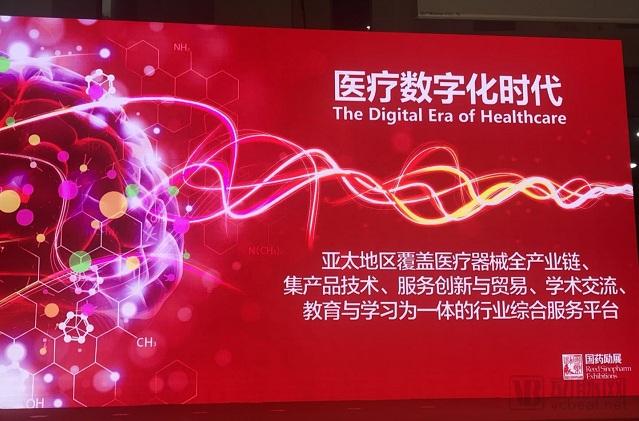
On April 11, the 79th China Medical Equipment (Spring) Fair (CMEF) opened in Shanghai. As the largest healthcare industry exhibition in the Asia-Pacific region, this year’s CMEF is themed “The Era of Digital Healthcare,” providing comprehensive solutions for the medical and hospital construction sectors.
At this exhibition, VCBeat (WeChat ID: vcbeat) dispatched a five-member reporting team to deliver more first-hand information. According to our sources, the current CMEF features 4,100 exhibitors and 21 national pavilions, primarily from China, the United States, Germany, Israel, Italy, India, Turkey, South Korea, and other countries.
The event featured not only upstream enterprises engaged in the R&D and design of medical devices, but also numerous companies from fields such as medical imaging, in vitro diagnostics (IVD), medical electronics, medical optics, operating room and emergency care, rehabilitation and nursing, medical consumables, and disinfection and infection control. It even included cutting-edge smart health enterprises representing the latest trends in AI, IoT, big data, and wearable devices.
As the most bustling platform for new product launches in the Asia-Pacific region, this exhibition saw companies unveil a total of 600 new products. Major industry players such as GE HealthCare, Siemens, United Imaging, Philips, and Hisense Medical all introduced new offerings, particularly in the realm of digital healthcare products and solutions. Following the first day of the event, VCBeat promptly compiled a list of some of the most impressive digital health innovations.
GE: Transforming into a Digital Industrial Company
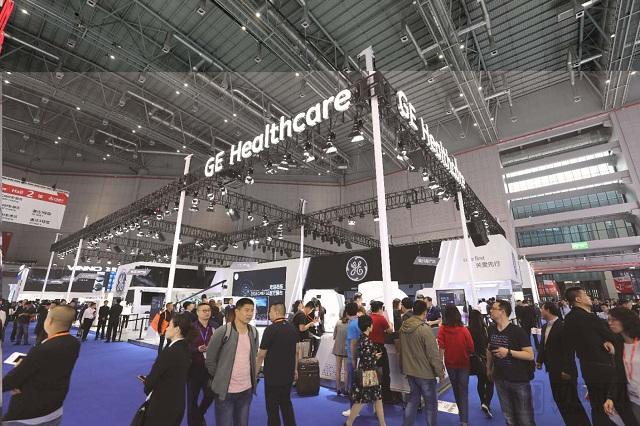
GE is transforming into a digital industrial company, continuously driving the transformation of healthcare models through digital innovation. It helps hospitals and physicians make better clinical and operational decisions, accelerating the decentralization of high-quality medical resources. GE’s digital health strategy in China focuses on three core outcomes: asset operation management, patient clinical diagnosis, and hospital capacity building.
At CMEF, GE launched three flagship digital health applications and solutions:
Asset Cloud Manager:This is a comprehensive intelligent management and optimization solution for medical equipment, customized by GE’s China team to meet local needs, enabling lean management throughout the entire lifecycle of medical devices. The newly launched Asset Cloud Manager features an overall platform expansion and upgrade, integrating cross-brand hospital-wide equipment management, core equipment management, and clinical operations optimization solutions. It further provides support in hospital performance management, efficient operation of core equipment, and precise clinical diagnosis. In particular, the clinical operations optimization solution offers standardized scanning parameters for radiology departments, enabling green, low-dose scanning, which enhances diagnostic capabilities while reducing patient wait times. Sir Run Run Shaw Hospital affiliated with Zhejiang University, the Affiliated Hospital of Xuzhou Medical University, Hunan Provincial People’s Hospital, and other institutions have already deployed the Asset Cloud Manager, achieving an overall 10% improvement in equipment operation and maintenance efficiency.
According to VCBeat, Sir Run Run Shaw Hospital, Zhejiang University School of Medicine, began deploying the Asset Cloud Manager in 2017, achieving “cloud-based” management of more than 14,000 medical devices across the hospital. This system enables staff to report repairs via WeChat, manage work orders, track progress, and view data at any time, significantly improving equipment management and maintenance efficiency. Building on this foundation, the hospital collaborated with GE engineers to innovate and implement an “Allocation Center” model based on the concept of equipment sharing. By tracking equipment location and status in real time, the hospital achieves on-demand allocation of devices, maximizing utilization rates.
Liu Jinchu, Director of the Equipment Department at Sir Run Run Shaw Hospital, stated, “Big data analytics serves as a crucial foundation for guiding and improving our maintenance and quality control operations. By employing data modeling to mine and analyze our accumulated data, we can achieve predictive capabilities. This enhances our operational efficiency, assists in budget adjustment, and delivers a higher return on investment.” It is estimated that after deploying the Asset Cloud Manager, Sir Run Run Shaw Hospital improved its equipment operation and maintenance efficiency by nearly 10% and increased equipment uptime by 17%.
Cloud Imaging Solutions:A patient-centric collaborative platform that coordinates medical resources across different regions, institutions, specialties, and care pathways to improve healthcare services. Leveraging advanced radiology workflows, sophisticated imaging diagnostic tools, intelligent reporting solutions, and a multi-dimensional collaboration framework, this platform enhances service delivery. GE’s cloud imaging solution offers new capabilities for collaborative radiological diagnosis and shared access to examination equipment. Regardless of location, physicians can view, process, and share medical images in the cloud, facilitating external expert collaboration for image interpretation and enabling multidisciplinary consultations. This approach also reduces redundant examinations while improving diagnostic efficiency and accuracy.
Cloud ECG Solution:Cardiovascular disease represents a major health challenge currently facing China, making prevention and control efforts an urgent priority. To ensure the precision, intelligence, and traceability of electrocardiogram (ECG) data, this solution establishes a regional ECG network connecting tertiary hospitals with primary care institutions. It enables standardized ECG data acquisition, AI-driven analysis and predictive assessment, and cloud-based remote diagnosis and treatment, thereby allowing patients to access cardiac diagnostic services from top-tier Grade 3A hospitals locally.
In addition, GE showcased Viewpoint, an intelligent ultrasound medical data management platform. This platform integrates and manages multidisciplinary data in a unified manner, enabling intelligent data retrieval, offline 3D image analysis, risk calculation, and rapid report generation. It helps sonographers significantly improve diagnostic and treatment efficiency, conduct research more effectively, and leads the trend toward intelligent and digital management of ultrasound medical data.
AW Image Post-Processing Platform:This is China’s first comprehensive 3D printing solution for the medical industry, covering the entire workflow from medical imaging to 3D modeling and finally to 3D printing. At the core of this solution is the AW4.7 SmartHub Workstation, which enables observation, comparison, rapid conversion, and accelerated 3D modeling of image data from various imaging devices. STL files can be exported with a single click for direct printing on 3D printers. Compared with traditional methods, the AW+ 3D Printing Comprehensive Solution addresses the most significant challenge in the process from precise imaging to 3D-printed models—direct generation of printable STL file formats—thereby substantially reducing the overall time required for 3D model production and optimizing the workflow.
Philips: AI-Powered Innovations Integrated into Solutions for Four Major Diseases
At this year's CMEF, Philips showcased integrated solutions that apply artificial intelligence technology to four key specialty areas: Chest Pain Centers/Stroke Centers, oncology, respiratory and sleep care, patient monitoring, and maternal and infant care.

Philips also unveiled for the first time a series of products and solutions featuring artificial intelligence technologies, including the Ingenia 3.0T CX intelligent MRI system, the Prodiva 1.5T all-digital MRI system, the UNIQ 2.0 X-ray equipment utilizing Blue low-dose technology, the new Affiniti 30 high-definition general-purpose ultrasound diagnostic system powered by the efficient and intelligent “IntelliSpace” platform, the next-generation high-end dynamic flat-panel fluoroscopy system CombiDiagnost R90, the new high-end floor-standing wireless DR DuraDiagnost F30 digital radiography system, new intelligent ICU solutions, patient-centric ward monitoring solutions, and the Dream Family solution for patients with obstructive sleep apnea (OSA).
The most impressive product in Philips’ latest release is the IQon Spectral CT iPatient AI Platform. As a patient-centric intelligent scanning platform, the new Philips CT iPatient AI Platform achieves breakthroughs in three key areas: intelligent engine, intelligent recognition, and knowledge deduction. The intelligent engine eliminates the need to manually set scanning parameters; users only need to specify image requirements, and the engine automatically matches all scanning conditions. Intelligent recognition features include automatic anatomical region identification and positioning, automatic matching and linking of different sequences after supplementary scans, and automatic detection of abnormal physiological signals. The knowledge deduction system incorporates multiple learning modes within the scanning platform, enabling knowledge-based reasoning throughout the scanning process.
Siemens Healthineers: Over 30 New Products Unveiled
According to VCBeat, Siemens Healthineers showcased more than 30 new products this year, with digital healthcare solutions featuring prominently among its exhibits. Medical big data and health informatics form the foundation of smart healthcare. As a key step in Siemens Healthineers’ strategic deployment in “health informatics,” teamplay integrates the company’s years of accumulated medical technology data and resources, and holds promise for establishing virtual platforms through collaborations with healthcare institutions in the future.
Siemens Healthineers has achieved significant breakthroughs in the field of AI-powered medical imaging. Its AI imaging solutions leverage a big data-driven clinical “disease knowledge base” and an “image processing workflow” developed in accordance with established standards and guidelines, enabling concurrent pre-processing through integrated software before physicians even open the case. The system then automatically generates comprehensive, structured reports that comply with guideline standards, thereby facilitating the implementation of standardized residency training programs.
At the CMEF exhibition, Siemens Healthineers’ integrated, multidisciplinary intelligent laboratory solutions also drew significant interest. Developed to address fluctuating workloads and the evolving needs of expanding clinical laboratories, this solution combines superior performance, adaptability, and intelligent technologies with Siemens Healthineers’ unique expertise in automated business processes. This integration provides laboratories with scalable capabilities for operational optimization, enabling labs of all sizes to adapt to changing demands and achieve optimal productivity.
United Imaging: Three Major Intelligent Imaging Devices + Ten Intelligent Diagnostic Applications
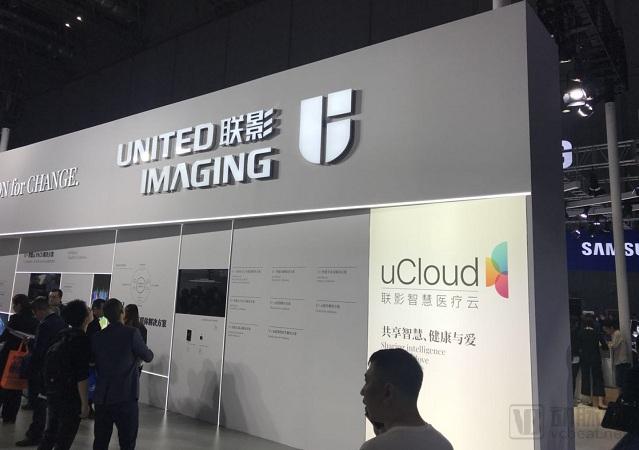
At the CMEF exhibition, United Imaging launched three intelligent medical imaging devices and ten AI-powered diagnostic applications. Notably, the company unveiled uAI, a self-developed, cross-product-line, open-architecture artificial intelligence platform, aiming to empower imaging and radiotherapy equipment as well as the uCloud United Imaging Smart Healthcare Cloud.
The three smart devices are: the Smart SkyEye CT, the Smart LightShuttle 1.5T MRI, and the Smart Digital PET-CT. Powered by AI across the entire imaging equipment lineup, these systems enable intelligent data acquisition and processing. With just a single press, the equipment automatically completes complex scanning procedures, including patient registration, positioning, and parameter adjustment. Furthermore, leveraging intelligent algorithms reduces hardware requirements and scanning radiation doses while ensuring ultra-high image quality.
In the intelligent diagnostics sector, the addition of renowned experts Dinggang Shen and Xiang Zhou has driven remarkable progress in United Imaging’s medical artificial intelligence. Currently, 10 intelligent diagnostic applications cover a variety of diseases and lesions, including lung cancer, breast cancer, rib fractures, osteoarthritis, and coronary artery stenosis. The imaging modalities involved include CT, PET-CT, MRI, and DR.
Hisense: Product Solutionization, Solution Expansion
Hisense Medical has proposed a smart hospital solution this year, comprising three major modules: an intelligent information display system, a 3D surgical planning service system, and smart building management.
Smart Information Display System is the cornerstone of smart hospitals. It primarily comprises eight core subsystems: the Smart Operating Room System, Remote Consultation System, Smart Imaging Review Room System, Medical Staff Management System, Information Publishing System, Queue Calling System, Interactive Entertainment System, and Inter-Departmental Communication System. This integrated approach not only breaks down information silos but also maximizes diagnostic and treatment efficiency for physicians while enhancing the healthcare experience for patients.
Secondly, the 3D surgical planning service system is built upon Hisense’s proprietary computer-assisted surgery system. Leveraging precise 3D reconstruction, it accurately restores the anatomy of intra-abdominal organs (including the liver, gallbladder, pancreas, spleen, and kidneys), lesions, and surrounding vascular systems. As a precision surgical solution, it assists physicians in preoperative precise planning, intraoperative reference, and postoperative evaluation. The system has been adopted by nearly 100 tertiary hospitals, facilitating over 2,000 complex hepatobiliary and pancreatic surgeries.
Finally, smart buildings focus on addressing issues related to security prevention, energy efficiency management, and equipment operation and maintenance, providing comprehensive support for the refined, efficient management and services of hospitals.
In addition, Hisense showcased its star products one by one, including medical displays, medical terminals, medical refrigerators, standalone CAS, standalone SID, and intelligent image reading tools.
The Time for Healthcare Digitalization Has Arrived
During this year’s Two Sessions, Premier Li Keqiang repeatedly mentioned “digital healthcare.” Tencent Chairman Ma Huateng has also been actively discussing digital healthcare, with Tencent investing billions of U.S. dollars in related companies. This suggests that the time is ripe for the digitalization of healthcare.
On one hand, statements from national leaders have addressed the policy bottlenecks hindering the development of digital healthcare, with “Digital China” elevated to a national strategy. On the other hand, digital healthcare technologies have matured, with big data, cloud computing, the Internet of Things (IoT), mobile health, and artificial intelligence extensively applied in medical scenarios. Furthermore, a solid public foundation for digitalization has been established, thanks to comprehensive market education by leading domestic and international internet companies. The market scale for online consultations, remote multidisciplinary consultations, and wearable devices is now dozens of times larger than it was three to four years ago.
More intuitively, at this year's CMEF, we observed thousands of manufacturers launching digital healthcare products, which will tangibly benefit hospitals, physicians, and patients in real-world applications.