

Tencent's Internet+ Healthcare Head Chang Jia Outlines Three-Year Timeline for Widespread Medical AI Adoption and National Platform Mission
From April 12 to 13, the 2018 China “Internet Plus” Digital Economy Summit was held in Chongqing. Themed “Empowering the New Ecosystem, Sharing New Opportunities,” the summit was guided by the Chongqing Municipal People’s Government and jointly organized by the National Party Media Information Public Platform of People’s Daily, the Chongqing Municipal Commission of Economy and Information Technology, and Tencent Company.
At the Medical AI Sub-forum on the afternoon of the 12th, Chang Jia, Head of Tencent’s Internet + Healthcare Center, shared Tencent’s explorations in open innovation and development of medical AI. VCBeat has compiled the guest’s insights.
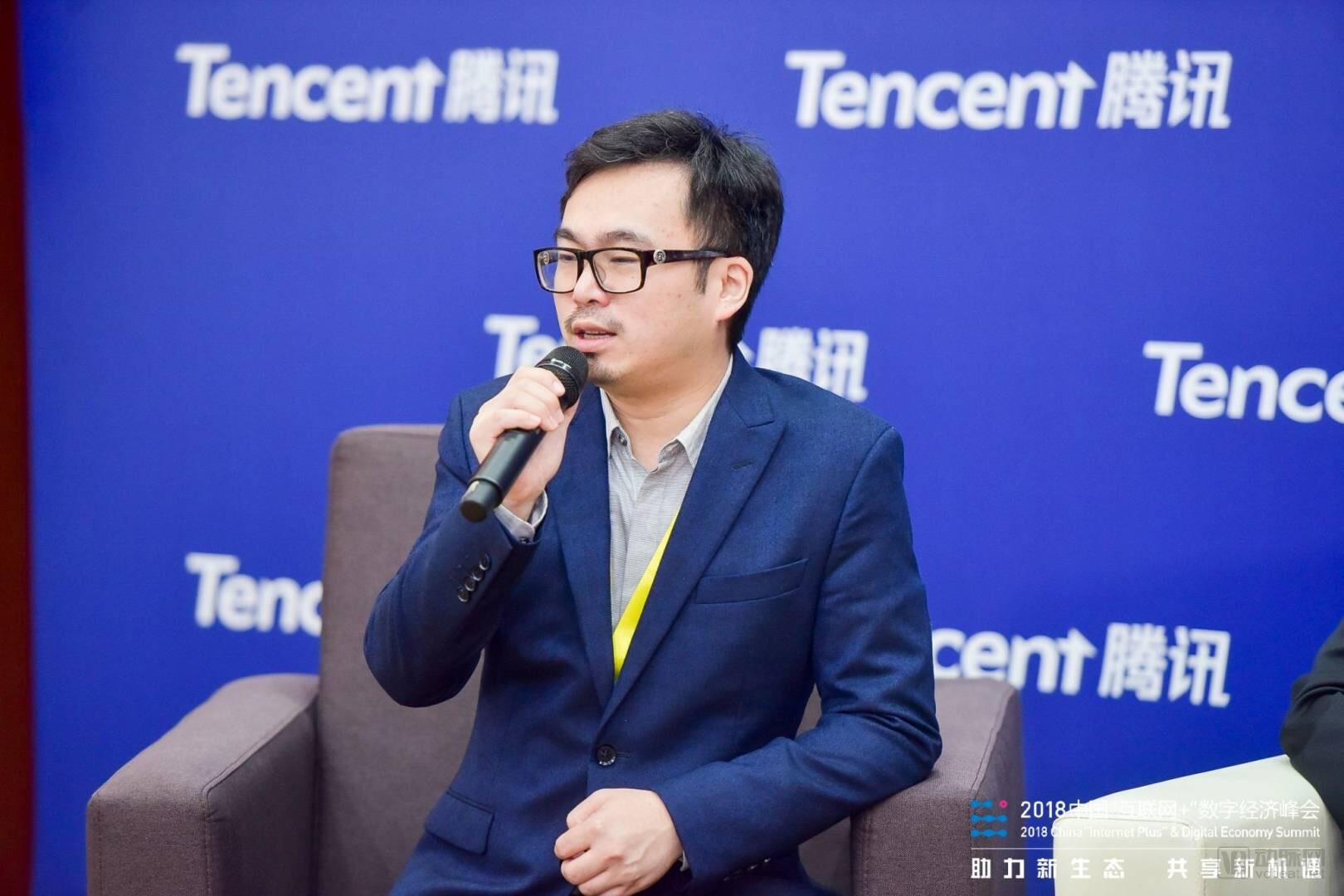
Chang Jia, Head of Tencent's Internet + Healthcare Center
Tencent Joins the “National Team,” Deploying AI Across Major Application Scenarios
In November last year, the Ministry of Science and Technology announced the first batch of national next-generation artificial intelligence open innovation platforms, specifying that Tencent would be responsible for building the National Next-Generation Artificial Intelligence Open Innovation Platform for Medical Imaging.
Since receiving approval to undertake the construction of the national platform, Tencent has actively engaged in open discussions with government authorities and industry partners on platform development strategies, jointly focusing on industrial advancement, with the aim of contributing to the overarching plan for China’s AI theory, technology, and applications to achieve world-leading status by 2030.
Since its inception in 1956, the concept of artificial intelligence has experienced multiple peaks and troughs over more than half a century of development.
In 2006, machine learning algorithms, represented by deep learning, achieved leapfrog progress in fields such as computer vision and speech recognition, with a significant improvement in recognition accuracy.
Since 2016, it has achieved success in specific application areas and gained widespread attention across various industries. Among these, image recognition technology has particularly stood out.
Facial recognition technology is widely applied in fields such as identity authentication and creative culture. In particular, it empowers governments by providing real-name identity verification capabilities for electronic credentials. By integrating with the WeChat ecosystem, a series of globally leading e-government applications have emerged, including Shaanxi’s Electronic Business License, Shenzhen’s Electronic Driver’s License, and the Electronic Social Security Card.
Meanwhile, products that have become highly familiar to the public in recent years—such as intelligent customer service systems, autonomous vehicles, and smart speakers—are also making steady progress across sectors including transportation, education, finance, and entertainment.
Focusing on the healthcare sector, with Tencent Miying as a representativeMedical Imaging AITaking the lead, it has rapidly advanced in multiple fields, including early-stage gastrointestinal cancer screening, pulmonary nodule detection, diabetic retinopathy screening via fundus imaging, and mammography. Meanwhile,Auxiliary Diagnosis Field, by leveraging natural language processing capabilities, inMedical Record StructuringIt is also playing a role in facilitating scientific research and in the prevention and control of risks related to medical record quality. ZhiQ&A systems, virtual assistants, disease monitoring, medical robots, genetic testing, drug R&D...have also developed strong application scenarios.
Optimistically, it will take three years for medical AI to achieve widespread application across the entire industry.
When it comes to medical AI, a hot topic in the industry is whether AI will replace doctors. Tencent has communicated with many practitioners, and the general consensus is that the current basic positioning of medical AI is to assist doctors.
On the one hand, medicine lies at the intersection of humanistic ethics and science, meaning many issues cannot be judged solely through mechanistic logic; on the other hand, medical AI is still in its early stages of development and requires considerable time to continue advancing.
In terms of application scenarios, breakthroughs in cutting-edge technologies depend on collaboration with top medical experts.However, the most widespread application scenarios for medical AI lie at the primary care level. Serving primary healthcare institutions, facilitating universal health coverage, supporting tiered diagnosis and treatment, and promoting early cancer screening will constitute the core use cases for medical AI.
Benefiting from the sustained development of China’s economy and the global leapfrog advancement of internet industries, exemplified by mobile payments and the sharing economy, China’s artificial intelligence industry has also ushered in a historic opportunity for growth.
In foundational technical fields, the number of research papers from China and the United States is roughly on par, with China even taking the lead in some areas, while the quality of research is gradually catching up. Innovation in application scenarios is a particular strength for China. We firmly believe that artificial intelligence, like all previous emerging technologies, will evolve from initial exploration to becoming seamlessly integrated into daily life, subtly transforming everyone’s lifestyle and becoming an essential part of everyday living.
ButThe development of medical AI is destined to be a long-term investment. The human body itself is the most complex subject of study, and medical AI employs machines to simulate human thinking in order to study the human body. Meanwhile, the volume of data samples is not on the same order of magnitude as in other industries, thus necessitating a more extended timeframe.
Regarding the widespread, industry-wide adoption of medical AI, optimistic estimates suggest a timeline of approximately three years, while another perspective anticipates it will take five to ten years.Therefore, the development of medical AI requires concerted efforts from the entire industry, while also leaving ample room for long-term growth for all stakeholders.
Upon joining the “national team,” the new generation of open innovation platforms for artificial intelligence will consist of four major modules.
In 2011, Tencent proposed an open strategy to build an innovation and entrepreneurship ecosystem. Driven by the Tencent Open Platform team, it established a comprehensive open system, evolving from initial traffic openness and underlying technology openness to platform openness and service openness.The total number of partners has exceeded 13 million, creating 25 million jobs, with cumulative revenue sharing surpassing RMB 23 billion. Tencent’s offline innovation hubs have been established in 34 locations across 29 cities, covering a total area of over 1 million square meters.
Leveraging the solid development foundation of the Tencent Open Platform, the “National New Generation Artificial Intelligence Open Innovation Platform for Medical Imaging,” approved for construction by Tencent, will consist of four modules. They are:Innovation and Entrepreneurship, Full Industry Chain Collaboration, Academic Research, Inclusive Public WelfareFour directions.
Innovation and Entrepreneurship
In the area of innovation and entrepreneurship, Tencent Miying, in collaboration with the Tencent AI Accelerator, has opened up Tencent’s AI capabilities,We provide five key pillars of support—AI technology, mentorship, industry resources, market access, and investment—to help AI technologies and products identify more application scenarios.
At the technical level, connecting fromTencent AI Lab, Youtu, Architecture Platform, Tencent CloudAI capabilities, providing learners with access to over 20 cutting-edge AI technologies. Meanwhile,Providing access to over ten million Tencent Cloud resources to help projects reduce computing costs and improve data processing efficiency, thereby supporting project growth.
At the mentorship level, we have assembled top-tier experts spanning the industrial, academic, engineering, design, and investment sectors.Through six months of offline mentorship, providing in-depth product and technical analysis for participants' projects to assist in refining AI products.
Full-Industry-Chain Collaboration
Industrial resources,The accelerator facilitates connections to upstream and downstream AI industry chain resources for projects, including supply chain resources such as chips, industrial design, and manufacturing, as well as scientific research collaboration resources in the healthcare sector.
Participants in the AI Accelerator program will gain access to investment opportunities with Tencent Investment and the “Double Hundred Plan,” while also attracting significant attention from multiple investment firms through the accelerator. Launched in July 2017, the Tencent AI Accelerator has selected 29 projects, whose aggregate valuation has grown from RMB 7 billion to RMB 20 billion. More than 20 of these companies have secured new funding rounds, including two investments directly from Tencent, and over ten have established deep strategic business collaborations.
The healthy development of medical AI relies on every link across the upstream and downstream segments of the entire industry chain. Tencent Miying is actively engaging with various stakeholders to explore application scenarios for medical AI.
Tencent Miying and WeChat Smart Hospital are actively exploring collaborations with Shanghai Pharmaceuticals, Sinopharm, AstraZeneca, and others in areas such as pharmaceutical distribution and cancer prevention and treatment.
Collaborating with Siemens Healthineers, B. Braun, and others to enhance and diversify medical products, explore third-party application development for medical devices, and provide better decision support for clinical diagnosis, surgical assessment, and more.
and,Collaborating with leading players in the healthcare IT industry, such as Hangzhou Zhuojian, Zhiye Software, and Kingdee Medical, to explore how to deliver a smoother user experience for physicians and a more secure information environment for patients within hospital settings.
Academic Research
In the realm of academic research, Tencent will collaborate with medical experts and academic journals both domestically and internationally to advance AI+ healthcare research through joint projects, exploration of cutting-edge applications, and cross-industry academic studies.Li Zhaoshen, Academician of the Chinese Academy of Engineering and Director of the National Clinical Research Center for Digestive Diseases; Qiao Youlin, Professor at the Chinese Academy of Medical Sciences and Peking Union Medical College; Jia Jiafu, Dean of the School of Oncology at Peking University Cancer Hospital, President of the Beijing Institute for Cancer Prevention and Treatment; Zheng Zhongxi, Professor at West China Hospital of Sichuan University and Vice Chairman of the Pathology Branch of the China Association of Medical Equipment; and Jin Zhengyu, Chairman of the Chinese Society of Radiology of the Chinese Medical Association and Director of the Department of Radiology at Peking Union Medical College Hospital, among other distinguished medical experts, have been invited to serve as Senior Academic Advisors for Tencent Miying.。Tencent Miying has also established joint artificial intelligence medical laboratories with more than a dozen top-tier hospitals in China to jointly explore cutting-edge applications.
Furthermore, Tencent AI Lab has entered into a strategic partnership with Springer Nature, a leading international academic and educational publishing group, to jointly promote interdisciplinary research in the field of “AI + Healthcare.” The collaboration aims to integrate global scientific resources and support interdisciplinary cooperation between the healthcare industry and artificial intelligence research through various initiatives, including academic grants, conferences, and talent exchanges. Additionally, Tencent Miying will establish a strategic partnership with AME Publishing Company, an international medical publisher, to co-publish academic journals focused on AI-driven medical research, thereby fostering further advancement in scientific achievements related to artificial intelligence in medicine.
HP Philanthropy
In terms of HP's public welfare initiatives,Following the launch of China’s first public welfare screening program for early-stage esophageal cancer last December, in collaboration with the Jieyang Municipal Government, the Tencent Public Welfare Foundation, and Jieyang People’s Hospital using Tencent Miying, Tencent is set to further advance its new “Technology + Public Welfare” model this year.
Recently,Under the guidance of the Wuxi Municipal People's Government and the Wuxi Municipal Health and Family Planning Commission, Tencent, in collaboration with partners such as AstraZeneca and led by Academician Li Zhaoshen, jointly established the Gastrointestinal Cancer Prevention and Control Center (GICC) platform.,Promote the development of pilot medical consortiums and early gastric cancer screening pilots,Tencent Miying’s AI capabilities will support the Gastrointestinal Cancer Prevention and Control Center (GICC) in implementing a public welfare screening program for early gastric cancer, further advancing the rollout of public welfare early-cancer screening initiatives at primary-care hospitals.
At the recently concluded “Two Sessions,” Premier Li Keqiang emphasized, in his Report on the Work of the State Council delivered to the National People’s Congress, the need to strengthen the research, development, and application of next-generation artificial intelligence and to advance the “Internet Plus” initiative across multiple sectors, including healthcare, elderly care, and education. During the Two Sessions, Mr. Ma Huateng, Chairman of the Board of Tencent, also actively proposed accelerating the application of digital technologies to promote the balanced development of medical resources and service capacity.
The development of medical AI presents a historic opportunity, and the establishment of the National Next-Generation Artificial Intelligence Open Innovation Platform for Medical Imaging is a significant historical mandate. It is hoped that the platform will serve as a “connector,” bridging the innovation chain in medical AI, accelerating cross-disciplinary research between artificial intelligence and medicine, and promoting the overall healthy development of the AI-plus-healthcare industry.