

Premier Li Keqiang Endorses 'Internet + Medical Consortium' Model, Set to Become Dominant Approach for Major Hospitals
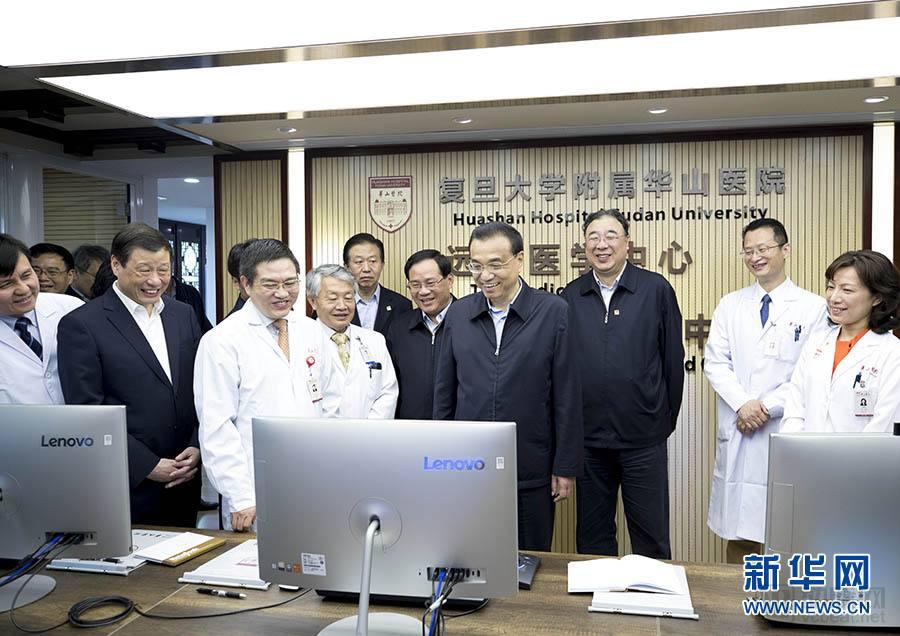
According to Xinhua News Agency, on April 11, Li Keqiang, Member of the Standing Committee of the Political Bureau of the CPC Central Committee and Premier of the State Council, visited Huashan Hospital Affiliated to Fudan University. During the visit, he conducted an on-site inspection at the hospital’s Telemedicine Center to review innovative practices in “Internet+” telemedicine and medical consortiums, emphasizing the need to make high-quality medical resources more accessible to the general public. This marked Premier Li Keqiang’s first inspection tour since his reappointment. Coming one year after the nationwide rollout of new national policies on medical consortiums, the visit provided a significant boost to the “Internet+ Healthcare” sector, with internet-based medical consortiums emerging as the mainstream approach for large hospitals to implement tiered diagnosis and treatment.
At the Huashan Hospital Telemedicine Center, Premier Li Keqiang carefully inquired about the remaining challenges in telemedicine. He emphasized the need to actively develop “Internet Plus Healthcare,” urging health authorities to further tap into the potential of high-quality medical resources and telecommunications companies to prioritize bandwidth upgrades for telemedicine services. This would make top-tier doctors “just a touch away” even for grassroots communities in central and western China, leveraging “Internet Plus Healthcare” to extend the benefits of premium medical resources to a broader population.
Over the past year, the Premier has explicitly called for the development of “Internet Plus” medical consortia on multiple occasions, actively promoting the growth of internet-based healthcare. On April 12 last year, the State Council’s executive meeting deployed comprehensive efforts to build and develop medical consortia. One week later, on April 20, Premier Li Keqiang inspected the construction of the medical consortium at Weihai Traditional Chinese Medicine Hospital in Shandong Province, stating, “High-quality medical resources must be integrated across all levels of care; by leveraging the ‘connectivity’ of medical consortia, we can alleviate the ‘pain points’ people face in accessing medical services.”
Huashan Hospital is a hospital directly affiliated with the National Health Commission. To date, it has established 10 national key disciplines under the Ministry of Education and 20 national key clinical specialties, carrying out numerous innovative practices in clinical disciplines, medical consortia, and “Internet Plus” healthcare. According to media reports, on the same day that Premier Li Keqiang inspected the Weihai Medical Consortium, Huashan Hospital’s “Air Hospital” completed its system integration with WeDoctor’s Wuzhen Internet Hospital, achieving an upgrade in service scope. On that day, it also conducted a “long-distance consultation” spanning five provinces and autonomous regions and six internet-based medical consortium platforms, expanding Huashan Hospital’s service reach from within its partner medical consortia to nationwide coverage across China.
In an interview with CCTV’s “First Time” program, Ma Xin, Vice President of Huashan Hospital, stated that internet technology has enabled the upgrading of traditional medical consortia. By leveraging online collaboration and training, Huashan Hospital aims to extend its advantages in disciplines, talent, technology, and brand to primary healthcare institutions across China, thereby supporting the national tiered diagnosis and treatment system and health-focused poverty alleviation efforts.
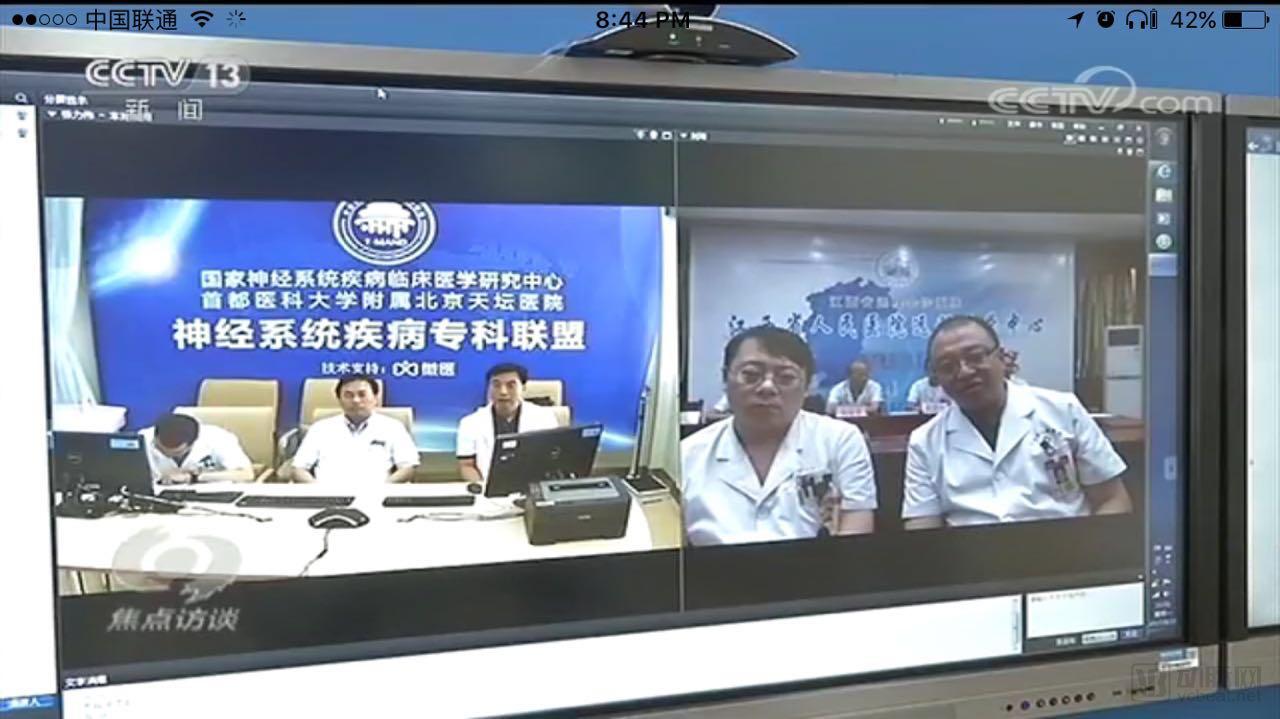
Shortly thereafter, CCTV’s “Focus Interview” program featured an in-depth report on the Internet Plus Specialty Medical Consortium practice implemented by Beijing Tiantan Hospital. On June 24, 2017, Beijing Tiantan Hospital took the lead in establishing the “Tiantan Hospital Specialist Alliance for Neurological Diseases.”
Tiantan Hospital has partnered with WeDoctor to leverage internet technologies in establishing a nationwide internet-based medical consortium for neurology. Currently, the consortium connects 79 member institutions across 31 provinces and municipalities, with an estimated 300 Grade A tertiary hospitals nationwide expected to join the alliance in the future.
China’s largest traditional Chinese medicine (TCM) hospital has also established an internet-based medical consortium. On May 15, 2017, the nation’s first TCM medical consortium was founded in Guangzhou. Through the development of projects such as a teleconsultation center, training center, imaging diagnosis center, laboratory diagnosis center, and patient transfer center, high-quality medical resources—including those of renowned and experienced TCM practitioners—have been decentralized to grassroots levels. This initiative facilitates regional coordination and enhances the service capacity of primary healthcare institutions as well as the overall level of TCM services.
Chen Dacan, President of Guangdong Provincial Hospital of Traditional Chinese Medicine, believes that internet technology can help hospitals break with old traditions, transcend institutional boundaries, extend their service radius, and develop new service models. In particular, among member units of medical consortia and between hospitals at different levels, a patient data integration and sharing platform should be established to enable connectivity via the internet, while ensuring information security.
“Telemedicine and internet technologies can facilitate information flow among institutions within medical consortia, fostering tighter integration and supporting the healthy, sustainable development of these consortia,” stated Zhang Qunhua, Chief Medical Officer of WeDoctor and Dean of Wuzhen Internet Hospital. He noted that the internet-based medical consortium model can effectively advance the implementation of tiered diagnosis and treatment and promote the equitable distribution of high-quality medical resources.
On October 9, 2017, Premier Li Keqiang explicitly required at the State Council executive meeting that, in the process of promoting the development of medical consortiums, greater efforts should be made to leverage “Internet + Healthcare” to address challenges. By employing “Internet+” approaches such as telemedicine, it is possible not only to reform traditional healthcare delivery models and facilitate patient access to medical services, but also to incentivize healthcare professionals and maximize the efficient and flexible utilization of high-quality medical resources.
According to the "Guiding Opinions on Promoting the Construction and Development of Medical Consortia" issued by the General Office of the State Council, all tertiary public hospitals are required to fully participate in pilot programs for medical consortium construction and play a leading role. As of September 2017, nearly 90% of tertiary hospitals across China had joined these pilot programs and achieved mutual recognition of examination and test results among hospitals at the same level. The "Internet + Medical Consortium" model has become the mainstream trend for many tertiary hospitals in building medical consortia. It will continue to promote the downward flow of high-quality medical resources to primary care institutions, ultimately achieving the healthcare reform goal of tiered diagnosis and treatment.