

From Zero to One: Sumian's Non-Pharmacological Approach to Insomnia Treatment via Smart Hardware and Cloud-Based Medical Platform
Among all sleep disorders, insomnia is the most prevalent. According to statistics from the World Health Organization, the global prevalence of sleep disorders stands at 27%. Furthermore, the 2016 sleep survey results released by the Chinese Sleep Research Society indicated that the prevalence of insomnia among Chinese adults reached as high as 38.2%, with this figure continuing to rise year by year.
In terms of treatment, current management of insomnia remains largely confined to the use of synthetic sedatives and hypnotics. Due to the propensity for these medications to cause tolerance, dependence, and withdrawal symptoms, as well as their inherent adverse effects, the search for non-pharmacological solutions for insomnia has become a significant topic in academic circles.
In terms of the market, by 2017, the sales volume of China’s hypnotics industry reached 1,670.51 tons, a year-on-year increase of 4.7%, while the global market size for hypnotics had reached $80 billion. Behind this substantial market capacity for sleep medications lies precisely the opportunity for non-pharmacological treatment solutions.
Addressing the many pain points of pharmacological treatment for insomnia and the market gap in non-pharmacological solutions, Sumian has seized the opportunity to dedicate itself to developing smart hardware for the non-drug treatment of insomnia, providing insomnia patients with personalized and systematic sleep health management services.
Recently, VCBeat interviewed Han Zhenya, Founder and CEO of Sumian Innovation Technology (Shenzhen) Co., Ltd., to explore Sumian’s product architecture and development path.

Han Zhenya, Founder and CEO of Sumian Innovation Technology (Shenzhen) Co., Ltd.
From Industry to Healthcare: The Entrepreneurial Journey
Han Zhenya’s entrepreneurial journey began in 2010, progressing gradually from the initial sales of electronic products to venturing into the medical sector.
After successfully founding Kaiming Technology and achieving annual revenues exceeding RMB 1 billion, Han Zhenya entered the healthcare industry, which boasts a large population base and broad prospects. He sold his independently developed DR imaging systems to more than a thousand hospitals across China, thereby accumulating substantial medical resources.
However, as the core technologies of DR equipment are predominantly held by developed countries in Europe and the United States, domestic independent R&D has lagged slightly behind, and the market has become a red ocean. Therefore, in its fifth year of operating in the healthcare industry, Han Zhenya set his sights on the niche segment of sleep medicine.
Founded in October 2017, Sumian currently has a team of approximately 40 people. Most of its core members come from companies such as Tencent, Huawei, and Mindray Medical. Their previous successful entrepreneurial experiences have brought to Sumian a group of core talents who possess both internet and medical industry DNA. In his view, this is a team with “strong execution capabilities,” capable of rapidly translating theories into products.
From Devices to Services: Building a Closed-Loop Sleep Management System
In the market, sleep health products primarily take the form of smart hardware paired with mobile apps. Differentiating from homogeneous offerings and establishing competitive barriers within the industry has become critical to the development of sleep technology startups. Given their foundation in technology, the core focus must inevitably be on technological innovation.
From Han Zhenya’s perspective, leading sleep technology constitutes Sumian’s core competitiveness. During its first four years in the market, Sumian invested RMB 70 million in research and development, leveraging its accumulated medical and technological resources. Building on clinical feedback regarding the application of pulsed magnetic field technology, the construction of a Sleep Cloud Database, and the mining of sleep big data, Sumian has created an ecosystem integrating the Sumian Device, monitoring devices, a mobile app, and a Cloud Medical Center. This ecosystem establishes a closed-loop service model encompassing treatment, follow-up interventions, and sleep management.
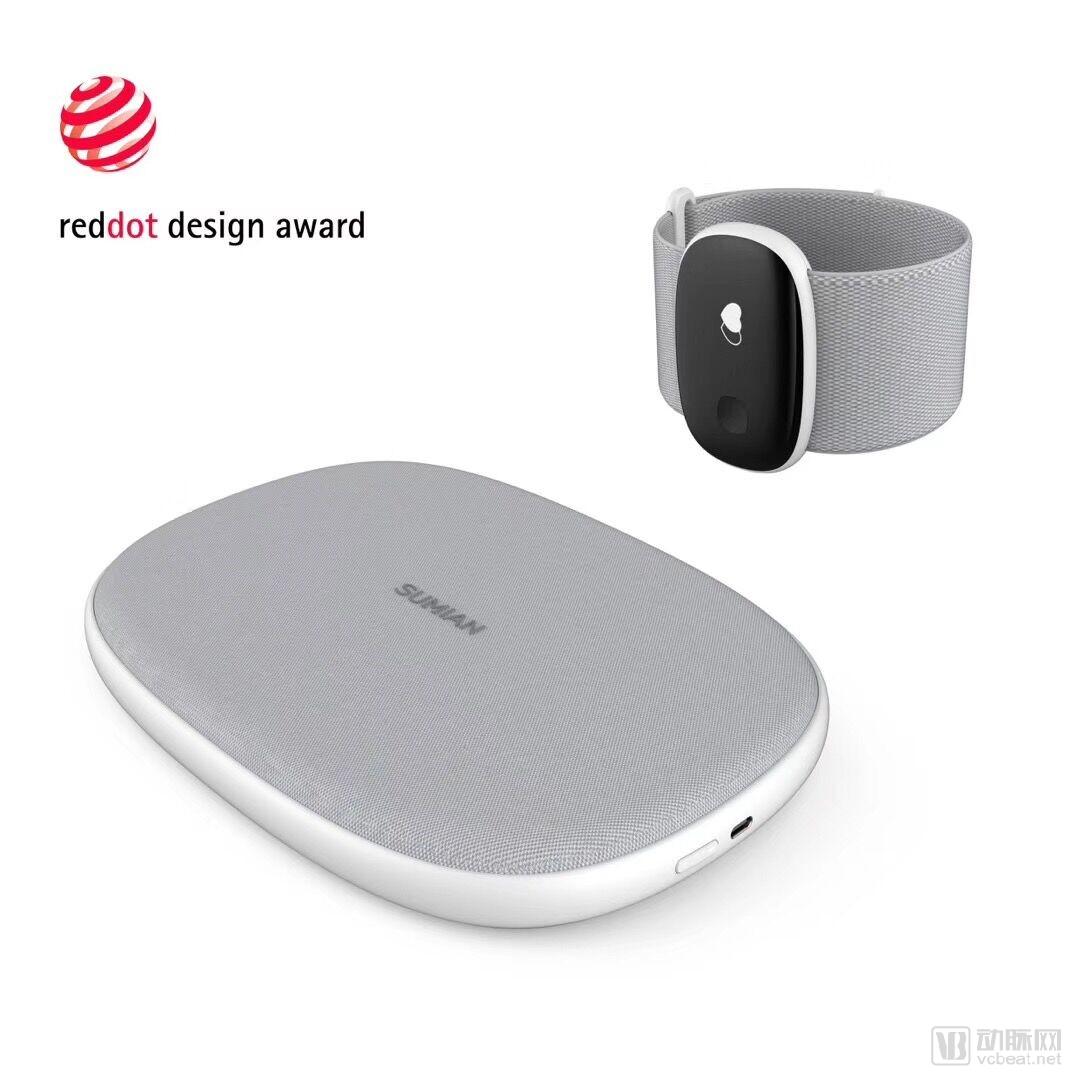
Quick Sleep Device + Monitoring Bracelet (Image source: Quick Sleep official website)
Among these, the intelligent hardware device—Sumian Instrument—leverages theoretical research on “non-invasive modulation of brain activity via dynamic magnetic fields to aid sleep,” and employs a pulsed magnetic therapy system to achieve certain therapeutic effects for insomnia.
After using the sleep aid device, improvements in insomnia symptoms should be assessed through specific physiological indicators. Users can collect data such as pulse rate, electromyography (EMG), and eye movements via wearable monitors to track sleep information in real time and upload it to the mobile app.
As the gateway to the Cloud Medical Platform, the mobile app client can transmit users’ sleep data to the Cloud Medical Center. Backing this center, Sumian will assemble a professional medical team of 30 members, covering specialties such as sleep medicine, psychiatry, neurology, and clinical psychology. The Cloud Medical Center collects user sleep data and, through mining of big sleep data, assists physicians in monitoring patients’ sleep, enabling more precise diagnosis and treatment, while also serving as a reliable basis for evaluating therapeutic outcomes and conducting one-on-one follow-ups.
Han Zhenya revealed that Sumian will establish in-depth collaborations with 2,000 experts and physicians from Grade A tertiary hospitals across China within three years, ensuring that its sleep management solutions provide professional and systematic services to existing insomnia patients as well as newly diagnosed cases each year. In the future, through the synergy between its self-built medical team and collaborating experts and physicians, Sumian has the potential to evolve into a specialized sleep physician group dedicated to sleep healthcare services.
Physician-led drainage extends insomnia treatment from hospitals to home settings
Positioned as a consumer electronics product, it primarily targets individuals with poor sleep quality or mild sleep disorders, and has limited medical attributes.
Sumian primarily targets individuals with primary insomnia disorder, which is characterized by symptoms such as difficulty falling asleep or maintaining sleep due to various causes, shallow or fragmented sleep, early morning awakening, and insufficient sleep duration or poor sleep quality. It is also known as sleep-onset and sleep-maintenance disorder. According to Han Zhenya, the current population affected by this condition in China is approximately 40 million.
In terms of application scenarios, whether smart hardware can obtain CFDA certification to enter hospital settings is key to determining whether sleep technology companies can expand their sales channels.
Currently, Sumian has partnered with Guangdong Provincial People’s Hospital to conduct clinical trials involving 200 cases to evaluate therapeutic efficacy. Meanwhile, according to Han Zhenya, the combined total of clinical and non-clinical experimental data has reached 1,000 cases. The product is currently undergoing application for certification from the China Food and Drug Administration (CFDA), with approval expected within the year.
In terms of marketing model, although it is mainly based on the agency distribution system, with nearly 1,000 potential distributors across China, Han Zhenya insists on focusing the main traffic generation strategy on hospital doctors. He stated that this approach is because "Sumian hopes to gain recognition from everyone in the scientific and academic communities through its therapeutic efficacy."
For patients with severe insomnia, seeking treatment at a hospital typically consumes considerable time and energy. Han Zhenya believes that after the initial consultation for sleep disorders, follow-up visits and monitoring can be conducted remotely. For physicians, once patients upload their monitoring data via the Cloud Medical Center, doctors can leverage fragmented time slots on the platform to serve a larger number of patients.
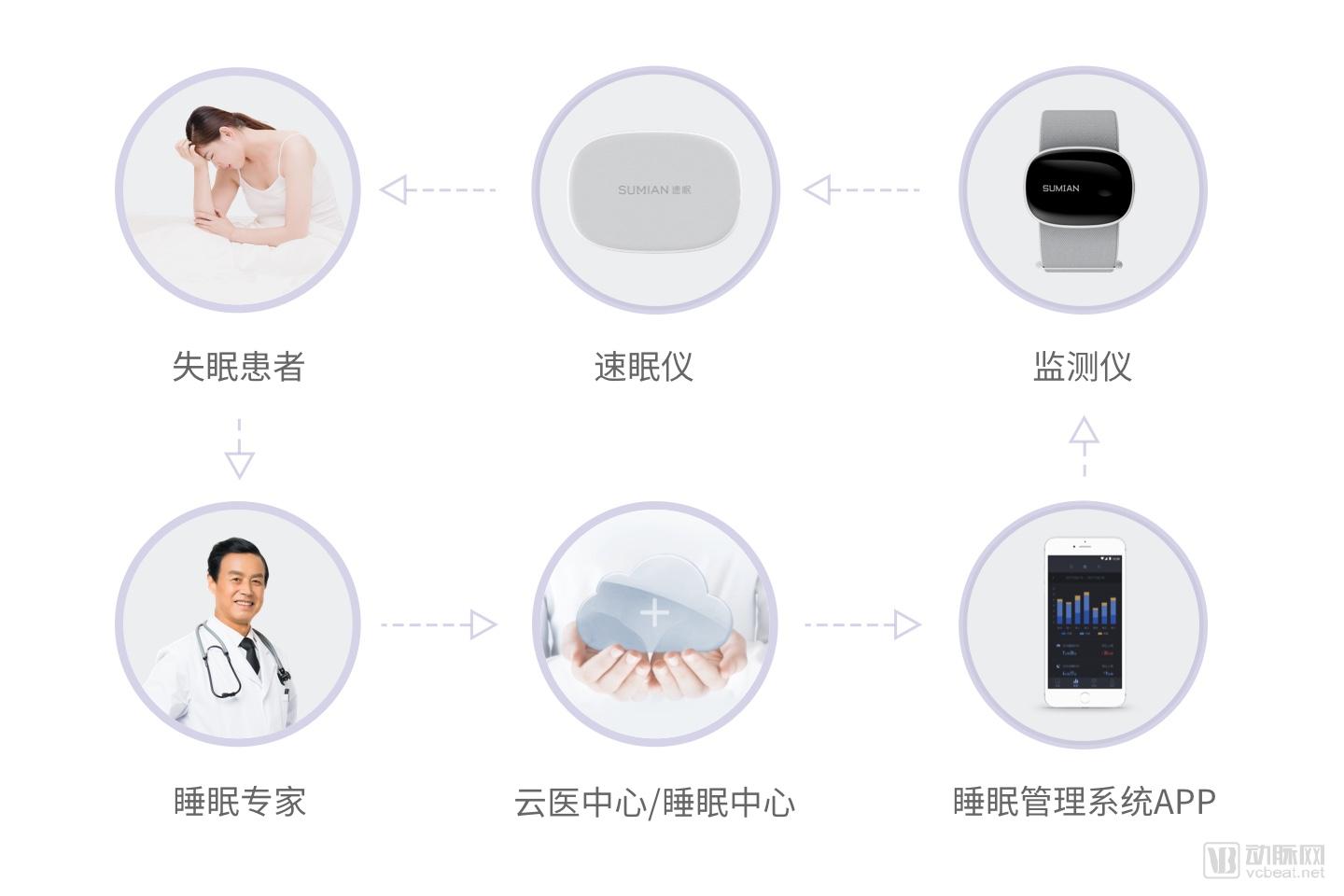
Sumian Connects Doctors with Smart Devices to Create a Closed-Loop Service (Image source: Sumian official website)
“Sumian is designed to improve sleep. While our product alleviates users’ insomnia symptoms, a fundamental resolution requires improving their sleep habits under the guidance of a physician.”
In hospital settings, the key limitation of medical-grade devices is that those targeting insomnia disorder (insomnia not caused by apnea) are primarily monitoring devices, such as polysomnography systems. These instruments mainly monitor sleep and quantify sleep quality into data, but lack therapeutic intervention capabilities, ultimately requiring physicians to provide treatment solutions.
Moreover, patients undergoing treatment are forced to make repeated trips to the hospital, resulting in fragmented care and a poor patient experience. Sumian integrates large-scale medical equipment technology into portable devices, enhancing user experience while extending treatment settings to the home environment, thereby ensuring continuity of care.
Han Zhenya believes that smart hardware manufacturers and hospital sleep centers should be partners rather than competitors. “When we undertake an initiative, we must prioritize primary and secondary contradictions and clearly distinguish friends from foes. Hospital monitoring centers serve as a channel for patient referral; they are, in fact, ‘friends’ with whom we can collaborate on win-win initiatives.”
Professional Sleep Management Services Enhance User Stickiness and Explore AI Applications
According to the well-known Gartner Hype Cycle in the IT sector, both pulsed magnetic modulation technology and sleep metric monitoring have entered the “Slope of Enlightenment,” characterized by steady growth. As the technologies mature, Suimian’s next steps will be to continuously refine its products, improve user-data-driven pilot sites, and achieve low-cost, large-scale replication.
Han Zhenya believes that the key to rapid replication lies in a mature technical architecture and business model. In addition to revenue from initial product sales, Sumian’s income also includes fees for sleep management services. By providing sleep management services through professional physicians, the company enhances user engagement and loyalty to its devices. “Sleep management is essential for all individuals suffering from insomnia. Sleep care involves more than just devices; it requires cultivating healthy sleep habits and improving sleep health under the professional guidance of physicians.”
Meanwhile, the reporter learned that Sumian is also exploring artificial intelligence applications after collecting big health data. For the sleep data generated by users every day, how to process the data, turn data into information, transform information into knowledge, and convert knowledge into sleep management solutions—this is the work of artificial intelligence after data collection.
AI-Assisted Sleep Management: Real-Time Monitoring of Physiological Metrics via Wearable Devices with Monitoring Capabilities, Integrated with Sleep Data and Physician Follow-Up and Intervention from Cloud Medical Centers, to Provide Corresponding Improvement Strategies.
Meanwhile, the AI module will also provide a virtual assistant function during consultations, similar to a “chatbot,” serving as a bridge for doctor-patient communication to ensure that patient conditions are assessed and managed within known and controllable parameters; when patients fail to meet the corresponding indicators, the AI can promptly identify issues, intervene in a timely manner, and alert users.
For companies engaged in hardware R&D, low customer repurchase rates mean that revenue is primarily one-time; therefore, continuous product iteration is critical. In Han Zhenya’s vision, the next step for Sumian is to transition from “Quick Sleep” to “Quality Sleep.” If the Sumian system addresses the challenge of moving users from “unable to fall asleep” to “falling asleep,” then “Quality Sleep” will tackle the issue of progressing from “being able to fall asleep” to “achieving restful sleep.” Thus, the key focus moving forward is improving users’ sleep quality.
It is reported that, in addition to product R&D and cloud platform-based services, Sumian will also establish offline Sleep Medicine Centers. Han Zhenya stated, “Our purpose in building Sleep Medicine Centers is to deeply integrate with cutting-edge technologies, as well as to foster close collaboration with the industry, research institutions, and physicians. We plan to open two Sleep Medicine Centers this year and expand to approximately ten by next year.”
Currently, Sumian has attracted significant attention from numerous investors. Regarding collaboration with capital partners, Sumian seeks not only financial investment but also managerial resources and strategic assets that facilitate technological R&D. “We warmly welcome investors who can strengthen the pillars of our corporate development, such as those offering expertise in artificial intelligence and sleep-based neuroscience R&D, access to physician and hospital networks, and internet operations capabilities.” In Han Zhenya’s view, Sumian’s future ambition is to achieve a market valuation of hundreds of billions and become a unicorn in the sleep healthcare industry.