

Zhizhong Invests RMB 110 Million to Build Medical Device CMO and Third-Party Testing & Research Platform, Accelerating Domestic Innovation Commercialization
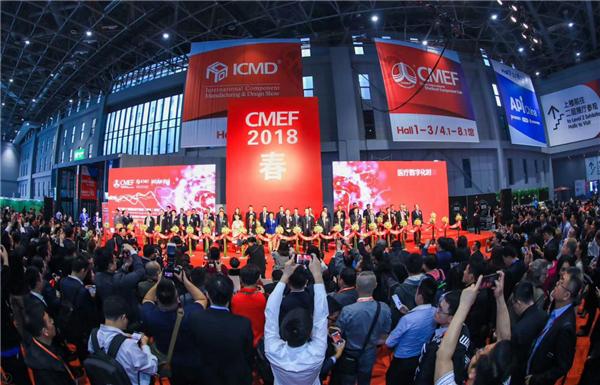
On April 11, 2018, the 79th China International Medical Equipment Fair (Spring) (hereinafter referred to as “CMEF”) was held as scheduled at the National Exhibition and Convention Center in Shanghai, with a remarkably vibrant atmosphere on site.
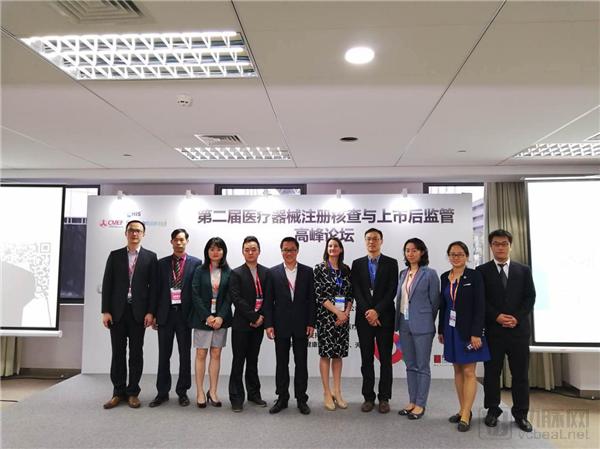
At 13:00 that afternoon, the “2nd Summit Forum on Medical Device Registration Inspection and Post-Market Surveillance,” jointly organized by the China Association for Medical Devices Industry (CAMDI), Sinopharm-Reed Exhibitions, and Wuhan Zhizhong Technology Co., Ltd. (hereinafter referred to as “Zhizhong”), was successfully held. The event attracted over 300 attendees, making it one of the most popular forums on the first day of the exhibition.
As one of the organizers of this event, Zhizhong officially launched its comprehensive medical device service platform, built with an investment of RMB 110 million and integrating regulatory affairs, clinical trials, R&D, testing, and manufacturing—Zhongzhong Medical Devices CMO and Third-Party Testing and Research Platform. It is reported that the project covers a total area of nearly 7,000 square meters, with Phase I scheduled to be completed by June 30, 2018.
Zhizhong Medical Device Contract Manufacturing Organization (CMO) Platform provides comprehensive design, manufacturing, and product management services specifically for medical device enterprises. Leveraging in-depth knowledge of medical device regulations and extensive experience in product registration, the platform integrates a high-quality supply chain to accelerate time-to-market for medical devices while effectively reducing overall product costs without compromising quality.
Currently, the Zhizhong CMO Platform operates three major production lines for active medical devices, passive medical devices, and in vitro diagnostic (IVD) reagents. It provides comprehensive manufacturing services for a range of products, including wearable devices, home-use devices, general active devices, catheter-based products, dressing products, nucleic acid reagents, and immunoassay reagents. These services cover the production of samples for registration testing, clinical trial samples, and large-scale commercial manufacturing.
Decoupling Registration from Manufacturing: CMOs Emerge as the New Hotspot in the Medical Device Industry
VCBeat (WeChat ID: vcbeat)A reporter from VCBeat promptly interviewed Yang Da of Zhizhong, who stated that while the recent announcement appeared to be a major strategic shift to outside observers, it was in fact a natural progression.
Over the seven years since its establishment,The four “T”s in the company logo reflect Zhizhong’s enduring commitment to building a team grounded in technology and talent, with a dedicated focus on the technological transformation of medical devices.Over the years, the company has attracted a number of outstanding young core professionals in the fields of medical device R&D, quality management systems, and clinical affairs. With more than 70% of its clients being small and medium-sized enterprises (SMEs) engaged in innovation and entrepreneurship, the team has honed its professional expertise and established VCBeat’s reputation as a “trusted brand” within the industry. The company has achieved certain accomplishments thanks to the support of industry leaders, experts, investors, clients, and friends.
In recent years, although the Chinese government has consistently encouraged innovation in domestically produced medical devices, under current regulations, product registration and manufacturing licensing are “bundled” together, requiring a single entity to handle both registration and production. Registration applicants must navigate multiple stages, including research and development, clinical trials, regulatory registration, and manufacturing, while also establishing and maintaining a Good Manufacturing Practice (GMP) system. This end-to-end process from research to production demands substantial effort, manpower, and capital.
This model has dampened enthusiasm for innovative R&D and continuous improvement in product quality, while also restricting the rational allocation of innovation resources. It was not until 2017 that China’s medical device industry ushered in new opportunities for development.
On December 7, 2017, the Shanghai Municipal Food and Drug Administration issued and implemented the Implementation Plan for the Pilot Program of the Medical Device Registrant System in the China (Shanghai) Pilot Free Trade Zone. This innovative reform was launched by the Shanghai Free Trade Zone to align with internationally accepted rules, aiming to provide practical experience for the regulation of medical devices across China.
The implementation of this pilot program for the “separation of permits and licenses” means that eligible registration applicants can now apply for a Medical Device Registration Certificate independently and subsequently entrust production to qualified manufacturers with adequate production capabilities. Under the Marketing Authorization Holder (MAH) system, innovators can focus on product research and development while outsourcing production to qualified enterprises. This approach helps curb low-level redundant construction in the medical device industry, accelerates the market launch of innovative medical devices, stimulates vitality in industrial innovation and development, and enhances innovation and R&D capabilities.
On February 27, 2018, Shanghai Yuancin Medical Technology Co., Ltd.’s single-channel ECG recorder received market approval from the Shanghai Food and Drug Administration, becoming the first product in China to be approved for market launch under the Marketing Authorization Holder (MAH) system. This approval is expected to accelerate the product’s market entry by a full year and save approximately RMB 1 million in production-related investments. This also marks the formal implementation of the innovative reform of the medical device MAH system launched in Shanghai the previous year.
With the implementation of the registrant system, many R&D institutions hope to entrust the production of their innovative achievements to professional third-party enterprises through the pilot program of Contract Manufacturing Organizations (CMO) for medical devices, thereby achieving technology transfer and commercialization. Previously, experts analyzed thatThe pilot program for the Medical Device Registrant System marks the government’s pursuit of maximized reform breakthroughs. Once implemented and scaled, it will generate tens of billions, or even hundreds of billions, in new contract manufacturing organization (CMO) business for medical devices.Therefore, the next big trend in the medical device industry is here!
Current Status of the Global Medical Device CMO Industry
So, what is the current status of CMOs in the medical device industry, and where do the opportunities lie?
It is understood that the global CMO/CDMO model for medical devices is a highly mature and successful business model. This is not a Chinese innovation; rather, it marks China’s first breakthrough within its own regulatory framework. Industry leaders such as Jabil and Flex are widely recognized in this sector, serving major global medical device companies including Medtronic, BD, and Johnson & Johnson. At this summit, Lin Feng, Director of the Medical Device Registration Division of the Shanghai Food and Drug Administration, also shared a case study on Jabil’s CMO operations in Shanghai.
In China, as the Medical Device Registration Holder system has not yet been fully implemented, there are currently no true Contract Manufacturing Organization (CMO) enterprises for medical devices. With the exception of the Shanghai pilot zone, Shanghai Juyi can be regarded as the first genuine Contract Development and Manufacturing Organization (CDMO) enterprise for medical devices in China, with its core founding team possessing many years of relevant industry experience.
But as of now,The bottlenecks constraining the development of China’s CMO/CDMO sector are not merely regulatory; the core issue lies in the industry’s recognition of the value provided by CMOs/CDMOs and the establishment of a credit system based on this value perception, followed by the building of professional talent teams for CMOs/CDMOs.
“It makes sense” but “can’t be done,” and “can be done” but “not well,” are common occurrences.With the continuous improvement of China’s regulatory framework for medical devices (covering their entire lifecycle) and the rapid development of the industry, the adoption of CMO/CDMO models has become an irreversible trend in sector development.
4 Key Advantages of Choosing Zhongzuo as Your CMO for Medical Devices
Compared with other institutions, what are the advantages of Zhizhong, as one of China’s leading medical device consulting service providers, in conducting CMO business? Yang Da told the reporter that there are mainly four aspects.
First, in terms of regulations, the manufacturing of medical devices is not comparable to that of ordinary commodities; it involves multiple domains, multi-layered processes, and diverse special requirements for various product categories. Manufacturers without a regulatory background find it difficult to comply with Good Manufacturing Practice (GMP) requirements.
Since its inception, ZhiZhong has been assisting enterprises in ensuring regulatory compliance, with adherence to regulatory standards serving as one of its core competencies. To date, ZhiZhong Technology has served over 300 clients, the majority of whom have overseas or research institution backgrounds.
For example, Zhizhong has provided technical consulting services for the market launch of BGI’s first domestically developed next-generation sequencer, Anhan Photoelectric’s first domestically developed capsule endoscopy system, and Hangzhou MicroTech’s first domestically developed patch insulin pump. Additionally, Zhizhong has helped multiple prominent enterprises, including Mingde Biology, Wuhan Janssen, and Wuhan Boji, achieve significant milestones in regulatory compliance and registration. Meanwhile, Zhizhong has also participated in medical device technology transfer services for the Chinese Academy of Sciences, Huazhong University of Science and Technology, Wuhan University, and numerous clinical institutions. Some projects even involved investment incubation. As a result, Zhizhong has established an initial reputation and brand credibility within the industry among regulators, enterprises, investors, and specialized industrial parks.
Secondly, in terms of talent and technology, high-tech content, specialization, and large-scale production are inseparable from strong technical implementation capabilities and talent reserves.
Over the past six years, Zhizhong has been building a professional team with expertise in product R&D, system management, production management, and clinical experience. Among the current team of nearly 70 members, more than 80% hold bachelor’s degrees, and 30% have master’s degrees or higher. The team includes talents from renowned universities such as Tsinghua University, Zhejiang University, Sichuan University, Huazhong University of Science and Technology, and Wuhan University, as well as overseas returnees.
Meanwhile, Zhizhong attaches great importance to the cultivation of engineering talent in the industry. Last year, it signed strategic cooperation agreements with Ezhou Industrial College, Wuhan Huaxia University of Technology, and Wuhan Vocational College of Software and Engineering, respectively, to carry out programs related to medical device registration, clinical affairs, and production.“Advanced Blue-Collar Talent Development Program for Medical Devices”. These talents will all become an important component of the CMO platform.
Third, regarding suppliers and partners, compared with the production and manufacturing of ordinary goods, medical device products are far more complex, with significantly different product standards and manufacturing processes, imposing stricter and more specialized requirements on suppliers.Zhizhong has consistently been committed to building a “micro-ecosystem” for the technological translation of medical devices, establishing a resource pool based on “mutual trust, mutual assistance, complementarity, and sharing,”Can provide clients with high-quality, reliable suppliers or partners.
Finally, Zhizhong boasts professional supporting laboratories that provide third-party testing and inspection services.
Third-Party Laboratory Testing Research Services: Solving R&D Challenges
When discussing the business operations of Zhizhong Laboratory, Yang Da stated that the medical device CMO platform not only provides scaled-up manufacturing services post-registration but also plays a crucial role during the early-stage R&D and small-batch sample production phases.
Currently, there are few testing centers for medical devices accredited by the China Food and Drug Administration (CFDA), resulting in excessively long queues for product testing. Small and medium-sized medical device enterprises generally lack suitable testing laboratories to provide robust technical support for their R&D activities. The market predominantly offers laboratory leasing and instrument sharing services, which fail to fundamentally address the challenges in R&D.
To this end, Zhizhong has established, in accordance with the international standard ISO/IEC 17025 and the requirements of the NMPA’s Key Laboratory for Medical Device Regulation,To the Zhongzhong Medical Device Inspection and Research Institute (TRI), aiming to establish a medical device testing and R&D laboratory with advanced technical capabilities and high-quality services in China.
Drawing on years of accumulated experience in providing regulatory consulting services for medical devices both domestically and internationally, and with a deep understanding of the technical issues and testing challenges at every stage from research and development to market launch, Phase I of the Research Institute has establishedFive Major Laboratories: Electromagnetic Compatibility Laboratory, General Electrical Safety Laboratory, Environmental Testing Laboratory, Cleanroom Testing Laboratory, and Sterile Packaging Testing Laboratory, in the vertical technical field of medical device regulation,Provides comprehensive, high-quality R&D guidance, testing, and rectification services for medical laboratory equipment, digital imaging devices, optical instruments, patient monitoring equipment, ultrasound systems, and certain non-device products.
This is a service that traditional OEM manufacturers are unable to provide.However, Zhizhong has repeatedly emphasized:“We do not position our laboratory as a mere referee; instead, we focus on R&D validation, assuming a more prominent role as a coach to serve as an effective partner for enterprises.”
The market is not short of laboratory resources; however, available options are polarized. On one hand, there are laboratories primarily acting as “referees,” such as medical device testing centers accredited by the China Food and Drug Administration (CFDA) or those with CNAS and GLP qualifications, which provide technical assessments and issue reports. On the other hand, there are private enterprises and research institutions that offer only hardware rental services, such as facility and equipment leasing. There is a notable lack of laboratories providing technical services backed by extensive regulatory expertise.
“Zhizhong focuses on developing laboratory testing research services, targeting industry pain points to create differentiation, and has prepared a team of experienced engineers for this purpose, which is our advantage,” said Yang Da.
Since its establishment in 2011, Zhizhong has accumulated years of product experience and client resources through its CRO business, gaining deep insight into the pain points of enterprise production processes. The company’s recent foray into the medical device CMO sector—building a closed-loop technical service platform that shifts focus from asset-light consulting to asset-heavy technical services—represents a strategic initiative by Zhizhong to align with market demands and national policy directions.
Clearly, Zhizhong has positioned itself at the forefront of the next major wave in the medical device industry. With comprehensive preparations already in place, the company is now poised and ready, awaiting the opportune moment to surge forward.