

ARCH Venture Partners: The Investment Logic Behind 92 Healthcare Bets and 26 IPOs
Since its spin-off from the University of Chicago in 1986, ARCH Venture Partners has been focusing on investments in the life sciences sector for over 30 years. Employing an investment philosophy that is almost “somewhat crazy,” they have deployed hundreds of millions of dollars in the healthcare industry, with individual investments ranging from $50,000 to $150 million.
Over the past 30 years, ARCH Venture Partners has participated in more than 250 investments. Familiar names such as CRAIL, Illumina, Kythera Biopharmaceuticals, WuXi AppTec, Juno Therapeutics, and YiAn JiShi are all part of their investment portfolio. They describe themselves as a group of bold, contrarian adventurers.
So, how do these adventurers seek new opportunities in emerging technologies, and what logic do they employ to strike a balance between risk and opportunity?
VCBeat has compiled and organized ARCH Venture’s 261 investments since 1995, selecting 174 transactions in the healthcare sector to gain insights into the investment strategy of this top-tier venture capital firm.
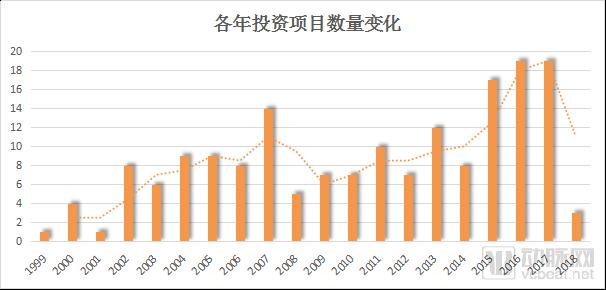
Prior to 2000, the firm’s investments were primarily concentrated in internet and software enterprises. Subsequently, it shifted its focus to the life sciences and energy sectors. Over time, the firm has increasingly intensified its investment activities in the healthcare sector, with 174 out of its 261 total investments occurring in this field.
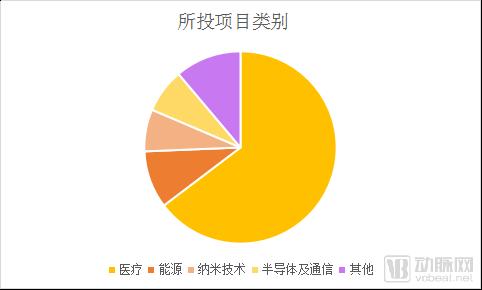
From a timeline perspective, ARCH Venture Partners’ investment activities in the healthcare sector have experienced two peaks: one in 2007 and another after 2015, with the activity index increasing for four consecutive years. So, what changes occurred in the healthcare industry during these years, and which projects did they invest in?
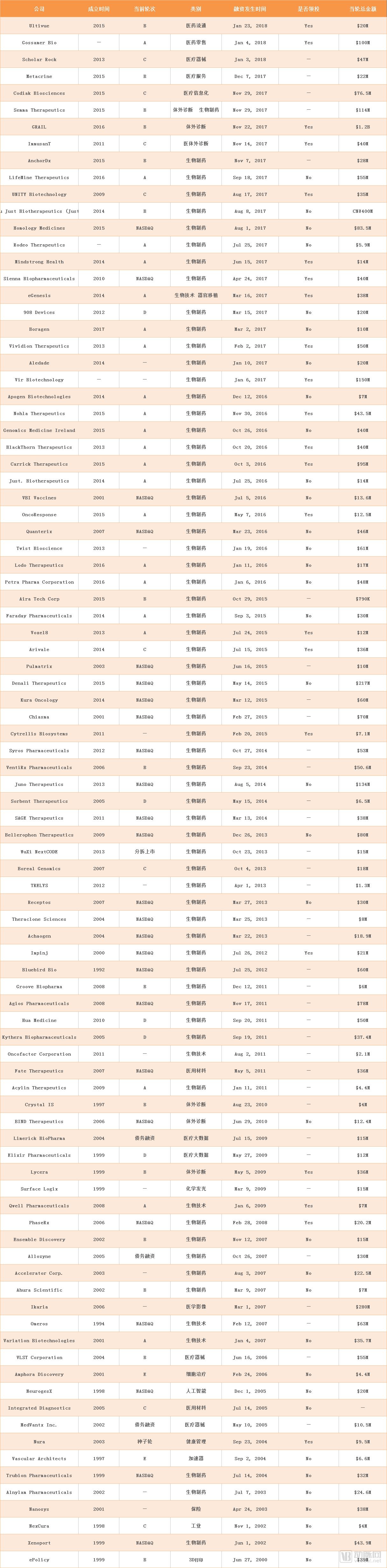
Data from Crunchbase
As we can see, biopharmaceutical companies accounted for the vast majority of investment activities in recent years. Moreover, out of a total of 91 invested projects, 68 were in biotechnology companies. Among the 22 healthcare projects they led, 18 were related to biotechnology.
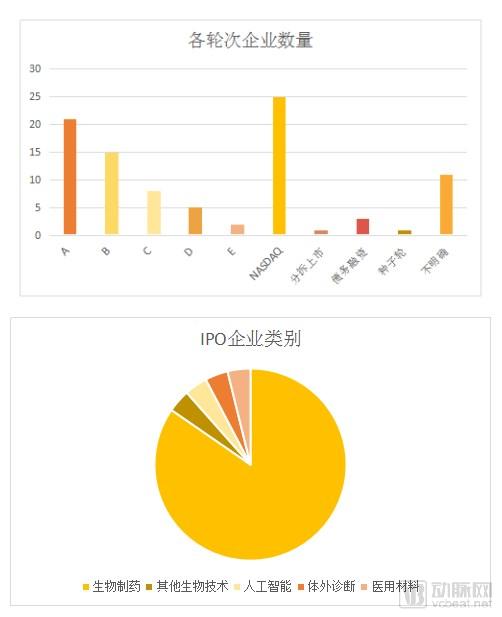
Of course, these projects have also achieved remarkable results. Among the 26 companies that successfully completed their initial public offerings (IPOs), 22 were from the biomedical sector. Notably, JUNO Therapeutics, a leader in CAR-T therapy research, went from inception to IPO in just 14 months and was ultimately acquired by Celgene for $9 billion. Receptos was also acquired by Celgene after its IPO for $7.2 billion; prior to this, the company had received acquisition overtures from AstraZeneca, Gilead Sciences, and Teva Pharmaceutical Industries.
The period from 2007 to 2018 marked the peak of the company’s investments in biopharmaceutical enterprises. Notably, most projects invested in around 2011 have since gone public after several years of development, while the majority of those invested in after 2016 are now in the late-stage growth phase, having emerged as industry leaders with even global recognition.
ARCH Venture does not adhere to conventional norms; it first evaluates opportunities and the underlying science before considering how to establish a company. Prior to building a company, it seeks to understand what the company and the technology require, and provides support centered around these needs.
Such a strategy is readily accepted by both the academic community and founders, as ultimately, everyone shares the same goal: to find a path that builds the project into the strongest company.
Embrace Technological Advancements, Be a Trailblazer of the Era
We reviewed the breakthrough technologies selected by MIT over its first decade. From 2001 to 2006, these were primarily focused on information technology (IT), communications technology, and new materials. Consequently, in those early years, ARCH Venture invested heavily in internet, IT, and nanomaterials projects.
Subsequently, biotechnologies represented by personal genomics, synthetic biology, bispecific antibodies, stem cell engineering, and single-cell analysis have gradually accounted for an increasing share, while the emergence of new energy technologies such as flexible silicon and nanosolar cells has also gained prominence. These two fields have gradually become the primary, and in some cases exclusive, focus of ARCH Venture Partners.
Over the past decade, the life sciences sector has also undergone revolutionary changes. Lower sequencing costs and the advent of CRISPR have greatly spurred exploration in scientific research, leading to a surge of breakthroughs. These achievements have been translated into technologies, which in turn have created new opportunities.
In recent years, scientific advancements have reduced the cost of using foundational tools, the academic community has begun to recognize their existence, and research institutions have placed greater emphasis on the commercialization of technologies. As a result, investment in new technologies has reached a pivotal moment.
Addressing Unmet Medical Needs
Of course, the attention paid to these two fields is driven not only by technological advancements but also by market and societal progress. The upgrading of healthcare demands and the rise of the new energy revolution have also endowed these two sectors with long-term vitality.
Of the more than 60 biopharmaceutical projects invested in, the vast majority target chronic diseases, oncology, and immune-mediated disorders.
Advances in medicine and living standards have significantly increased human life expectancy, which is certainly a cause for celebration. However, this increase in average lifespan does not halt the aging process. Population aging and changes in dietary patterns have led to a year-on-year rise in the incidence of chronic and age-related diseases, such as diabetes and Alzheimer’s disease.
Unlike severe malignancies or lethal viruses, these chronic diseases are not fatal. However, they are generally incurable, impair patients’ quality of life, and require long-term medication. The primary goal of pharmacotherapy for chronic diseases is to improve patients’ quality of life, a standard that continues to rise in patient expectations.
Just as the discovery and purification of insulin in the 1920s marked a milestone, the advent of insulin glargine has saved countless patients with diabetes. Although insulin glargine is associated with adverse reactions and requires scheduled injections, it addressed the urgent needs of diabetic patients and became a blockbuster drug. However, we must not overlook the fact that patients desire more than this.
In the 1950s, sulfonylureas and metformin were introduced to the market. Over several decades of development, they have become the most important components of oral hypoglycemic agents. Subsequently, products such as pioglitazone and sitagliptin were also launched. It can be said that the expectations of patients, the market, and researchers for medications have never been fully satisfied. While a perfect technology or product may not exist, there is always room for better products.
Autoimmune diseases are conditions in which the immune system reacts against self-antigens, leading to damage of the body’s own tissues. Common examples include psoriasis, rheumatoid arthritis, and systemic lupus erythematosus. Moreover, an increasing number of diseases have been classified as autoimmune disorders.
American singer Selena Gomez is a lupus patient. Currently, there is no cure for lupus in medicine; the condition can only be stabilized through hormone therapy. After experiencing several relapses, Gomez underwent an organ transplant surgery in 2017.
Similar to chronic diseases, autoimmune diseases are generally difficult to cure. However, they differ in that autoimmune diseases have a more severe impact on patients' lives. The number of diagnosed cases is increasing, yet medical treatment options remain limited, resulting in strong market demand.
The same holds true for cancer. In the past, fear of cancer stemmed from its high mortality rate. Today, as cancer incidence continues to rise, so too does public anxiety surrounding the disease. The oncology treatment market is expanding rapidly; however, this complex disease evades therapeutic effects through multiple mechanisms. Targeted therapies and immunotherapies have played pivotal roles in treatment, while CAR-T cell therapy has achieved complete tumor eradication for the first time. Nevertheless, each therapeutic approach has its limitations, and researchers have never ceased their pursuit of more effective treatments.
Who knows what approach is truly perfect? Thus, unmet medical needs persist, technological exploration continues, and market exploration will not cease.
Risks Cannot Be Avoided, But Can Be Mitigated
Investment always carries risks, particularly in frontier technologies. Even large pharmaceutical companies are not immune to drug failures, such as Eli Lilly’s glucose-lowering medication.
During the project evaluation process, ARCH Venture links drug targets to diseases and identifies specific patient populations based on these connections. By forecasting the targeted therapies, diseases, and patient populations associated with these targets, it reduces the risk of failure in new drug development projects.
“ARCH Venture’s General Partner Kristina Burow stated in an interview, ‘You can never completely eliminate risk, after all, we are dealing with human biology. However, modern technologies and methodologies enable us to perform far better than we did a decade ago.’ In her view, the most exciting aspect of current investment opportunities lies in the ability to stratify patient populations and deliver targeted therapies tailored to individual patients and their specific diseases.”
Professional and Powerful Team
"To do a good job, one must first sharpen one's tools." For a company, the "tools" are its team; an excellent team is the source of energy for corporate development.
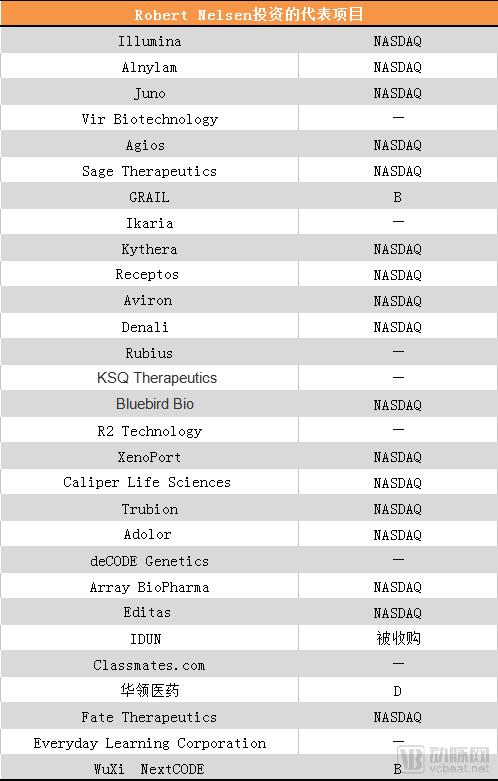
Robert Nelsen, Co-Founder and Managing Director of ARCH Venture Partners, holds degrees from the University of Chicago and the University of Puget Sound. He has served as a trustee at the Fred Hutchinson Cancer Research Center and as a director of the National Venture Capital Association. During his 30-year tenure at ARCH Venture Partners, Nelsen led early-stage investments in more than 30 companies, 19 of which have achieved valuations exceeding $1 billion.
The following are some of the seed-round and early-stage projects he has participated in:
Kristina Burow is a General Partner at ARCH Venture Partners. She holds degrees from Columbia University and the University of California. Prior to joining ARCH Venture Partners, Burow worked at Novartis’ biotech venture fund, BioVentures, and was an early member of the Novartis Genomics Foundation (GNF), where she helped incubate multiple companies.
Since joining ARCH Venture Partners in 2002, Burow has been dedicated to innovation and development in the biotechnology sector. Over the past decade, she has successfully built numerous emerging companies, including Vividion Therapeutics, Lycera, BlackThorn Therapeutics, Sienna Biopharmaceuticals, Metacrine, Scholar Rock, Unity Biotechnology, AgBiome, AgTech Accelerator, and Vir Biotechnology. She has also participated in a series of acquisition projects by ARCH Venture Partners, such as Kythera (KYTH – acquired by Allergan) and Ikaria (acquired by Mallinckrodt). Furthermore, Burow was involved in the founding of several companies, including Receptos and Sapphire Energy.
Robust Exit Channels
With the exception of WuXi AppTec, nearly all projects invested in by ARCH Venture Partners have exited via NASDAQ (it should be noted that WuXi AppTec, although previously listed on NASDAQ, is now delisting). It must be acknowledged that these robust exit channels have enabled the firm to foster a favorable investment environment.
It is well known that biotechnology companies have longer profitability cycles and face higher risks than most other industries. A market that prioritizes innovation capability provides them with assurance and incentives during the investment process in innovative technologies, thereby alleviating their concerns.