

GE Digital Solutions Empower Sir Run Run Shaw Hospital to Manage Over RMB 1 Billion in Medical Assets
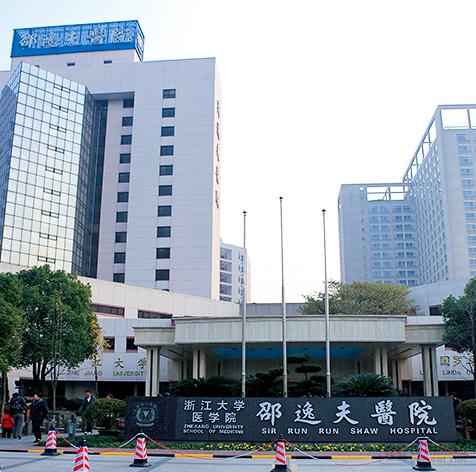
Image source: Sir Run Run Shaw Hospital official website
Currently, the clinical use and real-time maintenance demands for hospital medical equipment are continuously growing, leading to an increase in the number of devices and rising operational and maintenance costs. How to employ more efficient management methods to enhance hospital equipment management, reduce total cost of ownership (TCO), and improve the quality of medical services has become one of the challenges faced by hospital administrators. Digital solutions undoubtedly offer new approaches to addressing this challenge.
As the first public hospital in China to achieve Joint Commission International (JCI) accreditation, Sir Run Run Shaw Hospital, Zhejiang University School of Medicine, has leveraged the innovative concepts of the sharing economy to implement precise, digital management of its equipment assets, valued at up to RMB 1 billion. This approach has enhanced equipment operational efficiency and effectively controlled hospital costs.
The History of Informatization Construction at Sir Run Run Shaw Hospital
Hospital informatization is a significant manifestation of hospital culture and a crucial lever for hospital management. The informatization initiative at Sir Run Run Shaw Hospital was launched in tandem with the hospital’s establishment in 1994. As early as 1994, the hospital achieved informatized management of its entire inpatient system on minicomputers.
According to Qiao Kai, Deputy Secretary of the Party Committee at Sir Run Run Shaw Hospital, the hospital implemented information-based management for its outpatient system in 2000. By the end of 2015, the hospital achieved HIMSS Stage 6 certification. In August 2017, it attained HIMSS Stage 7 certification. Sir Run Run Shaw Hospital is not only one of the eight top-tier hospitals nationwide to achieve this level but also the only hospital in Zhejiang Province to have received HIMSS Stage 7 certification.
Over the past two years, Sir Run Run Shaw Hospital has prioritized paperless initiatives in its informatization development. All medical processes within the hospital, including outputs from smart devices, are recorded in the system. Patients no longer need to use paper for information exchange, as all such interactions are now fully managed through the digital system.
Secretary Qiao stated, “The paperless hospital is a conceptual term; in practice, it means that patients’ electronic medical records, various test results, and diverse images and audio data are all stored in our system.”
In 2013, the hospital completed the integrated development of its two campuses, achieving centralized information management. By the end of 2017, the hospital’s business volume reached RMB 4.2 billion. Without the support of information systems, such substantial growth in business volume would have been unimaginable.
Health Cloud Platform
“If every hospital builds an isolated online hospital, its viability will not be sustainable,” said Secretary Qiao. “The greatest characteristic of the internet is interconnectivity; an isolated online hospital falls far short in terms of information sharing.”
In response, Sir Run Run Shaw Hospital has established an open health cloud platform—the Sir Run Run Shaw Hospital Health Cloud Platform. As a comprehensive platform, it offers services including remote consultations, two-way referrals, chronic disease management, and even family physician services. On the Health Cloud Platform, the greater the resources and talent available, the more assistance patients receive, and all consultations are provided free of charge.
Currently, nearly several hundred hospitals have joined the Health Cloud Platform, enabling the sharing of medical resources and information. On the platform, both large and small hospitals serve as equal nodes. Through these nodes, physicians can conduct remote lightweight consultations, with over 50,000 registered doctors currently active online.
Asset Cloud Manager
As the Director of the Equipment Department at Sir Run Run Shaw Hospital, Zhejiang University School of Medicine, Director Liu Jinchu told reporters that the hospital’s two campuses currently house more than 14,000 pieces of medical equipment, with fixed assets exceeding RMB 1 billion. “Including data generated by imaging and intelligent devices, these equipment produce approximately 200 GB of data per day, resulting in an annual total data volume exceeding 60 TB.”
Medical equipment in hospitals plays a crucial role in the medical process. The quality of the equipment directly affects physicians' assessment of patients' conditions; therefore, controlling the quality of medical equipment is the responsibility and obligation of hospitals. Only by strengthening supervision can we promote hospital management of medical equipment quality and ensure the quality of clinical applications.
Since its inception, the Equipment Department of Sir Run Run Shaw Hospital has held many unique insights into equipment management. As early as 1994, the hospital invested over one hundred thousand US dollars in equipment for preventive maintenance.
In terms of information management, according to Director Liu, the Equipment Department of Sir Run Run Shaw Hospital has been using a self-developed equipment management system for over a decade, which can promptly record data from equipment inspections.
With the hospital’s development, data management within the Equipment Department faces new challenges. Since historical inspection data were stored in text format within the system, it was difficult for the Equipment Department to analyze and utilize these data effectively. Furthermore, due to the large number of medical devices in the hospital, engineers sometimes failed to record inspection data because of heavy workloads, resulting in partial data loss.
Later, Sir Run Run Shaw Hospital implemented GE Healthcare’s Asset Cloud Manager, enabling staff to submit repair requests via WeChat. Through the system, each engineer has clear visibility of their assigned tasks. Furthermore, the system’s field naming conventions and tabular schema design adhere to structured data standards, allowing the Equipment Department to leverage big data analytics for guiding improvements in maintenance and quality control operations.
Furthermore, the Equipment Department can leverage big data to perform predictive analytics. For instance, by analyzing maintenance and replacement costs, it can estimate the optimal service life before decommissioning for specific equipment categories, or determine whether the intervals for maintenance and inspection require adjustment.
“In short, we can make predictions by leveraging various mathematical models based on the accumulated data,” said Director Liu.
For administrators, the status of all hospital equipment can be monitored in real time via PC and mobile devices. They can clearly see how many units are in good working order, how many are under maintenance, and whether any issues are impacting clinical operations.
By leveraging accumulated big data, the Equipment Department can also predict periods of high incidence of equipment failures. Medical devices generally have an average service life; once this lifespan is exceeded, they enter a phase prone to frequent failures. At this stage, hospitals can proceed with new budget planning.
“Previously, with over 1,000 monitoring devices in the hospital, we had no clear visibility into which year or batch they were procured, nor when they should be replaced. Now, with data-driven insights, we can estimate the optimal timing for equipment upgrades,” said Director Liu.
Overall, the Asset Cloud Manager delivers improvements in three key areas of hospital management and operations: First, by providing a one-stop platform, it enables biomedical engineers to quickly gain comprehensive insights into equipment status, thereby enhancing their productivity, medical device utilization rates, and user efficiency. Second, through real-time early warning and predictive capabilities, it facilitates remote diagnosis and maintenance of medical devices, reducing unplanned downtime. Third, by improving utilization, reliability, and availability of medical device assets, it lowers the overall cost of medical equipment for hospitals and increases return on investment.
Building on the Asset Cloud Manager, the hospital also plans to leverage IoT technology for fixed asset management. For instance, RFID products will be adopted for equipment location tracking.
Leveraging the Sharing Economy Concept for Equipment Management
To improve equipment utilization, the hospital’s Equipment Department has also established an Equipment Lending Center, also known as an Allocation Center. By deploying and managing equipment through rental arrangements, this approach embodies the principles of the sharing economy.
If medical equipment in other departments is insufficient, staff can request devices from the Equipment Lending Center, though this service is not free of charge. Such requests were uncommon in the past, but the Lending Center now maintains a substantial inventory, including patient monitors, defibrillators, and electrocardiogram (ECG) machines. By adopting GE Healthcare’s Asset Cloud Manager, the Equipment Department can directly access borrowing and return records, thereby facilitating streamlined digital management.
Director Liu stated, “In the past, much of the equipment purchased by clinical departments was underutilized, yet these departments had to bear the depreciation costs themselves. Now, by leasing equipment from the Equipment Sharing Center at a rate of 2 yuan per hour, departments are exempt from depreciation expenses, making it far more cost-effective than purchasing outright. Therefore, to meet peak demand in clinical departments, the Equipment Sharing Center has expanded its inventory from just over a dozen units to more than 200, with the aim of reducing costs for these departments.”
Secretary Qiao summarized the informatization construction of Sir Run Run Shaw Hospital:
Paperless operations and the interconnectivity of information facilitate collaboration between hospitals. The development of medical consortiums requires the seamless integration of patient flow, logistics, and financial flows; this is fundamentally unattainable without informatized and paperless management.
In the past, equipment managed by the Equipment Department was shared with other departments within the hospital. In the future, the hospital’s development strategy aims to achieve equipment sharing across the entire institution, then extend it to internal sharing within the medical consortium, and ultimately realize city-wide equipment sharing. The establishment of third-party clinical laboratory and medical imaging centers serves precisely this purpose.