

Wofang Technology Files IPO Prospectus: AI-Powered ECG Diagnostic System Compatible with Most ECG Devices to Aid Triage by Primary Care Physicians
Health Intelligence Valley is China’s first industrial cluster complex centered on incubating and accelerating health industry ventures and innovating health service models. Leveraging Meinian Onehealth, China’s largest health-focused traffic gateway and big data platform, it provides innovative enterprises with access to samples, data, markets, and capital support.
Health Valley has currently achieved a strategic layout across six major parks, cumulatively investing in and incubating nearly 100 startup teams, including dozens of highly valued “dark horse” enterprises in the health sector with valuations exceeding RMB 100 million. Series Reports on Enterprises in Health Valley Parks—Wofang Technology connects ECG device manufacturers and physicians through its AI-powered ECG-assisted diagnostic system, helping primary care physicians optimize patient triage.
Electrocardiography, as a widely used diagnostic tool, is highly prevalent in medical institutions at all levels. China Cardiovascular Disease Report2016Data shows that the global market size of the electrocardiogram (ECG) medical industry exceeds40hundred million U.S. dollars, with the number of cardiovascular disease patients in China reaching as high as2.9100 million.2013The global market value of electrocardiograph machines in [year] is36.83hundred million USD,2014Over the years41hundred million US dollars,2015-2021during the year will be6.1%at a compound annual growth rate,2021The annual projected market size is expected to reach61.2hundred million U.S. dollars. China is a major country for cardiovascular diseases, with the current number of domestic patients suffering from cardiovascular disease2.9100 million, accounting for more than the proportion of deaths from various diseases among residents40%The above ranks first, thus indicating a huge market space.
Although electrocardiography (ECG) is a medical modality that can be deployed at the primary care level for widespread screening, the scarcity of skilled physicians capable of interpreting ECGs at this level makes graph interpretation highly challenging. Furthermore, ambulatory ECG monitoring generates vast amounts of data, much of which represents normal findings without abnormalities; nevertheless, reviewing these data consumes a substantial amount of physicians’ time.
Currently, many physicians can only rely on the automated ECG interpretation systems built into electrocardiographic devices. These systems are based on expert systems originally developed for the interpretation of static electrocardiograms, which require stringent measurement conditions. When these algorithms are transferred to ambulatory electrocardiography, they exhibit numerous inherent limitations and are even less capable of meeting the automated analysis needs of the new generation of wearable ECG devices emerging in the mobile internet era.
Wofang Technology has leveraged artificial intelligence to develop an intelligent ECG recognition system that rapidly and accurately assists physicians in identifying abnormalities in both dynamic and static electrocardiograms. By empowering ECG device manufacturers and clinicians at primary healthcare institutions, the company has drawn coverage from VCBeat.
The "Dream Team" from Peking University and Tsinghua University
Zhong Youmin, the company’s founder and CEO, was born in a rural area. While studying clinical medicine at Jiangxi Medical College, he taught himself assembly language and C programming out of interest in computers. After working for a period at an affiliated hospital of a medical school after graduation, driven by his strong interest in cardiology, he enrolled as a master’s student under Professor Cai Shanglang at the Medical College of Qingdao University, specializing in interventional cardiology. His expertise covers coronary stent intervention, interventional treatment of congenital heart disease, interventional management of valvular heart disease, and intervention for arrhythmias.
During this period, deeply aware of the complexity of cardiac arrhythmias, I pursued a Ph.D. in Cardiovascular Diseases at Peking University Health Science Center after completing my master’s degree, specializing in clinical cardiac electrophysiology under the supervision of Professor Guo Jihong, a renowned clinical cardiac electrophysiologist at Peking University People’s Hospital. Throughout this period, I studied and mastered various invasive and non-invasive diagnostic and therapeutic techniques in clinical cardiac electrophysiology, including electrocardiography (ECG). Recognizing the complementary nature of these approaches, I selected as one of my doctoral research topics the application of ECG in the differential diagnosis of two common types of arrhythmias encountered in primary clinical practice.
After completing my Ph.D., I pursued postdoctoral research in cardiac electrophysiology at the Texas Heart Institute in the United States to further advance my expertise. During my time in the U.S., I personally witnessed the significant impact of technologies such as computing, the internet, data analytics, and artificial intelligence on clinical diagnosis and treatment.
Furthermore, Zhong Youmin’s past experiences in personal growth, education, and work have given him a profound understanding of the critical role electrocardiograms (ECGs) play in addressing cardiac diseases at primary care levels, as well as the weaknesses inherent in primary healthcare infrastructure. Consequently, he has long been committed to leveraging new technologies to assist primary care physicians in interpreting ECGs.
Another co-founder interviewed, Ding Xiaocheng, holds a master’s degree in Artificial Intelligence from Peking University and has over 20 years of experience in the internet industry. He has held technical and product roles at companies such as Baidu, IBM China Research Laboratory, China Mobile, HP China, and Symbian China, and was among the founders of Megvii Technology. After leaving Megvii, Ding sought a field that would allow him to fully leverage artificial intelligence while aligning with his long-term interests. After years of exploration, he focused on cardiovascular health, partly inspired by his family members’ longstanding struggles with arrhythmia. As alumni of Peking University, Zhong Youmin and Ding Xiaocheng quickly found common ground and decided to join forces.
The founding team also includes core members from the National Health Commission, Huawei, and the Department of Electronic Engineering at Tsinghua University, thereby covering five key areas: healthcare, product development, engineering, algorithms, and policy. This has resulted in a highly comprehensive team structure. These founders all have backgrounds from Peking University or Tsinghua University. By rights, they could have continued to enjoy comfortable careers in their previous roles. However, believing that reaching a certain age is an opportune time to engage in meaningful work and contribute to the health sector for greater personal fulfillment, they came together to launch this venture.
Linking Device Manufacturers and Physicians
Zhong Youmin stated that most current automated ECG interpretation systems are based on expert systems. Due to limitations in their continuous learning capabilities, it is difficult for these systems to be satisfactorily extended to the recognition of dynamic and mobile electrocardiograms (ECGs). However, it has become very common for users to wear dynamic ECG monitors for cardiac monitoring. The artificial intelligence (AI) technologies that have emerged in the past two years possess inherent advantages in learning capability. Compared with traditional expert systems, AI technologies can overcome the uncertain impacts caused by environmental changes and noise interference through learning when provided with larger datasets. Therefore, AI-based ECG interpretation will be the primary approach in the future, particularly offering natural advantages in interpreting mobile and wearable ECGs.
By automatically analyzing and interpreting electrocardiograms (ECGs), the company provides algorithmic support to a large number of ECG device manufacturers on one hand, while also transmitting ECG signals to specialist physicians on the other. Wofang Technology acts as an intermediary layer, leveraging artificial intelligence to assist doctors and connect with patients.
Currently, Wofang Technology’s products primarily target and prioritize critical conditions in cardiac health, such as atrial fibrillation, bradycardia, conduction block, and premature ventricular contractions among arrhythmias. For certain specific ECG abnormalities, the sensitivity and specificity have exceeded 90%, significantly outperforming automated ECG interpretation systems based on expert systems.
At the current stage, WoFang Tech’s products primarily assist primary care physicians in patient triage by directly analyzing conditions with distinct specificities and generating preliminary diagnostic reports. For cases requiring specialist evaluation, WoFang Tech’s analytical system conducts an initial assessment and then forwards the findings to expert physicians for further review.
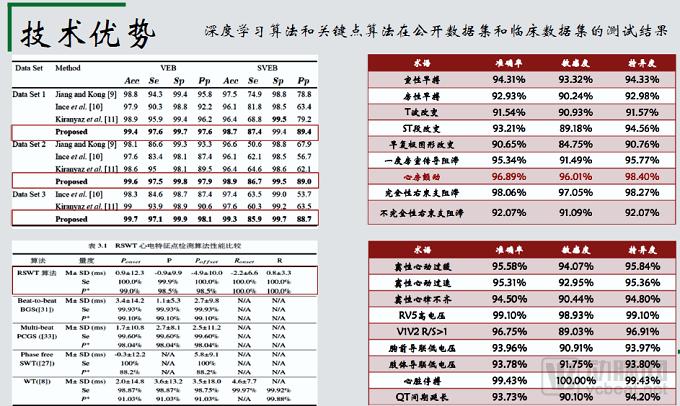
Image source: Wofang Technology
Wofang Technology supports its partners via APIs, transmitting electrocardiogram (ECG) data to specialists for further interpretation through streamlined business processes. Within the entire value chain, Wofang Technology’s upstream partners are device manufacturers, while its downstream clients include remote consultation centers and hospital physicians. By performing preliminary processing of ECG data before handing it over to doctors, Wofang Technology helps alleviate their workload.
Compatible with Most ECG Devices on the Market
Currently, there are numerous models and types of ECG devices on the market. WoFang Technology’s AI-powered ECG auxiliary recognition system is designed to serve the vast majority of these devices, including ambulatory ECG, resting ECG, consumer-grade, and medical-grade systems.
Zhong Youmin told VCBeat that broad compatibility is an inherent advantage of WoFang Technology’s AI-powered ECG auxiliary diagnostic system. When device manufacturers collaborate with WoFang Technology, the company conducts signal quality assessments on their equipment. Based on the results of these signal evaluations, WoFang adjusts and optimizes its algorithmic models, ensuring a rapid adaptation process.
Zhong Youmin stated that varying signal quality can affect the diagnostic outcomes of computer-aided diagnosis systems. Since numerous upstream device manufacturers address the challenge of electrocardiogram (ECG) measurement under diverse conditions and environments—which differs significantly from resting ECG recordings obtained in hospital settings—the resulting signal quality varies across different scenarios. Therefore, it is essential to tailor AI systems specifically to each manufacturer’s devices.
Furthermore, Wofang Technology is a completely neutral third-party provider of medical AI technical services. It can serve the vast majority of ECG device manufacturers on the market, reducing their investments in technology, human resources, and financial resources in this sector. In terms of pricing, Wofang Technology offers considerable flexibility: it can charge based on the number of API calls made by customers, or it can sell its solutions to device manufacturers via a one-time bundled license, fully tailoring its approach to meet the needs of its partners.
In the future, WoFang Technology will strengthen its cloud service capabilities and establish partnerships with more ECG device manufacturers. Currently, WoFang Technology has completed a tens-of-millions-level angel financing round.