

Exploring Application Scenarios and Profit Models of AI in Healthcare: What Kinds of AI Projects Are Hospitals Willing to Pay For?
Can the New Generation of Artificial Intelligence Spark an Industrial Revolution? This is not merely a concern for AI development companies, but also for beneficiaries of AI technology, such as physicians and patients.
On the afternoon of April 12, Tongdu Capital hosted, and VCBeat and Tsinghua University School of Economics and Management co-organized, the 12th “Tongdu Time” salon titled “Where Is the Path for ‘Healthcare + AI’?” The event featured in-depth discussions on the application value and commercialization potential of next-generation artificial intelligence in the healthcare sector.
The conference invited the following guests for this salon: Professor Song Sen from the Department of Biomedical Engineering and the Center for Brain-Inspired Computing Research at Tsinghua University; Professor Duan Tao from Shanghai First Maternity and Infant Hospital and founder of Chuntian Medical Management; Li Yiming, co-founder of Deepwise Healthcare; Li Xing, founder of DeepIntel; Li Xiaodong, co-founder of Lianxin Medical; Zhang Dadi, partner at Danhua Capital; Fei Xiaolu, Chief Engineer of the Information Center at Xuanwu Hospital; and Yu Hui, partner at CEHealth Fund. In addition, numerous industry experts, investors, and entrepreneurs attended the event.
Where Should “Healthcare + AI” Go? Let Us Find the Answers from the Conference Content.
Imaging examinations are the most routine method for patients undergoing hospital check-ups, and medical imaging equipment is now widely available. Currently, 80% of clinical treatments require prior examinations such as CT and MRI. The data generated by these devices is standardized and highly amenable to processing.
However, in daily practice, radiologists typically spend a significant amount of time reviewing medical images. Although the review of each image set usually takes only about five minutes, prolonged and repetitive viewing and interpretation can reduce diagnostic accuracy, leading to occasional misdiagnoses.
At the conference, Li Yiming, co-founder of Deepwise Healthcare, pointed out: “In today’s healthcare system, we lack sufficient resources to meet the substantial demand for high-quality medical care. This is where ‘Healthcare + AI’ presents an opportunity—leveraging AI to bridge the current significant gap. Deepwise Healthcare has chosen medical imaging as its entry point, gradually uncovering the value of ‘Healthcare + AI.’”
Many physicians are reluctant to devote their energy to screening healthy individuals, as they struggle to provide timely care for sick patients and thus lack the time to serve the healthy population. Taking pulmonary CT scans as an example, when a CT is ordered during an outpatient visit, physicians tend to perform a highly detailed review. However, if the CT is conducted as part of a health check-up, physicians may not spend time carefully reviewing the images, making it easy to overlook small lesions.
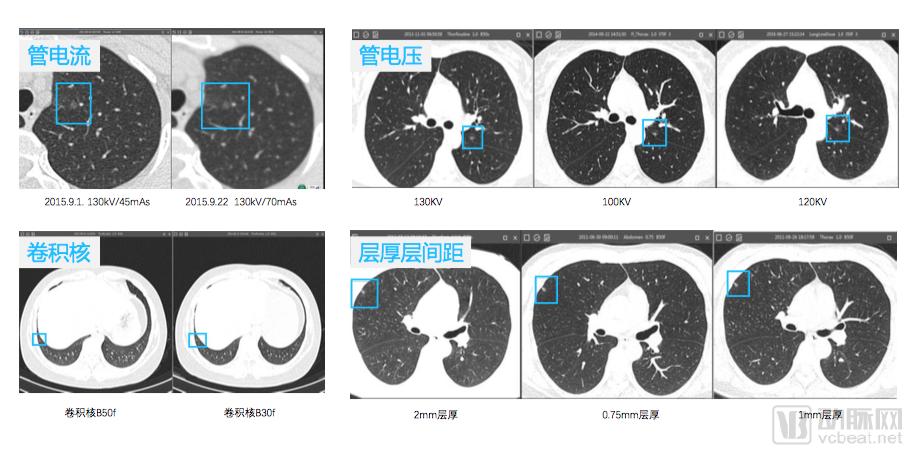
Pulmonary Nodule Detection (Image Source: Deepwise Medical)
AI technology can achieve significant results in the field of medical imaging. On one hand, image data features standardized structures and large volumes, making it well-suited for AI learning. On the other hand, AI does not suffer from fatigue due to repetitive tasks. Although AI may occasionally make diagnostic errors, its actual misdiagnosis rate is significantly lower than that of radiologists.
AI can liberate physicians from repetitive, low-level tasks, enabling them to focus on more meaningful work. In the future, patients will have a greater need for humanistic care, which cold machines cannot provide.
Medical information faces three issues: incompleteness, inaccuracy, and unstructured format.
At the conference, Duan Tao, founder of Springfield Medical Management, addressed issues concerning medical information. He argued that the root cause of these problems lies in the insufficiency of medical resources, where an inadequate supply of high-quality medical resources bears an excessive burden. Although the National Health Commission has distributed numerous forms to physicians for data collection, doctors remain in a state of high workload, struggling to keep up with their clinical duties. Under such circumstances, how can they spare time to organize medical data? This has led physicians to complete the required forms perfunctorily, rendering the forms meaningless and resulting in incomplete and useless data.
AI can address this issue through both indirect and direct approaches.
On one hand, AI can directly analyze the condition and assess the patient’s health status. In this scenario, AI requires two types of data: the patient’s genotypic data and phenotypic data. Hospitals can provide patients’ medical records to the AI in advance; after receiving the genotypic data, the AI then processes the phenotypic data—either self-reported by the patient or obtained through direct clinical evaluation by a physician—to determine the diagnosis.
In such scenarios, physicians can save a significant amount of time, while the verified data exhibits characteristics such as standardization, structuring, completeness, and accuracy. In this way, AI can free up physicians’ time and address the pain points associated with medical data.
AI-assisted analysis inevitably carries a rate of misdiagnosis, but we must remain patient with machine learning systems, as even senior physicians can make diagnostic errors for various reasons. According to Dr. Duan Tao, a 2017 study demonstrated that an AI system outperformed 95% of doctors in disease analysis.
On the other hand, AI can annotate and analyze data such as medical images; automate the processing of information generated by medical devices; and independently organize and analyze big data using algorithms. These capabilities reduce physicians’ workload, allowing them to devote more energy to interpreting data that AI cannot handle, thereby indirectly addressing the aforementioned pain points in medical information management.
Professor Song Sen from the Department of Biomedical Engineering at Tsinghua University shared at the conference his profound and enduring connection with medical imaging, spanning the period from his graduation at Tsinghua to his studies at MIT. He highlighted two key issues arising from this experience, both of which are critical to the future development of AI.
Professor Song Sen believes that, to date, many diseases remain niche conditions; however, they are associated with high mortality rates, pose significant challenges that current medical technologies have yet to overcome, and suffer from insufficient data collection compared to more common diseases.
Despite these numerous challenges, Professor Song Sen believes that they are not insurmountable. In fact, by employing interactive annotation methods, we can enable AI to learn from big data and train on small datasets, thereby gradually identifying underlying patterns.
In the process of learning and analysis, humans always quantify various metrics. Even decisions made based on experience are invariably inspired by specific events from the distant past, rather than arising out of thin air. AI can learn, analyze, and make decisions through big data; however, throughout this entire process, researchers remain unable to ascertain how AI arrives at its decisions. The analytical process of AI is akin to a black box: researchers input data on one side and retrieve results from the other, while what occurs in between remains unknown.
However, if people can understand how AI makes decisions, they can derive new conclusions by analyzing these decision-making processes and address the shortcomings in current AI computations. Professor Song Sen believes that by adopting an AI perspective and understanding how AI thinks, we can achieve rapid breakthroughs in medical technology, enabling AI to incorporate both intuition and reasoning into its analysis of healthcare data.
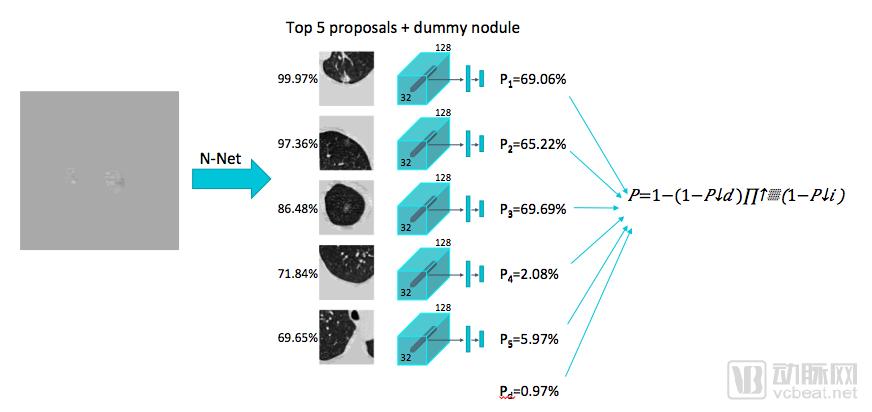
Deep Learning-Based and Probabilistic Bayesian Models Provide the Basis for AI Decision-Making (Source: Tongdu Capital)
Investors: Profitability is the motive for investor participation
How AI business models can be effectively implemented is the primary concern for investors. AI talent is extremely expensive, and AI companies must continuously develop products, expand appointment channels, and continually recruit additional talent. However, there is no clearly defined revenue model on the income side. Many AI enterprises can only survive through continuous fundraising in their initial years, with their losses mounting ever larger.
Even so, Yu Hui, a partner at CEC Health Fund, believes: “First, the healthcare industry will not develop that quickly; it is indeed difficult to see a sound commercial profitability model in the short term. However, from a long-term perspective, favorable news will emerge in this industry in the third or fourth quarter of 2018. The trend in 2018 will be upward, and this sustained upward trajectory may continue through 2019 and even 2020.”
Zhang Dadi, a partner at Danhua Capital, stated, “The exploration of business models for AI projects is not just a challenge in China, but a global one. With our country’s abundant patient data resources, the government is determined to avoid falling behind in artificial intelligence. Consequently, China has incorporated AI into its national development strategy—a move rarely seen among other nations. Therefore, rather than merely following in the footsteps of the U.S. FDA, China will accelerate the development of AI. This represents highly favorable news for current AI startups. As long as we remain steadfast in our efforts, the value will inevitably be realized.”
In an interview with VCBeat, Zhang Dadi stated, “We do not focus on which technological domain a solution belongs to, whether it is AI or blockchain; we only invest in projects with the potential for future profitability.” Therefore, even if AI appears to have a promising future, investors will gradually lose confidence if it fails to identify viable pathways to achieve profitability.
Fei Xiaolu, Chief Engineer of the Information Center at Xuanwu Hospital, highlighted several practical challenges currently facing AI during the roundtable discussion session of the conference. She argued that the primary barrier to the clinical implementation of AI remains technical in nature. Taking medical imaging as an example, a specific AI algorithm is typically designed to screen for and flag only a single disease entity. In clinical practice, however, physicians conduct a comprehensive analysis of a CT scan rather than approaching it with a preconceived notion—first confirming a specific diagnosis and then applying a corresponding AI tool for verification. It is unreasonable to expect hospitals to allocate sufficient funds to deploy a wide array of specialized AI systems, yet this financial burden represents an unresolved issue in the current landscape.
Therefore, specialized hospitals have a high demand for AI, but for large comprehensive hospitals, AI currently fails to meet their needs. “If AI can reach the level of our hospital’s neurology department, we would proactively promote it without requiring vendors to take the initiative; this is entirely possible. However, I believe that technology companies still need to make sustained efforts and accurately identify the core issues.”
The development of new things is always tortuous, but there is no doubt that it is only a matter of time before AI, as an extension of human intelligence, gains public recognition. We need to have confidence in the AI industry and trust in AI developers; one day, we will see the technological world of our dreams.