

Trecare Rikyo Achieves Highest Market Penetration in Southwest China's Overseas Assisted Reproduction Sector Within Three Years
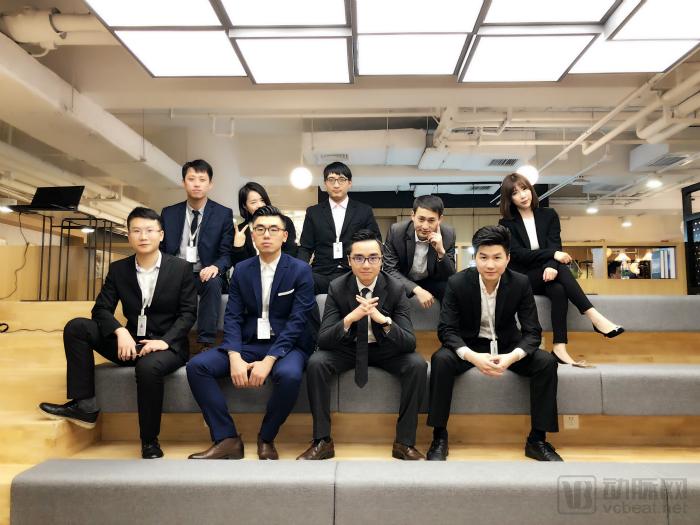
Trecare Core Team; Zhu Tao, the founder, is third from the left in the front row.
Established in 2015, Sichuan Recoor Medical Management Co., Ltd. (hereinafter referred to as “Recoor”) became the enterprise with the highest market penetration in Southwest China’s cross-border healthcare sector, particularly in assisted reproductive technology, within just three years.
Trecare’s brands, including “Mi Yun” and “Quan Xi,” independently operate international medical services such as overseas assisted reproduction and overseas medical treatment, and have developed the Tre-Services end-to-end business management system. To date, it has established strategic partnerships with more than 50 top-tier medical institutions abroad and completed online platform development and offline channel deployment for multiple brands.
So, how does RecoYou leverage its resource barriers and comprehensive services to earn patients’ trust through word-of-mouth and serve thousands of families? VCBeat (WeChat ID: vcbeat) conducted an exclusive interview with Mr. Zhu Tao, founder of RecoYou.
Zhu Tao comes from a family with a long-standing medical tradition. His maternal grandfather was a renowned veteran practitioner of traditional Chinese medicine in Sichuan Province, and several members of his father’s generation held positions in Sichuan’s health authorities. Influenced by his upbringing and personally witnessing the superior therapeutic outcomes achieved through advanced foreign medical technologies, Zhu became determined to bring world-class medical expertise and compassionate, patient-centered care back to China.
Following thorough research into domestic and international market projects and the establishment of a core team, RekeYou has assembled a team comprising members of the U.S. medical academies, senior executives from Fortune 500 multinational corporations, seasoned technical experts from foreign enterprises, and leading figures in China’s internet operations sector.
In early 2015, Ruikyou was officially established in Chengdu, primarily focusing on three business areas: overseas assisted reproductive technology (ART), overseas treatment for critical illnesses, and overseas health checkups.
“After three years of consolidation and accumulation from concurrently operating these three business lines, our focus has shifted more toward the reproductive health sector, as evidenced by market data and business volume. This marks a key differentiator for Rekeyou compared to other overseas medical service platforms that primarily focus on critical illnesses,” said Zhu Tao. He noted that Rekeyou integrates demand, supply, and services within the reproductive health industry, establishing a connector linking patients, physicians, and institutions both domestically and internationally.
"In China, one in every eight couples of reproductive age faces infertility issues. Moreover, there is a trend toward younger patients; data from our partner hospitals show that many girls under the age of 25 are experiencing premature ovarian insufficiency, with AMH levels even lower than those of women aged 35. This is related to environmental factors, lifestyle habits, and other pathological causes. Since the relaxation of the one-child policy to allow two children, the user base and demand for the assisted reproductive technology industry have surged rapidly, presenting us with a significant opportunity."
In terms of product form, based on a thorough understanding of the overseas medical market and an analysis of its inherent issues, Rekeyou has pioneered the development of U-Med Select, a revolutionary overseas medical matchmaking platform in the industry. This platform aims to address some of the urgent pain points in the current overseas medical market, such as high prices, low credibility, and difficulties in customer acquisition.
“This is a product incubated by our company, and we spent over six months refining and developing it. Based on an assessment of current patient volume, brand awareness, and the reputation among local physicians and hospitals, Ruikoyou has achieved the highest market penetration in Southwest China.”
To date, Rekeyou has signed long-term strategic cooperation agreements with more than 50 leading reproductive health institutions, cancer treatment centers, and general hospitals abroad. Some of these medical institutions have also entered into exclusive cooperation agreements for the Southwest region. Furthermore, Rekeyou has established both online and offline distribution channels for multiple brands, including “Mi Yun” and “Quan Xi,” and has hosted over 50 online and offline events, engaging thousands of domestic client families.
Zhu Tao revealed that all medical institutions and laboratories partnered with RekeYou have undergone rigorous screening and are distributed across the United States, the United Kingdom, Thailand, Malaysia, Russia, Japan, and Taiwan, China.
“We will refer to the annual hospital rankings published by local official authorities and conduct in-depth research on key indicators such as the 5-year survival rate for critical illnesses, comprehensive pregnancy and live birth rates at fertility hospitals, quality of medical services, postoperative recovery, reputation within the local medical community, and feedback from patients after their return to China. Based on a comprehensive evaluation of these hard metrics, we will identify the overseas healthcare institutions that best meet the needs of Chinese patients and enter into strategic cooperation agreements with them.”
"In terms of business volume, our key partnership region is the United States, as it boasts globally leading technology, resources, and supporting infrastructure in major diseases such as oncology, as well as in assisted reproductive technology, along with relatively more open policies. Southeast Asia offers greater cost-effectiveness, and Russia is an emerging player; however, our service teams are already in place."
Reporters learned that Ruikeyou has established partnerships with 25 hospitals and institutions in the United States, including MD Anderson Cancer Center, Houston Methodist Hospital, Scripps Proton Therapy Center, HRC Fertility, Pacific Fertility Institute (PFI), and Fertility Care Center of Las Vegas (FCLV).
“Regarding costs, medical expenses for IVF in the United States are approximately $20,000–$30,000, while those in Thailand are slightly lower. We have established a comprehensive, personalized service workflow that includes remote video consultations prior to departure, organization and translation of medical records, guidance on preliminary examinations, as well as full-service support abroad such as medical interpretation, clinical accompaniment, and arrangements for transportation, accommodation, and meals. In cases involving surrogacy, we also provide professional legal procedures, trust fund management, and even detailed services such as bill verification. As a result, patients place a high degree of reliance and trust in us,” said Zhu Tao, expressing confidence in his team.
It has been 40 years since the birth of the world’s first test-tube baby in 1978. In vitro fertilization (IVF) technology has evolved from the first generation, conventional IVF-ET (In Vitro Fertilization and Embryo Transfer), to the current third generation, featuring PGS/PGD (Preimplantation Genetic Screening/Preimplantation Genetic Diagnosis).
PGS technology refers to the detection of chromosome number and structure in embryos before they are transferred back into the uterus. By comparison, it analyzes whether there are abnormalities in genetic material, whether any pairs of chromosomes are missing, and whether the morphological structure of the chromosomes is normal.
PGD (Preimplantation Genetic Diagnosis) is a technique that involves extracting trophectoderm cells from blastocysts for genetic analysis to detect abnormalities and carrier status of genetic defects, thereby enabling the selection of healthy embryos for transfer and effectively preventing the transmission of genetic diseases to offspring.
“In the United States, preimplantation genetic screening (PGS) can assess all 23 pairs of chromosomes in embryos, while preimplantation genetic diagnosis (PGD) can screen for 125 types of genetic disorders; however, the application of this technology is not yet widespread in China. Genetic conditions such as Down syndrome, thalassemia, and Cri-du-chat syndrome can all be screened through third-generation in vitro fertilization (IVF). Over 95% of our patients undergo third-generation IVF, ensuring that only healthy embryos are transferred into the uterus at some of the most prestigious assisted reproductive laboratories in the United States.”
“For certain specific groups, whether due to physical, occupational, or familial factors, there is a rigid demand for surrogacy. The total cost of legal surrogacy in the United States is approximately RMB 1 million. Since egg donation and surrogacy currently fall within a policy gray area in China, our company adheres strictly to the principle of never crossing the red line of national laws. Therefore, our patients will only engage in overseas legal egg donation and surrogacy services in countries and regions where such practices are lawful and in full compliance with local policies and regulations.”
Zhu Tao told reporters that in the United States, only 14 states legally permit surrogacy and egg donation. However, the industry chain is highly mature, with licensed attorneys handling all aspects of the process—including financial arrangements, guarantees, trusts, notarization, and parentage determinations—to ensure full legal compliance.
Behind every family seeking egg donation and surrogacy lies a unique story. “This rather unconventional group consists of individuals who, for various reasons, have been unable to have their own children. Therefore, when they fulfill their dream of building a family abroad through our legal channels, they are deeply grateful to us. This, in turn, instills in us a strong sense of responsibility and mission, making this work highly rewarding.”
For any company engaged in overseas medical services, customer acquisition is no easy feat. However, Ruikeyou has successfully partnered with more than 120 hospitals and over 1,500 physicians across relevant departments in China through its online platform and diverse offline channels. Additionally, it has established collaborations with more than 100 cross-industry partners, including major insurance companies, banks, Meinian Onehealth (China’s largest publicly listed health checkup provider), and Penguin Doctor (backed by Tencent).
“Our sales team maintains far stronger connections with hospitals than our competitors, thanks to our highly personalized communication and services. Additionally, we have developed Tre-Services, a comprehensive business management system that oversees the entire closed-loop process—from initial consultation and contract signing, through pre-departure preparations and full-course treatment abroad, to post-operative follow-up upon return to China. The system manages every stage, providing detailed data records on which channels generate the most leads, as well as conversion and signing rates.”
Regarding the 2018 plan, Zhu Tao revealed that in addition to increasing local penetration rates, the company will gradually roll out its market layout and expansion across China. “We will proceed simultaneously online and offline. In the first step, we have already validated our entire business model, including full-market operations, and achieved profitability. In the second step, we will implement phased, large-scale deployment, including establishing backend medical entities, and we also plan to seek financing.”