

WeSure CEO Liu Jiaming Launches Service Allowing Commercial Health Insurance Purchase via Medical Insurance Individual Account Balance
Recently, the 2018 China “Internet+” Digital Economy Summit was held in Chongqing. Themed “Empowering the New Ecosystem, Sharing New Opportunities,” the summit was guided by the Chongqing Municipal People’s Government and jointly organized by the National Party Media Information Public Platform of People’s Daily, the Chongqing Municipal Commission of Economy and Information Technology, and Tencent.
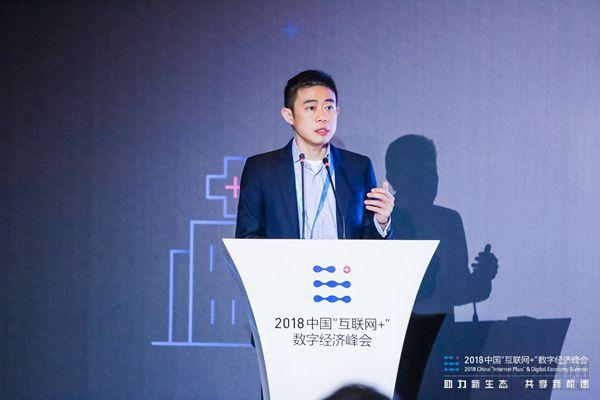
Liu Jiaming, Chairman of WeSure, shared insights at the conference, introducing WeSure’s explorations in the “Internet + Insurance” sector.
WeSure (hereinafter referred to as “WeSure”) is Tencent’s first majority-controlled insurance platform and a key component of Tencent’s “Internet + Finance” ecosystem. In October 2017, it obtained approval from the China Insurance Regulatory Commission (CIRC) to operate as an insurance agent, and officially launched the following month. Users can purchase insurance policies, check policy details, and file claims through WeChat and QQ—two nationwide lifestyle service platforms—making insurance readily accessible.
As one of the event’s supporting media outlets, VCBeat (WeChat ID: vcbeat) has compiled highlights from select speakers for its readers. Below is a verbatim transcript of the remarks delivered by Liu Jiaming, Executive Director and CEO of WeSure.
Hello everyone. It is a great honor to have the opportunity to share with you WeSure and Tencent’s explorations in the “Internet+” insurance sector: how to integrate social security with commercial insurance, enabling users to purchase supplemental commercial insurance using the balance in their medical insurance accounts.
China's health insurance coverage exceeds the global average
Before interpreting our strategic layout, let us first review the industry background. Consider a statistic that fills us with pride: China’s basic medical insurance coverage rate is now far above the global average. The global average stands at approximately 50%, which would rise to 60% if China were included. Currently, China’s basic medical insurance coverage rate has reached 95%, while pension insurance coverage has attained 70%.
Building on this foundation, the government continues to strive to expand social security coverage. Three major initiatives have been implemented: First, the medical insurance formulary has been expanded to cover more medications, with the number of reimbursable drugs increased through negotiations last year. Second, cross-provincial healthcare services have been enabled, allowing migrant workers to access medical care and settle claims outside their home regions. Third, local social security agencies have launched various mobile apps and official WeChat accounts, exploring “Internet Plus” solutions to enable users to obtain required social security services more efficiently.
Furthermore, let us examine healthcare-related data: in China, on average, one in six individuals is hospitalized annually, representing a relatively high proportion. In the event of serious illness, treatment costs often exceed RMB 100,000 to 200,000, imposing a substantial financial burden on families.
Taken together, while basic medical insurance provides “broad coverage and fundamental protection,” the risk of catastrophic illness remains a recurring concern; therefore, more diversified healthcare security options should be made available to residents.
Promoting the Use of Medical Insurance Personal Account Balances to Purchase Commercial Health Insurance
How to Enhance Personal Healthcare Coverage: The Most Critical Approach Is Supplementing with Commercial Insurance—This Is the Exploration Undertaken by WeSure.
Many people contribute to the “five social insurances and one housing fund” every month, yet they may not know where these contributions go. For instance, if your monthly salary is 100 yuan, approximately 2 yuan will be allocated to medical insurance, which is divided into two accounts: the personal account and the pooled fund. The balance in the personal account is at the individual’s disposal and can be used for outpatient visits, medication purchases, and other related expenses. The pooled fund is centrally managed by the social security administration and is used to cover eligible costs for special-disease outpatient care and hospitalization that fall within the scope of basic medical insurance coverage.
To enhance the level of medical security, it is essential to revitalize the funds in personal medical insurance accounts. Since 2012, policies have indicated that the balance in personal medical insurance accounts can be used to purchase commercial health insurance, and pilot programs are currently underway in more than 30 cities.
However, this pilot program has not yet been rolled out on a large scale due to several constraints: first, raising resident awareness of the policy and ensuring that commercial insurance can reach users; second, the payment process for this purchase method is relatively cumbersome; and third, regarding claims settlement, reimbursement requires different invoices, and the process may take more than ten days. Therefore, WeSure is exploring how to leverage internet-based solutions to address these pain points and streamline the process.
We have undertaken several initiatives: first, we integrated WeChat with social security cards. With nearly one billion users, WeChat allows individuals to link their social security cards and query social security information online; second, we enabled online payment for medical services and permitted the use of personal account balances from basic medical insurance to purchase commercial health insurance.
We have launched the initiative in Shenyang that allows individuals to use the balance in their personal medical insurance accounts to purchase commercial health insurance. This effort has received strong support from the Shenyang Social Security Bureau, positioning Shenyang at the forefront nationwide as the first city to engage in such exploratory collaboration with us. Currently, WeSure, in partnership with Tencent’s “Internet+” division and Taikang Pension, has introduced a health insurance product funded by personal medical insurance account balances for users in Shenyang. Urban employee participants can leverage the modest funds in their social security cards to secure substantial coverage beyond the scope of basic medical insurance.
This product is designed for urban employees in Shenyang, allowing them to pay premiums directly via their WeChat Wallet using funds from their individual medical insurance accounts. It covers both the insured individuals and their minor children, with annual premiums starting at just RMB 126. In terms of coverage, the plan offers a sum insured of up to RMB 2 million, features a zero deductible, and is not restricted to the social security drug formulary, making it a comprehensive protection product characterized by “high coverage and low entry barriers.”
The feature that best exemplifies WeChat’s “Internet Plus Connectivity” advantage is the product’s fully online purchase process. Users are exempt from health declarations and medical examinations prior to purchase, with automated underwriting completed within seconds. Unlike traditional individual account insurance products that require in-person swiping of social security cards for payment, this product supports online payment and automatic renewal. Distinct from other health insurance products currently on the market, it features proactive claims settlement by the insurer, allowing users to receive claim payments without filing an application or uploading documentation themselves.
For users, Tencent’s “Internet + Connectivity” advantage has significantly improved the experience of using personal medical insurance account balances to purchase health insurance. With just a few simple steps on WeChat, insured individuals can leverage their personal medical insurance account funds to secure health coverage of up to RMB 2 million. By “letting data do the running so that people have to walk less,” this approach will greatly enhance residents’ willingness to enroll in commercial health insurance and comprehensively boost enrollment rates.
In summary, WeSure’s exploratory initiatives and new services aim to create a multi-party win-win scenario. On one hand, users can leverage small balances in their social security accounts to purchase supplemental coverage, effectively maximizing the value of these funds. Local governments, particularly social security bureaus, can provide residents with layered and comprehensive protection through this “Internet+” integration. For healthcare ecosystem partners, service efficiency is enhanced via online appointment registration and WeChat Pay. For insurance companies, WeSure offers a more effective channel to reach customers.
Further Reading
Eligible participants in the Shanghai Urban Employee Basic Medical Insurance may, on a voluntary basis, use the accumulated balance in their personal medical insurance accounts to purchase exclusive commercial medical insurance products approved by the China Insurance Regulatory Commission and endorsed by the Shanghai Municipal People’s Government.
Effective September 1, 2017, employees enrolled in Changsha’s employee basic medical insurance program may use their medical insurance cards to purchase commercial health insurance and accidental injury insurance. The Changsha Medical Security Bureau stated that this initiative aims to revitalize funds in personal accounts, improve the efficiency of fund utilization, and meet the public’s diverse needs for health protection.