

Where Is the Future of 'AI + Healthcare'? Tongdu Time's 12th Salon Held in Beijing
On the afternoon of April 12, 2018, the event “Where Is ‘Healthcare + AI’ Headed? — Application Value and Commercialization Potential of Next-Generation Artificial Intelligence in Healthcare,” also serving as the 12th Tongdu Time Salon, was held at the Entrepreneur Accelerator of Tsinghua SEM. The event was hosted by Tongdu Capital and co-organized by VCBeat and Tsinghua University School of Economics and Management.
This salon primarily focused on discussions regarding the application value and commercialization of “Healthcare + AI.” Distinguished guests included Professor Song Sen from the Department of Biomedical Engineering and the Center for Brain-Inspired Computing Research at Tsinghua University; Professor Duan Tao, Founder of Spring Field Medical Management and affiliated with Shanghai First Maternity and Infant Hospital; Mr. Li Yiming, Co-founder of Deepwise Healthcare; Ms. Li Xing, Founder of DeepGlow; Mr. Li Xiaodong, Co-founder of Lianxin Medical; Mr. Zhang Dadi, Partner at Danhua Capital; Ms. Fei Xiaolu, Chief Engineer of the Information Center at Xuanwu Hospital; and Ms. Yu Hui, Partner at CEC Health Fund. The event was also attended by numerous industry experts, investors, and entrepreneurs.
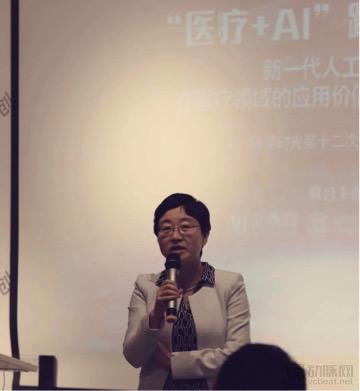
First, Ms. Wu Ronghui, Founding Managing Partner of Tongdu Capital, delivered the opening remarks and warmly welcomed all attendees. Ms. Wu stated that Tongdu Capital is committed to becoming an evergreen fund with a global perspective, a local network, deep industry insights, and an innovative spirit. By hosting 12 editions of the “Tongdu Time” salon over the past three years, the firm aims to embed itself deeply within the industry and build a platform for exchanging ideas and sharing Tongdu’s research findings and insights with entrepreneurs, industry experts, and all those striving for success. In the currently booming field of “Healthcare + AI,” there is much excitement, confusion, and uncertainty. It is our hope that this wonderful afternoon will provide an opportunity for in-depth discussion on these topics.
During the keynote session, Professor Song Sen from the Department of Biomedical Engineering and the Center for Brain-Inspired Computing Research at Tsinghua University delivered a compelling speech titled “Applications of Next-Generation Artificial Intelligence Technologies in the Healthcare Sector.”
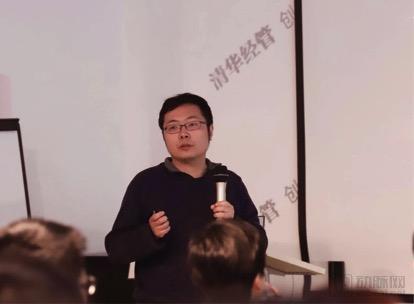
Professor Song Shen used medical imaging as an entry point to explain, in a step-by-step manner from basic to advanced concepts, how to conduct few-shot learning using machine language in the era of big data. AI technology can solve many problems that are beyond human capability and uncover correlations that humans cannot detect. However, the entire data mining process operates as a black box. Professor Song Shen believes that if we can understand how AI makes decisions, view problems from AI’s perspective, and comprehend how AI “thinks,” thereby making the entire analytical process both intuitive and logical, AI will drive the Fourth Industrial Revolution.
Subsequently, Professor Duan Tao, founder of Chuntian Medical Management and affiliated with Shanghai First Maternity and Infant Hospital, analyzed the application value of medical AI and the future of artificial intelligence from the perspective of “hospital users.” Professor Duan believes that doctors review similar cases, prescribe identical orders, and perform repetitive, straightforward tasks on a daily basis. The heavy workload prevents them from devoting adequate attention to completing data forms; consequently, the data contained in these perfunctorily completed forms become essentially useless. This reflects the current state of the healthcare industry.
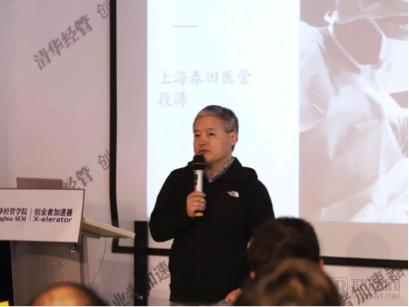
Professor Duan believes that AI can change this status quo: “In most cases, diseases are common and frequently occurring. Based on phenotypes and genotypes, it is basically possible to determine what disease a patient has. In terms of diagnosis, machines can be more reliable than humans.”
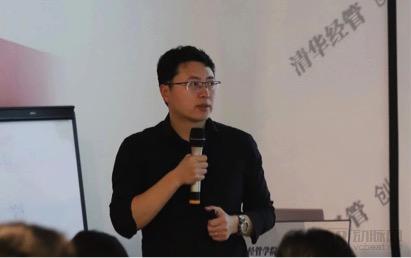
Mr. Li Yiming, Co-founder of Deepwise Healthcare, discussed the opportunities in “Healthcare + AI” from the perspective of “business development”: “China has recently introduced healthcare reform policies and identified certain challenges. We need to strengthen primary care infrastructure so that patients can have their health issues resolved at the grassroots level, rather than being referred to higher-level hospitals. This approach can help address the current difficulties and high costs associated with accessing medical care.” Deepwise Healthcare has adopted this as its entry point, starting with hospital imaging to design an auxiliary diagnostic system aimed at enhancing the diagnostic capabilities of primary care institutions and meeting their corresponding needs.
Subsequently, Yang Chengkui, Investment Director at Tongdu Capital, moderated the panel discussion titled “Opportunities and Challenges in ‘Healthcare + AI’.” For this session, Tongdu invited the following guests: Ms. Li Xing, Founder of DeepBioscience; Mr. Li Xiaodong, Co-founder of Lianxin Medical; Mr. Zhang Dadi, Partner at Danhua Capital; Ms. Yu Hui, Partner at CEC Health Fund; and Ms. Fei Xiaolu, Chief Engineer of the Information Center at Xuanwu Hospital. Ms. Wu Ronghui, Founding Managing Partner of Tongdu Capital, also participated in the forum.
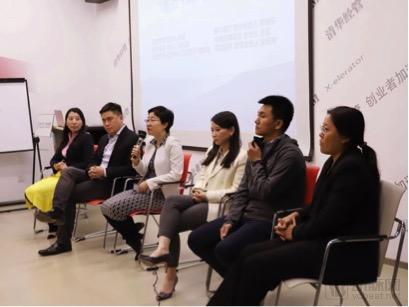
In this seminar, investors, entrepreneurs, and hospital users engaged in face-to-face discussions, exploring topics such as “The Importance of AI in Healthcare,” “Can AI Resolve Data Issues Within Three Years?,” and “Challenges in the AI Entrepreneurship Journey.” Regarding the question of whether “AI Represents a Revolutionary Major Opportunity for Healthcare,” the panelists shared their respective viewpoints in a relaxed yet lively atmosphere.
First, Mr. Zhang Dadi stated: “This is an excellent opportunity. China has substantial unmet medical needs, and the overall standard of healthcare remains too low. This gap is significant, and I am highly optimistic about AI+Healthcare.”
Ms. Wu Ronghui stated, “This trend is unstoppable; it is only a matter of time. Companies in the field of healthcare informatization took more than a decade to achieve their current scale and influence. I believe AI companies will move faster, as each cycle of technology application in this industry is accelerating, and the pace is quickening.”
From an entrepreneur’s perspective, Mr. Li Xiaodong stated, “The transition from the informatization of the PC era to the intelligence of the AI era is a process of long-term accumulation. While no major disruptions have occurred along the way, AI technology as a whole is now accelerating. As entrepreneurs, we frequently engage with clinicians to understand how extensively AI is utilized in their hospitals and to review daily interaction feedback; each such exchange serves as a source of inspiration for us.”
Ms. Fei Xiaolu shared her perspective on the future of artificial intelligence from a hospital standpoint: “The limitations on AI development are not due to conservatism within hospitals. AI should clearly define its role—whether it is to serve as an adjunct to treatment or to become the ‘ultimate brain.’ I believe we still have a long way to go and much foundational work to complete. We cannot simply push forward recklessly, but I remain optimistic about the overall direction.”
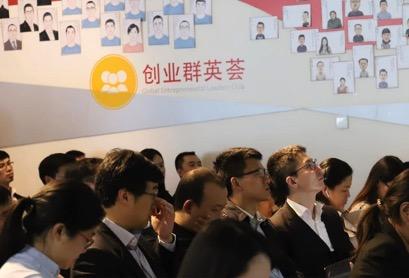
“Tongdu Time Salon” is a recurring event series hosted by Tongdu Capital, held quarterly. The salon focuses on niche sectors within the two core investment areas of Tongdu Capital: healthcare and intelligent technology. It aims to help entrepreneurs and investors in these fields clarify industry trends, connect with high-quality resources, identify application scenarios, and pursue the right development path in their exploration. More exclusive content from the events, along with Tongdu’s industry research reports, will be released sequentially on Tongdu Capital’s WeChat official account (ID: TendenceCapital). Don’t miss out on the insights.