XCARE Files IPO Prospectus: Building a Global Medical Data Sharing Platform on Blockchain
The essence of blockchain is a decentralized database; however, in the healthcare sector, what matters is not merely decentralization, but rather the integration of data within distributed systems.
Reality is subtly shifting beneath the surface, with data integration becoming the cornerstone for solving all challenges. In this era, data silos can no longer drift securely in the internet’s currents as they once did. Countless enterprises are striving to connect these silos using their own technologies, and this interconnected network of formerly isolated data repositories will unleash tremendous energy.
EY’s Life Sciences 4.0 Era report highlights that data is the core of future competition among technology companies, and the trend of the Fourth Industrial Revolution is for tech firms to infiltrate traditional healthcare companies and establish entirely new life sciences enterprises, leveraging big data to change the world. XCARE is precisely such a company, riding this wave at full speed.
VCBeat (WeChat ID: vcbeat) interviewed XCARE founder Mao Zemin, who brought fresh perspectives to blockchain builders.
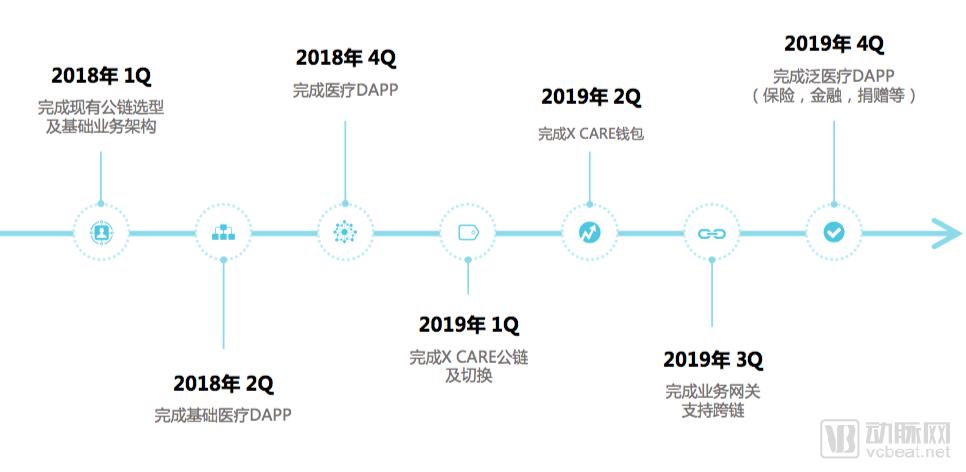
“XCARE is building a public blockchain focused on the life sciences sector. From a technical perspective, we have basically completed the initial version of the SDK; the initialization commands for real-name XCI nodes have been implemented; the backend identity authentication module and file upload interface have been developed; smart contracts have been finalized; and elliptic curve-based key pairs along with corresponding transaction algorithms are also complete. The most recent achievement is the institutional node whitelist, for which functionalities and documentation have already been uploaded,” Mao Zemin briefly summarized the status of the XCARE project in an interview.
Well-prepared, the XCARE team completed the construction of the main chain as scheduled within just three months and moved on to the next step: developing the foundational healthcare DApp.
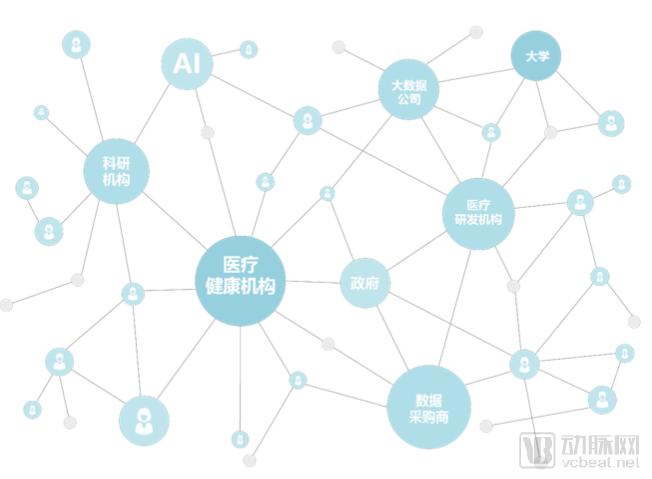
XCARE’s ultimate goal is to establish a cross-border medical data sharing platform via blockchain. By leveraging blockchain infrastructure, it integrates global medical information silos into a unified network, employing blockchain technology—rather than reliance on trust—to ensure the privacy and reliability of data sources, as well as the security and compliance of data access.
To achieve this goal, XCARE will initiate and design a secure, deterministic, rights-confirmed, consensus-based, and experimental medical data collaboration system within communities; based on the performance of this medical data collaboration system on existing public blockchains, it will design and participate in building a foundational data chain dedicated to the life sciences sector; and it will initiate and participate in designing a scalable, cross-chain medical fingerprint prototype based on personal nodes.
Through community building, XCARE will establish a robust mechanism for the circulation and exchange of medical data value. Data contributors can share de-identified data to support medical research and service institutions, earning rewards via blockchain smart contracts for their contributions. Meanwhile, healthcare providers and research institutions will gain access to more trustworthy and valuable data resources.
Every blockchain enterprise shares a consistent long-term goal, yet each possesses its own unique strengths. Xcare gains its competitive edge through technology, which currently serves as the core competency driving blockchain development.
Implementing searchable encryption in a cloud computing environment is straightforward, whereas doing so on a blockchain presents a significant challenge. The XCARE technology team holds two key patents in this field.
In terms of privacy data storage, XCARE employs symmetric encryption, asymmetric encryption, and secret-sharing to split data into tens of thousands of ciphertext fragments, which are distributed across P2P nodes. Data held by any single node appears as garbled text; to access the complete data, one must obtain a minimum or “threshold” number of ciphertext fragments and merge them using reverse cryptographic computation. Under this framework, data security is extremely high, as the cost for hackers attempting to crack these protocols generally exceeds the potential benefits.
XCARE will create a globally unique medical ID for individual users on the blockchain. Leveraging the scalability and cross-chain design of the XCARE chain, this medical ID is poised to gain recognition and enable cross-chain interoperability throughout the broader blockchain ecosystem in the future.
XCARE users can precisely retrieve on-chain data. During the data usage process, XCARE desensitizes and encrypts the accessed data, and broadcasts an explanation of the data’s security status to wallet users. This provides maximum protection for personal privacy and data security.
To enable every user to participate in XCARE’s public blockchain in their daily lives, it is essential to address
One challenge is how to reduce users' storage burden. To address this, XCARE adopts a hybrid node architecture that lightens storage nodes, ultimately empowering users to manage information via simple devices.
As the medical data community continues to strengthen, AI systems at pharmaceutical research companies will be able to access and process cross-border, cross-industry big healthcare data. Broader sample sizes can significantly accelerate new drug development, thereby benefiting more lives.
Future healthcare services will increasingly leverage comprehensive personal health data to select the most effective treatments for individuals, rather than relying on coarse, generalized diagnostic and therapeutic approaches. As the volume of real-world data contributed by data nodes to the XCI platform continues to grow, the richness and value of comprehensive personal medical data will increase substantially. We may even be able to map out individual health trajectories and predict the timing and probability of future disease onset.
The low cure rate for rare diseases is primarily attributed to their low incidence and scarce data, which hinder comprehensive research and the development of effective treatments. XCARE offers greater potential for the research and cure of rare diseases. On one hand, increased data volume can expand sample sizes for rare disease studies, thereby accelerating the research process; on the other hand, the availability of more relevant data supports pathogenic analysis of rare diseases and provides simulated data for drug development.
Through smart contracts, XCARE can automatically conduct insurance underwriting and claims processing based on big medical data. Furthermore, comprehensive personal medical data enables the realization of personalized, precision-tailored insurance coverage. This has the potential to significantly transform the landscape of the traditional health insurance industry.
Medical data is a goldmine for life. The authorization of medical data usage by individuals or institutions is crucial for medical research. XCARE ensures the security of this process and the credibility of the data through technological means, which will greatly accelerate the development of data research in the medical field. Individuals and institutions can donate the rewards obtained from open data authorization through XCARE to medical charities around the world, helping patients in areas with weak medical systems and limited financial capabilities.
XCARE is currently developing cross-chain technology. CEO Mao Zemin stated, “The unification of blockchain is an inevitable trend for the future. In the end, each sector may be left with only one or two public chains, while the remaining chains will either disappear or be merged into the longest public chain. Furthermore, blockchains across different sectors will begin to integrate information, and the final era will be characterized by information flows and currency flows that bypass exchanges.”
But we are still at the very beginning of the broader historical tide; blockchain technology represents only a small fraction of the entire ecosystem, and the key lies in attracting sufficient user participation.
While building its blockchain platform, XCARE visited numerous hospitals in Shanghai and engaged in discussions with Pacific Insurance Company and PICC Property and Casualty Company. It also communicated with medical equipment suppliers and healthcare data companies, awaiting the successful completion of its product development.