

Yidu Cloud Files IPO Prospectus After $120M Investment to Build Medical Big Data Infrastructure
Currently, there are over 4,000 types of hospital information systems in China, with an average of more than 100 systems per hospital. These systems exhibit significant variations in data structure and representation, with natural language text accounting for more than half of the data. Furthermore, the differing documentation styles among departmental physicians add to this extreme complexity, making it difficult for computers to interpret the data.
Executed entirely by humans, even 500 people would be unable to process billions of medical records in their lifetimes.
There is a company that, after four years of effort and an investment of over RMB 800 million, has conducted in-depth research on a wide range of diseases and built the infrastructure for future digital healthcare, ultimately gaining recognition from nearly one hundred top-tier Chinese medical research institutions (ranked within the top 150) and government agencies. Its name is: Yidu Cloud.
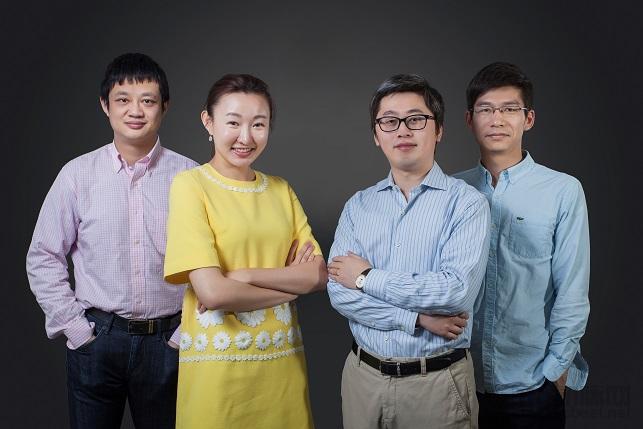
Yidu Cloud Founding Team (Image provided by Yidu Cloud)
“20 people, 800 million yuan, 1.2 billion copies, 20 million units”
In 2013, Yidu Cloud established a team of 20 members. Upholding the belief that “actionable data is the foundation, and new-type healthcare is the future,” they dedicated themselves to the research and development of medical big data and AI infrastructure platforms.
Today, they have assisted medical institutions in digitizing and processing over 1.2 billion medical records, establishing standardized versions for more than 20 million diagnostic terms. On average, approximately 700,000 medical records are processed daily, with at least 15,000 standardized diagnostic terms established each day.
Two-thirds of the top 150 hospitals in China are their partner clients. In 2018, they also planned to collaborate with provincial and municipal government agencies in 10 provinces to establish regional medical data platforms.
Amid the AI renaissance in China, numerous startups have secured substantial financing. Yidu Cloud, operating outside the spotlight, has remained relatively “under the radar” within the industry. Despite receiving investment from major institutional investors and achieving unicorn status by integrating technology development, implementation, and the three key pillars of industry, academia, and research, the company has never publicly disclosed its valuation.
Transforming raw data into usable data, i.e., “basic processing of big data,” is the origin of Yidu Cloud.
“Everyone wants to tackle the high-profile aspects of healthcare, such as appointment scheduling and connecting patients with specialists. I don’t deny their value, but no one is willing to do the ‘dirty work’ of transforming raw data into usable data,” joked Gong Rujing, founder of Yidu Cloud.
This is indeed the case. Building foundational infrastructure is the most challenging task, akin to laying a foundation for a building. Few startups choose to enter the market by developing basic systems with high technical barriers, as Yidu Cloud has done.
To date, Yidu Cloud has processed over 1.2 billion medical records and compiled more than 20 million diagnostic terms. The company automatically converts dispersed, unstructured, and non-standardized data into standardized, usable formats and consolidates them into a unified repository.
With this standardized dataset, the value of the infrastructure platform becomes evident.
Only by tackling the "toughest challenges" can a large-scale platform be built
While the vast majority of big data and artificial intelligence companies choose to enter the market by focusing on one or two specific domains, Yidu Cloud has adopted a much broader strategy. Its developed “Data Intelligence Platform for Healthcare” (DPAP) spans from basic scientific research and clinical systems to hospital management systems, as well as cross-hospital and cross-regional collaborative sharing. Despite this extensive scope, the platform achieves comprehensive coordination and orderly collaboration, distinguishing itself from mere theoretical concepts akin to “building cars through PowerPoint presentations.”
Yidu Cloud’s assessment is that only by achieving a qualitative breakthrough in the data domain can the entire industry chain be unlocked. This represents the toughest challenge within the industry chain.
In addition to the healthcare industry’s emphasis on privacy protection, which has resulted in relatively slower evaluation and adoption of technology, a significant portion of data exists as unstructured or even physician-specific natural language text. Examples include subjectively written medical records and ward round notes, with information scattered across various departments within hospitals. This fragmentation directly contributes to the difficulty in leveraging such data.
To break through this bottleneck, it is essential to first establish an infrastructure platform, then develop various intelligent modules on top of it that can seamlessly integrate with existing hospital systems.
In response, Yidu Cloud dedicated three and a half years to developing a highly integrated medical data processing system capable of transforming raw, fragmented, non-computable data into high-quality, computable data. The platform aggregates extensive knowledge graphs, more than 300 intelligent processing modules, and over 20 specialized disease databases.
How difficult is this? Xu Jiming, Chief Technology Officer (CTO) of Yidu Cloud, cited a specific example: for the same disease, documentation styles may vary among physicians. For instance, the “2” in “type 2 diabetes” might be written as a Chinese character or an Arabic numeral; some may write “diabetes type 2,” while others use “Type 2 Diabetes.”
Many diseases with cumbersome names have more complex notations. Although there is the so-called International Classification of Diseases (ICD) coding standard in medical diagnosis, it covers only over 20,000 types, which is insufficient to address the evolving realities of clinical practice.
To address this issue, machines must be able to recognize that different expressions refer to the same disease. Yet, this is merely a “minor” issue among the many challenges on the DPAP platform. Resolving it requires computers to have a profound understanding of the structure and semantics of words in natural language.
Yidu Cloud’s foundational platform can rapidly transform fragmented data from various vendors into standardized data that complies with the requirements of China’s National Medical Products Administration (NMPA, formerly CFDA) and the U.S. Food and Drug Administration (FDA).
The Long Journey Behind the Functions of 300 Modules
Yidu Cloud’s four founders have repeatedly emphasized a core philosophy: “Improving the relationship between humans and disease.” But how exactly is this “improvement” to be achieved? This critical mission effectively falls upon the medical big data platform.
The primary bottleneck constraining the value realization of medical big data lies in the capabilities of data platforms across three dimensions: integration, processing, and application. This means that merely transforming data from an unusable to a usable state is only the starting point of Yidu Cloud’s mission; equally critical is building corresponding applications on the foundation of this usable data.
Driven by data intelligence, its core foundation, the “Medical Data Intelligence Platform,” has been equipped with over 300 application modules, covering the entire healthcare process.
In clinical decision support, structured data is presented according to different functional modules, accurately reflecting each patient’s disease progression throughout the entire treatment cycle. By integrating disparate data sources, DPAP constructs a patient timeline module centered on the chronology of diagnostic and therapeutic events, thereby completing disease data modeling. From a disease-centric perspective, DPAP is also capable of providing disease data models.
Both disease data models and patient diagnosis and treatment models serve as the foundation for clinical research, care pathway mining, therapeutic efficacy evaluation, and computer-aided diagnostic applications.
In accordance with international and domestic medical standards, Yidu Cloud has currently completed the integration and identification of diverse core information for numerous diseases, constructing models for 25 major disease categories and over 3,000 specific diseases, with these figures continuing to expand.
Currently, the technology underpinning Yidu Cloud’s more than 300 functional modules encompasses key foundational algorithms and artificial intelligence technologies developed in recent years, including medical natural language processing, medical image analysis, construction of medical knowledge graphs, big data mining in healthcare, and large-scale (deep) machine learning models and their applications.
A Qualitative Leap After Scaling 15 Mountains
For big data and AI enterprises, the greatest challenge lies in implementation. In 2017, Yidu Cloud began commercializing its products. Two-thirds of the top 150 hospitals in China are its partner clients.
“The first one was the most difficult; it took one year and two months to go live. The first 15 platforms had almost no network effects, so capacity could not scale up—it was very painful,” recalled Gong Rujing.
When Yidu Cloud was founded in 2013, although the industry was receptive to the concepts of big data and AI innovation, some hospitals remained conservative in their strategies, largely due to concerns over data security and compliance in collaborations with commercial companies. This bottleneck was only broken after hospitals gradually recognized Yidu Cloud’s data security technologies and data compliance assurance mechanisms.
“The more the ‘machine’ sees and learns, the smarter the system becomes.” Yidu Cloud’s products have gradually attracted the attention of numerous experts and hospitals. For instance, Sun Yat-sen University Cancer Center has partnered with Yidu Cloud in a strategic big data collaboration, publishing a paper on nasopharyngeal carcinoma in the renowned journal The Lancet. Currently, the two parties are engaged in research cooperation in areas such as nasopharyngeal carcinoma, colorectal cancer, and lung cancer.
“After onboarding 15 clients, the platform network’s value expanded rapidly, with quantitative changes leading to a qualitative leap.” Currently, Yidu Cloud has processed over a decade’s worth of hospital data; the process is fully automated and can be completed and deployed in as little as two weeks.
The healthcare industry is characterized by high entry barriers, and competition has become even more intense with the convergence of tech giants and startups. A key source of Gong Rujing’s confidence lies in the strength of her team.
During her studies in the UK, Gong Rujing won the All-UK Mathematics Championship for five consecutive years and gained 14 years of experience at Wall Street investment banks. CEO Sun Zhe co-founded Beijing Huixu Jinxin, focusing primarily on investments in the healthcare industry, and possesses extensive practical experience in healthcare investment and operations.
Xu Jiming, CTO of Yidu Cloud, holds a master’s degree in Computer Applications from the Graduate University of the Chinese Academy of Sciences. He previously led core technical teams at Baidu, including the Search Services Team and the Box Computing Team, and was honored as one of Baidu’s Most Valuable Employees. He Zhi, Chief Strategy Officer (CSO), formerly served as Product Director at Alibaba Group, where he spearheaded the development of Tmall’s big data platform. Throughout his serial entrepreneurial journey, he founded four companies, including Hangzhou Shuyun Information, which specializes in precision marketing software and services powered by big data mining.
Gong Rujing smiled and said of Peng Tao, the current Chief Data Scientist, “We actually competed with Toutiao for him back then. He chose to join us because he felt our work was more difficult and challenging.”
At the end of 2017, Yan Jun, former Senior Research Manager at Microsoft Research Asia, joined Yidu Cloud. Specializing in natural language processing and knowledge engineering, Yan assumed the role of Chief AI Scientist and recruited Yongxiong Wang, a professor in the Department of Statistics at Stanford University, to serve as Chief Data Science Advisor, further strengthening the talent lineup of this academically elite company.
With rapid business growth, Yidu Cloud’s team size has doubled year after year. By the end of 2018, the headcount is projected to exceed 800, with R&D personnel accounting for as high as 60%. The majority of these R&D staff hail from renowned internet companies and top-tier laboratories both in China and abroad. The remaining 20% are dedicated to the medical field.
Cross-Regional Integration: Data Intelligence Extends to Drug R&D and Health Insurance
Establishing cross-regional data centers will be Yidu Cloud’s key focus in 2018, with the company expected to build approximately 10 provincial-level regional medical data centers, Sun Zhe revealed to reporters.
It is reported that medical data centers will consolidate data from local tertiary Grade A hospitals, as well as secondary and tertiary hospitals, onto regional cloud platforms. The centralized sharing of cross-institutional data helps establish comprehensive patient health records. This eliminates the need for patients to carry their medical records when seeking care at different facilities, while enabling hospitals to effectively provide holistic health services.
Regarding the benefits of drug development, Yidu Cloud aims to promote collaboration among hospitals. For instance, while each hospital currently operates its own new drug R&D base, pooling regional resources for pharmaceutical companies’ new drug development projects would enhance capacity and accelerate the market launch of new drugs. “This can also provide support for government public decision-making,” emphasized Sun Zhe.
In 2017, Yidu Cloud and Chongqing Medical University jointly established the Yidu Cloud Medical Data Research Institute at Chongqing Medical University, marking China’s first secondary college dedicated to medical data. Additionally, Yidu Cloud collaborated with the China Food and Drug Administration (CFDA) on monitoring adverse drug reactions. Leveraging population-level analysis across the Chongqing region, the partnership effectively evaluated local drug utilization patterns and identified adverse reactions with characteristics specific to Chongqing, thereby demonstrating the substantial efficacy of regional healthcare platforms.
Through such collaboration, in addition to helping government agencies understand the incidence of adverse drug reactions (ADRs) in China, it can also drive the pharmaceutical industry to establish a high-quality monitoring mechanism that integrates the strengths of industry, regulation, academia, and research.
Thus, it is evident that Yidu Cloud’s services have evolved from initially targeting only medical institutions to encompassing regional platforms and supporting public decision-making.
Beyond clinical trials, post-marketing adverse reaction surveillance for new drugs has long remained a challenging issue for the industry.
Under the traditional model, such oversight relies on physicians’ voluntary reporting, or requires companies to mobilize substantial human resources to collect relevant information from hospitals after a new drug is launched. This process is prone to errors and omissions. In response, Yidu Cloud undertook a special research project commissioned by Chongqing Medical University and the Center for Drug Reactions Monitoring of the China Food and Drug Administration (CFDA), developing an intelligent pharmacovigilance system based on big data and algorithms.
Another core factor constraining transformation in the healthcare industry is the administration of health insurance. Only when health insurers, as payers, adopt more scientific approaches to evaluating payment models and pricing for diseases can they fundamentally help establish a virtuous cycle across the entire healthcare market.
Yidu Cloud is set to announce a collaboration with the Department of Automation at Tsinghua University to establish the Joint Research Center for Autonomous Systems in Smart Healthcare, aiming to drive further theoretical and methodological innovations in healthcare insurance applications.
On April 12, Premier Li Keqiang presided over an executive meeting of the State Council to determine measures for developing “Internet Plus Healthcare,” with the aim of alleviating difficulties in accessing medical care and improving the public’s health standards.
“Internet + Healthcare” has become a pivotal initiative driving transformation in China’s healthcare industry. Recently, Yidu Cloud and People’s Health have collaborated to foster innovation in the medical big data sector, jointly building the People’s Health Cloud Platform. They are also engaging in extensive cooperation in areas such as research on medical data quality evaluation systems and the development of assessment standards. These explorations by Yidu Cloud will support the implementation of the “Healthy China” strategy and the national big data strategy, while promoting the integrated development of the healthcare industry with external sectors.