

2018 Health Management Blue Book: 8 Billion Outpatient Visits vs. Only 500 Million Health Check-ups, Over 95% Lacking Post-Check-up Services, and China's Dietary Supplement Market Booming as Global Growth Leader
Recently, the Zhongguancun New Wisdom Source Health Management Research Institute, the Health Management Research Center of Central South University, and the Social Sciences Academic Press jointly released the Blue Book on Health Management: Report on the Development of China’s Health Management and Health Industry (2018).
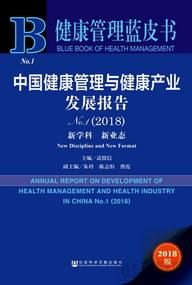
“Report on the Development of China’s Health Management and Health Industry (2018)” (Image source: Official website of Social Sciences Academic Press)
"China Health Management and Health Industry Development Report (2018)" (hereinafter referred to as the "Blue Book"), themed "New Disciplines, New Business Models," analyzes the development status of the health management discipline and the health industry. The Blue Book points out that the development of China's health management and health industry from 2017 to 2018 was characterized by "overall positive momentum with numerous challenges." Specifically, there was a "hot" development trend in ten areas: national macro policies and industrial planning, theoretical research and academic exchanges, smart health and intelligent elderly care, health check-ups and chronic disease management, and health data and group standards. In contrast, significant issues emerged in the transformation of development concepts, disciplinary talent development, system and model construction, improvement of health literacy, and assurance of service supply, presenting "cold" developmental challenges.
The book consists of a general report and five thematic reports, comprising a total of 22 articles. Based on a systematic definition and clarification of the theoretical connotations and practical scope of health management as a new medical discipline, an innovative medical system, an emerging health industry, and a new format of health services, the general report focuses on analyzing the ten major development trends and five key challenges in China’s health management and health industry from 2017 to 2018 from the perspective of integrating theory with practice, and puts forward corresponding countermeasures and recommendations.
The following are selected viewpoints and data from VCBeat:
Health Management (Check-up) Institutions See Slowed Growth, with "Check-up Only, No Follow-up Care" Still Dominant
The Blue Book points out that, in contrast to the continuous growth in the total or incremental number of hospitals, hospital beds, and patients, the development pace of health management (physical examination) institutions in China and the growth rate of their served population began to slow down in 2017.
On the one hand, influenced by relevant national policies, social capital has primarily been invested in establishing hospitals and elderly care and rehabilitation institutions. On the other hand, due to their advantages in equipment, technology, expertise, and brand reputation, public Grade 3A (tertiary) hospitals have captured the high-quality customer base for health check-ups. As a result, private health management (check-up) institutions remain at a disadvantage; even with chain operations and substantial capital investment, significant growth is difficult to achieve in the short term.
Furthermore, with the deepening reform of medical institutions across the entire military, paid external services provided by military hospitals and sanatoriums have been significantly impacted, leading to a general reduction in the scale of health management (physical examination) services.
The Blue Book points out,As of the end of 2017, there were more than 10,000 health management (physical examination) institutions at all levels and across all categories in China. Among these, 90% were established by public medical institutions (including those operated by military medical institutions), while 10% were private or socially funded independent or chain health management or physical examination institutions.
2In 2017, the number of outpatient visits for medical services in China was estimated to exceed 8 billion (7.9 billion in 2016), while the volume of health management (physical examination) services amounted to only 500 million. Moreover, health management services are offered in a limited variety, with over 95% still focused primarily on physical examinations and lacking post-examination follow-up services.
In 2017, with the implementation of the National Medium- and Long-Term Plan for the Prevention and Control of Chronic Diseases, and the in-depth advancement of the National Basic Public Health Services Program and the construction of Comprehensive Demonstration Zones for Chronic Disease Prevention and Control, chronic disease health management began to receive unprecedented attention.
First, chronic disease health management has been formally incorporated into the strategic plan of "Healthy China 2030" and the "Medium- and Long-Term Plan for Chronic Disease Prevention and Control in China (2017–2025)." Second, chronic disease health management is being promoted and implemented as part of the National Basic Public Health Services Program, alongside child health management, elderly health management, and maternal health management. Third, the National Health and Family Planning Commission is formulating guidelines for the development of demonstration institutions for chronic disease health management and promotion services, with the aim of accelerating the standardized and orderly development of chronic disease health management.
Developing Medical Wearable Devices Is an Intrinsic Requirement of Healthy China
The Blue Book points out that the number of people with chronic diseases in China is around 300 million, among which the burden of chronic diseases in the population under 65 years old accounts for 50%. The proportion of deaths due to chronic diseases in urban and rural areas of China accounts for as high as 85.3% and 79.5% of the total number of deaths, respectively, and the disease burden caused by them has accounted for 70% of the total disease burden. Chronic diseases in China present the characteristics of "a large number of patients, long duration of illness, high medical costs, and great demand for services."
Medical Wearable Devices Can Transform Healthcare Models, Reduce Medical Costs, and Address the Uneven Distribution of Medical Resources:
First, it enables dynamic monitoring of health indicators and provides timely feedback and assistance, empowering patients with chronic diseases to engage in self-management and helping to address the challenge of the high prevalence of chronic conditions.
Second, it can improve efficiency, reduce the number of medical visits, and save on medical expenses and labor costs.Clinical studies on the efficacy of global mobile health services show that remote monitoring after discharge can reduce patients’ medical costs by 42% and hospital stays by 35%.
Third, the contradiction in the supply of medical resources in China is prominent, with high-quality medical resources mainly concentrated in large cities in Beijing, Shanghai, Guangzhou, and eastern coastal provinces.Medical wearable devices can help chronic disease patients in remote areas receive remote medical support.
The Blue Book points out,China’s Medical Wearable Devices Still Face Four Key Challenges:
Application Level—The acceptance and participation rates of medical research institutions and hospital physicians regarding most medical wearable devices remain relatively low. There are few devices that truly achieve medical-grade application, resulting in limited application value, suboptimal user experience, and low user stickiness;
Technical Level—Bottlenecks remain in key technologies such as sensors, chips, human-computer interaction, operating systems, and battery life, and basic innovation capabilities need to be strengthened;
Standard Level——There is currently a significant lack of industry standards for medical wearable devices, which hinders the evaluation of performance and safety, as well as mutual compatibility and interoperability—such as integration with healthcare information systems and collaboration among devices from different manufacturers and of different types. This limits the overall synergistic utility of medical wearable devices and impedes industry development;
Safety Aspect——As medical wearable devices are currently the closest apparatus to the human body for real-time health data monitoring, the data they collect constitutes some of the most sensitive personal information. However, the industry currently lacks unified security standards and corresponding regulations, making it difficult to effectively safeguard user data security.
Currently, we should prioritize a people-centered approach to accurately identify critical needs; leverage cutting-edge technologies to enhance the intelligence of medical devices; strengthen the integration of medicine and engineering to improve the quality of dynamic data; conduct comparative studies with an emphasis on evidence-based support; and foster collaborative innovation to achieve leapfrog development.
From 2005 to 2015, China's health supplement market registered an average annual growth rate of 13%, ranking first globally.
The Blue Book points out that China still lags far behind Western developed countries in terms of per capita spending on health supplements, the number of loyal users, and market penetration. The current opportunities in China’s health supplement market are primarily driven by consumption upgrades and favorable policies, which are expected to expand the market size from approximately RMB 120 billion in 2015 to around RMB 180 billion in 2020, positioning China to surpass the United States as the world’s largest market in the foreseeable future.
Vitamins, amino acids, minerals, plant extracts, coenzymes, chondroitin sulfate, fish oil, and bee products constitute the seven major categories of dietary supplement raw materials in China, with some of these categories having achieved world-class competitiveness in production and export.
In 2016, China’s dietary supplement sales reached $10.82 billion (with $7.81 billion in exports and $3.01 billion in imports), of which raw material exports accounted for 84% of the total.
Data shows, China possesses significant advantages in the production and export of raw materials such as vitamins, chondroitin sulfate, amino acids, and plant extracts, and this industry still holds substantial room for growth within the country.
The raw materials for China's dietary supplements are primarily exported to four major markets: the United States, Germany, Japan, and the Netherlands. From 2011 to 2016, the trade volume of these related products maintained a steady, slow growth trend.
In China, the penetration rate of the nutritional health industry is only 10%, indicating that it is still in its early stages. Per capita spending on dietary supplements is less than $20. Both figures are significantly lower than those in the United States, where the penetration rate of dietary supplements is approximately 70%, with per capita spending around $101.
However, factors such as the aging population trend in China, changes in consumer spending patterns, and policy support are all driving forces behind the rapid growth of the nutritional supplements industry.The future upside potential is immense.
With the transformation of China’s consumption structure, the upgrading of its industrial structure, and the implementation of relevant policies, we anticipate that China’s dietary supplement industry will achieve a breakthrough over the next five years. As science and technology continue to advance, new dietary supplements are constantly being discovered. The continuous introduction of new dietary supplement varieties is meeting consumers’ growing demands, representing another significant development trend.
It has been reported that new nutraceutical ingredients have been discovered in natural plants, marine organisms, and traditional Chinese medicine. Currently, Coenzyme Q10, Gynostemma pentaphyllum, fish oil, and Ginkgo biloba leaf extract are highly favored by the market. Manufacturers need to continuously upgrade and enhance the technological sophistication of their products. To ensure healthy and sustainable development, products must not only demonstrate high efficacy and quality but also move beyond the pitfalls of low pricing and low-end positioning, while continually improving both technology and services.
Source: The official WeChat account “Pishu Shuo” of Social Sciences Academic Press