

iPharma AI-Powered Personalized Medication System Debuts at 2018 National Clinical Pharmacy Conference
On April 28, the 2018 National Academic Conference of the Clinical Pharmacy Branch of the Chinese Medical Association was grandly opened in Taiyuan, Shanxi Province, known as the beautiful “Dragon City.” Organized by the Chinese Medical Association and its Clinical Pharmacy Branch, and co-hosted by the Shanxi Medical Association and the Second Hospital of Shanxi Medical University, this conference marked the seventh national academic meeting held since the establishment of the Clinical Pharmacy Branch. Themed “Transformation and Development, Collaborative Innovation,” the conference featured 18 specialized sessions, including “Informatics and Artificial Intelligence in Pharmaceutical Care,” “Monitoring and Management of Clinical Medication Safety,” and “Theory and Practice of Precision Pharmacotherapy.” More than 100 experts were invited to deliver reports on various topics.
On April 29, at the Forum on Informatics in Pharmaceutical Care and Artificial Intelligence, Professor Zhang Jian, Director of the Department of Pharmacy at Xinhua Hospital Affiliated to Shanghai Jiao Tong University School of Medicine and Standing Committee Member of the Clinical Pharmacy Branch of the Chinese Medical Association, delivered a special report titled “Construction of AI-Driven Personalized Medication Models Through Multi-Level Mining of Real-World Data.”
The iPharma AI-powered personalized medication system, based on this model, was deployed at Xinhua Hospital in mid-April. Developed jointly by Xinhua Hospital, the First Affiliated Hospital of Zhengzhou University, Hebei General Hospital, and Beijing Nuodao Cognitive Medical Technology Co., Ltd., the system comprises two modules: therapeutic drug monitoring analysis and pharmacogenomic testing analysis.
Xinhua Hospital Affiliated to Shanghai Jiao Tong University School of Medicine, founded in 1958, is the first comprehensive Grade A tertiary hospital independently designed and constructed in Shanghai since the establishment of the People's Republic of China. Its overall strength in pediatrics remains at a leading level domestically and an advanced level internationally. The hospital has achieved top-tier national standards in interventional therapy for cardiovascular diseases, surgical treatment of complex congenital heart diseases, surgical correction of deformities, management of refractory leukemia, newborn disease screening, and diagnosis and treatment of neonatal hearing impairment. Xinhua Hospital has been home to numerous renowned medical experts, including Professor Gao Jinglang, a titan of Chinese pediatrics, and Professor Guo Di, a founding figure in pediatric health care.
Xinhua Hospital is actively advancing its information technology infrastructure and has recently partnered with Alibaba to jointly build a “Smart Hospital.” The Department of Pharmacy at Xinhua Hospital is among the first batch of national key clinical pharmacy specialties in China, ranking at the forefront nationwide in areas such as pharmaceutical informatization, adverse drug reaction research, and personalized medication research.
On December 25, 2016, the U.S. Congress passed the 21st Century Cures Act, approving the use of “real-world evidence (RWE)” to replace traditional clinical trials for studies on expanding drug indications. Meanwhile, the FDA published an article in The New England Journal of Medicine to interpret RWE. In September 2017, the FDA issued guidance on using real-world evidence for the approval of expanded indications for medical devices, entering the phase of practical implementation. These developments signal that clinical pharmacy will become another important scenario for the application of healthcare big data, alongside medical imaging.
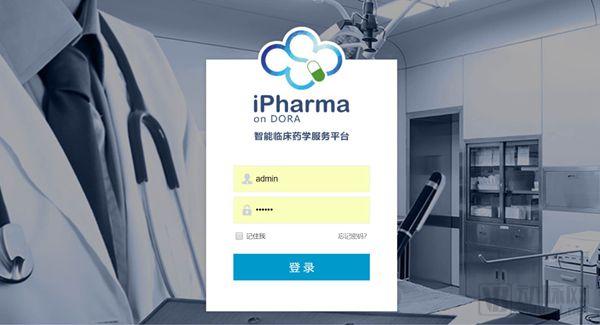
iPharma leverages real-world big data on medication usage and applies artificial intelligence technologies to provide personalized medication guidance. Personalized medication entails administering the most appropriate drug at the optimal dose, to the right patient, at the most suitable time. Currently, the primary basis for personalized medication includes therapeutic drug monitoring (TDM) and pharmacogenomic testing. The drugs supported by iPharma version 1.0 are vancomycin, which undergoes TDM, and warfarin, which is guided by pharmacogenomic testing. This system enhances the level of clinical pharmaceutical care, promotes the development of pharmaceutical sciences, and holds significant importance for rational and safe medication use.
In his report, Professor Zhang Jian first introduced the development of an artificial intelligence (AI)-based model for personalized vancomycin dosing. Vancomycin is a commonly used antibiotic in the treatment of severe infections. It has complex clinical pharmacology, significant interindividual variability, and a narrow therapeutic window. Excessive dosing can easily lead to adverse reactions such as ototoxicity, nephrotoxicity, and hematologic toxicity. Currently, personalized dosing relies on therapeutic drug monitoring (TDM) and pharmacokinetic parameter calculations; however, these approaches often consider only a limited number of clinical factors, are applicable to only a subset of patients, and fail to adequately address patients with complex clinical presentations. Advances in AI and machine learning enable multi-level mining of clinical data, incorporating a broader range of influencing factors, thereby facilitating the construction of AI-driven personalized dosing models better suited to complex clinical scenarios. This module determines appropriate personalized dosing regimens through analysis and mining of TDM data and related clinical information. Additionally, the system integrates pharmacokinetic models commonly used by pharmacists, providing dosing recommendations based on both pharmacokinetic principles and AI algorithms, while also supporting pharmacist-defined custom dosing.
Subsequently, Professor Zhang Jian introduced an artificial intelligence-based personalized dosing model for warfarin. The underlying approach is fundamentally similar to that used for vancomycin; however, it utilizes pharmacogenomic testing data and corresponding clinical data. By leveraging artificial intelligence and machine learning techniques, the model identifies key influencing factors and generates personalized dosing regimens.
The iPharma AI-driven personalized medication system is characterized by “real-time capability,” “intelligence,” and “incremental learning.” “Real-time capability” refers to the system’s ability to rapidly extract various clinical data from operational systems (such as HIS, LIS, etc.) through real-time interaction technologies. “Intelligence” denotes that the system can generate personalized medication regimens leveraging artificial intelligence technologies. “Incremental learning” means that, after the AI-based personalized medication model is successfully established, it can continuously acquire new knowledge from emerging samples (such as real-world data and rational medication regimens).
The development of iPharma has received strong support from leaders including Professor Chen Hongzhuan, Vice Dean of Shanghai Jiao Tong University School of Medicine; Professor Sun Kun, President of Xinhua Hospital; and Professor Zheng Zhongmin, Vice President of Xinhua Hospital. Recently, the Institute of Clinical Pharmacy Innovation at Shanghai Jiao Tong University School of Medicine will be established at Xinhua Hospital, with the AI-driven personalized medication system being one of its key focus areas. According to Professor Zhang Jian, iPharma will next initiate multicenter validation, deploy the system in more hospitals, and collect additional medication data. As a result, its precision will continue to improve, its “experience” will become increasingly rich, and its “capability” to provide personalized medication regimens will grow stronger.