

23Mofang's CEO Zhou Kun on Further Price Cuts: Making Genetic Testing Accessible to All and Expanding Capacity with a New Lab
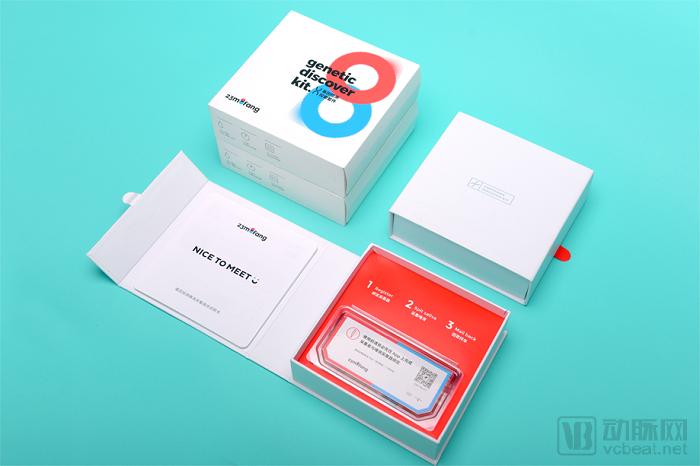
Image provided by 23mofang
On June 26, 2018, China’s consumer-grade genetic testing market experienced another “earthquake” as the leading DTC brand, 23mofang, adjusted its product pricing once again, marking the first time that consumer-grade genetic testing products entered the “200-yuan” price range.
In August 2017, they reduced the product price from RMB 999 to RMB 499, and their competitor, WeGene, followed suit. This marked the first time that the price of consumer genetic testing products in China had dropped below RMB 500. Benefiting from the high growth volume driven by the lower price, 23mofang’s sample size increased from the original 40,000 to the current 200,000!
During an interview, Zhou Kun set the ambitious goal of accumulating a sample size of 1.5 million by 2019. The primary reason for this further price reduction of the product is to increase its visibility and reach a broader audience.
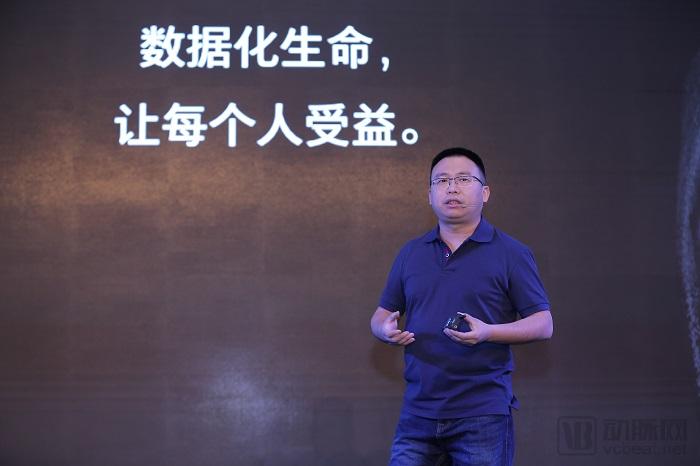
Zhou Kun, Founder and CEO of 23mofang
What is the rationale behind 23mofang’s price reduction? Can it remain profitable after the cut, and what are its next steps? To find out, VCBeat once again called its founder, Zhou Kun, to discuss the story behind the price adjustment.
“In the future, everyone should have their own genetic data.”“Many practitioners in the gene industry have told VCBeat this, which is also a statement Zhou Kun mentions in every interview.”
Zhou Kun explained to VCBeat that products everyone should have ought to be affordable. “Our consistent logic has been to continuously lower product prices whenever costs are controllable,” he said.
This is akin to IBM’s disruption of the computer industry in its early days. During the era of mainframes, computers were bulky and cumbersome to operate, seeming forever disconnected from everyday life. The advent of the microprocessor subsequently disrupted the industry for the first time. It was precisely this technology that enabled Steve Jobs and Michael Dell to assemble Apple and Dell computers in a garage and a dormitory room, respectively.
However, disruption does not cease with the emergence of innovative technologies. In the personal computer business, IBM eliminated DEC, which pursued a high-end strategy, by operating under a low-margin, high-volume model, ultimately transforming the industry and the world.
Undoubtedly, Zhou Kun’s business model planning for 23mofang bore a striking resemblance to that of IBM at the time. He emphasized to VCBeat that product prices must be reduced whenever possible.
“It was definitely impossible to drop the price to 299 yuan in 2017, given the cost structure. So we reduced it to 499 yuan at that time,” recalled Zhou Kun.
Over the past six months, 23mofang Laboratory has reduced its scrap rate and labor costs by enhancing automation levels and product craftsmanship, as well as optimizing inspection processes. Furthermore, with the expansion of testing scale leading to lower procurement costs for consumables, the overall testing cost of its products has been further reduced.
“After costs came down, we implemented another round of price adjustments,”The price of 299 yuan can also maintain gross profit."When asked whether price reductions would affect profits, Zhou Kun responded as follows."
Furthermore, a reduction in product prices will undoubtedly appeal to more consumers. He believes that as prices decrease, the customer acquisition cost for the product will also decline.
One of the keys to IBM’s success in outshining DEC lay in its integration of technological innovation with its business model. In a low-interest-rate environment, it achieved overall profitability through high-volume output.
Behind every product price reduction lies a multiplied and increasingly rapid growth in sales volume. For enterprises,Behind the rapidly growing sales performance, there will inevitably be a test of its own production capacity.
Therefore, VCBeat speculates that 23mofang will inevitably expand its production capacity. This speculation has also been confirmed by Zhou Kun.. He revealed to VCBeat that 23mofang is preparing to build a new laboratory in Chengdu.
After completing its Series B financing in August 2017, 23mofang expanded the production capacity of its laboratory, which currently reaches a monthly throughput of 40,000 tests. “At that time, we were building up production capacity in preparation for our first price reduction,” he told VCBeat.
He revealed to VCBeat that, following the second round of price reductions, they would once again begin to build momentum for next year’s sales growth.It is estimated that the new laboratory will have an annual production capacity of over 2 million people once completed.
23mofang completed two consecutive rounds of financing in March and May 2018, raising a total of RMB 162 million. These two rounds of financing provided the company with ample funds for subsequent laboratory construction and R&D reserves.
However, Zhou Kun still stated that there would be subsequent financing plans. “This is a major undertaking; we will continue to invest in production capacity, market expansion, and R&D,” he said.
In addition to establishing partnerships with upstream and downstream players in the market, 23mofang also conducts joint research with institutions such as the Ministry of Education Key Laboratory of Contemporary Anthropology at Fudan University, the Kunming Institute of Zoology of the Chinese Academy of Sciences, and the First Affiliated Hospital of Army Medical University. Through collaborative research with experts from these laboratories, the company aims to deliver superior products.
Genetic data is a treasure trove for research on human diseases and genetics. Today, 23mofang’s sample size has reached 200,000. Such a large-scale dataset of Chinese individuals holds immense value across any field.However, Zhou Kun stated that he does not endorse the business model of directly monetizing data.
“Data ownership should belong to users. Relying on data monetization for profitability is unsustainable and non-compliant with regulations,” he stated.
Therefore, in comparison, 23mofang is more inclined to return the value of this data to users.
“We will build our own research models and collaborate with universities and research institutions to explore new innovations, continuously iterating and upgrading our products,” explained Zhou Kun.
Each user is provided with a comprehensive informed consent form prior to undergoing testing. Upon obtaining the user’s consent, their data will be de-identified and subsequently used for scientific research.
Through these research collaborations, we transform scientific findings into simple and accurate testing assays, integrating them back into our products. This enables users to benefit from medication guidance and other services, providing them with richer self-interpretation tools that offer greater health-related insights.
“As we accumulate more data, we will launch more projects of this kind—some in general entertainment, some in health, and some in rigorous medical fields—leading to diverse applications,” Zhou Kun told VCBeat.
In this process, user data security and privacy have become critical and sensitive issues. To address this, 23mofang has established a multi-layered user protection mechanism.
Zhou Kun believes that 23mofang merely serves users through its app, and during the data collection process,Allow and encourage user anonymity. This constitutes the first layer of privacy protection for users.
The second layer is reflected in network protection.Zhou Kun revealed that 23mofang would invest approximately RMB 5 million in cybersecurity in 2018."The ultimate outcome of genetic testing is the digitization of life, with these data carrying significant implications. 'We are fully aware that a data breach would be a fatal blow to our brand; therefore, we spare no effort in ensuring cybersecurity,' emphasized Zhou Kun."
The final layer is user consent; users may withdraw from this study at any time via the 23mofang APP,Once the user logs out, the data system will automatically clear this data., thereby safeguarding user data security and privacy.
Compared to the initial price of 999 yuan, the current price of 23mofang’s products has dropped by 70%. Is there further room for reduction after this?
Zhou Kun revealed to VCBeat that the largest expense for 23mofang remains the cost of testing. As the market size expands, competition among upstream manufacturers has intensified, prompting them to implement price reductions as well. Illumina’s sequencing costs have been consistently declining, while BGI Genomics offers even lower prices.
“Upstream prices will definitely decrease,There is still significant room for cost reduction in the entire genetic testing market in the future.“He said thus.”