

United Imaging Launches Open AI Platform uAI, Unveils 13 AI-Powered Medical Solutions Within Four Months

United Imaging
High-end Medical Device Developer
Recently, Shanghai United Imaging Healthcare Co., Ltd. held its inaugural uInnovation Global Innovation Conference in Shanghai. During the event, United Imaging unveiled the uAI United Imaging Intelligence Platform, a series of new products, and its future innovation roadmap. Xue Min, Chairman and CEO of United Imaging, stated, “The original intention behind hosting the uInnovation Global Innovation Conference is to build a platform that brings together stakeholders from industry, academia, research, and clinical practice, both domestically and internationally, to forge a global community of innovation. Through more forward-looking innovation, more diverse interdisciplinary integration, and deeper cross-sector collaboration, we aim to achieve win-win outcomes and symbiotic growth.”
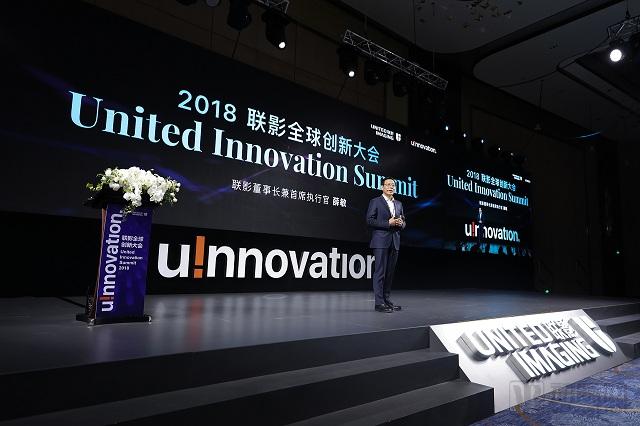
Image source: United Imaging Intelligence
United Imaging’s comprehensive “data + scenario” layout can make AI more robust.
Shen Dinggang, Co-CEO of United Imaging Intelligence (the AI subsidiary of United Imaging), told VCBeat (WeChat ID: vcbeat) that although United Imaging Intelligence was officially established in December 2017, United Imaging had already begun preparing for its medical AI initiatives several years earlier.
Shen Dinggang chose to join United Imaging because the company offers a comprehensive portfolio of high-end medical imaging and radiotherapy products, along with a nationwide medical imaging cloud and third-party imaging centers. These assets provide a continuous stream of “data” and abundant “application scenarios” for medical AI. More importantly, over the past seven-plus years of United Imaging’s development, Shen has witnessed its growth from scratch to scale, a journey that reflects an admirable entrepreneurial spirit.
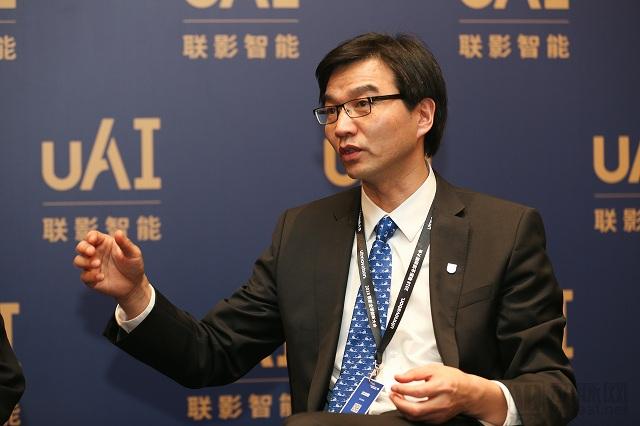
Shen Dinggang, Co-CEO of United Imaging Intelligence (United Imaging’s AI Subsidiary) (Image source: United Imaging Intelligence)
Zhou Xiang, Co-CEO of United Imaging Intelligence, stated that he had received numerous offers before joining the company. A key factor in his final decision to join United Imaging was Professor Shen Dinggang, who commands a large network of students and wields significant international influence. The two have been close friends for many years, with Zhou working in the industry sector and Shen in academia, maintaining a long-standing connection across their respective fields.
The second important reason lies in the uniqueness of medical AI. The healthcare industry is highly complex, with tens of thousands of human diseases and hundreds or even thousands of diagnostic and therapeutic approaches employed by physicians. Generally, peripheral or independent startups can only focus deeply on a few specific areas, making it difficult for them to achieve economies of scale. In contrast, United Imaging Intelligence leverages the robust platform of United Imaging to develop AI solutions that are deeper, broader, more solid, and more sustainable.Taking the currently most popular pulmonary nodule detection as an example, most AI systems are still focused on disease “screening.” However, healthcare actually encompasses an entire workflow from imaging to screening, follow-up, diagnosis, treatment, and assessment, into each of which AI can be deeply integrated.。
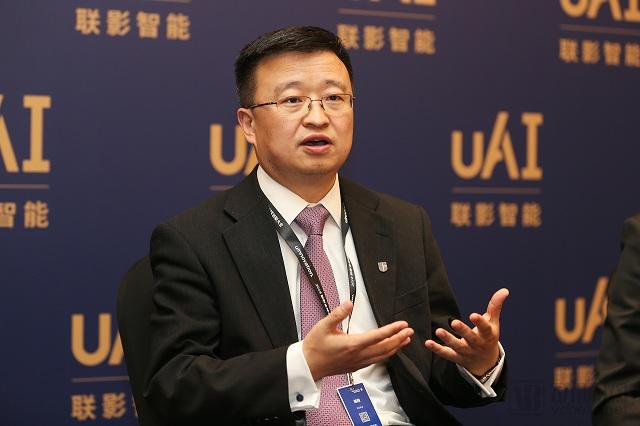
Zhou Xiang, Co-CEO of United Imaging Intelligence (Image source: United Imaging Intelligence)
United Imaging Intelligence, established less than six months ago, unveiled its first series of products built on the uAI platform at this press conference, including: Intelligent XR Image Interpretation (XR), FFRct Hemodynamic Analysis (CT), Intelligent Bone Injury Assessment (CT), Intelligent Joint Analysis (MR), Intelligent Pulmonary Nodule Screening (CT), Intelligent Breast Lesion Analysis (XR), Differential Subtraction (XR), Vascular Analysis (CT/MR), and Intelligent Multimodal Fusion (PET-CT).。
In addition, United Imaging Intelligence has jointly launched 16 scientific research collaboration projects with 15 research institutions, including Zhongshan Hospital Affiliated to Fudan University and Huashan Hospital Affiliated to Fudan University. The research topics cover multiple diseases such as hepatocellular carcinoma, glioma, Parkinson's disease, stroke, and bone tumors.
Empowering Physicians, Imaging & Radiotherapy Equipment, and United Imaging Smart Healthcare Cloud
“In the interview, Zhan Yiqiang, COO of United Imaging Intelligence, stated that AI itself is a technology rather than a product. Healthcare professionals use equipment or information systems empowered by medical AI, rather than the AI technology per se. It is akin to how we use cars and airplanes, rather than the engine technology itself.”
Guided by this approach, United Imaging’s medical AI technology is positioned to empower products such as imaging equipment, radiotherapy devices, and the United Imaging Smart Healthcare Cloud.
“Intelligent Radiology Interpretation for Health Checkups”: By simply installing this intelligent diagnostic application on X-ray equipment, the system can rapidly pre-screen large volumes of images to identify normal chest X-rays, submitting only those with suspected abnormalities for physician review.
Zheng Jiezhi, a core member of United Imaging Intelligence, stated, “The system not only triages and organizes lung disease imaging studies to help physicians understand the findings, but also visualizes abnormal regions within the images, enabling them to comprehend the underlying rationale.” To ensure the system’s accuracy, the team conducted deep learning training using a dataset of 200,000 chest X-rays.Among 14 pulmonary conditions, including pulmonary nodules, pulmonary edema, and pleural thickening, the system has achieved world-leading diagnostic accuracy in nine of them, surpassing relevant research teams at the U.S. National Institutes of Health and Stanford University.。
Furthermore, AI can enhance the efficiency and quality of data acquisition at the source. Intelligent imaging devices launched on the uAI United Imaging Intelligence platform enable faster, more precise, safer, and more cost-effective imaging.
Taking the newly launched Smart SkyEye CT as an example, traditional CT examinations required radiologic technologists to go through multiple tedious steps, including selecting patient positions, positioning patients, and determining scan ranges. This process involved a heavy workload and resulted in inconsistent scanning quality. The Smart SkyEye CT utilizes facial recognition technology to identify the positioning needs of patients across different ages, genders, and body positions, enabling one-click automatic positioning. This enhances operational efficiency, accuracy, and standardization, thereby ensuring high-quality imaging. Currently, this application covers 70% of the body regions routinely scanned in clinical CT examinations.
Additionally, Shen Dinggang stated that AI technology enables machines to automatically adjust slice thickness during reconstruction based on patient-specific conditions. For instance, if the AI detects a suspicious lesion during reconstruction, it can reduce the CT slice thickness to fully visualize the area of concern, while maintaining standard slice thickness for other regions. This approach enhances diagnostic accuracy while saving time in image interpretation.
Meanwhile, United Imaging is also leveraging AI technology to predict equipment failures, increase equipment utilization rates, reduce idle time, and improve operational efficiency.
Open Intelligent AI Platform
The three intelligent imaging devices and ten intelligent applications currently announced represent only a portion of United Imaging Intelligence’s product portfolio, with more to come in the future. The company’s ability to rapidly launch a wide range of commercially deployed products is primarily attributable to its uAI United Imaging Intelligence platform.
This platform features proprietary C++ deep learning deployment engines optimized for memory and speed, as well as C++ medical image processing libraries. It maintains robust interfaces with mainstream deep learning frameworks such as TensorFlow and PyTorch. Building on this foundation, the platform has developed general-purpose modules for image segmentation, object detection, image classification, image standardization, and image registration. These modules enable a wide range of applications, including chest X-ray screening and low-dose CT denoising. By combining different modules, new application models can be rapidly constructed, trained, and subsequently deployed for clinical testing and validation.。
Zhou Xiang emphasized that, in addition to leveraging AI for assisted diagnosis, equipment empowerment, and prognosis, United Imaging Intelligence also integrates imaging and non-imaging data to help physicians make more rational and accurate decisions in areas such as hospital operations.
Meanwhile, United Imaging Intelligence is building a smart platform for win-win collaboration. United Imaging welcomes doctors, research institutions, and even startups to join forces in driving innovation in medical AI.
Notably, leveraging its innovative platform, United Imaging Intelligence aims to better empower physicians. By establishing AI training programs, the company enables doctors to understand and utilize AI, transforming them into a vital force in medical AI research and development. This initiative supports physicians in independently conducting medical AI R&D and launching their own AI products, facilitating their transition from observers to participants, and ultimately to leaders in the field.
Building a Service Ecosystem Spanning the Entire Process of Disease Diagnosis and Treatment
In the interview, Shen Dinggang stated that the achievements currently announced by United Imaging Intelligence represent only a portion of their research. In the future, United Imaging Intelligence will continue to leverage AI to empower United Imaging’s medical imaging and radiotherapy equipment, as well as the United Imaging Smart Healthcare Cloud (uCloud), aiming to build an ecosystem of fully intelligent medical products and services that spans the entire process of disease diagnosis and treatment.
Specifically, the R&D efforts of United Imaging Intelligence will unfold along both vertical and horizontal dimensions. The horizontal dimension refers to universal core algorithms that are cross-modal, cross-organ, and cross-disease; these serve as fundamental building blocks, akin to LEGO bricks, for constructing various applications. The vertical dimension involves assembling these modules by combining and fine-tuning the universal algorithms based on a deep understanding of pain points in the healthcare industry, thereby creating products that physicians prefer to use.
Zhou Xiang stated that United Imaging Intelligence focuses its strategy on empowerment and win-win collaboration, empowering physicians and medical equipment, and achieving mutual benefits with hospital doctors, research institutions, and third-party organizations. To realize this vision, United Imaging Intelligence engages in product development, service provision, training, and the establishment of cooperation centers, ultimately building an open AI platform and ecosystem.
Three Conditions Essential for the Survival of Medical AI Companies
Amid the current fervor in the medical AI industry, Shen Dinggang noted that while the proliferation of startups and significant investor enthusiasm underscore the sector’s promising prospects, the reality is marked by uneven development among companies and a lack of substantial innovation. Many firms are still exploring viable pathways to commercial implementation.
How to Survive in a Fiercely Competitive Market: Shen Dinggang Shares His Insights
1. The product must meet the actual needs of physicians. Healthcare is a high-barrier industry; merely mastering medical AI technology is far from sufficient. R&D team members must possess a thorough understanding of diseases, engage in professional dialogue with physicians using their own terminology, accurately grasp their genuine needs, and develop products that doctors truly find valuable in clinical practice.
2. Data and practical application scenarios are required. Data is the foundation of AI R&D, a widely recognized fact. Once a product is developed, companies need to secure medical equipment and healthcare IT systems as platforms for training and deploying their AI systems. This requires the ability to connect with both upstream and downstream partners. United Imaging Intelligence holds a distinct advantage in this regard.
3. Capable of surviving until the point of obtaining market access approval. Currently, companies in the market generally have their own products; however, national regulatory authorities have not yet released approval standards for next-generation medical AI products. As such, these next-generation medical AI products have not received regulatory approval. Without approval, they cannot enter the market or generate revenue.
It is well known that the medical AI industry requires patience. However, relying solely on scientific research collaborations, financing, or other side businesses cannot sustain a company in the long run. The state is actively establishing approval standards, but this is a gradual process, as is obtaining clinical trial approval. Whether a company can survive until that point determines its very existence. Large corporations like United Imaging do not need to worry about this for now; they can simply focus on refining their products.