

East Sunshine Pharma and DXY Forge Strategic Partnership to Advance 'Influenza Prevention + Internet' Initiative
Recently, “Internet + Healthcare” has become the focal point of the medical industry. It is not only applied in healthcare institutions but also extended to areas such as chronic disease management and family doctor contract services. Nowadays, influenza prevention has also leveraged the rapid development of “Internet + Healthcare,” aiming to quickly raise public awareness about flu prevention among the general population.
The influenza outbreak at the end of last year has become a cause for significant public concern. According to surveillance data from the Chinese Center for Disease Control and Prevention (China CDC), the proportion of influenza-like illness (ILI) cases reported by sentinel hospitals in outpatient and emergency departments, as well as the positive rate for influenza virus detection, were substantially higher than those recorded during the same period over the past three years. The number of reported influenza outbreaks nationwide was significantly greater than in previous years, and there was also an increase in the proportion of confirmed influenza cases requiring hospitalization and intensive care.
It was precisely due to this influenza outbreak that the National Health and Family Planning Commission (NHFPC) updated and reissued the “Guidelines for the Diagnosis and Treatment of Influenza (2018 Edition)” after a seven-year interval. In these guidelines, oseltamivir, along with zanamivir and peramivir, was listed as an effective medication for treating the current influenza strain, with oseltamivir ranked first. During the flu season, it was sold out on multiple occasions.
So, how does the “Influenza Prevention + Internet” model work? On April 17, the launch ceremony for the strategic partnership between HEC Pharm and DXY, along with the “Centennial Influenza Project,” was held in Guangzhou. Themed “Uniting Medical Professionals to Combat Centennial Influenza,” the event invited experts and scholars from the industry, including Lu Hongzhou, Party Secretary of Shanghai Public Health Clinical Center; Zhou Xin, Director of the Department of Respiratory Medicine at Shanghai General Hospital affiliated with Shanghai Jiao Tong University; Zhan Qingyuan, Director of the Fourth and Fifth Departments of Respiratory and Critical Care Medicine at China-Japan Friendship Hospital; Bao Yixiao, Executive Dean of Shanghai Pubin Children’s Hospital and Deputy Director of the Department of Internal Medicine at Shanghai Children’s Medical Center. Zhong Nanshan, Academician of the Chinese Academy of Engineering and Director of the Guangzhou Institute of Respiratory Diseases, also interacted with the audience via video link.
Influenza is an ancient disease, first documented in the writings of Hippocrates, the “Father of Medicine” in ancient Greece, around the 5th century BCE. The earliest influenza outbreak widely recognized by the academic community occurred in 1510 CE. Since then, a total of 31 major influenza outbreaks have been recorded in historical literature. Characterized by its extensive geographic spread and high mortality rate, influenza was once regarded as divine punishment and named “influenza,” meaning “devil.”
Over the past century since the 1918 Spanish flu, influenza viruses have caused at least five global pandemics, leading to a significant increase in worldwide morbidity and mortality rates. China has frequently served as the origin of various types of influenza.
According to WHO data, approximately 5%–10% of adults and 20%–30% of children worldwide contract influenza annually, resulting in 3–5 million severe cases and 290,000–650,000 deaths. Influenza imposes a substantial disease burden on countries globally, with its impact continuing to intensify.
Professor Zhong Nanshan reviewed the century-long history of humanity’s fight against influenza viruses. In 1918, the Spanish flu caused 50 million deaths, more than three times the 16 million fatalities during World War I. It is widely believed that such severe consequences resulted primarily from two factors: first, a lack of understanding of quarantine measures at the time, which led to the rapid spread and infection of the virus; and second, the absence of effective antiviral drugs.
Over the century marked by rampant influenza, the most critical development has been the advent of the influenza vaccine.Currently, the World Health Organization predicts influenza viruses annually and produces vaccines in advance, which can prevent influenza with a probability of at least 50%. “Furthermore, a major advancement has been the emergence of antiviral drugs. In particular, the introduction and use of medications such as oseltamivir, zanamivir, and peramivir over the past two decades represent significant progress,” stated Professor Lu Hongzhou.
Professor Zhou Xin introduced the pathogenesis of influenza, emphasizing that it is essential to enhance public awareness of the disease. With early prevention and timely treatment, there is no need for panic.
Influenza remains an unavoidable and unpredictable threat, necessitating constant vigilance against the next outbreak. Zhong Nanshan recommends a three-pronged approach: First, the government should ensure openness and transparency in epidemic information, respond rapidly, scientifically, and in an orderly manner, and continuously strengthen support for and development of public health infrastructure. Second, science-based public education is crucial to foster a scientific understanding of influenza among the general population, enabling appropriate responses. Third, in the research domain, efforts should focus on the development of new drugs, vaccines, and diagnostic methods, with emphasis placed on basic research.
Professor Zhan Qingyuan, who has long been dedicated to research on severe influenza, stated that early vaccination is crucial for patients with severe illness and those at high risk. Furthermore, early diagnosis and treatment should be ensured.
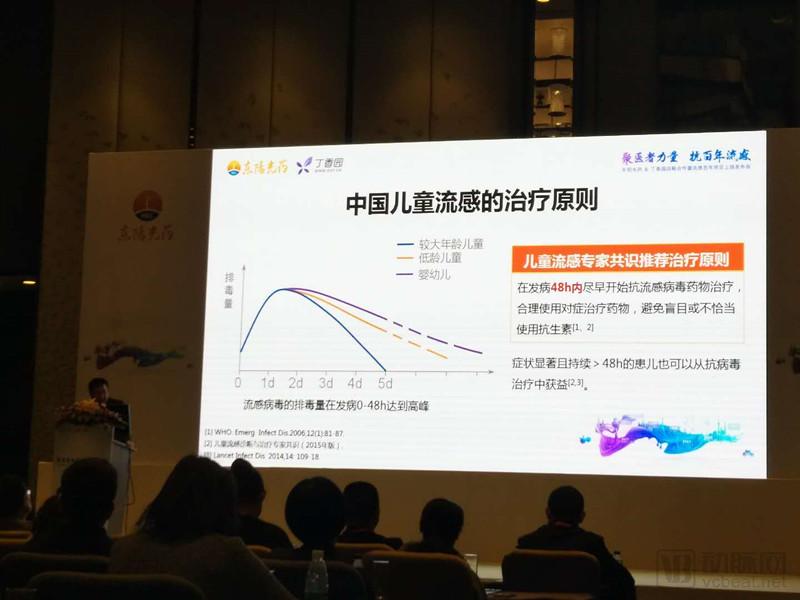
Professor Bao Yixiang provided a detailed overview of the current status of pediatric influenza infection through several case studies. He noted that children generally bear a higher disease burden due to their immature immune systems and the rapid transmission of the virus. However, given the currently low vaccination coverage in China, early detection and treatment—specifically initiating oseltamivir therapy within 48 hours of symptom onset—have become critically important measures.
Chen Yangui, Executive Director of Dongyangguang Pharmaceutical, stated that the most memorable aspect of this collaboration was his discussion with Zhang Wei, Vice President of DXY, on influenza prevention measures. “I was surprised to find that our ideas and measures for influenza prevention were completely aligned, and that we shared a common vision and mission.”
Dongyangguang Pharmaceutical is the only enterprise in China responsible for the production of oseltamivir, an antiviral drug against influenza. It actively organized production both during the avian influenza outbreak in 2006 and the H1N1 influenza pandemic in 2009.
Following the establishment of this strategic partnership, HEC Pharm and DXY will jointly release a white paper themed “A Century of Influenza.” The research data are derived from DXY’s recording and analysis of traffic across various platforms, providing specific recommendations to enhance public awareness of influenza.
Zhou Shuzhong, co-founder of DXY, stated at the event that as an internet platform, DXY aims to continuously create value, better serve physicians and the public, and work with all industry stakeholders to realize the vision of “more health, less disease.”
Zhang Wei, Vice President of DXY, stated,Through this strategic partnership with HEC Pharm’s “Century of Influenza” initiative, both parties will jointly commit to advancing influenza science education among physicians and the general public.By leveraging the Internet to disseminate professional academic content and clinical experience on influenza prevention and control to physicians in China, we have pioneered a new development path for the domestic influenza protection industry. This initiative plays a comprehensive and positive role in improving China’s future influenza prevention environment, reducing influenza outbreaks, and advancing the “Healthy China” strategy.
In the future, leveraging "Internet Plus" technologies and artificial intelligence analysis may play a certain role in vaccine research and development. Currently, however, "Internet Plus" initiatives are primarily focused on the allocation of service resources—namely, enabling patients with specific needs to locate high-quality healthcare providers within a defined scope, or optimizing matching mechanisms—and have not yet played a particularly critical role directly in the vaccine R&D process.

“Throughout our collaboration, DXY’s core role has been that of a value connector within the industry. On one hand, DXY connects with over 2 million professional physicians in China, who play a crucial role in influenza prevention and control. On the other hand, it links with HEC Pharm, as well as key experts and other important drivers in the industry. ‘We deliver these critical resources and information to physicians and patients in an efficient, accessible, and easily acceptable manner, ensuring they can promptly find the right approach when needed. This is the role DXY plays—as an industry value connector—in contributing to influenza prevention and treatment,’ said Zhang Wei.”
Meanwhile, over the past two years, DXY has also been focusing on building an integrated doctor-patient model.It comprises four key components. The first is physician education, which serves as the foundation of the entire healthcare core. The second is peer-to-peer interaction among physicians; many young doctors engage in customized exchanges with the experts present here. The third is doctor-patient interaction, leveraging internet technologies to facilitate communication between doctors and patients not only in physical settings but also online. The fourth is patient management, covering the phases before hospital admission and after discharge—stages that are difficult for in-hospital physicians to monitor effectively but can be well managed through internet-based solutions. This approach is primarily applied to the management of many chronic and severe diseases.
In the field of influenza, the integrated doctor-patient model also plays a significant role and delivers value. This involves educating patients during the pre-symptomatic phase, providing timely follow-up and response when symptoms appear, and properly guiding patients to appropriate medical facilities during the treatment phase. Each of these steps is critical. For patients, this approach saves valuable time, which is essential given the time-sensitive nature of influenza treatment.
“We are prudently advancing our collaborative partnership with HEC Pharm. Through this synergistic mechanism, we engage in mutual sharing and adopt a more open mindset to integrate advanced technologies, specialized expertise, and additional partners. This initiative cannot be successfully implemented by relying solely on the efforts of two parties; rather, it requires the collective strength of the experts present here and the many partners who will join us in the future. Together, we aim to provide physicians with valuable clinical guidance and support, and to assist patients starting from prevention and education. We strive to educate users on the appropriate protective measures at different stages, while leveraging the reach, timeliness, and efficiency of the internet to raise awareness among healthcare professionals and the general public, thereby contributing to the nation’s more effective prevention and control of influenza,” said Zhang Wei.
Zhou Shuzhong added: In terms of public health education, DXY has made some attempts. Taking influenza as an example, we first encourage people to maintain proper daily nutrition and exercise, which can help us achieve a good state of health and effectively resist influenza when exposed.
Secondly, through health science popularization, users are encouraged to seek medical attention promptly and receive appropriate treatment. If a patient has to visit three or four different hospitals for a single condition, they not only spend considerable time but also expend physical energy, thereby increasing the risk of infection. Such burdens can be avoided by providing preliminary education to users.
Ultimately, joint pharmaceutical enterprises aim to enable users to learn about high-quality drugs, medical devices, and prevention and control measures at an early stage, facilitating rapid dissemination of knowledge. This increases the likelihood of their application and empowers individuals with the confidence to implement appropriate management strategies. Although this process entails substantial effort, it is well worth it.
Zhou Xin believes that enhancing the diagnostic and treatment capabilities of primary care physicians, coupled with a tiered diagnosis and treatment system, would ensure that only a small number of critically ill patients are referred to higher-level hospitals for emergency care. In this way, during severe influenza outbreaks, patients would not flock to large hospitals in droves. This approach would also alleviate the excessive burden on emergency departments, respiratory medicine, pediatrics, and internal medicine departments in major hospitals, thereby reducing the incidence of physician burnout and illness.
In January this year, the state issued the "Notice on Doing a Good Job in Influenza Prevention and Control in 2018," which also mentioned: Primary healthcare institutions should strengthen publicity and education on influenza prevention and control knowledge, disseminating core information on influenza prevention and control to residents within their jurisdictions through SMS, WeChat, Weibo, official accounts, bulletin boards, informational brochures, health education lectures, and other means. Family doctor teams should be organized and mobilized to carry out targeted promotional activities for contracted service recipients, guiding residents to take proper self-protective measures and seek medical care appropriately when ill. Primary healthcare personnel must correctly master the "Diagnosis and Treatment Plan," enhance their capabilities in early identification, diagnosis, and treatment, effectively provide routine clinical care for influenza patients, and, in accordance with regulatory requirements, guide and assist suspected severe cases in timely referral to medical institutions with adequate treatment capacity.
Regarding the tiered diagnosis and treatment system advocated by the state, Zhou Shuzhong stated that primary healthcare workers still face challenges such as insufficient medical knowledge and shortages of equipment and medications. For instance, many influenza medications are often unavailable at community clinics. Although online platforms cannot be used to supply medications, they can provide access to expert resources, enabling specialists to assist primary care physicians in implementing disease prevention and control measures promptly.