

Allergan Releases 'Global Aesthetics Trust Report': Chinese Consumers Show Lower Emphasis on Brand Trust
VCBeat (WeChat: vcbeat) has learned that on April 18, the “2018 Medical Aesthetics Trust Pioneer Initiative,” jointly hosted by the Chinese Association of Plastics and Aesthetics and People’s Daily Online·People’s Health, co-organized by Sina Weibo, and supported by Allergan, was officially launched in Beijing.
In the current era of booming growth in the medical aesthetics industry, achieving high-quality growth and sustainable development has become a core issue for the sector, with trust playing a pivotal role in this process.
The Pioneer Initiative aims to promote greater industry-wide emphasis on further enhancing trust, in order to meet consumers’ growing demand for high-quality medical aesthetic services. At the launch ceremony,Allergan Releases First "Global Aesthetic Medicine Trust Report", fully demonstrating the importance of trust in medical aesthetics from the dual perspectives of consumers and healthcare professionals.
Amid the rapid growth of the medical aesthetics industry, government departments have successively launched initiatives in recent yearsA Series of Market Regulatory Actions, thereby promoting the healthy development of the industry. In 2017, seven government departments, including the National Health and Family Planning Commission and the China Food and Drug Administration, jointly issued the Notice on Launching a Special Campaign to Severely Crack Down on Illegal Medical Aesthetics, laying a solid foundation for building a sound ecosystem in the medical aesthetics industry.
To enable the Chinese medical aesthetics industry to achieve more substantial growth and align with mature, developed markets, enhancing overall industry trust will be of paramount importance. Zhang Bin, President of the Chinese Association of Plastics and Aesthetics, pointed out at the conference that China’s medical aesthetics industry is at a critical stage of development. Striking a balance between growth speed and quality will have a decisive impact on the healthy and orderly development of the sector, and boosting industry trust is a key measure to achieve this “balance.”
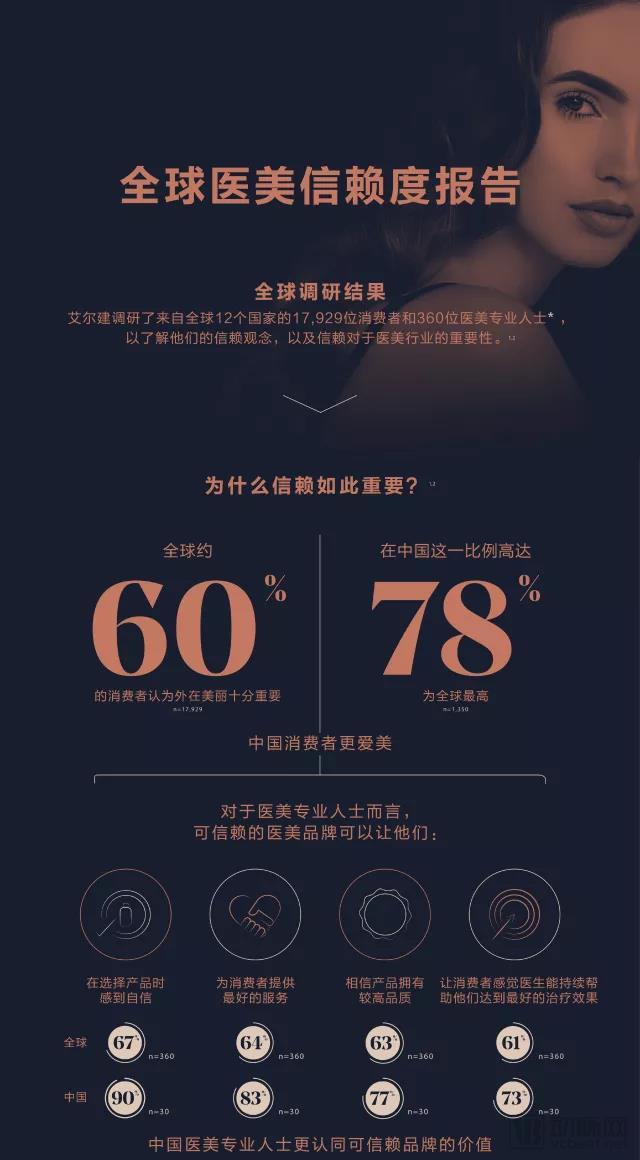
The “Global Report on Trust in Medical Aesthetics” further substantiates the critical importance of trust within the medical aesthetics industry. This survey-based report engaged nearly 18,000 consumers and over 300 medical aesthetics healthcare professionals across 12 countries and regions worldwide, examining key issues such as trust in product brands and the trust dynamics between consumers and healthcare providers.
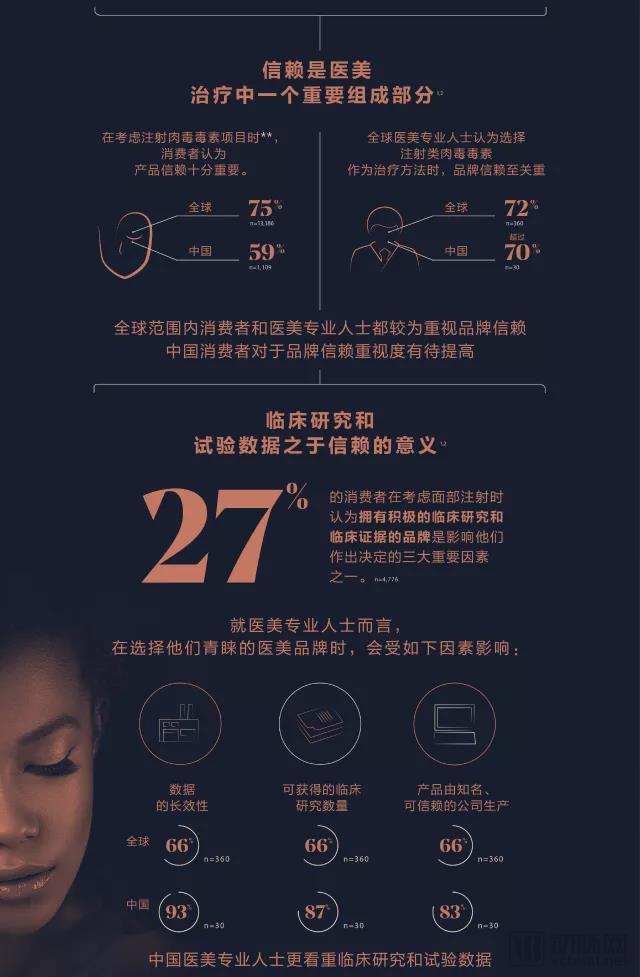
The results show that consumers and healthcare professionals consistently agree that trust inThe Importance in the Medical Aesthetics Experience. Taking botulinum toxin-related treatments as an example, 75% of consumers believe that trust in the product is an important factor in their aesthetic experience. Furthermore, the Report also shows that 61% of physicians believe that trust in medical aesthetic products gives them greater confidence during treatment.
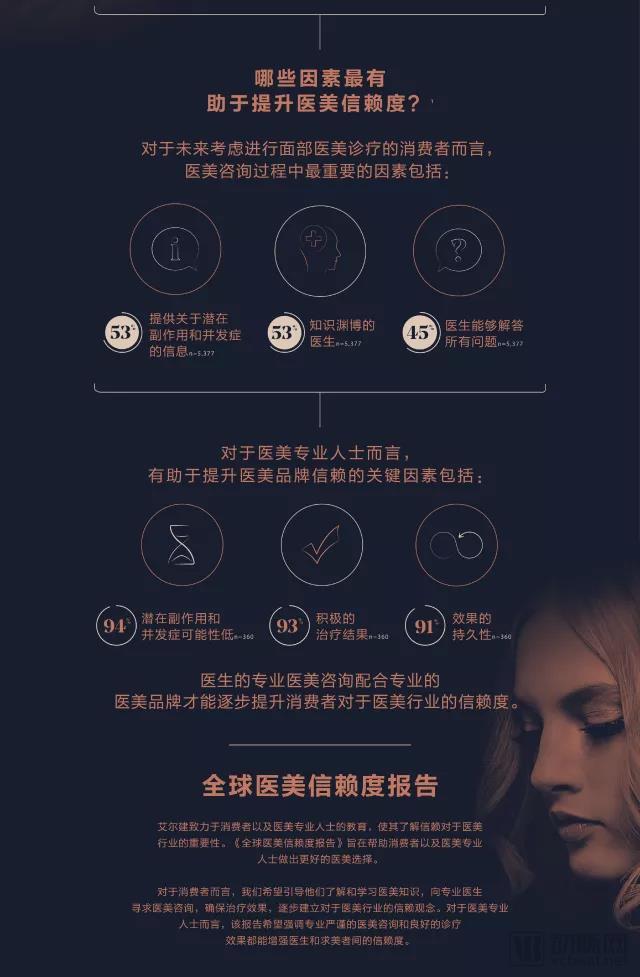
The Report also highlights trust challenges between consumers and physicians that are prevalent globally. The survey reveals that only 34% of consumers felt reassured by their physician’s competence regarding treatment outcomes during their most recent aesthetic medicine consultation, and merely 29% of respondents indicated that their physicians adequately addressed all their concerns. The following section outlines the situation in China’s aesthetic medicine market:
1/ Chinese Consumers Are More Beauty-Conscious:
Globally, about 60% of consumers consider external beauty very important; in China, this figure reaches as high as 78%, the highest worldwide!
2/Chinese consumers’ emphasis on brand trust needs to be enhanced:
When considering botulinum toxin injection treatments, 75% of consumers worldwide regard product trustworthiness as highly important, whereas this figure stands at only 59% among Chinese consumers.
3/ Chinese medical aesthetics professionals place greater value on trusted brands:
For medical aesthetics professionals, factors influencing their choice of preferred brands include the longevity of efficacy data, the availability of clinical studies, and whether the products are manufactured by well-known, reputable companies. Chinese medical aesthetics professionals place greater emphasis on these factors.
In this regard, Zhang Bin, President of the Chinese Association of Plastics and Aesthetics, emphasized: “Trust in the medical aesthetics industry is comprehensively reflected across three dimensions: products, medical personnel, and institutions. Among these, trust between consumers and medical professionals is the most core issue, which is also one of the key reasons why we launched this initiative.”
Here are some perspectives from the guests:
Li Qin, Dean-in-Chief of Jiahe Medical Aesthetics Group and President of the Facial Rejuvenation Branch of the Chinese Association of Plastics and Aesthetics:
Patients’ trust in physicians is generally founded on the latter’s professionalism, which is primarily reflected in their ability to provide scientifically rigorous aesthetic medicine treatment plans that meet patients’ individualized needs.
To achieve this, efforts must be focused on three levels: First, always conduct scientific assessments based on the individual circumstances of each aesthetic patient and tailor professional diagnosis and treatment plans to strive for optimal therapeutic outcomes. Second, guide consumers to choose medical aesthetic products that have a strong reputation and are supported by long-term clinical trial data and literature. Finally, strengthen effective communication to address consumers’ concerns during their aesthetic journey, help them build confidence in treatment outcomes, and properly guide them toward rational aesthetic pursuits.
Lei Hongyu, General Manager of Allergan China’s Medical Aesthetics Division:
Trustworthy products provide consumers with a guarantee of safety and quality, while serving as a powerful tool for physicians to better demonstrate their therapeutic expertise.
The “Global Aesthetic Medicine Trust Report” indicates that Chinese consumers place less emphasis on brand trust compared to the international average. Taking botulinum toxin treatments as an example, 75% of consumers worldwide recognize product brand as a significant factor in their aesthetic experience, whereas this figure stands at only 59% in China. High-quality brands are an indispensable component in helping physicians meet the needs of aesthetic seekers; therefore, awareness among Chinese consumers in this regard urgently needs to be strengthened.
Xing Luwei, Director of the Medical Supervision Division, Bureau of Comprehensive Supervision, National Health Commission:
In response to certain phenomena within the medical aesthetics industry, the former National Health and Family Planning Commission, in conjunction with seven other departments, launched a special campaign last year to crack down on illegal medical aesthetic practices. This campaign focused on four key areas of work, all of which have achieved tangible results:
The first aspect is to crack down on unlicensed medical practice and regulate the conduct of medical aesthetic services; the second aspect is to combat the illegal manufacturing and sale of counterfeit drugs and medical devices; the third aspect is to investigate and deal with non-compliant medical aesthetic training; and the fourth aspect is to address illegal medical advertising and online information.
We have been intensifying efforts to crack down on illegal medical practices, while supporting medical institutions in conducting medical aesthetic services in a standardized and orderly manner, thereby fostering a trustworthy industry ecosystem.
Li Bin, Director of the Medical Management Center at Yimeier (Beijing) Holding Group Co., Ltd.:
While government regulation and guidance are important, from the perspective of the industry’s long-term development, it is essential to further open up the market, encourage a large number of physicians to enter the medical aesthetics sector, and accelerate the approval processes for legitimate products and medical institutions. By creating more high-quality options for individuals seeking aesthetic improvements and meeting their demands, we can fundamentally enhance trust in the industry. This also lays the foundational groundwork for integrating medical aesthetics into people’s pursuit of a better life.
Dong Xuesong, Deputy General Manager of People's Health:
The media should fully leverage their role in public opinion oversight, actively speak out, and strengthen consumer education on medical aesthetics through rational and healthy reporting, enabling consumers to develop a comprehensive understanding of the industry.
Zhu Ying, Vice President of iWen Doctor on Sina Weibo:
Regarding new media, given the relatively high degree of platform freedom, it is essential to strengthen self-discipline, strictly control disseminated content, provide consumers with positive and constructive guidance, and foster a trustworthy environment for new media communication in the medical aesthetics industry.
About Allergan:
Allergan plc (NYSE: AGN) is a growth-oriented pharmaceutical company headquartered in Dublin, Ireland, setting a new paradigm for the global pharmaceutical industry. Allergan is dedicated to the research and development, manufacturing, and marketing of branded pharmaceuticals, medical devices, and biologics, with the aim of improving patients’ quality of life.
Allergan’s branded pharmaceutical products span therapeutic areas including the central nervous system, ophthalmology, medical aesthetics, gastroenterology, gynecology, urology, and anti-infectives. Its R&D pipeline comprises more than 65 projects in mid-to-late stages of development. The company owns premium medical aesthetic brands such as Botox®, Juvéderm®, Natrelle®, and McGhan®.