

How Top U.S. Hospitals—Mayo Clinic, Cleveland Clinic, and Massachusetts General—are Leveraging AI: Innovations, Partnerships, and Commercialization Strategies
In recent years, capital has flocked to medical AI. Since 2014, the number of domestic medical AI enterprises has entered a period of rapid growth, reaching 36 in 2016 and exceeding 50 by 2018. However, upon closer examination of these companies, we find that while there are numerous “medical + AI” concepts and continuous product launches at the technical level, commercial implementation in application scenarios within China remains scarce.
On April 17, VCBeat (WeChat ID: vcbeat) published an article in its “Commercialization of Medical AI” series titled “Hisi Hetero Isomerism has established its own model through in-depth collaboration with West China Hospital》reportedHisense Heterogeneous Deep DiveWest China Hospital: A Case Study on Its Path to Commercial Implementation
As Song Jie, Founder and CEO of Xishi Yigou, stated, the commercial implementation of medical AI in China faces numerous bottlenecks. These include the fragmented “department + AI” model, which fails to generate synergistic effects needed to drive genuine transformation; excessively high legal barriers to data collection that prevent meeting the required “volume” demands; and weak hardware R&D capabilities among technology providers, hindering the conversion of technological achievements into final products. These challenges undoubtedly constrain the substantive role artificial intelligence can play in addressing the entrenched problems plaguing the healthcare industry.
So, how can these challenges be overcome? Chinese AI companies have made numerous attempts, and VCBeat has been continuously tracking and reporting on these developments. Now, let’s adopt a different perspective by turning our attention to major hospitals in the United States to examine how they are applying AI.For over a century, the United States has been able to rapidly iterate innovative achievements into real-world applications, becoming the biggest beneficiary of technological change.
To help patients narrow down their search for medical care, U.S. News & World Report annually publishes its “Best Hospitals Honor Roll.” In this article, we have selected the top five hospitals from the 2017–2018 rankings: Mayo Clinic, Cleveland Clinic, Massachusetts General Hospital, Johns Hopkins Hospital, and UCLA Medical Center.
The Mayo Clinic, located in Rochester, Minnesota, USA, is one of the world’s most renowned medical institutions. Founded in 1889, it has evolved into a comprehensive healthcare system encompassing outpatient services, hospitals, medical research, and medical education.

Image from the official website of Mayo Clinic
In January 2017, the Center for Individualized Medicine at Mayo Clinic announcedandTempusCollaboration, both parties will provide personalized treatment for cancer patients based on analytics and machine learning technologies.
Mayo Clinic and Tempus Plan to Collaborate on Two StudiesTempus will perform molecular sequencing and analysis on 1,000 patients at Mayo Clinic, generating clinical-grade genomic results from tumor sequencing. Subsequently, Tempus will leverage bioinformatics analyses and machine learning tools to transform these genomic findings into data sets readily usable by Mayo Clinic’s research teams. Mayo Clinic can utilize this data to develop personalized cancer treatment plans for patients, thereby helping to avoid ineffective medications and reduce unnecessary drug toxicity. Mayo Clinic believes that, most importantly, personalized cancer therapy will improve patient survival rates and enhance quality of life.
Tempus CEO Eric Lefkofsky pointed out that while technology has made incredible advances over the past two decades, it has not yet fully permeated the healthcare system. “We are excited to bring Tempus’s operating system and analytics technology to Mayo Clinic, to benefit doctors and patients in their fight against cancer.”
TempusTempus is a health-tech startup dedicated to developing personalized cancer care through machine learning platforms. Tempus has built data pipelines to collect and analyze massive datasets, as well as pipeline-powered software applications to support clinical decision-making and academic research. The company also operates its own CLIA-certified laboratory, currently serving over 50,000 patients annually. Since its founding three years ago, Tempus has remained committed to its mission: accumulating vast amounts of genomic and clinical data from cancer patients to enable physicians to leverage this information for more effective personalized treatment.
Furthermore, in March 2017, the Mayo Clinic and medical device manufacturer Omron Healthcare completed a $30 million Series D investment in AliveCor, a cardiac health startup. VCBeat previously reported on this development. (See “Backed by $30 Million in Investment from Omron and Mayo Clinic! Smart ECG Company AliveCor Is Launching a New Generation of AI Panels》)。
In July 2017, the Mayo Clinic andAliveCor Partnership Combines AliveCor’s AI Technology with Mayo Clinic’s Proprietary Algorithms to Develop a Tool for Easy Screening of Long QT Syndrome by Both Medical and Non-Medical Personnel. Long QT syndrome is a congenital or acquired condition that annually leads toTo 3,000–4,000 PeopleSudden Death in American Children and Young Adults: 160,000 Americans Are at High Risk for This Condition。
Through this collaboration, new methods and technologies for detecting Long QT Syndrome will be developed using the Kardia Mobile device. AliveCor brings proprietary artificial intelligence patents, algorithms, and millions of electrocardiogram (ECG) records, while the Mayo Clinic contributes vast medical datasets and world-leading clinical expertise. The integration of these strengths will enable the practice of preventive medicine at an unprecedented scale and provide immediate results previously unattainable. Patients will gain a more comprehensive understanding of their cardiac health, proactively monitor their condition, and help establish new standards in cardiac care. ECGs contain extensive information about an individual’s overall health status, and applying machine learning to millions of ECG records represents a significant advancement over traditional ECG analysis.
AliveCorIt is a manufacturer of smartphone-based ECG devices and one of Apple’s accessory partners. AliveCor’s flagship product, KardiaMobile, and its upgraded version, Kardio Pro, enable patients to capture their own electrocardiograms (ECGs) at any time and email the results to their physicians. It is the first consumer-grade ECG product to receive clinical validation and FDA clearance. Kardio Pro is an enhanced version of KardiaMobile that leverages AliveCor’s artificial intelligence technology. Using ECG data as a foundation, it tracks patients’ blood pressure, weight, and activity levels, consolidating all metrics onto a single dashboard for comprehensive comparison. Through machine learning, the Kardio Pro system identifies patients who require prioritized clinical attention while flagging healthy individuals with no issues who can be safely disregarded.
The Cleveland Clinic, located in Ohio, United States, is operated by the nonprofit Cleveland Clinic Foundation. Founded in 1921, the Cleveland Clinic is a nonprofit institution that integrates medical care, research, and education, providing specialized healthcare and cutting-edge treatment options. The Cleveland Clinic has pioneered numerous firsts in the medical field, such as the first coronary angiography, the first minimally invasive heart valve surgery, and the first fMRI-guided deep brain stimulation surgery.
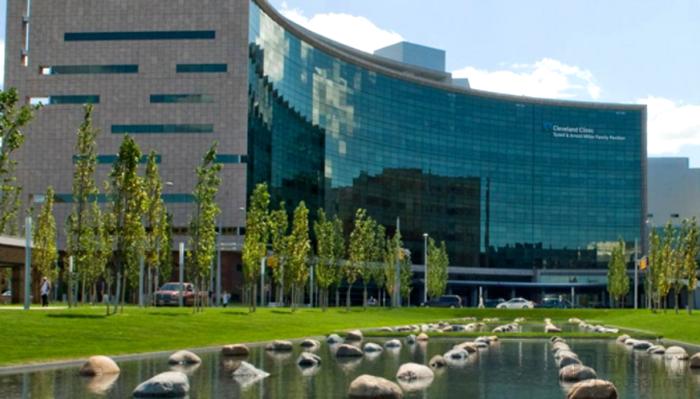
Image from the Cleveland Clinic official website
In September 2016, Cleveland Clinic partnered with Microsoft toUseMicrosoft AI Digital AssistantCortana conducts predictive and advanced analytics to help Cleveland Clinic “identify patients at high risk of cardiac arrest based on ICU care.”
As early as 2014, the Cleveland Clinic launched its ownFingerCommand CentereHospital, to enable remote nighttime monitoring of patients in the ICU. The collaboration with Microsoft has enabledeHospitalThe system will Cortana is integrated into it, becoming more intelligent. Furthermore, data collected from the eHospital system is stored in Microsoft Azure SQL Database, a cloud-based database designed for application developers. In the future, data collection points will be expanded to include patient vital signs and laboratory data.
According to Microsoft’s 2016 annual report, Cortana is used monthly by 126 million Windows 10 users and is part of Microsoft’s Intelligent Cloud segment. Cortana’s features include setting reminders, recognizing natural language without requiring users to input predefined commands in advance, and retrieving information from the Bing search engine to answer questions.
Massachusetts General Hospital is a comprehensive hospital located in Boston. It is Harvard University’s largest medical education center and biomedical research base, with a strong research atmosphere. Founded in 1811, Massachusetts General Hospital has been associated with 11 Nobel laureates to date, who have conducted research or received training at the institution.

Image from the official website of Massachusetts General Hospital
VCBeat conducted a review of Massachusetts General Hospital’s strategic layout in the digital health sector in 2015 (see “The Inside Story of Massachusetts General Hospital’s Internet Initiatives”). As of August 2015, the time of publication, Massachusetts General Hospital had not yet attempted to apply machine learning to real-world scenarios.
Subsequently, in April 2016, NVIDIA announced its participation as a “Founding Technology Partner” in Massachusetts General Hospital’s “Center for Clinical Data Science.” At that time, NVIDIA had already embarked on its artificial intelligence strategy, while the “Center for Clinical Data Science” established by Massachusetts General Hospital aimed to leverage medical AI to improve the detection, diagnosis, treatment, and management of diseases. As part of the collaboration, NVIDIA installed the NVIDIA DGX-1 at Massachusetts General Hospital. According to NVIDIA, the DGX-1 is a GPU-based “supercomputer for deep learning.”
Massachusetts General Hospital maintains a database containing approximately 10 billion medical images, leveraging its vast repository of phenotypic, genetic, and imaging data to train deep neural networks. By employing artificial intelligence, physicians can compare a patient’s symptoms, test results, and medical history with insights derived from a large cohort of other patients. Initially, the Center for Clinical Data Science at Massachusetts General Hospital will focus on radiology and pathology—fields particularly rich in images and data—before expanding into genomics and electronic health records.
“We now have the capacity to expand the field of radiology beyond its primary function of providing visual information for human interpretation,” said Keith J. Dreyer, Vice Chair of Radiology and Executive Director of the Center at Massachusetts General Hospital, in a statement. “Guided by precision healthcare, we are entering an era of radiomics characterized by quantitative biostatistics, where our interpretations will be enhanced by algorithms learned from diagnostic data across large patient populations. This would not be possible without the processing power of GPUs.”
Located in Baltimore, Maryland, Johns Hopkins Hospital is a large general hospital that was ranked the best hospital in the United States by U.S. News & World Report for 23 consecutive years. Founded in 1889, it serves as the teaching and research hospital of Johns Hopkins University.
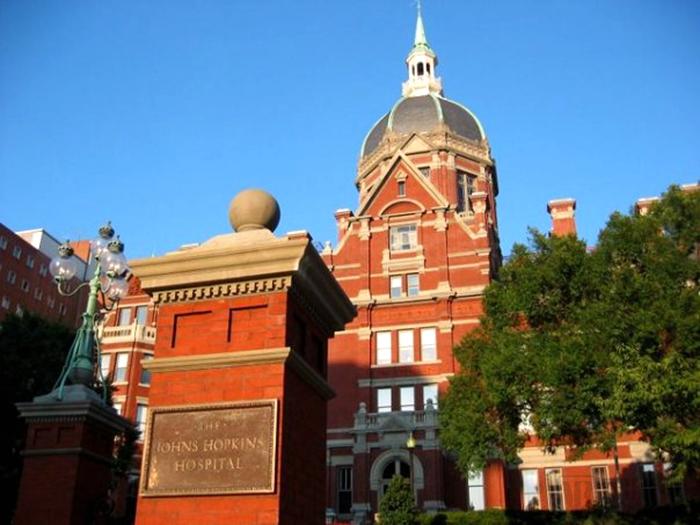
Image from the official website of Johns Hopkins Hospital
In March 2016, Johns Hopkins MedicineHospitalAnnouncementStartThe Hospital Command Center, with GE Healthcare Partners as its partner responsible for the design and construction of the center. The center uses predictive analytics to support more efficient operational processes, thereby improving the efficiency of patient care management.
The command center is equipped with 22 monitors displaying real-time data, resembling the war rooms of NASA’s military and space operations facilities, and integrating cutting-edge systems engineering, predictive analytics, and situational awareness.
The command center is staffed by 24 personnel drawn from various existing departments within the hospital, who are responsible for the centralized management of the entire patient journey from admission to discharge. On average, the center receives 500 messages per minute from 14 different IT systems at Johns Hopkins Hospital, generating real-time data. This data is refreshed every 30 seconds and covers everything from bed availability and operating room efficiency to patient status and staffing levels. Staff can take immediate action to prevent or resolve bottlenecks, reduce patient wait times, coordinate services, and mitigate risks. By analyzing the collected data, the command center can also predict occupancy rates for each floor over the next two days, as well as the specific expected number of patient admissions and discharges for each of the next three days.
Since its establishment, the Command Center has achieved significant results in improving patient experience and operational outcomes. According to a Johns Hopkins report, its capacity to accept patients with complex medical conditions from other hospitals across China has increased by 60%, emergency department bed turnover speed has improved by 30%, post-operative operating room transfer delays have been reduced by 70%, and the number of patients discharged before noon has increased by 21%.
UCLA Medical Center, located in Los Angeles, United States, was founded in 1955. Affiliated with the University of California, it is a comprehensive teaching hospital.
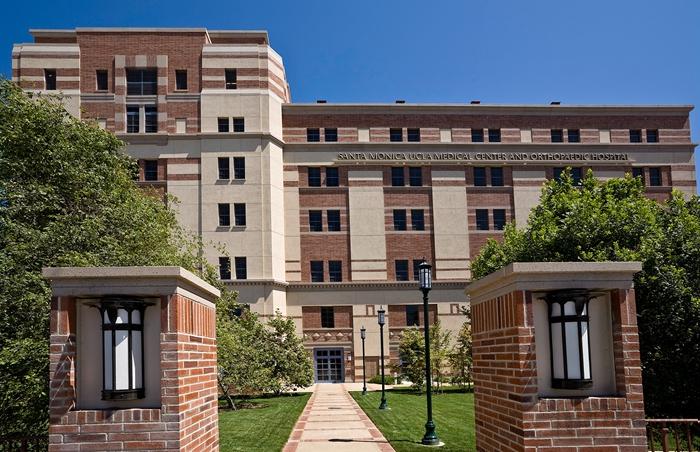
Image from the official website of UCLA Health
In March 2017, interventional radiologists at UCLA utilized artificial intelligence to create a Virtual Interventional Radiologist (VIR) to provide clinical decision support for non-interventional radiologists.
VIR is a chatbot, similar to online customer service, created using IBM Watson’s artificial intelligence natural language processing technology. IBM Watson provided VIR with over 2,000 sample data points to simulate the information commonly received by interventional radiologists during consultations. VIR employs “deep learning” to become increasingly intelligent as more data is input.
VIR automatically replies to clinicians’ questions via text message, helping them select the optimal treatment regimen. For example, it can inform the inquirer whether a specific therapy should be administered to a patient with a particular allergy. “It’s like texting a human radiologist, but it uses artificial intelligence to respond automatically. This is the fastest way to obtain information, and the responses are carefully curated and supported by medical data, leading to better patient care,” said Dr. Kevin Seals, a radiology resident at UCLA and the application’s developer. If a query exceeds VIR’s automated processing capabilities, VIR will provide contact information for an interventional radiologist at the hospital, thereby facilitating direct human-to-human communication.
Lessons from Others
AI technologies based on machine learning have remained at the forefront of capital market trends for over two years. Participation has expanded from early-stage private equity and venture capital firms on the investment side to large-scale industrial enterprises on the product side, seemingly validating their capacity to reshape the world as a future trend.
Through the above review of AI applications in top U.S. hospitals, we have identified two noteworthy points.
First, minimize data barriers.In the United States, top-tier hospitals typically choose to partner with leading technology giants. For instance, the Cleveland Clinic has joined forces with Microsoft, Massachusetts General Hospital with NVIDIA, Johns Hopkins Hospital with GE, and the UCLA Medical Center with IBM. The technology providers in these cases are all well-established leaders in their respective fields. Furthermore, some leading technology companies, such as GE, opt to collaborate with multiple top-tier hospitals simultaneously. These strong alliances, and even networked partnerships among industry leaders, help break down data silos, enabling medical AI applications to leverage massive datasets and ensuring that machine learning models deliver accurate artificial intelligence capabilities. AndInIn China, although some technology vendors have chosen top-tier hospitals as their entry point, medical AI applications remain confined to individual departments or within single hospitals due to limited capabilities and legal barriers, inevitably resulting in data silos.
Second, the front-end orientation of application scenarios. Generally, subfields of medical AI applications are categorized into disease prediction, hospital management, clinical decision support, precision surgery, and health management. Unlike their Chinese counterparts, which focus primarily on clinical decision support, major U.S. hospitals prioritize disease prediction in their medical AI applications (e.g., Cleveland Clinic’s collaboration with Microsoft, Johns Hopkins’ partnership with GE,UCLA Medical Center's VIR) and health management (such asMayo Clinic and AliveCor Partnership) and other upstream stages. The ultimate goal of healthcare is health; integrating medical AI applications into the earlier stages of the health continuum can effectively improve societal health outcomes.
The application of new technologies inevitably follows a process of exploration, synthesis, and further exploration. The insights gained during this exploratory phase can be either inward-looking or outward-facing. In the future, VCBeat will continue to closely monitor the latest developments in the commercial implementation of medical AI both in China and abroad.