

OrbiMed Asia's Jian Wang on Post-Setback Investment Strategies in Immuno-Oncology
On April 6, U.S. biopharmaceutical company Incyte announced the termination of its Phase III clinical trial evaluating the combination of its IDO inhibitor epacadostat and Merck’s PD-1 inhibitor Keytruda for the treatment of melanoma, due to failure to demonstrate a significant improvement in progression-free survival. The capital market responded immediately, with Incyte’s stock price plunging 22.93%.
The industry was abuzz with debate: What impact will this event have on the field of cancer immunotherapy? Will investors adjust their investment strategies accordingly? Which immuno-oncology (I/O) combination therapies will gain greater favor?
To address these questions, we have invited Wang Jian, a globally renowned investor, Senior Managing Director and Founding Partner of OrbiMed Asia, to provide expert insights and answers.
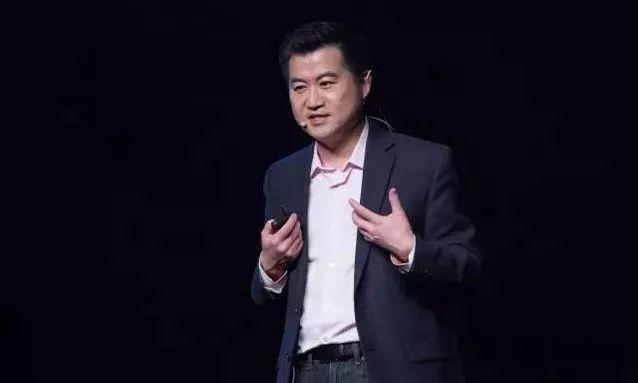
Jian Wang, Senior Managing Director and Founding Partner of OrbiMed Asia
■ Concept:
Tumor Immunotherapy (Immuno-Oncology, I/O):Tumors can evade recognition and attack by the host immune system through various mechanisms, while cancer immunotherapy works by restoring the body’s normal anti-tumor immune response, ultimately leading to the control and elimination of tumors.
These primarily include immune checkpoint inhibitors, tumor microenvironment modulators, cell therapies, and cancer vaccines.
Oncology Immuno-Oncology Combination Therapy (I/O Combo):The efficacy of most immune checkpoint inhibitor monotherapies is evident only in a subset of patients, with response rates even below 20% in many common cancers. To achieve more desirable anti-tumor response rates and durability, combination therapies built on PD-(L)1 inhibitors as the “cornerstone” alongside various other treatments have emerged. Key strategies include combining PD-(L)1 inhibitors with other immuno-oncology (I/O) agents, chemotherapy, radiotherapy, or targeted therapies.
■ How do you view the recent Phase III clinical trial failure of Incyte’s IDO inhibitor in combination with PD-1? What impact do you think this will have on the future of I/O combination therapies?
The failure of the epacadostat and Keytruda combination has sent shockwaves through the entire immuno-oncology (I/O) field, leading many to lose confidence in IDO inhibitors and causing a chill in the I/O combination therapy sector. In the short term, these developments are to be expected. However, in the long run, I/O and I/O combination therapies represent an irreversible trend that will not disappear due to temporary setbacks. Moreover, I believe that the lessons learned from this failure will be beneficial to the long-term development of the I/O field.
For the protagonist of this incident, IDO inhibitors, a single failure does not completely negate their potential in combination with PD-1 inhibitors. Incyte’s decision to advance from promising results in small-scale, single-arm Phase I/II clinical trials of epacadostat combined with Keytruda directly into large-scale Phase III trials inherently carried unavoidable risks. Data related to kynurenine reduction suggest that the dose of epacadostat used in this clinical trial (100 mg BID) was likely insufficient.
Incyte may breathe new life into epacadostat by optimizing patient selection and indications. Insights from industry insiders reveal that multiple companies, including Eli Lilly, have not halted their R&D efforts on IDO inhibitors. Other IDO inhibitors may succeed by demonstrating greater potency or a wider therapeutic window compared to epacadostat.
The path to developing a successful drug is often fraught with twists and turns. Herceptin, a classic blockbuster therapy for breast cancer, also encountered setbacks in clinical trials. It was only after patient enrollment was guided by companion diagnostics to select those with HER2 overexpression that Herceptin demonstrated satisfactory efficacy and ultimately achieved successful market approval.
This incident also serves as a warning to the market, particularly China’s pharmaceutical investment community: I/O combinations are not as straightforward as they may seem. It is expected that investors will adopt a more rational and objective approach toward combination therapies in the future. The vast array of potential I/O combinations is akin to musical composition; while there appear to be thousands of possible pairings at first glance, not every combination yields a harmonious melody.
Developing an excellent I/O combination therapy is highly complex: patient selection and associated biomarkers are often critical.
I/O combinations must generate synergistic effects, where 1+1 is greater than 2, rather than merely equal to 2. This requires I/O combinations to demonstrate clear advantages over the simple addition of two drugs, such as a significant improvement in efficacy (e.g., response rates) or reduced side effects;
The immune system and the mechanisms of tumor immunity are inherently complex, and the superposition of combination effects further increases systemic complexity, making outcomes even more difficult to predict. Due to significant differences between the human immune system and animal models, immuno-oncology (I/O) combinations cannot be rapidly and accurately evaluated in preclinical animal studies, necessitating validation through clinical trials.
In addition to combination selection, many other factors can influence clinical outcomes, such as dosage form and route of administration.
■ As an investor, would you adjust your investment strategy for innovative anticancer drugs?
Regarding investment strategies in tumor immunotherapy, this event serves as a reminder based on our original logical judgments and reflections. Future assessments of the immuno-oncology (I/O) sector will be more cautious and prudent, with particular emphasis on evaluating the target patient populations for products. For combination therapies, we will closely examine the scientific rationale underlying the combinations and the synergistic effects of the two drugs.
Meanwhile, as competition among I/O combination therapies intensifies, efficacy alone no longer guarantees a therapy’s viability; instead, only the most superior combinations will prevail.
■ If you remain bullish on I/O and I/O combinations, which categories do you favor more among I/O agents, small-molecule targeted therapies, chemotherapy drugs, cancer vaccines, and oncolytic viruses?
This requires a case-by-case analysis; it is not necessarily true that one drug is inherently superior to another, although certain trends do exist at a macro level.
First, I believe that non-targeted chemotherapy drugs will gradually fade into obsolescence, as their significant toxic side effects not only destroy cancer cells but also damage normal cells and weaken patients' immune systems.
Second, although small-molecule targeted drugs offer improved precision over chemotherapy agents, they still lack sufficient specificity because their targets are often expressed in normal cells as well. Consequently, an increasing number of these agents are being used in combination with immuno-oncology (I/O) therapies. Even more rapidly emerging than small-molecule targeted drugs are biologics, particularly I/O biologics, including various antibodies, antibody-drug conjugates (ADCs), and fusion proteins.
In the medium to long term, I am highly optimistic about “living” therapies such as cell therapy (e.g., CAR-T) and gene therapy (e.g., oncolytic viruses), as they hold the promise of truly eradicating cancer.
■ Between “fast followers that target mature mechanisms with balanced risk” and “innovators that pioneer novel mechanisms,” what is your investment preference?
In China today, “innovation” is a highly popular term, yet pure innovation (first-in-class) remains relatively rare. This is because few domestic companies currently develop new drugs based on entirely novel, unvalidated targets, resulting in an even smaller number of successful innovators.
It takes considerable courage to invest exclusively in first-in-class assets; I believe that China’s current landscape does not yet support this as a standard strategy. My primary investment approach currently emphasizes risk balance, aiming for portfolio companies to possess both fast-follower or me-better drugs progressing from the Investigational New Drug (IND) stage through Phase I/II clinical trials, and more innovative first-in-class or best-in-class product pipelines in the preclinical stage.
Source: China Renaissance