Microsoft's Healthcare Strategy: Targeting Health Informatics and Genomic Data with $200M Investment Over Two Years
In 2018, Microsoft successively removed HealthVault Insights from the iOS, Android, and Windows stores. This software, launched by Microsoft alongside Healthcare NExT in February 2017, provided long-term care and rehabilitation plans for specific patients.
This move does not signal Microsoft’s exit from the personal care sector; on the contrary, it indicates that the Microsoft Healthcare NExT initiative has entered a new phase. The “AI + Healthcare” strategy has taken shape, with every step of Microsoft’s healthcare expansion exuding an aura of cutting-edge technology.
How Was Such a Massive Healthcare Project Planned and Structured? VCBeat Provides a Detailed Analysis.
NExT is an enigmatic and low-profile department, with the full name New Experiences and Technologies Organization. “It not only has the scientific research backing of Microsoft Research Asia (MSRA) and its collaborative laboratories, but also numerous engineers from Microsoft Engineering Group responsible for turning ideas into reality. It appears more like a combination of an incubator and a venture capital firm.”
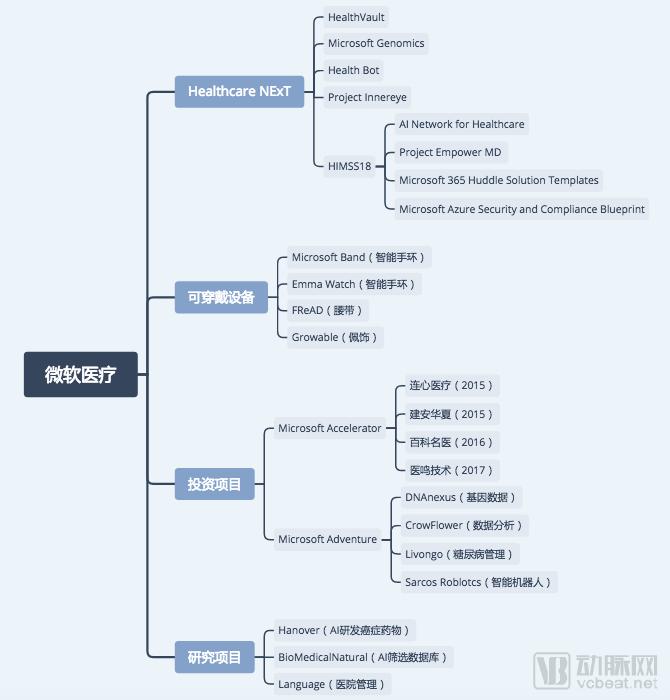
The AI-driven healthcare research initiative, Healthcare NExT, leverages Microsoft’s strengths in AI and cloud technologies to advance medical innovation. Its primary objectives include alleviating physicians’ data entry burdens, triaging patients, and monitoring out-of-hospital patient care. The initiative comprises four core components: HealthVault, Microsoft Genomics, AI-powered intelligent chatbots, and Project InnerEye. Together, these four applications constitute Microsoft’s current strategic framework in the healthcare sector.
From a functional perspective, HealthVault and Microsoft Genomics primarily serve the purpose of data collection and organization, while Project InnerEye is an experimental research initiative focused on segmentation. These two components can be integrated through AI-driven intelligent chatbots. Together, these four elements constitute Microsoft’s healthcare ecosystem strategy.

Dr. Peter Lee, Corporate Vice President and Head of Healthcare NExT at Microsoft (Image source: Microsoft official website)
Since 2007, Microsoft has launched the personal health record center, HealthVault. This platform serves as a globally networked medical system, initially designed to facilitate the sharing of patients' medical information between hospitals and physicians, thereby enhancing diagnostic and treatment efficiency.
Nowadays, HealthVault is a cloud-based platform designed to empower individuals to control their health data by facilitating the collection, storage, and sharing of personal medical information. The platform also integrates with various third-party applications and devices to help users manage fitness, dietary, and general health data.
The platform’s interface is frequently criticized for its poor user-friendliness; however, it places greater emphasis on safeguarding users’ personal privacy compared to other platforms. Furthermore, it is an highly open platform that allows anyone to develop applications to connect to Health Vault, offering interoperability with numerous systems such as Windows, Java, iOS, and Android.
Bill Gates once specifically pointed out, “The next person to truly surpass me as the world’s richest individual will certainly come from the field of genetics.” This prediction is highly likely to become reality.
Today, the cost of sequencing the human genome has plummeted from millions of dollars a decade ago to approximately $1,000. This affordability enables research departments to undertake large-scale sequencing initiatives and apply them in clinical research. The rapid expansion of genomic sequencing places significant demands on data storage and computational power; storing each genome requires approximately 60 GB of storage space, and processing typically consumes around 1,000 CPU hours.
Microsoft Azure can meet this demand by providing reliable and secure global cloud storage services for genomic data. The Microsoft Genomics service on Microsoft Azure offers an easy-to-use web service for analyzing and comparing user genomes, thousands of times faster than traditional methods. This service adheres to the consistency and accuracy guidelines established by the Broad Institute of MIT and Harvard. With its speed, simplicity, and accuracy, the Microsoft Genomics service is well-suited for broad application in the fields of cancer research, rare diseases, general health, and precision medicine.
Health Bot is designed to help healthcare partners easily provide intelligent and compliant medical virtual assistants and chat services. For example, insurance companies can deploy bots to enable customers to easily check claim statuses and ask related questions; hospitals can equip bots with symptom checkers to triage patient conditions, answer patient inquiries, and assist patients in locating the nearest doctor.
The InnerEye project develops specialized machine learning for the automated segmentation of tumors and 3D radiological images, in collaboration with partners such as RaySearch Laboratories and Intuitive Surgical. Its specific functionalities include:
1. Extract targeted genomic measurements for quantitative radiomics;
2. Rapid Radiotherapy Planning;
3. Precise Surgical Planning and Navigation.
The InnerEye project is built upon years of research in computer vision and machine learning. It employs algorithms such as Deep Decision Forests (already used in Kinect and HoloLens) and convolutional neural networks (such as those available in CNTK) for the automated analysis of medical images.
This technology is designed to assist physicians. Machine learning outputs can be easily refined and adjusted by clinicians until they deem the results valid. Throughout the process, physicians maintain full control over the outcomes.
What did Microsoft announce at the HIMSS18 conference?
In addition to the four main pillars of Healthcare NExT, Microsoft also shared related supporting initiatives at the HIMSS 2018 conference to facilitate the healthy development of Healthcare NExT.
These items include:
1. AI Network for Healthcare: Microsoft’s “AI + Healthcare” network expansion project, establishing an AI-centric network in the field of cardiology in collaboration with Apollo Hospitals, one of India’s largest healthcare systems.
2. Project Empower MD: A research collaboration with UPMC, EmpowerMD creates an AI-powered system that listens to and learns from physicians’ verbal interactions and clinical practices, thereby reducing the burden of documentation.
3. Microsoft 365 Huddle Solution Templates: Release new, scalable developer templates to help healthcare teams benefit from state-of-the-art collaboration.
4. Microsoft Azure Security and Compliance Blueprint: Helps healthcare institutions migrate data to the cloud in a simpler, compliant, secure, and industry-standard-compatible manner by providing an end-to-end application development foundation.
5. Microsoft 365 Huddle Solution: A new template for office software that helps health and medical workers better utilize Microsoft Teams services.
The aforementioned initiatives serve as the foundation for Microsoft’s healthcare infrastructure, ensuring that various Healthcare NExT projects benefit from robust network support, efficient data transmission, sound interoperability, and flexible scalability.
In addition to the aforementioned NExT series projects and the new initiatives announced at the HIMSS18 conference in March, Microsoft Ventures has also invested in a range of healthcare projects, potentially integrating them into Microsoft’s own strategic portfolio.
Microsoft Ventures comprises three components: the Startup Community, the Incubator, and Customer Support. The Startup Community incorporates Microsoft’s BizSpark program, launched in 2008, providing startup teams with free or low-cost Microsoft software and other services. It also facilitates networking among entrepreneurs, helps them seek partners, and offers a technical support platform. Microsoft’s Incubator maintains offices in multiple countries worldwide, including the United States, China, and Israel, offering 3–6 months of incubation support for entrepreneurs. The Customer Support service leverages Microsoft’s extensive global customer base to provide startups with essential customer channels, helping them build their own customer base and expand their brand.
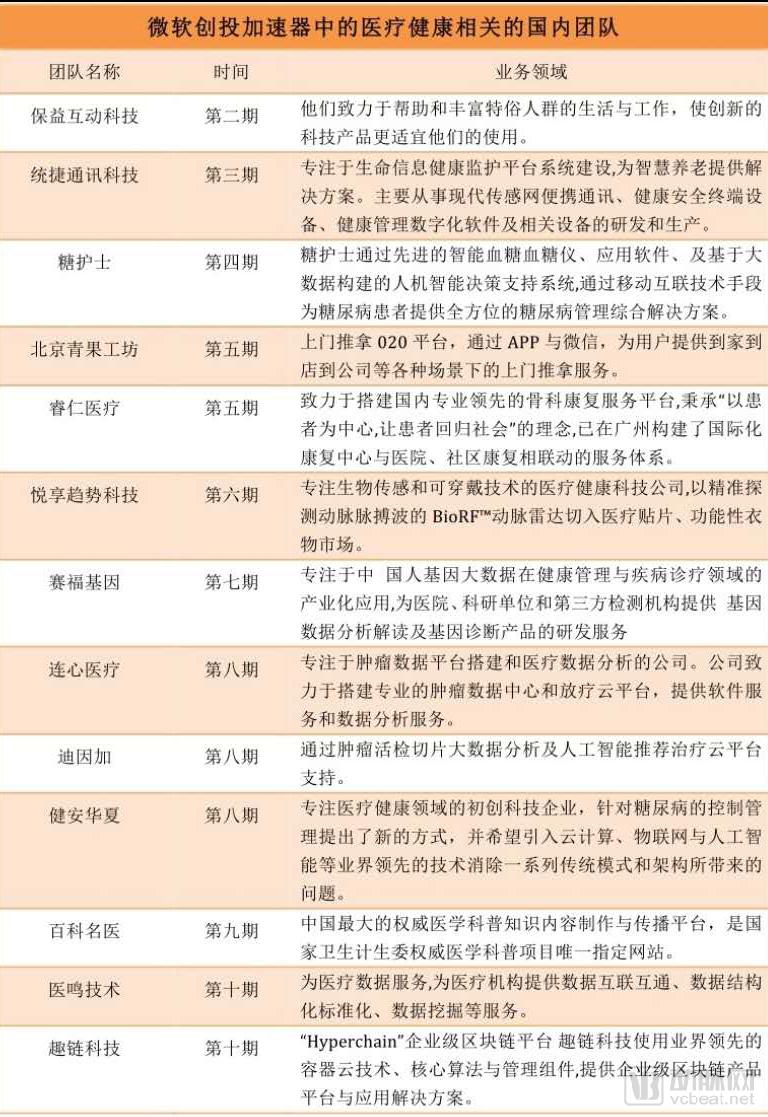
Healthcare Companies Selected for Microsoft China Startup Incubator
An analysis of investments by Microsoft Ventures and Microsoft Accelerator reveals that prior to 2016 (before the seventh cohort), Microsoft lacked a comprehensive strategic layout, with no discernible pattern in its investment approach. Its team invested in angel-stage projects such as Inthera Bioscience and Telesofia Medical. However, after 2016, Microsoft’s strategic intent became increasingly evident. As shown in the chart, the companies that received funding were all at Series D or later stages, representing enterprises or projects already well-established in the healthcare sector. Furthermore, investment focus concentrated on high-tech fields such as artificial intelligence, chronic disease treatment (including cancer), and genomics. This strategy aligns closely with Microsoft’s core competencies and enables deep integration with its cloud computing platform, Microsoft Azure.
Microsoft had invested in several companies engaged in healthcare informatization prior to 2016, but has not extended any further offers to such enterprises since then. This is understandable: startups typically have limited data resources and R&D capabilities. As a business giant with its own established informatization products, Microsoft can achieve faster and more efficient results by opening up its existing platforms, making it unnecessary to provide subsidies or support to smaller firms.
In the realm of wearable devices, Microsoft previously collaborated with Graphnet Health to launch the Microsoft Band smartwatch series; however, sales were dismal, and consumer reviews were largely unfavorable.
Emma Watch is a wearable device initially designed to help Emma Lawton, a specific Parkinson’s patient, alleviate the inconvenience caused by tremors. Although this project is still in the research phase, the Microsoft Research team is conducting further tests to evaluate its efficacy for other Parkinson’s patients and exploring the feasibility of other non-invasive wearable devices.
Other wearable devices in the research phase include FReAD, a product designed for visually impaired individuals that provides audio assistance during tactile manipulation of everyday objects.
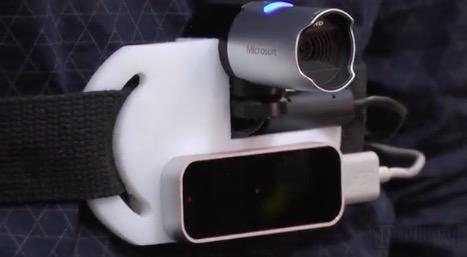
FReAD Belt (Image source: Microsoft official website)
In the field of wearable devices, Microsoft is not the first tech giant to stumble; Intel and Google ventured even further and suffered even heavier setbacks. Wearable devices inherently face certain limitations in terms of interoperability and user experience—for instance, most users are reluctant to wear multiple devices simultaneously. It will take a long journey for major companies to cultivate such user habits.
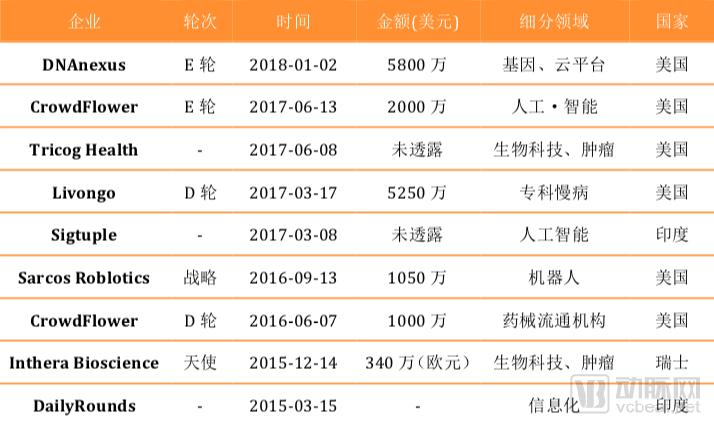
Microsoft's Investment in the Healthcare Industry Since 2015
Microsoft’s lead investment in DNAnexus demonstrates its ambition. Founded in 2009, DNAnexus provides users with services for DNA data storage, sharing, analysis, and management, showing unicorn potential and securing $58 million in Series E funding in January 2018. Investing in DNAnexus has paved the way for the development of Microsoft Genomics. With its own controlled genomic cloud platform, Microsoft can more precisely enter the field of precision medicine (PM) while accelerating machine learning processes in PM-driven AI applications.
Microsoft’s overall strategy centers on cloud storage, with AI as the primary application tool, leveraging data from wearable devices and other external databases (such as DNAnexus and Validic) to directly target the field of precision medicine.
As early as 2016, Microsoft proposed the development of artificial intelligence for cancer treatment, and its current strategic layout underscores this commitment. From platforms to data and technology, Microsoft has made comprehensive preparations.