

Winning Health Releases 2018 Performance Highlights: Hospital Clients Surpass 5,000, Advancing the 'Four Clouds' Strategy
Recently, the Winning Health Winning World 2018 User Conference was successfully held in Shanghai. Themed “Gathering Wisdom in Healthcare, Envisioning the Future with Intelligence,” the event attracted more than 1,300 experts in healthcare informatics to jointly explore the development and direction of smart healthcare. The conference featured one main forum and six sub-forums, where over 40 experts in healthcare informatics shared their insights. Topics covered included the integration of artificial intelligence with healthcare, leveraging informatics to improve healthcare quality, building intelligent platforms through data integration, Regional Health 3.0, Internet Plus Healthcare, as well as new technologies and applications in healthcare informatics.

At the main forum of the conference on the morning of April 20, Mr. Gao Jiechun, Director of the Hospital Management Institute of Fudan University; Mr. Xie Hua, Director of the Shanghai Health and Family Planning Information Center; Mr. Zhang Xuegong, Professor in the Department of Automation at Tsinghua University, Chair of the Academic Committee of the Department of Automation, and Member of the Tsinghua University Academic Committee; and Mr. Yu Guangjun, President of Shanghai Children’s Hospital, attended the conference and delivered keynote speeches at the main forum.
Mr. Zhou Wei, Chairman of Winning Health, delivered the welcome address at the conference. He stated that since Winning Software was renamed Winning Health in 2016, the company has implemented a dual-drive strategy that closely integrates healthcare informatization with “Internet+” healthcare innovation initiatives.
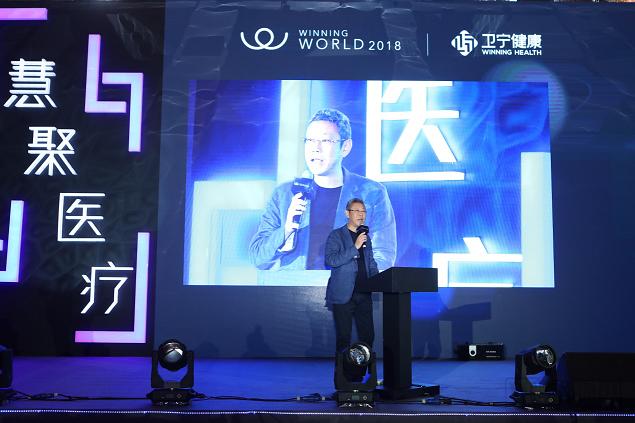
Over the past two years, Winning Health has introduced a new concept for Smart Hospital 2.0, built upon an intelligent platform, and has made significant strides in healthcare informatization, with its total number of hospital clients exceeding 5,000. Meanwhile, leveraging its in-depth understanding of the healthcare industry and accumulated talent pool, as well as continuously advancing its “4+1” strategy—comprising Cloud Medicine, Cloud Pharmacy, Cloud Insurance, and Cloud Wellness, along with an internet innovation platform—the company’s internet-based innovative businesses have also achieved remarkable results.
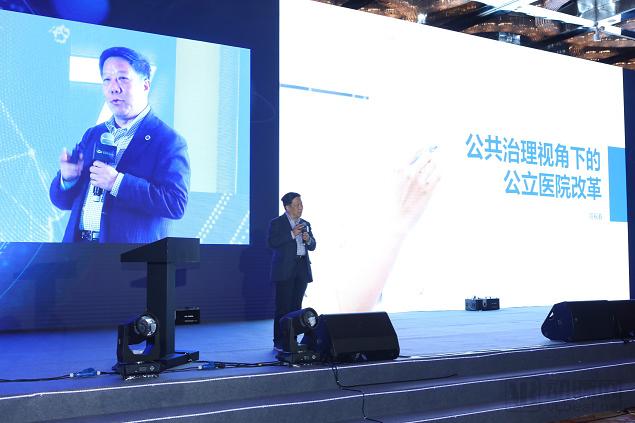
Gao Jiechun, Director of the Institute of Hospital Management at Fudan University, delivered the keynote address as the first speaker at the conference. His presentation, titled “Reform of Public Hospitals from the Perspective of Public Governance,” elaborated on improving public hospital reform through market allocation, governance structures, and compensation mechanisms. He proposed a target model and provided an in-depth analysis of successful international case studies.
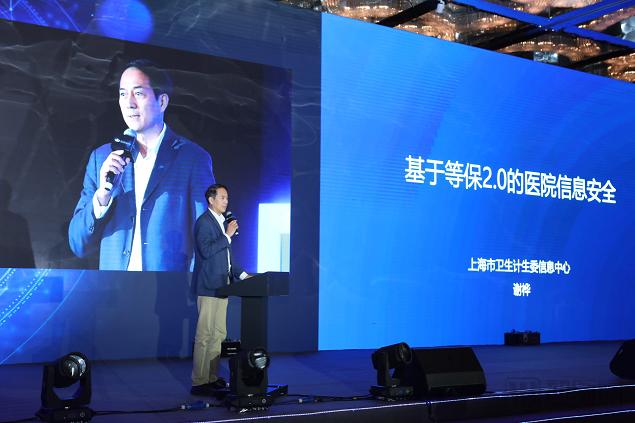
Xie Hua, Director of the Information Center of the Shanghai Municipal Health and Family Planning Commission, delivered the second keynote address titled “Hospital Information Security Based on MLPS 2.0.” He outlined the evolution from Information Security 1.0 to Cybersecurity 2.0 and highlighted seven major challenges currently facing the healthcare industry: new infrastructure failures, virus attacks, cyberattacks, mobile internet applications, website defacement, patient data breaches, and system instability. He also presented methods and models for addressing these challenges.
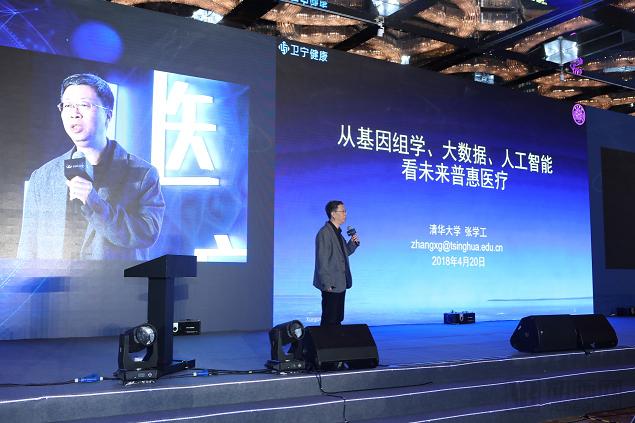
Zhang Xuegong, Professor in the Department of Automation at Tsinghua University, Director of the Academic Committee of the Department of Automation, and Member of the Tsinghua University Academic Committee, was the third speaker at the conference. He delivered an insightful presentation titled “Universal Healthcare from the Perspectives of Genomics, Big Data, and Artificial Intelligence,” discussing how to leverage the latest advancements in genomics, big data, artificial intelligence, and other disciplines to drive the development of universal healthcare and accelerate the implementation of the “Healthy China” strategy.
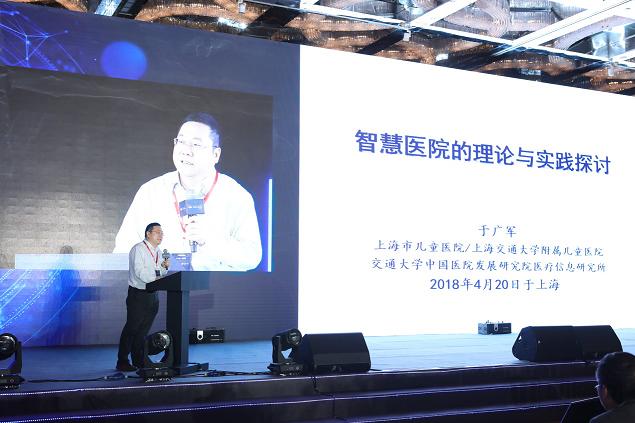
Yu Guangjun, President of Shanghai Children’s Hospital, was the fourth speaker at the conference. Drawing on his hospital’s experience and insights in leveraging digital technologies to build a smart hospital, he delivered a keynote address titled “Theoretical and Practical Exploration of Smart Hospital Development.” He discussed how to achieve deeper integration between digital technologies and hospital development needs, thereby providing patients with higher-quality experiences, enabling healthcare professionals to deliver more precise diagnosis and treatment, enhancing the efficiency of hospital operations and management, empowering decision-makers to uncover insights hidden within data, and allowing hospital Chief Information Officers (CIOs) to gain comprehensive oversight of IT operations and maintenance, ultimately strengthening the hospital’s overall competitiveness.
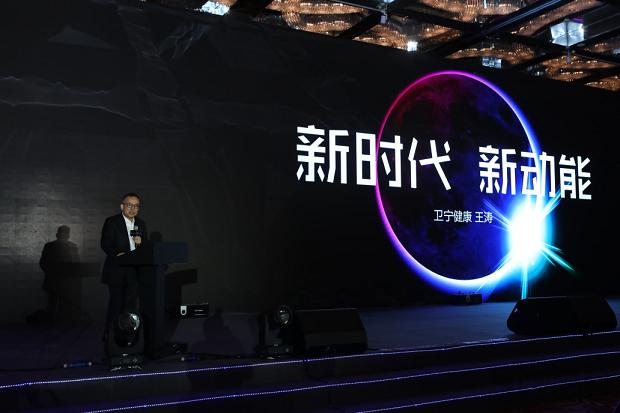
Wang Tao, President of Winning Health, delivered a speech titled “New Era, New Momentum.” Against the backdrop of this new era, Winning Health has continued to maintain its innovative vitality. Building on its traditional healthcare IT business, the company has been steadily advancing the implementation of its “Cloud Medicine, Cloud Pharmacy, Cloud Insurance, and Cloud Wellness” strategy. It also unveiled a three-year product roadmap covering various domains, including Internet+ 2.0, Smart Hospital 2.0, and Regional Healthcare 3.0.
Meanwhile, Wang Tao announced the establishment of “Kuaixiang Medical,” a subsidiary of Winning Health, at this conference.
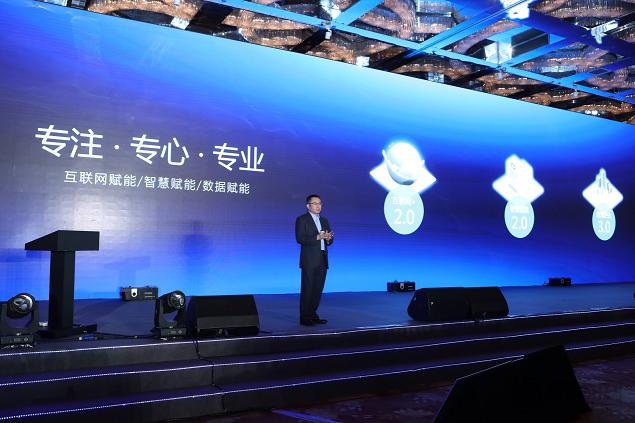
Mr. Zhao Daping, Vice President and CTO of Winning Health, delivered an insightful presentation titled “Winning Health Products 2018,” outlining the company’s product strategy across three key areas: Internet Plus, Smart Hospitals, and Regional Healthcare.
Dual-Wheel Drive, Co-Creating Brilliance
Since Winning Health Technology Group Co., Ltd. was renamed Winning Health in 2016, it has simultaneously launched a dual-drive strategy that closely integrates healthcare informatization with “Internet+” healthcare innovation businesses.
Over the past two years, in the field of healthcare informatization, Winning Health has proposed a new concept for Smart Hospital 2.0, built upon an intelligent platform, and has made significant progress. The total number of hospital clients has exceeded 5,000. Notable achievements include assisting the General Hospital of Datong Coal Mine Group in passing the Level 6 evaluation for Electronic Medical Records (EMR), helping three hospitals achieve Level 5 EMR certification, and enabling five hospitals to attain Level 4 EMR certification. Meanwhile, Winning Health has intensified its efforts in medical artificial intelligence (AI). Its AI-based bone age assessment application has been successfully deployed at Shanghai Children’s Hospital and won the championship at the 2017 China Big Data and AI Innovation and Entrepreneurship Competition.
Meanwhile, leveraging Winning Health’s in-depth understanding of the healthcare industry and its talent reservoir, as well as the continuous advancement of its “4+1” strategy—comprising Cloud Medicine, Cloud Pharmacy, Cloud Insurance, and Cloud Wellness, along with its internet innovation platform strategy—the company has achieved remarkable results in its internet-based innovative businesses.
In the realm of internet-based cloud healthcare: Nali Health, a subsidiary of Winning Health Group, has launched a cloud medical platform integrating “Internet + Hospital Alliances + Physicians.” As of January this year, the platform’s connected medical institutions spanned 24 provinces and municipalities across China, exceeding 1,500 in number; it boasted over 200,000 registered physicians and had served more than 10 million patient visits.
Cloud Pharmacy: Winning Health and Sinopharm Health established a joint venture, KeyShiQuan, a specialized company that operates a commercial insurance-based management platform and a hospital prescription-sharing platform to facilitate out-of-hospital drug sales and direct-to-patient delivery services.
Cloud Insurance: In the first half of 2016, China Life increased its capital investment to acquire a stake in Winning Health Technology Group, which is controlled by the group. The post-investment valuation reached RMB 832 million, with a full commitment to building an insurance risk control engine based on a medical knowledge base. Currently, this engine is being used by multiple large commercial insurance companies across China and nearly 100 municipal-level human resources and social security agencies.
In addition, Winning Health’s wholly-owned subsidiary, Winning Internet Company, has launched the “Winning Pay” payment platform for medical institutions. This platform supports various payment methods, including Alipay, WeChat Pay, UnionPay, commercial insurance, and basic medical insurance, enabling in-hospital QR code payments, online payments, card-free medical insurance settlements, as well as fast-track and direct claims settlement for commercial insurance.
As of now, Winning Health Payment services have been launched in over 600 medical institutions nationwide, with more than 9,000 payment devices deployed, a total transaction volume of RMB 2.9 billion, and over 18 million transactions completed. Additionally, integrations and service launches have been successfully implemented with multiple insurance companies, including Ping An Insurance, China Life Insurance, CPIC-Allianz, and ZhongAn Insurance.
Winning Health: Winning Health has strategically positioned itself in this sector to build the "Yunkang" (Cloud Health) ecosystem, integrating Cloud Medical Services, Cloud Insurance, and Cloud Pharmacy. In chronic disease management, Winning Health launched Kangxin, a platform focused on managing chronic conditions such as diabetes; in maternal and child healthcare management, it introduced services like Yunlebao. Taking Yitong Health, an investee of Winning Health, as an example, it is currently China’s largest operator of physical examination and medical service platforms for public hospitals. By the end of 2017, the company had connected with over 900 hospitals and physical examination centers, served hundreds of thousands of individuals annually, partnered with more than 5,900 corporate clients, and generated annual revenue exceeding RMB 100 million.