

Huiying Medical and 301 Hospital Launch AORTIST 2.0: Advancing from Efficiency Enhancement to Precision Therapy in Aortic Disease Management
On the morning of April 21, the 2018 Vascular Innovation Forum was held in Beijing. Centered on conceptual and technological innovation, the conference focused on the innovative application of next-generation information technologies, such as big data and artificial intelligence, in the medical field, and explored the practical implementation of these technological innovations in vascular surgery. At the meeting,Huiyi Huiying, in collaboration with the Department of Vascular Surgery at the Chinese PLA General Hospital (Beijing 301 Hospital), also released AORTIST 2.0, an AI-powered cloud platform for aortic research. According to Guo Wei, Director of the Department of Vascular Surgery at 301 Hospital, this marks the first global development of an AI-based automatic segmentation method for Type B aortic dissection.。
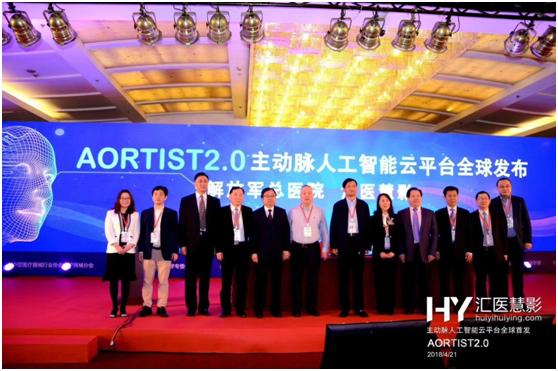
Image source: Huiyi Huiying
Big Data and AI Can Enable China to Overtake on a Bend
Xie Shaofeng, Director of the Department of Information Technology and Software Services under the Ministry of Industry and Information Technology (MIIT), stated in his address at the conference that advancing smart healthcare must be people-centered, aiming to fulfill the public’s aspiration for a better life, while strengthening cooperation in areas such as data openness and data security.First, promote the open sharing and comprehensive utilization of medical and health data. In line with the trends of emerging technologies and new business models, build a unified, comprehensive, and interconnected major healthcare platform to achieve co-construction and sharing of data and resources, eliminate data silos, and facilitate data-sharing channels between departments and industries.。
Second, inHealth information technology enterprises and healthcare departments collaborate to strengthen the alignment between supply and demand sides, promote the in-depth and extensive application of big data and artificial intelligence technologies in healthcare guided by demand, and facilitate the conversion of technological achievements and industrial upgrading.。
Third,Effectively safeguard the security of medical and health data, strengthen identity management and security system construction for such data, and ensure its security through the implementation of standardized preventive measures.. The deep integration of big data and artificial intelligence with the healthcare sector facilitates optimized resource allocation, consolidates societal strengths, and maximizes health benefits. It holds significant importance for driving technological advancement, achieving leapfrog development, enhancing public well-being, and comprehensively building a moderately prosperous society.
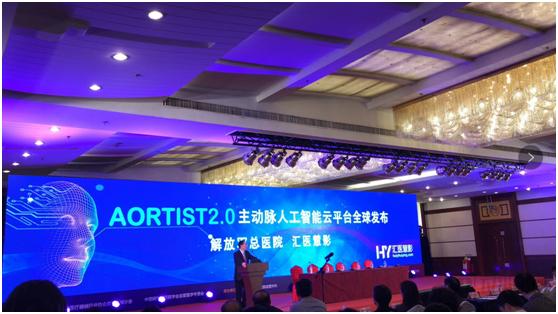
Image source: Huiyi Huiying
“As artificial intelligence (AI) has been elevated to a national strategic priority, algorithms, computing power, and big data have witnessed rapid development. In recent years, AI has achieved breakthroughs in patient monitoring, disease early warning, medication surveillance, personalized diagnosis, precision therapy, and smart elderly care. Particularly in the field of minimally invasive diagnosis and treatment, AI has unlocked immense potential for medical research and clinical practice.” Professor Liao Hong’en, Deputy Dean of the School of Biomedical Engineering at Tsinghua University, delivered a presentation titled “New Advances in Artificial Intelligence in Medical Imaging and Minimally Invasive Diagnosis and Treatment.” Professor Liao emphasized that, regarding AI, greater attention should be paid to achieving synergistic improvements in machine efficiency and human efficacy and cognition. Rather than completely replacing physicians, AI is more likely to serve as a complementary partner. In areas such as diagnosis, navigation, and other healthcare-related domains, long-term, close collaboration between humans and machines will ultimately enable precise, personalized medicine.
As a leading AI company in medical imaging, Huiyi Huiying provides a comprehensive suite of services for medical image data analysis, mining, and intelligent computer-aided diagnosis. Its solutions have been deployed in over 700 hospitals. Specifically, its deep learning-based intelligent computer-aided diagnosis system has been applied in hundreds of hospitals, while its big data intelligent analysis cloud platform—leveraging technologies such as radiomics, machine learning, and big data—has been implemented in more than 300 hospitals. At the 2018 Vascular Innovation Forum, Huiyi Huiying, in collaboration with the Department of Vascular Surgery of the Chinese PLA General Hospital (Beijing 301 Hospital), launched AORTIST 2.0, an AI research cloud platform dedicated to aortic diseases.
AORTIST, which stands for “Artificial intelligence Online Research platform Targeting Individualized aortic Stent-grafting Therapy”. According to reports,After a year of collaboration, both parties have achieved breakthrough progress in the precise measurement, prognosis prediction, and follow-up management of Type B aortic dissection surgery. According to Guo Wei, Director of the Department of Vascular Surgery at PLA General Hospital (301 Hospital), this marks the world’s first AI-based automatic segmentation method developed for Type B aortic dissection. This also represents a significant breakthrough for Huiyi Huiying: its AI application has expanded beyond the radiology department into clinical specialties, advancing from diagnostic support to participation in clinical treatment decision-making, thereby shifting its focus from efficiency enhancement to precision therapy.
AORTIST 2.0 Empowers the Diagnosis and Treatment of Aortic Diseases
Aortic dissection is the most perilous and complex condition among aortic diseases. With advancements in medical equipment and surgical instruments, endovascular repair has become a viable treatment for aortic diseases, marking a transition from open surgery to minimally invasive procedures. The primary challenge in minimally invasive treatment of aortic diseases has shifted from ensuring procedural safety to enhancing therapeutic efficacy. Consequently, vascular surgeons are increasingly focused on how to accurately measure aortic anatomical parameters to reduce the incidence of surgical complications, and how to predict patient prognosis to formulate individualized treatment plans and follow-up schedules.
Data indicate that the aorta is the main trunk vessel of the body. If an intimal tear occurs and timely treatment is not administered, rupture carries a high mortality rate. When the dissection is confined to the region distal to the origin of the left subclavian artery without involving the proximal aorta, it is classified as Type B aortic dissection. Type B aortic dissection is a rare but severe condition; 65%–70% of patients die during the acute phase due to complications such as cardiac tamponade and arrhythmias. Therefore, early diagnosis and treatment are essential.
Chai Xiangfei, Founder and CEO of Huiyi Huiying, introduced that after jointly designing the research project with PLA General Hospital (301 Hospital), the hospital provided imaging data and patient clinical data, while Huiyi Huiying supplied artificial intelligence algorithms, radiomics algorithms, and subsequent engineering-oriented algorithms. After the platform was trained, it underwent small-scale validation and accuracy tuning before being promoted for large-scale application.
AORTIST addresses three core challenges in the surgical management of Type B aortic dissection: precise measurement, prognosis prediction, and remote follow-up. Taking precise measurement as an example, surgery for Type B aortic dissection requires accurate assessment of the diameters of the proximal and distal landing zones, the location of the entry tear, and other critical distance metrics. Manual measurements based on axial CTA images are prone to errors, particularly in measuring the diameter of the aortic arch, and this approach also makes it difficult to obtain data on length and distances. In such cases, vascular surgeons often need to commission specialists to use commercial software to acquire accurate anatomical parameters; however, this method does not guarantee the accuracy or timeliness of information retrieval.
The AORTIST Cloud Platform has achieved breakthroughs in 3D aortic reconstruction, segmentation, centerline extraction, tear analysis, and precise measurement of diameter and length. It is reported that with the AORTIST Cloud Platform, the Intersection over Union (IoU) for arterial diameter measurement reaches 98%, and the error in arterial diameter measurement is reduced to within 1.5 mm. This represents an improvement in precision of over 50% compared to conventional manual measurements. The platform enables precise measurement of the anchoring zone diameter, length, and inter-branch arterial distances within 10 minutes, significantly enhancing both efficiency and accuracy. This provides substantial assistance to physicians in formulating personalized surgical plans.
Professor Guo Wei, Director of the Department of Vascular Surgery at the 301 Hospital, stated that radiomics is closely integrated with big data and artificial intelligence. Professor Guo believes that big data does not merely refer to large volumes of data, but rather to cloud-based big data. A more critical component of medical data is imaging data, which often serves as an objective manifestation of disease, offering greater authenticity than patient self-reports or medical records. Aortic diseases are particularly well-suited for applications involving big data, artificial intelligence, and radiomics. Although many companies currently focus on image processing, very few have extended their capabilities to automated segmentation. The most crucial aspect based on convolutional neural networks is automated measurement.AORTIST 2.0 facilitates precise measurements. Previously, the vast majority of our patients underwent manual preoperative measurements, which posed challenges in identifying the plane perpendicular to the aortic centerline and subsequently selecting the appropriate stent graft. Furthermore, AORTIST 2.0 offers procedural planning recommendations based on extensive data analysis, thereby improving long-term prognostic outcomes.。
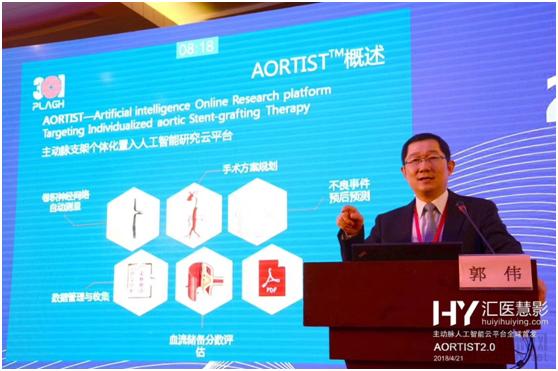
Image source: Huiyi Huiying
The Future of AI and Radiomics in Vascular Surgery
Looking back on the history of artificial intelligence, it originated with expert system-based AI and shifted to statistical models by the late 1990s. AI gradually came into public view starting in 2012, when data-driven artificial intelligence emerged. In 2016, AI technology exploded across various industries, earning this year the title “Year One of AI,” a milestone triggered by the emergence of AlphaGo.
Chai Xiangfei believes that,In the implementation of AI technology in healthcare, medical imaging and pathology are the two areas with the most mature technologies and the broadest applications. In minimally invasive diagnosis and treatment, AI-powered medical imaging not only enables intelligent analysis to provide new diagnostic and therapeutic strategies, but also achieves intelligent segmentation of medical images for 3D knowledge modeling, multimodal image registration to deliver multidimensional information to physicians, and radiation-free image tracking techniques to reduce intraoperative radiation exposure for clinicians.
Regarding Type B aortic conditions, although medical imaging has achieved breakthroughs, significant challenges remain. Chai Xiangfei noted, “The nationwide incidence of aortic diseases in China is approximately 100,000 cases. When we further subdivide these into Type A and Type B aortic aneurysms, each specific condition affects only tens of thousands of patients. Consequently, it is impossible for us to obtain datasets comprising hundreds of thousands or millions of cases. We typically perform computations on datasets containing only hundreds or thousands of samples. Therefore, the most critical capability that medical imaging currently needs to enhance is how to conduct artificial intelligence computations effectively with small datasets.”
From the perspective of the healthcare industry, its unique nature dictates that many new technologies and innovations cannot be subjected to “trial and error,” as this can easily jeopardize human lives. Meanwhile, particularly in the niche field of medical imaging, entrepreneurs with strong interdisciplinary capabilities possess a significant competitive advantage. Such entrepreneurs need not only clinical medical knowledge, computer science expertise, and data processing skills, but also a thorough understanding of the intricacies of marketing, sales, and management.
As Chai Xiangfei pointed out in his concluding remarks today, the medical imaging industry still suffers from a severe shortage of interdisciplinary talent, which is one of the bottlenecks constraining its rapid development. “Whether it involves product development, scientific research, or commercialization, multi-party collaboration is essential, with the cultivation of interdisciplinary professionals being particularly critical. In this process, business acumen, technical expertise, and medical knowledge are all indispensable,” he said.