

Mehe Eye Care: A Differentiated Approach in Pediatric Ophthalmic Plastic Surgery with No Rush to Scale
On April 25, 2017, Yu Gang, a 60-year-old pediatric ophthalmology expert, founded Meihe Medical, announcing the establishment of his own hospital and clinics, as well as an optometry center, and launching the Baobao Eye Doctor Group’s Meihe Ophthalmology.
Over the past year, Meihe Eye Hospital has consistently adhered to a multidisciplinary, cross-sector approach in team building and project implementation. By focusing on patient experience and service quality, the hospital has developed a pediatric ophthalmology specialty with distinct competitive advantages, prioritizing brand awareness and reputation over hasty, blind expansion.
How Meihe Eye Hospital Pioneered the Minimally Invasive Pediatric Eyelid Surgery Market and Refined Its Medical Services and Team: VCBeat (WeChat ID: vcbeat) interviewed Zhang Feng, Director of Beijing Meihe Eye Hospital (hereinafter referred to as “Meihe”).
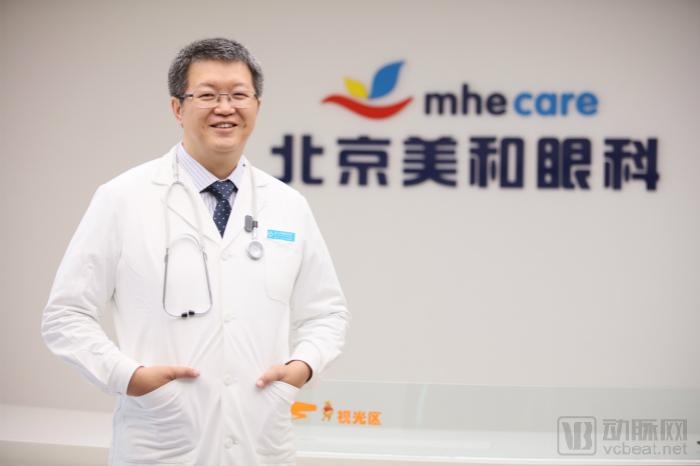
Zhang Feng, President of Beijing Meihe Eye Hospital (Photo courtesy of Meihe Eye Hospital)
Over the past two decades, both public and private ophthalmic institutions worldwide have been on a trajectory of rapid development in the field of ophthalmology.
“This is mainly attributable to major breakthroughs in treatment technologies and equipment for several key ophthalmic diseases, such as phacoemulsification for cataracts and excimer laser refractive surgery for myopia. Driven by this wave of technological advancement, the impact of China’s universal health insurance policy and its demographic dividend has become increasingly prominent. From the perspective of investors, ophthalmology no longer presents technical barriers and has evolved into a purely financial investment,” said Zhang Feng.
Senile cataracts and myopia are the two most prominent adult ophthalmology services, both highly amenable to standardized, assembly-line workflows. Within the industry, these adult ophthalmology services are often vividly referred to as “cash-cow” operations.
Reporters have learned that within the entire field of ophthalmology, adult ophthalmology actually offers greater replicability and predictability. Such low-risk, high-return projects remain relevant to this day. Although the adult ophthalmology sector has become a highly competitive “red ocean,” as long as medical insurance resources are effectively leveraged, market-oriented operations are highly mature and straightforward.
Regarding the currently prevalent “1 (flagship hospital) + N (outpatient clinics)” chain model for ophthalmic hospitals, Zhang Feng believes: “The challenge with this star-topology structure is that labor and management costs will increase substantially. In the already highly marketized traditional ophthalmology sector, it is difficult to further expand the overall market size; competition essentially revolves around capturing a larger share of the existing pie. Ophthalmology follows its own developmental trajectory, and over the next decade, the focus in the field is likely to shift toward pediatric ophthalmology.”
In contrast to the robust momentum seen in adult ophthalmology, progress in pediatric ophthalmology in China has followed a very flat trajectory over the past two decades. “During this period, seemingly all revolutionary technological advances have been irrelevant to pediatric ophthalmology in the traditional sense.”
Meihe is positioned to develop in the field of pediatric ophthalmology. “We must not follow the traditional path of pediatric ophthalmology; instead, we need to integrate interdisciplinary concepts and achieve technological breakthroughs. Traditional pediatric ophthalmology equipment tends to be relatively inexpensive, so greater emphasis should be placed on enhancing patient experience and service quality. Meihe will leverage its geographic advantages to continuously consolidate resources, establish eye care for children aged 0–6 years as our primary channel for patient acquisition, and develop minimally invasive eyelid plastic surgery into the most distinctive subspecialty offering in China’s pediatric ophthalmology sector.”
In terms of service offerings, “Meihe” not only covers traditional pediatric ophthalmology services such as strabismus and amblyopia, but also features distinctive specialties including minimally invasive pediatric eyelid plastic surgery, pediatric nasolacrimal duct procedures, and surgery for pediatric nystagmus. In particular, minimally invasive pediatric eyelid plastic surgery remains largely unaddressed in China; there are very few pediatric ophthalmologists capable of performing oculoplastic procedures, while plastic surgeons are generally reluctant to treat pediatric patients.
“For children with conditions such as ‘severe congenital ptosis’ and ‘blepharophimosis syndrome,’ failure to perform surgical correction before the maturation of their physiological, psychological, and visual development is highly detrimental to their physical, mental, and visual health. However, very few hospitals are currently capable of performing pediatric oculoplastic surgery.”
Minimally Invasive Pediatric Oculoplastic Procedures: Meihe is currently collaborating with the University of British Columbia Faculty of Medicine. “In the second half of the year, we will invite Canadian physicians to visit Meihe. A key priority for us this year is to elevate pediatric ophthalmic diagnosis and treatment technologies to new heights through project-based collaborations with top-tier medical institutions and enterprises, rather than focusing solely on patient acquisition.”
In the development of visual reinforcement products for children, Meihe has partnered with a high-tech startup in Beijing to develop medical software designed to enhance gaze stability and address learning disabilities. The product is currently available on the market for clinical use.
Currently, 90% of Meihe’s patients come from outside Beijing. “Although our patient base consists of children, it is the parents who pay for the services. These parents are predominantly from the post-80s and post-90s generations, making them our largest customer segment. The key to improving patient satisfaction lies in maximizing the efficiency of their medical visits.”
These young parents possess strong learning abilities. Especially in the era of self-media, they are not only adept at learning but also demonstrate robust independent thinking skills, and they generally exhibit an “anti-authority” stance. “Parents are more willing to engage in face-to-face communication and inquiry, bringing various lessons learned from the internet to ‘debate’ with you about their child’s condition. Parents are the true ‘patients,’ and we need an environment that fosters shared decision-making between doctors and patients.”
Zhang Feng told reporters that Meihe’s revenue primarily comes from its medical and optometry departments. Its fee structure partially references the pricing of specialized hospitals, while another portion is independently determined.
“Our medical pricing system offers a degree of flexibility; we do not differentiate between patients based on their financial status. All patients visiting our clinic receive standardized care and services. To support this commitment, we have established a dedicated assistance fund, through which we waived over 500,000 yuan in fees for low-income patients last year.”
Doing what tertiary hospitals are unwilling to do, what they prefer not to do, and what they cannot do—this has been the principle that Meihe has consistently upheld since its establishment one year ago.
Regarding the current state and future of pediatric ophthalmology, Zhang Feng analyzed: “Pediatric optometry has become the next lucrative trend, yet traditional pediatric ophthalmology continues to await opportunities brought about by technological advancements. From a broader perspective, pediatric eye care requires the integration of multidisciplinary technological progress to iterate and create a new paradigm in pediatric ophthalmology. Meihe is a key practitioner in this field; for instance, through neonatal fundus screening and visual function screening, we advocate establishing visual health records for children aged 0–6 years. During the critical period of visual development, targeted interventions and preventive measures are provided to ensure that children’s visual quality aligns with proper physiological developmental patterns.”
“Meihe has been preparing for replication since its very first day of operation. ‘So far, we have certain service offerings and programs ready for replication, such as pediatric eye health care and pediatric optometry and vision care. These light-medical services have already developed distinctive features. However, Meihe’s core, most valuable medical content still requires further refinement.’”
“Future Meihe’s success must be replicable to justify its existence. ‘We hope the young talents at Meihe can grow rapidly, and we are willing to provide them with room for trial and error. However, chain replication imposes higher demands on management, and institutional development must keep pace. Meihe needs managerial talent in this area but will never engage in blind expansion under the guise of chaining.’”
At Meihe, the entire service process primarily adheres to the “Four Online” principle: patients online, doctors online, products online, and services online, which has proven effective in supporting Meihe’s various business operations.
How are all the services integrated? Zhang Feng revealed the key: “It is, in fact, our nursing team. Meihe holds nurses to significantly higher standards than other healthcare institutions, and over the past year, the nursing team has implemented numerous innovative initiatives. The essence of medical service lies in caring for others, and the role played by Meihe’s nursing staff can be described as subtle yet profound—nourishing silently like spring rain. For the vast majority of patients receiving care at Meihe, their positive experiences are largely created by the nurses.”
Over the past year since its establishment, Meihe has achieved phased results in two areas: one is team building, with human resources as the core; the other is project implementation, developing pediatric ophthalmology with its own unique advantages through interdisciplinary iteration and adhering to a path of innovation.
“This year, we will adjust Meihe’s strategy and pace. We intend to focus on refining our services, building our brand, and cultivating a strong reputation, while also meticulously strengthening our team to ensure it remains grounded and practical. I hope every partner who joins Meihe will face challenges with an entrepreneurial mindset. Currently, different investors approach us almost every week. The more this happens, the more cautious we believe we must be. In the future, Meihe will evolve into a platform, with Meihe Optometry, Meihe Medical, Meihe Public Welfare, and Meihe Media potentially operating independently. Healthcare will undoubtedly remain the core.”
In the broader context of mobile internet, closed systems merely serve as a form of self-indulgence for management. “We are in an era of mobile internet where every enterprise is a media entity. We have placed great emphasis on building our own self-media platforms since before our opening. Dr. Yu Gang, our president, has been a dedicated practitioner of mobile healthcare. He led us to experiment with nearly all major self-media platforms in China. During this period, we also attempted to develop our own appointment-booking app. In particular, after the launch of WeChat, we largely abandoned the PC-based approach and redirected all our energy and manpower to the mobile front.”
Meihe has never established a marketing department; instead, it has integrated these functions into Meihe Media. “We aim to approach the matchmaking of medical resources from a broader media perspective.”
Regarding the field of pediatric ophthalmology, Zhang Feng stated that the most pressing issue to address is: “Devoting time and energy to training more specialized pediatric ophthalmologists. Optometry practitioners should gain a deeper understanding of and study clinical pediatric ophthalmology; lessons drawn from other fields can help improve our own practice. We need to move beyond the narrow confines of traditional pediatric ophthalmology and apply internet-era thinking to examine today’s doctor-patient relationship.”
In 2018, Meihe Eye Hospital was already preparing to launch training programs for other eye care professionals and primary-level pediatric ophthalmologists across China.
As for the 2018 target, Zhang Feng shared his expectations: “To help more people understand Meihe. Meihe is in no hurry to expand; at this stage, it needs to build its reputation and establish its brand.”