

Chuanpai Pain Management Group: A Full-Time, Hospital-Based Doctor Group Reinventing Chronic Pain Care
In 2018, VCBeat and VBInsight launched a call for case studies themed “New Structure,” targeting the primary healthcare industry. The initiative focuses on addressing prevalent challenges in primary care by selecting innovative practical cases in areas such as medical consortia, third-party medical services, novel clinics, chronic disease management and health management, and pharmaceutical retail. We will be publishing reports on these innovative healthcare enterprises—stay tuned. If your company would like to be featured, please click here.Registration Link。
During a brief 40-minute interview with reporters, Wang Jun mentioned the word “model” 16 times to explain the business model and development path of the Sichuan-style Physician Group. He is a clear-headed entrepreneur with a methodological approach.
“Sichuan Physicians Group in Action, Keeping Pain at Bay”—this is a phrase that frequently appears on the WeChat Moments of Wang Jun, founder of Sichuan Physicians Group. Established in late 2016, the group has been operating for nearly a year and a half, distinguishing itself in the market among numerous physician groups through its pure vision and unique management model. Recently, VCBeat interviewed Wang Jun to discuss the development “model” of Sichuan Physicians Group.
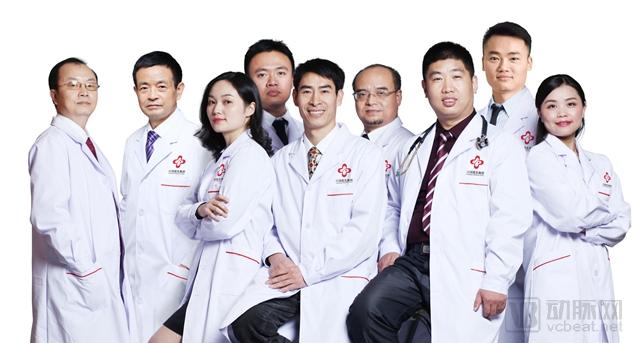
Core Team of the Sichuan-style Physician Group; Third from Right is Founder and CEO Wang Jun (Image Source: Provided by the Company)
Establish an Operations Team for Professionalized Management
Wang Jun, founder of Chuanpai Doctor Group, graduated from the Third Military Medical University and has 12 years of clinical experience at the General Hospital of the Chengdu Military Region. He is well-versed in the internet industry, with prior experience in e-commerce and building physician communities. After leaving the public sector in 2016, he established Chuanpai Doctor Group.
His 18-year military career was not merely a test of willpower for him, but also forged the determination to overcome challenges on his entrepreneurial journey. Wang Jun told VCBeat, “The military provided me with tremendous training. Entrepreneurship is indeed a long-distance race that requires greater endurance and the resilient qualities characteristic of a soldier.”
This is fully reflected in his work ethic. On September 24, 2017, Chuanpai, which had been established for nine months, announced that it had secured financing from Tamarace Capital. At the financing press conference held that day, Wang Jun recalled his state since founding the company: in order to save time and accelerate progress, he commuted by subway every day and worked an average of 18.5 hours per day during the 266 days of entrepreneurship. These 266 days were equivalent to 2.27 years of work for an average office employee.
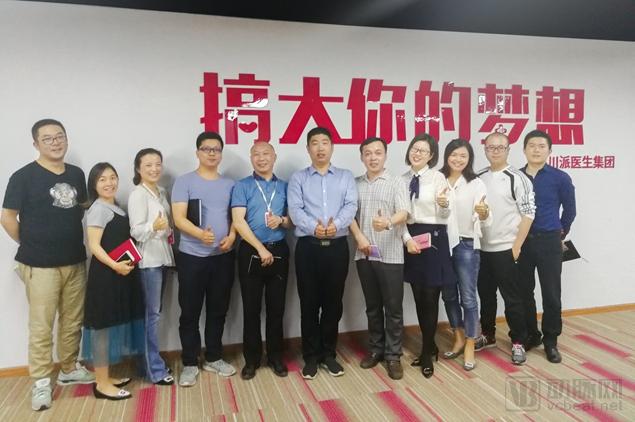
Sichuan-style Physician Group Team (Image source: Provided by the company)
Physician groups, which appear to be physician partnerships, are in fact a model designed to connect physicians with the market. Operations have become an integral part of physician groups; for instance, established groups such as Zhang Qiang Doctor Group and HeartRhythm Doctor Group have built their own operational teams. The Sichuan-based group is no exception: Wang Jun has assembled a 20-member operations team to implement professionalized management.
The team includes three vice presidents with expertise in corporate management, marketing, and capital operations: Ren Sihong, who has over 20 years of senior management experience in corporate operations, investment banking, and private equity fund investment management, with deep knowledge of capital operations; Wang Chunbao, who has 15 years of experience in healthcare management and successfully led Xuetang.com to expand into 509 universities across 106 cities in China within one and a half years, achieving RMB 2.72 million in sales in just one week; and Tang Dengcai, who served for over 20 years in the political work division of the military, overseeing technical cadres, possesses extensive resources among talent experts, and excels in the recruitment, development, and management of technical specialists, having previously served for many years as a Standing Committee Member and Director of the Political Department at the General Hospital of the Chengdu Military Region.
From a market perspective, the structure of a physician group resembles that of a brokerage firm. Without professional management, operations such as personnel allocation, resource distribution, physical operations, medical quality control, and brand marketing would appear highly fragmented, which is detrimental to both service delivery and internal cohesion. Professionalized management enables physicians to focus on their core competencies. As the tiered diagnosis and treatment system is gradually implemented, physicians will increasingly serve at the primary care level, making team coordination and management indispensable. Therefore, the establishment of its own operational team by Chuanpai represents a forward-looking initiative.
Three Key Criteria for Choosing a Doctor: Full-Time, Over Ten Years of Experience, and “Master Craftsmanship”
Military operations emphasize coordinated combat. Within Wang Jun’s team, there is a group of peers who share a common “genetic” profile. They all have backgrounds as military medical officers and are likewise skilled craftsmen proficient in specific technologies.
For instance, Chen Li engaged in pain diagnosis and treatment, healthcare for senior officials, and teaching at the Kunming General Hospital of the Chengdu Military Region and the Headquarters Hospital of the Chengdu Military Region for 24 years. He formerly served as the Director of the Pain Department at the Headquarters Hospital of the Chengdu Military Region. After retiring with the rank of deputy division-level officer, he joined the Sichuan School and became an inheritor of the Emei Orthopedic Tradition. He specializes in Emei orthopedic tuina, spinal manipulation, joint mobilization techniques, acupuncture, and acupotomy.
Song Qiliang, former Director of the Rehabilitation and Physiotherapy Center at the General Hospital of the Tibet Military Command, retired with a deputy corps-level rank. He has 42 years of experience in medical care, health preservation, rehabilitation, and scientific research, specializing in Tuina massage, soft-tissue manipulation and spinal adjustment techniques, acupuncture, and physical therapy.
Chen Huai, former Director of the Department of Anesthesiology at Guangzhou University of Chinese Medicine Clifford Hospital, has nearly 30 years of experience in the diagnosis and treatment of pain medicine at multiple Grade A tertiary hospitals. He specializes in nerve repair, nerve blocks, and neurolytic techniques; minimally invasive interventional procedures for nerves and intervertebral discs; pharmacological management of chronic pain; treatment of cancer-related pain in advanced stages; and emergency resuscitation techniques.
On October 25, 2016, the State Council issued the Outline of the “Healthy China 2030” Plan, which explicitly stated: “Innovate models for the utilization, mobility, and service delivery of medical personnel, and actively explore physicians’ independent practice, contractual services between individual physicians and medical institutions, or the formation of physician groups.” This marked the first time that “independent practice” and “physician groups” were included in a national-level policy document. Consequently, multi-site practice has generally become the most common form of employment for physicians within physician groups.
Unlike physician groups that boast about their large scale, the Sichuan model is rather unique. The first mandatory criterion for physicians recruited by the team is full-time commitment. “Part-time physicians often face scheduling conflicts with patients; either the physician’s availability is unsuitable, or the patient’s.”
At its inception, Wang Jun selected 15 physicians with doctoral degrees from the physician communities he had previously managed to jointly tackle challenging issues in pain management. He believes that the fundamental foundation of physicians lies in medical services; if a physician group focuses solely on profit-making, it will have no future. “By deepening and optimizing our medical service system, the true essence of a physician group will emerge.” Therefore, the second criterion for physicians in the Sichuan-based group is that they must be attending physicians with at least ten years of clinical experience, primarily sourced from Grade A tertiary military hospitals.
Furthermore, the Sichuan-style criteria for evaluating physicians are fundamentally different from those of public hospitals. What is needed are “skilled artisans”; at this stage, there is no need for doctoral supervisors, professors, or academicians of national stature. Rather, what is required are experts who possess genuine hands-on expertise and can provide frontline clinical services to patients.
The Pain Management Department primarily focuses on chronic conditions such as spinal pain and soft tissue pain, while also involving minimally invasive surgical procedures. Therefore, Wang Jun requires physicians from the Sichuan school to prioritize clinical practice over research or teaching. “In terms of clinical practice, teaching, and research, we score 95 out of 100 in the clinical dimension; the remaining two dimensions combined need only account for five points.” Technical proficiency is the absolute standard for evaluating physicians.
Wang Jun believes, “A physician must possess a standout strength in a specific area, such as expertise in arthroscopy, transforaminal endoscopy, or minimally invasive interventional procedures. In the medical industry, this is what leads peers to choose that physician for treating their own relatives and family members rather than seeking care elsewhere.”
The Pain Management Market Is Far from Standardized; Selecting the Right Pain Solutions Is the Greatest Risk Control
In the physician group model, physicians typically take the lead, with individual brands shaping the group’s foundational identity and strategic direction. Following the full liberalization of multi-site practice, more than 400 physician groups of varying sizes have emerged since 2017, covering specialized fields such as cardiology, neurology, orthopedics, psychiatry, and surgery.
Pain medicine began to take shape in China in 1997. It was not until July 16, 2007, that the former Ministry of Health issued a document approving the establishment of “Pain Departments” in hospitals at Level II and above, designating it as a primary clinical specialty. This marked the formal inclusion of pain management into the medical framework of hospitals. If there are weak departments in large hospitals, the Pain Department is certainly among them. Regarding this “Achilles’ heel” of large hospitals, Wang Jun believes it represents the best opportunity for him to embark on an entrepreneurial venture.
The composition of pain treatment practitioners in China lacks standardization. The workforce, numbering approximately 90,000, primarily consists of traditional Chinese medicine (TCM) massage therapists, acupuncturists, anesthesiologists, orthopedic and traumatology specialists, and psychiatrists. Widespread non-standard practices in diagnosis and treatment have resulted in 70% of chronic pain patients in China failing to receive timely and standardized care.
In the market, two extremes exist: either pain management departments in large hospitals are neglected, unable to attract top-tier resources in terms of talent acquisition or equipment procurement; or there are massage parlors and physiotherapy clinics of varying quality in the market, lacking professional medical expertise.
In China, the population suffering from cervical spondylosis alone is approximately 200 million. Due to unsatisfactory treatment outcomes and relatively poor patient experiences in hospitals, a certain proportion of these patients inevitably seek professional treatment institutions outside the hospital system. Therefore, Wang Jun’s decision to focus on the niche field of pain management stems from the fact that pain medicine is a late-developing specialty with a large patient base, yet no authoritative treatment institutions have emerged to date.
In Wang Jun’s view, a physician group is truly substantive only when it delivers high-quality services. Generally, the etiology of pain is complex, and its diagnosis and treatment involve numerous medical departments. To address the pain point of fragmentation between hospital departments, the Chuanpai Physician Group adheres to the philosophy of “multidisciplinary collaboration for one-stop pain management” and adopts a multidisciplinary team (MDT) model for diagnosis and treatment. It primarily treats pain-related conditions such as cervical spondylosis, lumbar disc herniation, postherpetic neuralgia, and trigeminal neuralgia.
The chaos in the pain management market has hindered the establishment of standardized diagnosis and treatment protocols. While hospitals have their own quality control standards, with strict departmental divisions and institutional frameworks, physician groups find the exploration of standardization to be a process of “crossing the river by feeling the stones.” Wang Jun believes, “Establishing standards takes time. The various business models within pain management departments are of uneven quality, requiring time and the entry of professional, well-regulated players. What are the standards for community healthcare institutions? What are the standards for hospitals? Industry-wide standards must eventually take shape.”
“Aircraft” and “Airports,” Relying on Physical Construction Bases
In the myriad reports circulating online, Wang Jun frequently likens the Sichuan-style model to an airplane and its airport. Unlike some physician groups that engage in “fly-in” surgeries or “moonlighting,” Wang Jun’s medical team has its own stationary “base.”
Medical care must inevitably remain grounded in physical entities. A physician group requires a home market to serve as its operational and training base; it cannot exist in isolation from its foundational environment. In Wang Jun’s words, the Chuan-Style Medical Clinic and Chengdong Hospital are the two “strongholds” of the Chuan-Style Physician Group, acting as the vehicles for delivering medical services.
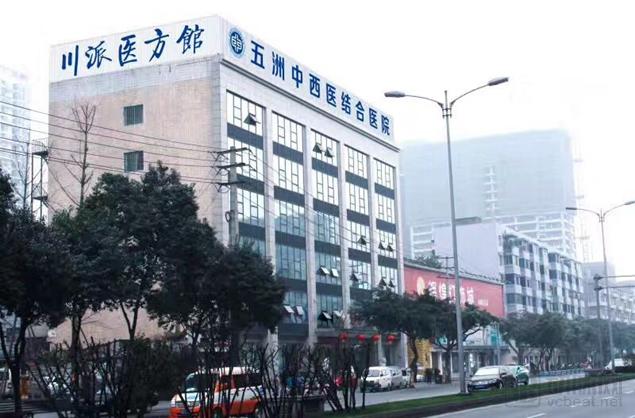
Chuan-style Medical Formula Hall (Image source: Provided by the company)
Relying on physical operations is one of the business models for physician groups, which involves integrating with physical medical institutions in some form to carry out services, training, scientific research, and other work within these entities. Essentially, this is a model aimed at enhancing service quality, while the physical institution also provides a platform for communication among the physician team and the necessary operational foundation.
Sichuan-style Medical Formula Hall adopts a business model combining self-operation and departmental co-construction, relying on Chengdu Wuzhou Integrated Traditional Chinese and Western Medicine Hospital and Chengdong Hospital as its main bases to carry out diagnosis and treatment activities.
Chengdu Wuzhou Hospital of Integrated Traditional Chinese and Western Medicine is a facility combining TCM and Western medicine, with its pain management specialty directly operated by Chuanpai under a semi-managed model. The hospital covers an area of 6,800 square meters. Chengdong Hospital serves as one of the bases where Chuanpai implements co-construction of medical departments. Originally a community health service center, it has evolved into a Grade II Class A hospital occupying over 30,000 square meters. Due to its previously weak foundation in pain management, Chuanpai’s entry provides support and assistance to enhance the hospital’s diagnostic and therapeutic capabilities.
Within the service radius of physical institutions, patient care should remain the core focus. For the Sichuan school of medicine, technical expertise should be the absolute dominant factor. While rooted in Chengdu and serving Southwest China with a nationwide perspective, it is essential to build a strong medical reputation locally. Wang Jun told VCBeat, “The core of healthcare operations lies in reputation management. Because healthcare is a long-cycle, low-frequency service, the hospital’s core asset is its patients. For patients, the most critical factor is treatment efficacy. Once efficacy is achieved and a positive reputation is established, patients will naturally come.”
Through word-of-mouth operations, community marketing, and follow-up services, the Sichuan-based practice has grown from seeing just one or two patients per day initially to nearly twenty patients daily. In his view, physicians must truly solve patients’ problems; however, doctors who have long worked within the public healthcare system tend to have weaker market awareness.
However, doctors at large hospitals are too busy to provide adequate patient services, leading to widespread dissatisfaction among patients. In contrast, while unlicensed itinerant practitioners may offer better service attitudes, their technical competence is severely lacking. This gap inevitably creates room for an intermediate force to address market deficiencies. Physician groups with strong clinical expertise precisely fill this role, and their value will become increasingly apparent over time.
In such a model, physicians enjoy practice autonomy, higher income, and broader professional horizons. Multidisciplinary consultations enable them to move beyond the confines of their individual technical expertise and address clinical challenges through a collaborative approach. Meanwhile, patients benefit from greater respect, reduced time costs, and more meticulous care.
Future: Potential Development of Community-Based Chain Institutions
In the operational model of the Chuanpai Physician Group, physicians are at the core. As Chuanpai’s physicians are full-time employees, labor costs are relatively high, accounting for 70%–80% of total expenditures. Regarding revenue, the current per-patient price for single-disease treatments at Chuanpai is 10% lower than that of Tier-3 Grade-A hospitals. However, this model is still undergoing optimization. Wang Jun revealed, “It is not ruled out that in the future, as our operations become more stable, our brand strengthens, our services improve, and our clinical pathways are further optimized, our per-patient pricing may match or even exceed that of Tier-3 Grade-A hospitals by up to 10%.”
In addition to the two physical bases currently in operation, Chuanpai will continue to strengthen its efforts in standardization and branding.
In the operation of offline physical institutions, in addition to the two base hospitals, Chuanpai has also extended its resources to the community level, providing technical support to more than 30 community-based organizations and exploring opportunities for chain-operation business models. In the future, Chuanpai may leverage its brand to establish more “small yet elegant” community-based chain clinics, each with an area of 150–300 square meters and an investment ranging from RMB 500,000 to RMB 1 million.
Perhaps echoing the slogan “Dream Big” emblazoned on the walls of Chuanpai’s office, Wang Jun has also set himself a “modest goal”: to transform Chuanpai into the Aier Eye Hospital of the pain specialty field.