

National Standards Set: AI, Big Data, and IoT Deployment Directions for Tier-3 Hospitals Officially Defined
Recently, to promote and standardize the informatization construction of hospitals, the National Health Commission formulated the "National Hospital Informatization Construction Standards and Specifications (Trial)" (hereinafter referred to as the "Construction Standards"). The document includes 5 chapters and 22 categories, with a total of 262 specific items, clarifying the construction content and requirements for the next stage of hospital informatization.
In the past, the absence of established standards forced healthcare IT enterprises to navigate uncharted waters through trial and error, exposing them to significant market risks after product development. This document, however, provides clear direction for corporate product research and development.
By referencing the document content, enterprises can gain a clearer understanding of hospitals’ needs in information technology infrastructure development during future product R&D. This enables them to more accurately identify the specific market segments for their products, assess the current stage of their products within the ongoing informatization process, and facilitate deeper analysis of market demand and future development trends.
The document outlines specific construction requirements for hospitals classified as Level II, Level III Grade B, and Level III Grade A, thereby providing a standardized framework for hospital information technology development. Products developed by enterprises that comply with the standards specified in the document are likely to achieve higher market acceptance. Furthermore, these standards serve as a reference for enterprises when identifying their target customer base.
Unified standards have created the conditions for data exchange and sharing among different hospitals and between hospitals and regional platforms, further promoting the interconnectivity of hospital information systems and establishing more convenient channels for collaboration between enterprises.
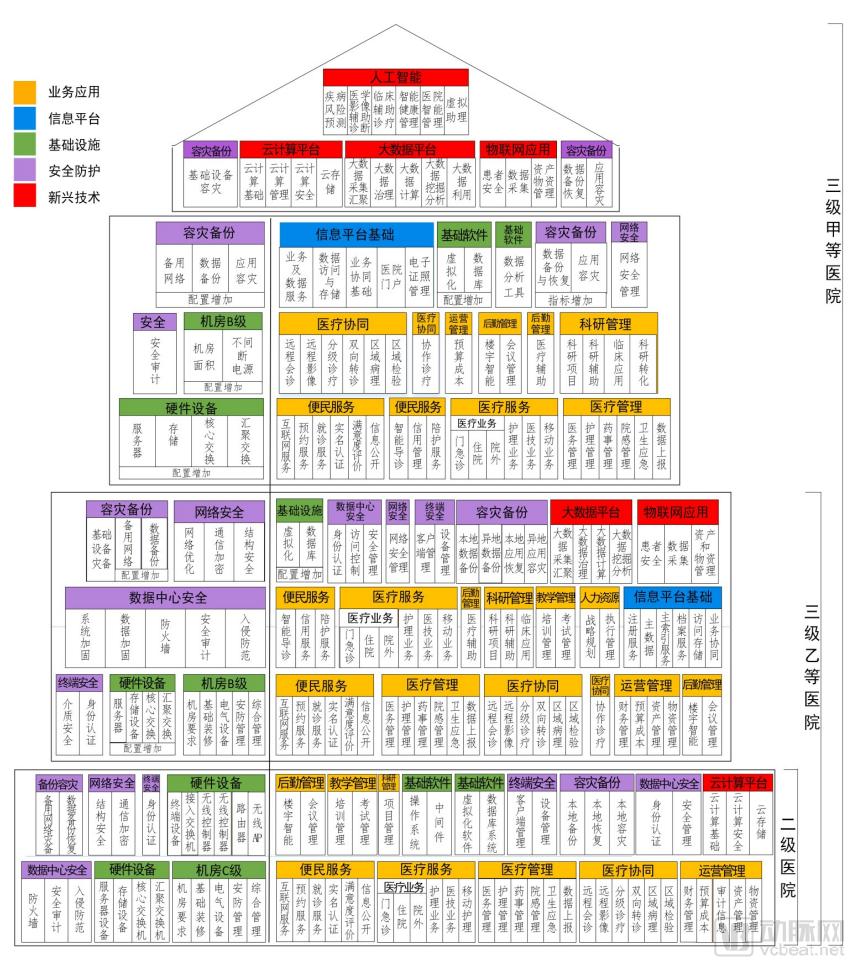
It can be seen that,Artificial intelligence, big data, the Internet of Things, and cloud computing, as emerging technologies, occupy the top tier of information technology infrastructure in Grade A tertiary hospitals., which clearly demonstrates the emphasis placed on these technologies in the current document.
Compared with the 2017 edition, scenario-based applications have begun to stand out.
Compared with the Technical Guidelines for the Application of Hospital Information Construction (2017 Edition, Trial), the Standards and Specifications for National Hospital Information Construction (Trial) significantly strengthens the conceptual framework for scenario-based implementation of emerging technologies—such as big data, artificial intelligence, and the Internet of Things—in tertiary hospitals.
Regarding the scenarios mentioned in the “Construction Standards,” VCBeat conducted an anonymous survey, inviting dozens of CIOs from top-tier hospitals in China and technical leads from industry companies to provide comprehensive ratings on scenario maturity, complexity, and potential. These results objectively reflect, to a certain extent, the future implementation directions for medical big data, artificial intelligence, and the Internet of Things (IoT).
In the “Construction Standards,” the specific content and requirements for big data are shown in the figure below:
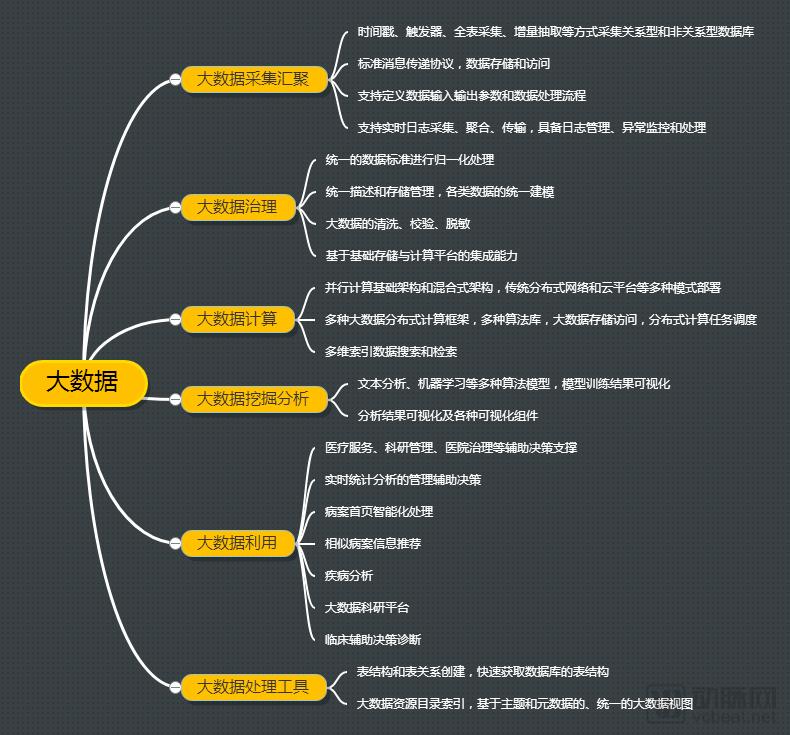
Compared with previous versions, the current Construction Standards provide more detailed requirements for the entire lifecycle of big data, encompassing data collection, governance, computation, mining and analysis, utilization, and tool implementation.
The big data application scenarios extracted from the specific standards are as follows:

Based on anonymous surveys of hospital information department directors and corporate technical or project leads, VCBeat has derived the following scoring assessment based on technology maturity, complexity, and development potential:
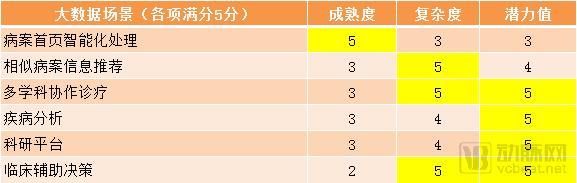
Currently, industry insiders are most optimistic about the development and application of big data in disease diagnosis, treatment, and scientific research. However, in terms of implementation difficulty, clinical decision support systems (CDSS) and multidisciplinary team (MDT) collaborative diagnosis and treatment pose the greatest challenges. Particularly for the former, technological maturity remains relatively low at present, with very few products truly applicable to physicians’ disease diagnosis and treatment workflows.
In this document, Wang Weiyu, Chief Product Officer of Boshi Medical Cloud, stated that the repeated emphasis on standardization and quality control of electronic medical records (EMRs) in the standards reflects the state’s heightened attention to EMRs, which will facilitate enterprises’ promotion of disease-specific structured EMRs.
Structured electronic medical records for specific diseases are the prerequisite foundation for big data applications; only by collecting high-quality data can subsequent applications be realized.
Currently, domestic medical big data companies are involved in all six major scenarios. Regarding these different scenarios, Wang Weiyu offered his perspective, suggesting that the first two can be defined as intelligent processing of existing hospital-level data. This represents a strategic focus for some companies, as this data already resides within hospitals’ established Hospital Information Systems (HIS) but has not yet been fully or effectively utilized.
The latter four items can be defined as the intelligent processing of structured panoramic data, which encompasses two key elements: structured data and panoramic data. Panoramic data extends beyond in-hospital diagnosis and treatment records to include out-of-hospital follow-up data, health data, patient genomic data, and more.
Furthermore, since acquiring data for the latter four items is significantly more challenging than for the first two, clinical decision support diagnosis currently represents the least prevalent scenario in practical terms. Even if existing hospital data are 100% structured through Natural Language Processing (NLP), this remains insufficient to support clinical decision-making; it is also necessary to fulfill the second element: panoramic data. This is precisely why Boshi Medical Cloud is dedicated to collecting panoramic medical data through disease-specific structured electronic medical records.
In terms of disease analysis and scientific research, the research projects of the PLA No. 302 Hospital serve as an excellent case study.
In 2015, to meet the research needs of a tumor database for central liver cancer and cholangiocarcinoma, the Liver Tumor Diagnosis and Treatment Research Center of the 302nd Hospital of the Chinese People's Liberation Army, the Molecular Diagnostics Medicine Professional Committee of the Chinese Research Hospital Association, and Boshi Medical Cloud collaborated for one year to jointly build a big data platform for cholangiocarcinoma. This platform achieved comprehensive integration of patient diagnosis and treatment information, imaging data, pathological diagnoses, metabolomics, and genetic testing data.
Currently, the Cholangiocarcinoma Big Data Platform at the 302 Hospital has accumulated structured medical records and omics data from over 1,000 cholangiocarcinoma patients. Building on this foundation, the hospital has integrated domestic and international clinical practice guidelines and research findings. Leveraging an intelligent analysis and mining system augmented by machine learning and deep learning, the center has successfully developed a novel mathematical model for “Estimating Disease Risk and One-Year Survival Rate in Cholangiocarcinoma.” This model provides a data-driven basis and clinical foundation for treatment evaluation and prognostic risk prediction in patients with cholangiocarcinoma.
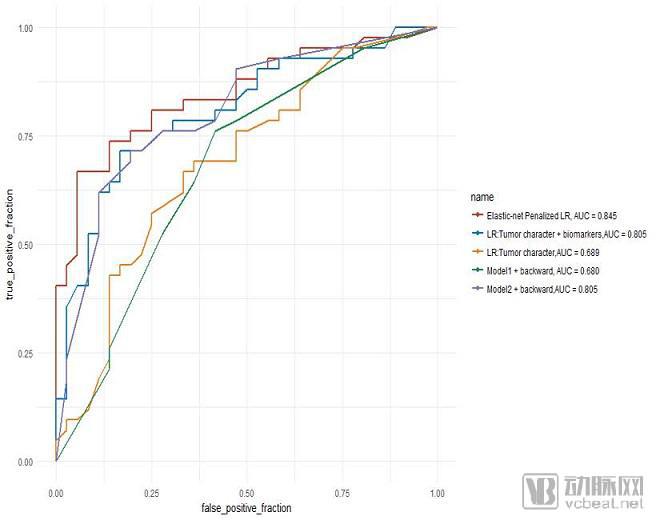 EN Achieves the Optimal Peak AUC
For instance, by inputting key patient information—including tumor characteristics, demographic data, laboratory results, and diagnostic metrics—into this product, clinicians can obtain recommendations for diagnostic staging, along with insights into appropriate treatment options, potential clinical outcomes, and the one-year survival rate.
In the realm of clinical decision support, LinkDoc Technology’s Hubble AI-assisted decision-making system is highly representative.
By applying real-world patient case data and algorithmic models to oncology treatment, LinkCare constructs precision diagnostic and therapeutic models and provides data support, thereby assisting hospitals in management decision-making, scientific research, and clinical diagnosis and treatment.
Currently, the “Risk Prediction of Skip Metastasis in Lung Cancer Lymph Nodes” module of the Hubble system can prevent premature recurrence by 8–10 months in lung cancer patients due to misdiagnosis, extending the lives of nearly 20,000 patients by 8–10 months annually. The “AI Intelligent Diagnosis of Pulmonary Nodules” module of the Hubble system automatically identifies all nodules in CT images, achieving a detection rate of 91.5%.
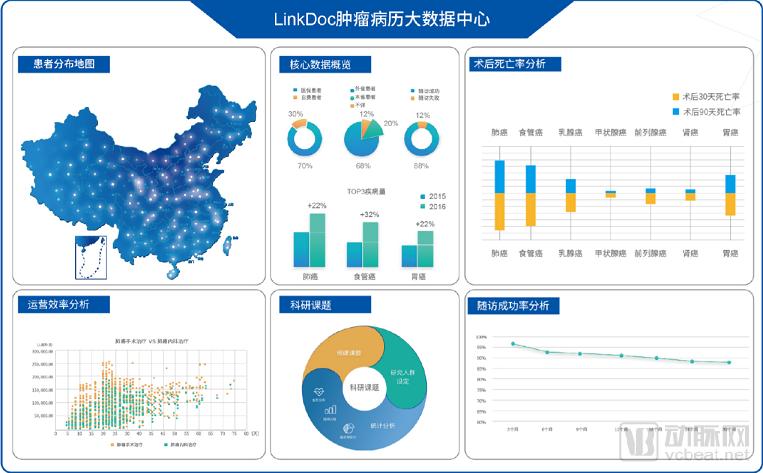
Hubble AI-Assisted Decision Support System Display Page
Hou Bolin, Director of Clinical Operations for Medical Big Data at LinkDoc Technology, told VCBeat that the company initially applied natural language processing (NLP) technology, combined with medical knowledge graphs and extensive manual annotation, to perform in-depth structuring of raw clinical medical records. Through a rigorous data processing framework, the company has built high-quality clinical big data cohorts, ultimately enabling effective applications based on big data.
LinkDoc primarily focuses on clinical data-based scientific research and the application of artificial intelligence in assisted diagnosis and treatment. It is less involved in hospital operational management and governance, including real-time statistical analysis.
Currently, scientific research remains a key priority for hospitals. As the construction of Hospital Clinical Data Repositories (CDR) is still in its early stages and available data platforms are imperfect, there is no relatively clear strategy for data utilization. Only research platforms are currently relatively mature in application. According to LinkDoc’s roadmap, disease analysis, scientific research, and assisted diagnosis will be its main focus areas in the future.
Multidisciplinary Team (MDT) diagnosis and treatment is also one of the application scenarios currently being explored in the field of big data. Taking oncology as an example, cancer treatment requires a comprehensive approach. Medical record data from a single department have limited value; however, MDT data involving multiple departments can significantly enhance the level of evidence provided by the data.
In this regard, there are also practical examples. Leveraging the underlying technology of Boshi Medical Cloud and drawing on years of practical experience in multidisciplinary discussions, Peking University Cancer Hospital has developed an MDT component tool designed for multidisciplinary team consultations.
With this tool, once physicians have defined their research topics, they can leverage data analytics to perform cross-validation and complementary analysis across different departments, physicians, and medical record forms. This multidimensional approach facilitates the implementation of Multidisciplinary Team (MDT) care, ultimately benefiting patients.
The specific content and requirements for artificial intelligence in the "Construction Standards" are shown in the figure below:
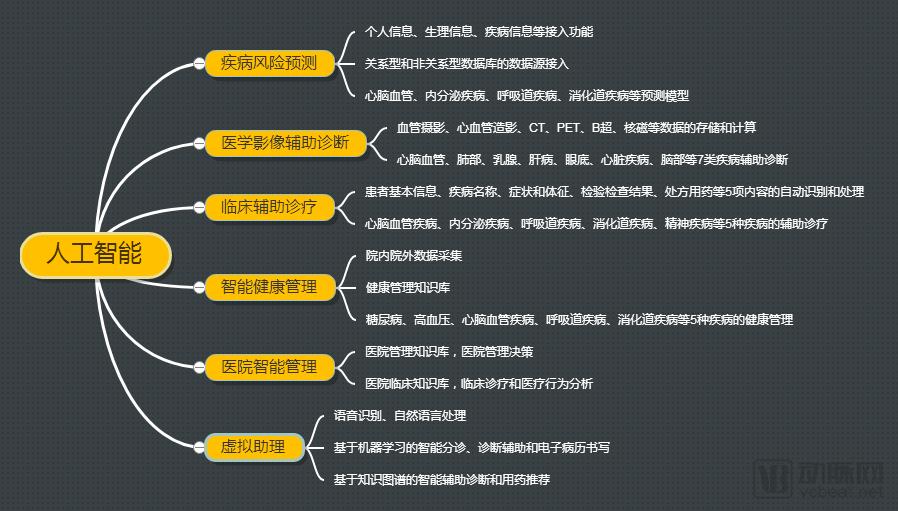
Compared with previous versions, the current "Construction Standards" clearly define the applications of artificial intelligence in various imaging devices and for major diseases. Key disease areas for medical imaging include cerebrovascular and cardiovascular diseases, pulmonary diseases, liver diseases, breast conditions, fundus disorders, and cardiac conditions. In terms of chronic disease management, artificial intelligence has application scenarios in health management for diabetes, hypertension, cerebrovascular and cardiovascular diseases, respiratory diseases, and gastrointestinal diseases.
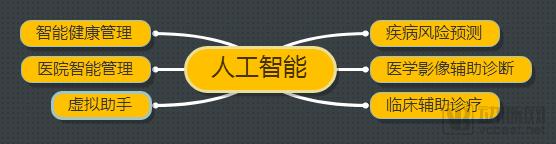
Based on the specific criteria, VCBeat has identified six major application scenarios for artificial intelligence as follows:
After consolidating anonymous survey responses from hospital information department directors and enterprise technical or project leads, VCBeat derived the following scoring assessment based on technology maturity, complexity, and development potential:
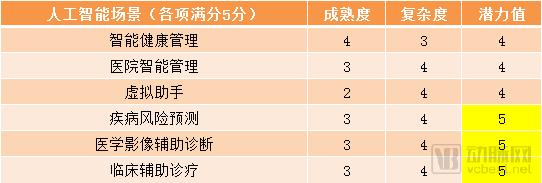
Survey results indicate that industry professionals are most optimistic about the application of artificial intelligence in assisted diagnosis and treatment, as well as predictive scenarios for diseases. In terms of technical difficulty, various scenarios are largely comparable. Intelligent health management is currently the most mature field.
Regarding the Construction Standards, Chen Hui, CEO of Yasen Technology, shared his perspective. He believes that this document will significantly promote the direction of artificial intelligence applications and clinical implementation, as well as enhance China’s healthcare system.
Currently, AI products targeting specific diseases, such as Alzheimer's disease or cerebrovascular and cardiovascular conditions, are relatively scarce in terms of diagnostic capabilities. Most efforts are concentrated on quantitative analysis for imaging assistance.
AI companies should prioritize disease risk prediction. Many diseases in China have suboptimal prognoses, fundamentally due to inadequacies in aspects beyond treatment itself. For these enterprises, the more critical capability lies in providing robust predictive analytics models for large-scale deployment, particularly focusing on cardiovascular and cerebrovascular diseases, neurological disorders, and geriatric conditions.
Chen Hui believes that disease risk prediction will become a highly viable application scenario, with practical implementation opportunities in physical examination centers, geriatric care centers, and third-party laboratory and diagnostic testing institutions.
In the realm of medical imaging applications, the current "Construction Standards" clearly define the application of artificial intelligence in diseases related to the heart, brain, blood vessels, breast, and lungs. Imaging data has also been expanded to include dimensions such as nuclear medicine and ultrasound. This prevents a large number of enterprises from clustering around a single type of imaging, which could lead to a disconnect between businesses and clinical practice.
From the hospital perspective, departments such as clinical laboratory, medical imaging, radiology, nuclear medicine, and pathology are in high demand. However, the future application of artificial intelligence in clinical departments is equally important as in medical technology departments. Taking cardiovascular and cerebrovascular diseases as an example, whether analytical models and data can be defined based on clinical needs, rather than being driven top-down solely from a technical perspective, is a direction that enterprises should attempt to explore and expand.
It is reported that Yasen Technology’s future development will focus on two key areas: first, supporting the largest possible base of primary care hospitals, including the implementation of laboratory testing services in third-party clinical laboratories; and second, exploring fields such as brain science, which have high actual incidence rates but lack effective, long-term predictive and prognostic analysis and management.
Given that population aging is a major issue in China, there is a significant lack of early prediction, risk management, and even rehabilitation services for neurodegenerative diseases. This represents a market worth tens of billions of yuan, even excluding pharmaceutical interventions.
In light of the recent release of the “Construction Standards,” VCBeat consulted Professor Zhang Xuegong from the Department of Automation, School of Information Science and Technology at Tsinghua University, an expert in artificial intelligence. According to Professor Zhang, Tsinghua University is currently collaborating with Winning Health, a leading domestic healthcare IT enterprise, in areas related to artificial intelligence.
He believes that, in addition to medical imaging and pathology, psychiatry represents another promising area for the practical application of artificial intelligence. In the past, physicians could only determine whether a patient had mental health issues by assessing their thought processes and logical reasoning. By leveraging speech recognition technology within AI, it becomes possible to employ machines to communicate with patients, akin to a Turing test.
The specific content and requirements for the Internet of Things (IoT) in the "Construction Standards" are shown in the figure below:
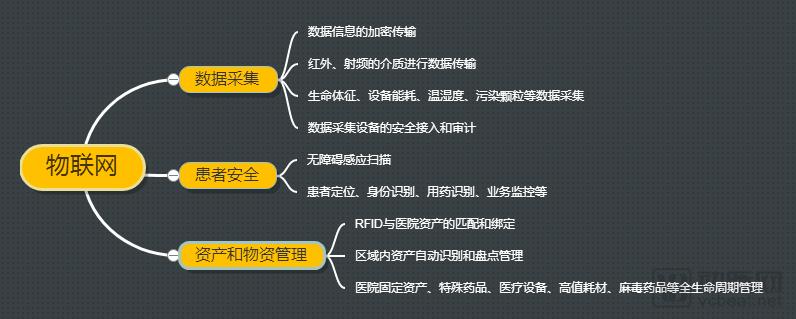
There have always been few standards related to the Internet of Things (IoT) in the medical field.
In November 2010, the Standardization Administration of China and the National Development and Reform Commission jointly established the National Working Group on Basic Standards for the Internet of Things. The primary responsibilities of the working group include studying and proposing recommendations for an IoT technical architecture and standard system suited to China’s national conditions, putting forward proposals for the formulation and revision of standards concerning key IoT technologies and basic general-purpose technical standards, and carrying out standard development activities.
Following the establishment of the National Internet of Things (IoT) Basic Standards Working Group, 47 projects were approved for the first batch of national IoT standards, among which 11 are healthcare-related, as detailed in the table below:
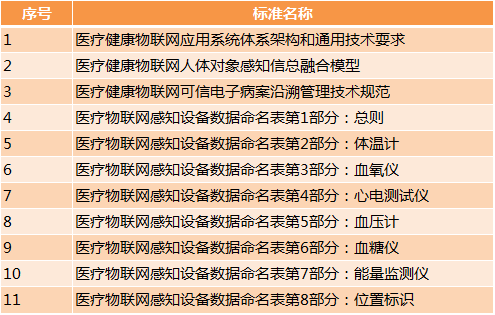
Although this standard was introduced early on, it has never served as a guiding benchmark for the healthcare industry. The recent release of the National Health Commission’s “Construction Standards” is expected to improve the current state of the industry.
The standard specifies 21 application scenarios for the Internet of Things, as detailed below:
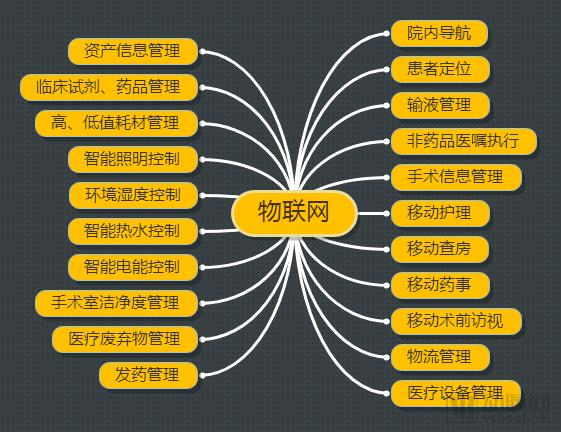
Based on the distinct characteristics of their product application scenarios, VCBeat categorizes IoT-enabled healthcare scenarios into two major types: location-based and data monitoring.
Based on anonymous surveys of hospital information department directors and enterprise technical or project leads, VCBeat has derived the following scoring assessments based on technology maturity, complexity, and development potential:
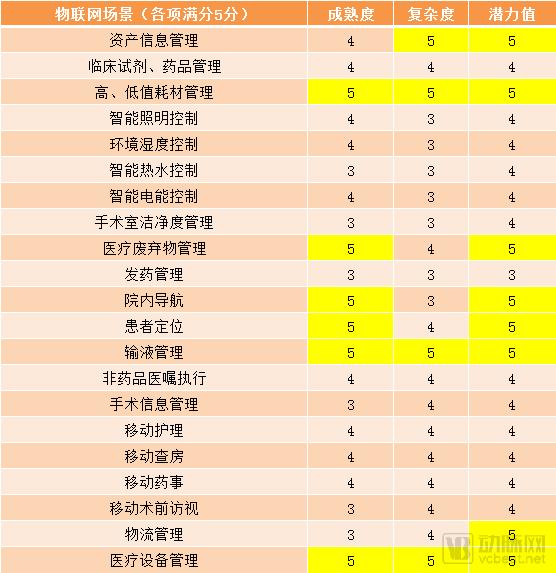
The survey results indicate that the industry is most optimistic about scenarios involving hospital consumables and equipment, as well as indoor positioning for assets and personnel within healthcare facilities.
VCBeat consulted Hu Xiaowei, Medical Industry Solutions Manager at Ruijie Networks, on this matter. He stated that in recent years, the medical Internet of Things (IoMT) has seen significant hype but has faced severe challenges in practical implementation. This standards document clarifies specific directions for deployment and will play a crucial guiding role in the implementation of medical IoMT solutions by enterprises over the next 5 to 10 years.
Currently, in the industry, patient safety and asset and supply management are areas with relatively more IoT solutions, while data collection-related solutions remain relatively rare.
In healthcare settings, patient safety has always been a top priority. Solutions such as infusion monitoring, infant anti-theft systems, and location tracking for psychiatric patients are continually emerging. Enhanced patient care helps reduce doctor-patient conflicts and fosters a positive healthcare environment.
Next is the asset and materials management solution. With the release of health and hygiene policies such as the “13th Five-Year Plan” for healthcare reform and “Healthy China 2030,” smart and information-based hospitals are being built at a rapid pace. A large number of medical devices, information technology products, high-value consumables, and other items have been introduced into the medical environment, becoming significant productive assets and property for hospitals. Effective management of these critical assets will become a key priority for hospitals.
Hu Xiaowei stated that, regardless of the stage a hospital is in, the management of its personnel and assets remains its most critical component.
People: Patient management and healthcare staff management directly impact the doctor-patient relationship;
The management of critical medical supplies, such as medical devices and special medications, constitutes a key component reflecting a hospital’s professionalism.
Therefore, patient safety and the management of supplies and assets represent highly promising entry points for IoT healthcare enterprises. In the future, Ruijie will also explore and delve deeper into solutions such as the management of special-needs hospital patients, healthcare personnel, medical waste, and pharmaceuticals.
Zheng Dong, Head of IoT Technology at Yihui Technology, also offered a similar perspective. He stated that, at the current stage, IoT applications in hospitals are primarily focused on the tracking of personnel, assets, and materials. Among these, there is the greatest demand for location-tracking solutions for medical staff and patients, followed by asset tracking.
Positioning of personnel, finances, and materials serves as the foundation; upon this basis, data are collected via various sensors. After aggregation, hospitals can leverage their data centers to conduct further analysis and planning.
For instance, with equipment assets, hospitals can leverage IoT sensing technologies to identify that certain devices are frequently utilized on a specific floor and for extended durations. Following data analysis, the Equipment Management Department can inform the hospital’s Procurement Department of this pattern, prompting consideration of additional purchases of such equipment.
Regarding future development, Zheng Dong assesses that due to significant disparities in medical IoT device standards, data acquisition is currently fragmented among manufacturers, with strong proprietary silos. Yihui Technology is currently promoting a common IoT platform, aiming to leverage its market advantages to break through the limitations of IoT in healthcare and ultimately realize the concept of smart hospital wards.
Traditional hospital wards are oriented toward clinical use, with healthcare professionals at the core, arranging resources based on their needs. In contrast, smart wards are patient-centric, leveraging sensors, infrared technology, RFID tags, and other means to provide patients with integrated ward services that encompass disease management, lighting, air quality, temperature, humidity, and entertainment.
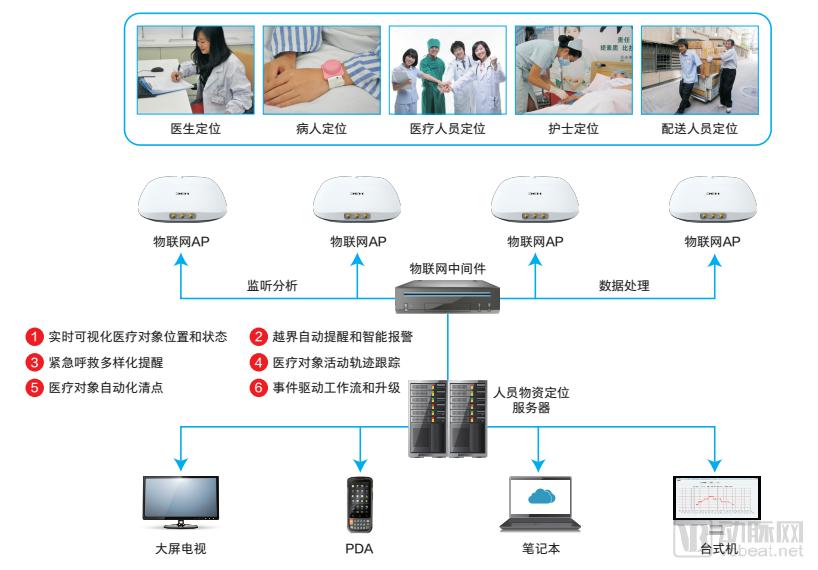
Taking personnel positioning management as an example, a typical application of Wi-Fi and RFID technologies in the healthcare industry, enhanced monitoring of the location and movements of special-needs patients enables true "patient-centered management."
Yihui Technology’s system enables refined and intelligent management of various hospital populations, offering precise Room-Level and Bed-Level positioning services, customizable event mechanisms, and diverse alert methods. These features are better aligned with real-world hospital scenarios. The perceptual data generated by the Internet of Things (IoT) not only enriches medical information databases but also provides significant convenience to healthcare professionals in their daily work.
Commonly located personnel include: doctors, nurses, patients, newborns, and dispatchers, among other healthcare workers.
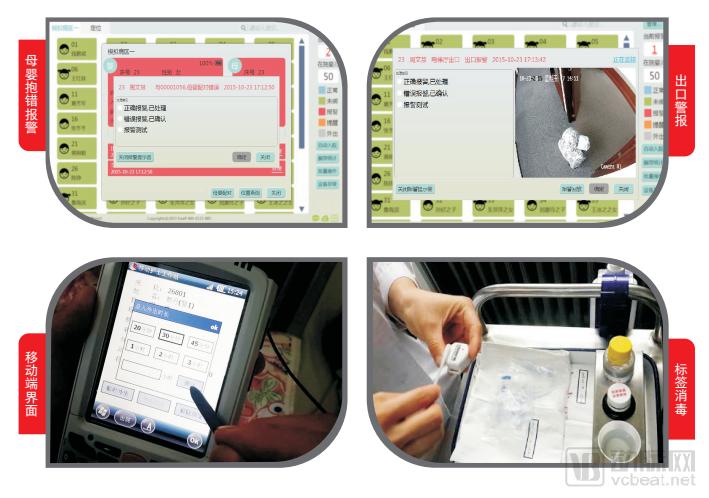
Furthermore, tertiary hospitals typically have a large number of newborns; without effective identification measures, issues such as accidental baby swaps and infant abduction often occur, leading to catastrophic consequences for both the hospitals and the families involved.
The Yihui Infant Anti-Theft System achieves mother-infant pairing by equipping both infants and mothers with active long-range RFID tags. The mother’s tag contains the functionality for managing mother-infant identity matching. Once an infant tag is secured around the infant’s ankle, any unauthorized removal will automatically trigger an alarm. Meanwhile, the system can deploy IoT access points (APs) within the infant’s activity area to collect infant-related data. By installing exit monitors at ward entrances and exits, the system ensures comprehensive, 24/7 monitoring of infants.
Unlike Ruijie Networks and Yiwei Technology, the product head at Lianxin Medical interpreted the document from the perspective of the “Quality Nursing Care” concept.
He believes that quality and safety are perennial priorities in the healthcare industry, as well as essential prerequisites for enhancing efficiency and improving patient experience. The core of hospital management will gradually expand from “medical quality” to “patient safety management” across the entire care continuum.
During hospitalization, patients face safety risks across various aspects of care, including diagnosis, medication administration, surgery, and nursing. Notably, nearly 70% of their time is spent interacting with nursing staff. Consequently, “high-quality nursing care” has been elevated to a key policy priority, with the national government accelerating reforms in nursing models through initiatives such as establishing and recognizing demonstration wards for high-quality nursing care.
On the other hand, the nature of nursing work—characterized by tedious, repetitive, and mechanical tasks—results in high indirect care hours and low direct care hours. This makes it difficult to demonstrate the value of nursing and leads to poor patient experiences, whereas IoT technology can help nurses address these issues.
Among these, data collection and transmission based on intelligent information recognition and matching (e.g., infusion monitoring, vital signs acquisition) demonstrate the most significant effectiveness, play a crucial role in ensuring patient safety management, and serve as the optimal focal point for building the brand of smart hospitals.

Smart Infusion Management
Therefore, Lianxin’s current focus is on intelligent nursing as the core, providing hospitals with comprehensive smart ward solutions. These solutions encompass patient positioning, identity verification, remote infusion monitoring, safe medication administration, and vital signs acquisition. All these scenarios leverage IoT technologies to deliver high-quality nursing care. Enhancing nursing quality represents the highest-priority requirement in the hospital’s intelligent upgrade process and is currently the most strategic entry point.
The specific content and requirements for cloud computing in the “Construction Standards” are shown in the figure below:
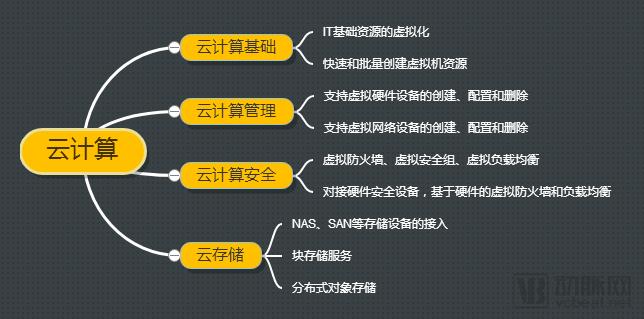
Since cloud computing serves primarily as an underlying technology in the healthcare industry, the document does not present clearly defined application scenarios.
Guo Lan, a partner at Kingsoft Cloud, stated that for cloud computing companies, this standard is both easy and difficult to meet. It is considered easy because cloud computing enterprises can basically provide the functional requirements specified in the document, such as resource virtualization and the rapid, batch creation of virtual machine resources.
The challenge lies in the fact that while functionality is merely the baseline, the higher standard demands stability and reliability. Cloud computing providers vary in their ability to meet Service Level Agreements (SLAs). For virtual machines and cloud storage services, achieving 100% service stability and data reliability is exceedingly difficult.
As is well known, hospital information systems have extremely high requirements for service stability and data reliability, which demands that cloud computing providers possess robust technical capabilities and extensive experience in large-scale cloud services. Otherwise, even if the functionality appears adequate on the surface, issues are inevitable in production environments.
Currently, as one of the top three cloud service providers in China’s public cloud market, Kingsoft Cloud offers an SLA of over 99.9% and achieves data reliability of 99.999999999%.
Additionally, Guo Lan noted that this standard does not differ significantly from those in other industries. In fact, the requirements outlined in this healthcare industry standard are somewhat more traditional compared to certain other sectors. Most emerging industries have already adopted cloud-based, non-“IOE” architectures; for instance, they typically use cloud database services (RDS) rather than traditional Oracle or SQL Server databases, thereby achieving greater autonomy and controllability. However, this standard does not include such requirements.
In summary, the “Standards and Specifications for National Hospital Information Construction (Trial)” issued by the National Health Commission will serve as a reference basis and guiding document for hospitals in China for a certain period. For enterprises, this document acts as a reassurance. With a clear direction, market acceptance of their products is also guaranteed.