

Two-Thirds of Parents Opt for Non-National Immunization Program Vaccines, with First-Tier Cities Reaching 24.78% Coverage: Key Factors Influencing Childhood Vaccination Decisions
April 25 marked China’s 32nd National Children’s Vaccination Day. As a pioneer in integrating vaccination services with mobile internet technology, San Dairen Technology officially released the “White Paper on Chinese Parents’ Attitudes and Behaviors Toward Child Vaccination in 2018” (hereinafter referred to as the “White Paper”).
It is reported that since 2016, Sandai Ren Technology has conducted annual research and analysis on vaccination attitudes and behaviors among Chinese parents. This year’s white paper was developed over the course of one month through rigorous and in-depth analysis, based on big data from more than 12.3 million parent users of its Xiaodoumiao app, as well as 290,155 completed surveys from parents of children.
According to this year’s survey results, parental acceptance of vaccination is generally high; however, knowledge about vaccination remains at a low level, and nearly half of infants experience delayed vaccinations. Furthermore, two-thirds of parents express willingness to choose Category II vaccines. In more economically developed cities, the proportion of Category II vaccine doses administered is higher, and there is greater demand for combination and multivalent vaccines.
The White Paper also reveals that 90% of parents proactively seek information about vaccines. Vaccination records and mobile internet platforms are the primary channels for acquiring vaccine-related knowledge, with mobile internet channels—such as vaccination-related apps and WeChat official accounts—accounting for 51.19%, a significant increase from the previous year. Mobile internet has thus become an important window for disseminating knowledge on childhood immunization.
Chen Honglin, Operations Director at Xiao Dou Miao, stated, “The preparation of the ‘White Paper on Parents’ Attitudes and Behaviors Toward Childhood Vaccination’ has been a persistent endeavor by Sandaisheng Technology. This year marks the third consecutive year of its release. Each year, the report presents a more comprehensive overview of childhood immunization by expanding population coverage and incorporating additional analytical dimensions. We hope this will provide government disease control agencies, the industry, and parents with valuable reference information.”
Long Wait Times Rank Lowest in Parental Satisfaction, While Mobile Internet Becomes Primary Channel for Parents to Learn About Vaccines
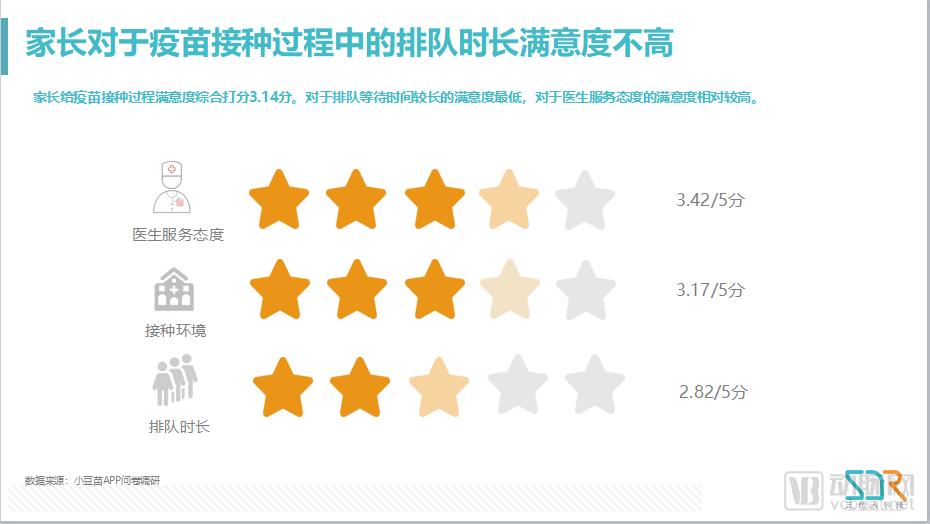
The White Paper indicates that parents from different cities, educational backgrounds, and age groups have varying expectations regarding the vaccination process. The more economically developed the city of residence, the higher the parental satisfaction with the vaccination process; parents aged 25–30 report higher satisfaction with the vaccination process than those in other age groups.
Xiao Dou Miao conducted a survey to investigate parents’ satisfaction with the vaccination process across three dimensions: doctors’ service attitude, vaccination environment, and waiting time. The score for waiting time was significantly lower than those for the other two dimensions, while satisfaction with doctors’ service attitude was relatively high.
Furthermore, in the vaccine knowledge assessment, only 30% of parents answered more than 75% of the questions correctly, indicating that most parents need to improve their understanding of vaccination. Parents’ awareness of the roles of combination vaccines and rotavirus vaccines is relatively weak; nearly 40% of parents mistakenly believe that the rotavirus vaccine is used to prevent hand, foot, and mouth disease (HFMD). In recent years, HFMD has exhibited a biennial peak pattern across China. Therefore, enhancing parents’ knowledge of relevant vaccines is increasingly urgent and important for immunization efforts.
Nearly half of children have delayed vaccinations, and two-thirds of parents express willingness to choose Category II vaccines.
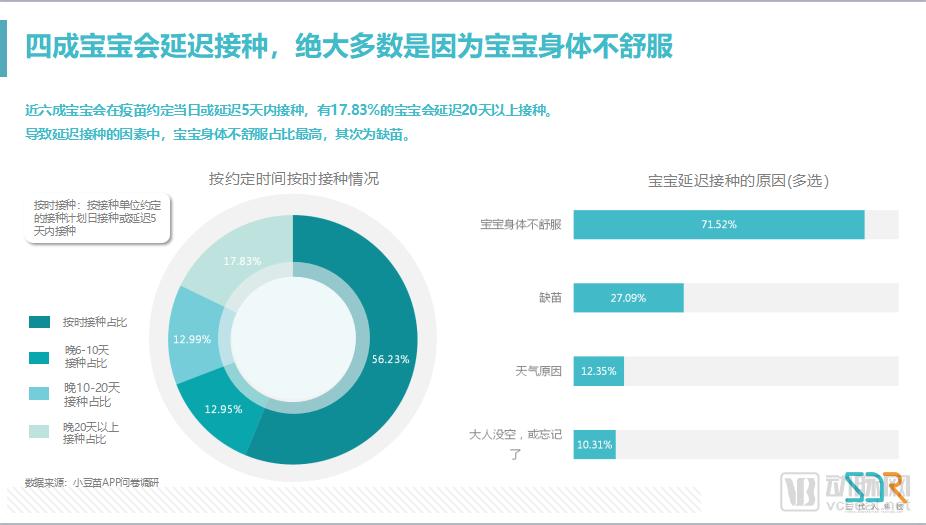
Survey data indicate that 56.23% of children received vaccinations on schedule, implying that nearly half experienced delayed vaccination. Although uncontrollable factors such as infant illness accounted for 70% of delays, it is worth noting that vaccine shortages and parental oversight are also significant contributors to delayed immunizations. Therefore, it is essential to further improve mechanisms for forecasting vaccine availability and reminding parents. The outpatient reminders and inventory inquiry features offered by Xiao Dou Miao can help alleviate this issue to some extent.
Regarding vaccine selection, two-thirds of parents expressed a willingness to choose Category II vaccines. The proportion of Category II vaccine doses administered is higher in more economically developed cities, with an overall share of 16.09%, reaching as high as 24.78% in first-tier cities. Regions with higher economic levels demonstrate greater demand for combination and multivalent vaccines.
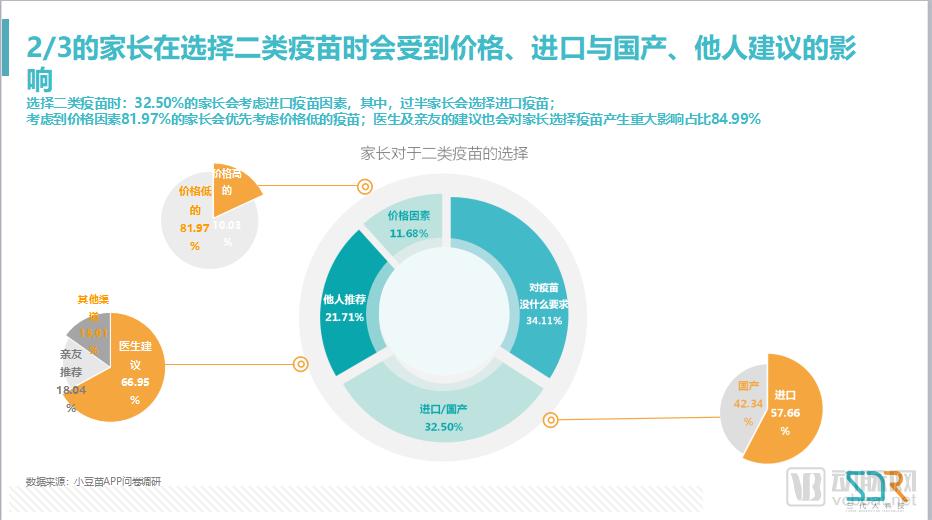
The report indicates that when selecting Category II vaccines, price, country of origin (imported/domestic), and recommendations from others are the three primary factors influencing parental decision-making. Specifically, 32.5% of parents consider the country of origin, 21.7% are primarily influenced by others, and 11.68% focus mainly on price. Among parents whose decisions are influenced by price, 81.97% prioritize lower-priced vaccines. Parents residing in second-tier cities, those with a junior high school education or below, and those aged over 40 are more price-sensitive.
In terms of the number of doses administered for Category II vaccines, Haemophilus influenzae type b (Hib) vaccine generally accounts for the highest proportion. However, there are variations in the top five Category II vaccines across different cities. The EV71 vaccine, launched in 2016, emerged as a dark horse, ranking second on the list of top five Category II vaccines in first-tier and new first-tier cities.
The level of economic development significantly influences the demand for combination vaccines that protect against multiple diseases and serotypes. Parents in first-tier cities exhibit stronger awareness of preventive vaccination, higher income levels, and substantially greater affordability for such combination vaccines compared to those in third-, fourth-, and fifth-tier cities. Parents in economically developed cities also demonstrate a stronger willingness to opt for alternative vaccines. Taking meningococcal vaccines as an example, China’s National Immunization Program includes two types: the group A and C meningococcal polysaccharide vaccine and the group A meningococcal polysaccharide vaccine. In the market, three Category II vaccines are available as alternatives: the group A and C meningococcal conjugate vaccine, the ACYW135 meningococcal polysaccharide vaccine, and the combined group A and C meningococcal–Haemophilus influenzae type b (Hib) vaccine.
Big Data on Vaccination Behaviors of Over 12.3 Million Parents
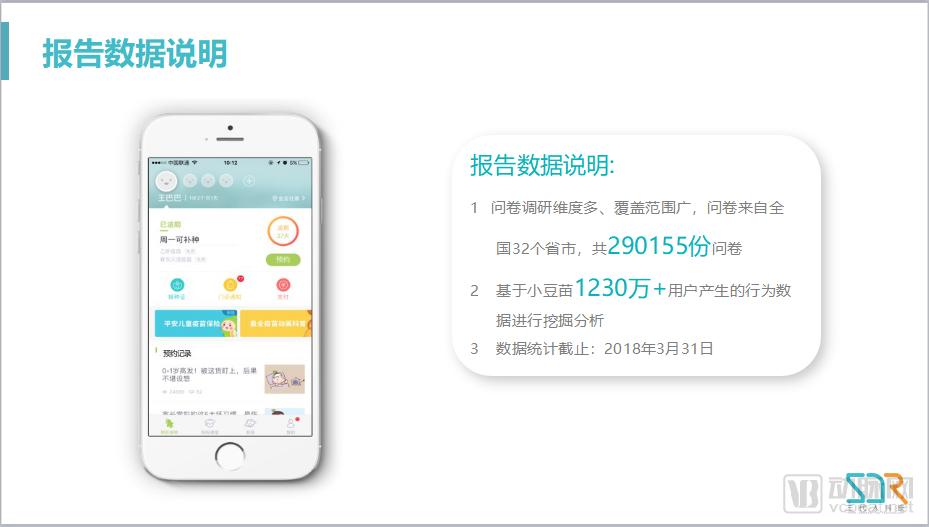
It is reported that the Xiaodoumiao app is China’s largest one-stop service platform for infant immunization. Centered on the entire vaccination process, the app links children with parents, physicians, and clinics to create a closed-loop immunization service ecosystem. It provides parents with scientific, intelligent, and personalized one-stop management services for their children’s vaccinations, including features such as electronic vaccination certificate lookup, vaccine reminders, appointment scheduling, payment, and inventory checks.
By downloading the Xiao Dou Miao app, parents can link their child’s vaccination code, synchronize immunization records, receive vaccination reminders, schedule appointments online, and consult on vaccination-related matters, thereby achieving end-to-end management of the immunization process.
As of December 2017, “Xiao Dou Miao” had covered all 32 provinces and municipalities directly under the central government in China, with its user base exceeding 12.3 million, serving 10.38 million families, and connecting to over 25,000 vaccination clinics. It has received widespread recognition and support from tens of millions of parents, health administrative departments at all levels, centers for disease control and prevention (CDCs), and vaccination clinics, becoming the one-stop “vaccination + mobile internet” platform with the largest user base, highest professionalism, and most extensive influence nationwide.
Based on behavioral data from over 12.3 million users of the Xiaodoumiao app and an analysis of 290,115 survey responses collected across 32 provinces and municipalities in China, this report provides a comprehensive synthesis that will serve as a key reference for industry organizations, enterprises, and parents.
Note: The full text of the White Paper can be obtained by replying with the keyword “White Paper” to the WeChat official account “Vaccine Xiaodoumiao.”