

How Internet Healthcare Services Can Be Delivered: Insights from the National Health Commission and China-Japan Friendship Hospital
On the morning of April 26, the National Health Commission held a special press conference themed ““Status of the Development of ‘Internet + Medical Health’ and Hospital-Based Internet Medical Services”The press conference was held at China-Japan Friendship Hospital. As its first public appearance since the media briefing on April 12, the National Health and Family Planning Commission’s choice of venue—a large national-level hospital directly under its administration—underscores the profound significance of the China-Japan Friendship Hospital model in the provision of internet-based medical services.
At the press conference, Jiao Yahui, Deputy Director of the Bureau of Medical Administration and Hospital Management under the National Health Commission, and Sun Yang, President of China-Japan Friendship Hospital, addressed key issues of public concern. For the first time, the National Health Commission provided official responses to widely discussed topics such as the entry points for “Internet + Healthcare,” the definition of internet hospitals, and safeguards for medical safety.Providing operational guidelines for internet-based medical services.VCBeat (WeChat ID: vcbeat) has compiled this information.
How to Enter the Market?
Even before the state explicitly outlined its “Internet + Healthcare” development strategy, various forms of internet-based healthcare service delivery had already emerged. It was not uncommon for hospitals and physicians to go online, and many enterprises providing internet healthcare services had already completed their strategic layouts, establishing a closed-loop ecosystem across the healthcare industry chain, seemingly awaiting only the policy green light.
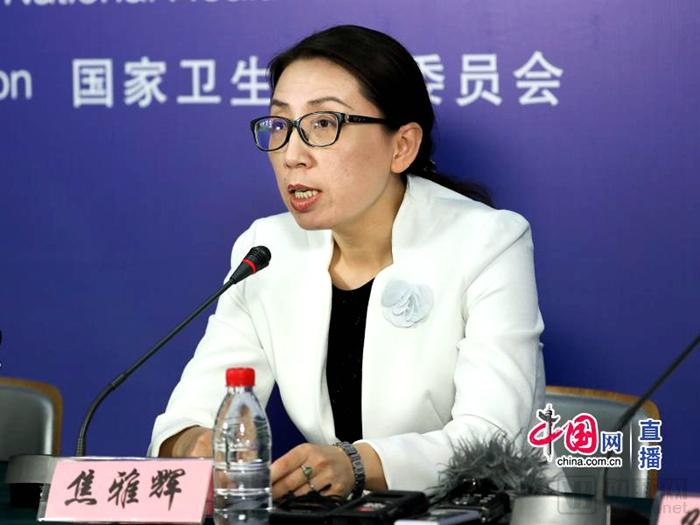
Jiao Yahui, Deputy Director of the Bureau of Medical Administration and Hospital Management, National Health Commission (Image source: Chinese Government Website)
The media briefing held two weeks ago clarified the supportive stance toward the development of internet hospitals but provided no further details. Fortunately, this meeting with the National Health Commission (NHC) has set a clear direction. Jiao Yahui stated, “Next, the National Health Commission will work with relevant departments to ensure the effective implementation and organization of policies.”Hospital Application Servicesas a Key Entry Point。“Regarding the specific approach, the National Health Commission has also selected demonstration hospitals.”
How to promote?
“Once there is a demonstration, promotion becomes relatively easier,” said Jiao Yahui.It is hoped that hospitals under the direct administration and management of the National Health Commission will fully leverage their role as the “national team” in setting an example and driving progress, thereby promoting the effective implementation of “Internet+” across the entire healthcare industry.+policy requirements for “medical and healthcare.”Subsequently, Sun Yang introduced the work that China-Japan Friendship Hospital has undertaken in recent years in the field of “Internet + Healthcare.” From the mature experience summarized by China-Japan Friendship Hospital, we can identify approaches for promoting internet hospitals in the future.
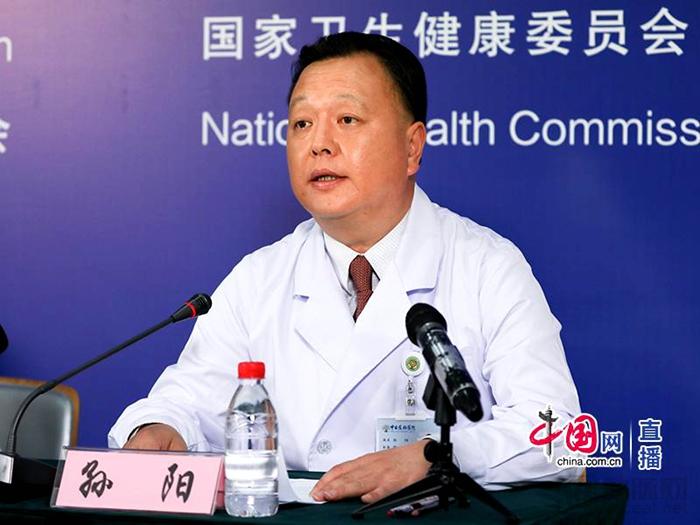
Sun Yang, President of China-Japan Friendship Hospital (Image source: Chinese Government Website)
What was the past approach?
Telemedicine Operations
China-Japan Friendship Hospital has established a telemedicine collaboration network connecting primary care institutions with large hospitals via the internet, linking healthcare facilities and medical personnel across different physical locations. Furthermore, over the years, the hospital has actively explored telemedicine coordination mechanisms under the tiered diagnosis and treatment model, leveraging the internet to enhance the accessibility of healthcare services.
Medical Consortium Development
China-Japan Friendship Hospital has established regional and specialized medical consortia to facilitate the downward flow of high-quality medical resources. Through the regional medical consortium, the hospital guides patients to seek initial diagnosis at community-level facilities. Meanwhile, leveraging its specialties in respiratory medicine, pain management, and integrated traditional Chinese and Western medicine for oncology, the hospital has formed specialized medical consortia to handle referrals of complex and critical cases, remote consultations, and remote training.
Informatization for Public Convenience and Benefit
Develop multi-channel patient-facing information platforms, such as mobile apps and WeChat official accounts, to enable online appointment scheduling, payment, waiting, and result inquiries, thereby improving the patient healthcare experience. Internet technology is also playing an increasingly significant role in end-to-end appointment scheduling, satisfaction surveys, hospital emergency response system development, and mobile nursing care.
How Will the Future Unfold?
Sun Yang stated that, in the next phase of work, China-Japan Friendship Hospital will focus on the following aspects:
First,Further expand appointment services, diversify booking methods, and reduce patient waiting times;
Second,Comprehensively enable online payment to prepare for full coverage across medical insurance, the New Rural Cooperative Medical Scheme, and commercial insurance, ensuring secure and convenient transactions;
Third,Further advance self-service initiatives by establishing internet-based bridges across patient-provider interaction points—including registration, consultations, payment, inquiries, and appointments—to reduce queueing at service counters.
Fourth,Further leveraging internet channels to promote information disclosure has significantly expanded the avenues for patients to access information;
Fifth,Further advance telemedicine by integrating 4G and 5G telecommunications infrastructure from basic telecom operators, establish an internet-based telemedicine collaboration system centered on China-Japan Friendship Hospital, and streamline the entire telemedicine process.
Sixth,By adopting a collaborative model that integrates “online and offline” services with “vertical coordination between different levels of care,” we implement two-way appointment-based referrals and comprehensively promote the tiered diagnosis and treatment system.
Seventh,Comprehensively advance health management and provide online diagnosis and treatment services for community patients with chronic diseases, particularly those requiring follow-up visits.
Eighth,Leveraging internet technology to comprehensively build smart hospitals with higher work efficiency, more convenient services, and an optimized experience.
How to Regulate?
Internet hospitals are an emerging phenomenon, with no precedents to follow for industry regulation. Precisely because of this, when the state first opened the door to internet hospitals, it immediately established two critical safeguard policies:One is medical quality and safety, and the other is data information security.
National regulations require medical institutions to ensure the authenticity and reliability of information when developing internet hospitals. Meanwhile, internet companies establishing partnerships with physical hospitals must assume corresponding principal responsibilities, ensuring their presence is tangible and verifiable.
Specifically,On the one hand, digital authentication of physicians' identities is conducted., ensuring full online traceability and audit trails;On the other hand, it is to clarify the primary responsibilities of the main entities., and even strengthen the primary responsibility of internet companies, enabling them to proactively fulfill their obligations by taking accountability for the services and diagnostic and treatment activities they provide.Jiao Yahui stated that the National Health Commission is studying measures to safeguard the security of electronic information data and to establish data ownership rights for electronic medical records. She considered it feasible for certain localities to set up internet-based regulatory platforms.
Jiao Yahui said, “We must not only accelerate but also be prepared to brake., on the one hand, we encourage development; on the other hand, we must strengthen oversight of medical quality. Guided by a commitment to safeguarding the health and lives of the public, we will enhance regulation based on the fundamental principles of inclusiveness and prudence.”
How to Coordinate Doctors' Schedules?
Regarding public concerns that establishing internet hospitals might further encroach upon the rest time of physicians—particularly specialists—who already face heavy or even excessive workloads, Jiao Yahui also offered her perspective. She argued that there is a misconception here: artificially separating “Internet + Healthcare” into distinct realms, assuming that physicians practice traditionally during their eight-hour workday and only become “internet physicians” outside those hours. In fact, this view is incorrect. The integration of the internet into the healthcare industry is subtle and pervasive. Within their current daily eight-hour shifts, physicians are already practicing as internet physicians. They conduct remote diagnoses via the internet and provide health management and monitoring for enrolled patients. This is not merely an activity carried out during fragmented spare time, but rather a normal part of their workflow. The internet has transformed physicians’ working methods and improved efficiency, rather than simply extending their working hours.
Jiao Yahui said, “I believe this is not an either-or issue. We should take a comprehensive view of the application of internet technology in physicians’ work, as it plays an important role at all times.”
How Will Medical AI Be Implemented?
Medical AI has begun to be applied in numerous healthcare scenarios across China, including computer-aided diagnosis systems within medical institutions, the da Vinci Surgical System, and surgical navigation. On the patient side, wearable devices are used to monitor parameters such as blood pressure and blood glucose. Some women’s and children’s hospitals and maternity hospitals have deployed AI-enabled remote fetal heart rate monitoring devices for pregnant women undergoing prenatal check-ups, thereby reducing the travel burden associated with these visits.
Jiao Yahui believes that the development of medical AI aligns with China’s innovation-driven development strategy. Although there is currently no explicit national master plan, various technological breakthrough projects in medical AI have been launched by the central government, local governments, and social capital. These initiatives have attracted the participation of many renowned experts and physicians. This demonstrates that, in terms of scientific research in medical AI, efforts are not being driven solely by the government; rather, resources from all sectors—spanning from the national to local levels, and from government to society—have been mobilized, with widespread commitment to advancing this field.
Meanwhile, China is a global leader in AI, so policymakers are full of hope and anticipation for the prospects of medical AI.