

Ande General Practice Clinic Files IPO Prospectus: A Community-Centered Primary Care Model Inspired by the UK's NHS
In 2018, VCBeat and VBInsight launched a call for case studies themed “New Structure,” targeting the primary healthcare industry. The initiative focused on addressing prevalent challenges in primary care by selecting innovative practice cases in areas such as medical consortia, third-party medical services, new-type clinics, chronic disease management and health management, and pharmaceutical retail. Reports on these innovative healthcare enterprises will be published sequentially; stay tuned. If your company wishes to be featured, please clickRegistration Link。
The UK’s community-based general practice model has long been praised, and many entrepreneurs in China have hoped to introduce it domestically. Five years ago, Zhong Peng brought the UK’s general practice model to Chengdu and established a clinic named “Ande General Practice” in a local community.
By the end of 2017, Ande had established three general practice clinics. The Yasongju clinic opened in 2014, followed by the Yinglun and Nanhu clinics in 2016. Each clinic occupies an area between 400 and 700 square meters. The average out-of-pocket cost per patient visit ranges from RMB 90 to RMB 120. The total number of registered patients exceeds 40,000, with over 70,000 patient visits served throughout 2017. Notably, the Yasongju clinic alone accounted for more than 32,000 visits.
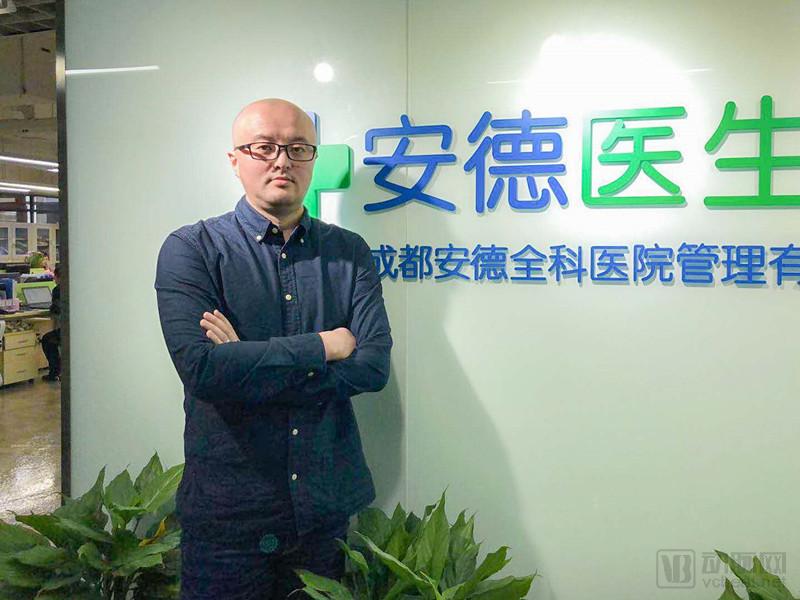
According to follow-up surveys conducted by Zhong Peng, overall customer satisfaction exceeds 90%, and there have been zero medical malpractice incidents for four consecutive years. Andre has become the preferred community healthcare provider for nearby families.
Zhong Peng is the co-founder of Dr. Ander. He majored in advertising and marketing in college, started his own business three years after graduation, and established his own advertising company, which had nothing to do with the medical industry. What prompted him to enter the healthcare sector, and how did he gain acceptance for his general practice clinic among local residents?
The founder of Ander is Xiao Xiao, a classmate of Zhong Peng’s spouse. Unwilling to follow the conventional path within the public sector, he resigned to launch his own venture. With both parents working in hospitals, Xiao Xiao grew up in a hospital environment, which led him to choose healthcare services as his entrepreneurial focus. His original aspiration was to provide compassionate, community-based medical care.
In the early stages of their venture, they coincidentally met an investor who wished to establish a hospital. The three quickly reached an agreement and founded a 5,000-square-meter private hospital in Chengdu High-Tech Zone. A year later, Zhong Peng and Xiao Xiao remained committed to pursuing community healthcare, so they resolutely left the founding team. Today, this hospital has become a highly reputed private medical institution in the High-Tech Zone.
From Zhong Peng’s perspective, operating hospitals and clinics requires fundamentally different approaches. Hospitals entail substantial capital investment and, with their numerous departments, face significant challenges in innovation. In contrast, community clinics require relatively lower investment, have fewer departments, and offer greater operational flexibility. Moreover, general practice services delivered on a family-unit basis are more likely to leave a lasting impression on patients.
When it comes to general practice, people cannot help but think of the UK’s general practice model. Thus, there is a story behind the naming.
Dr. Andy was a general practitioner in a small town in southern England, renowned for his exceptional medical skills that alleviated suffering and saved lives. Late at night on July 1, 1896, the 76-year-old Dr. Andy left his clinic with his medical bag, as was his custom. It was only when people saw that his clinic door would never open again that they realized Dr. Andy had served the town for exactly 50 years. Memories flooded back of Dr. Andy traversing every corner of the town, day and night, with his medical bag. These recollections plunged the town into mourning and made them realize how deeply Dr. Andy had become woven into their daily lives. Through his commitment to “alleviating suffering and saving lives” and embodying the ethical principle of “benevolence in medicine,” Dr. Andy defined his life’s work. His ordinariness and perseverance are regarded by later generations as the true embodiment of what it means to be a “doctor.”
Subsequently, “Ande” became the embodiment of the spirit of compassionate healing, representing a dedication to patients that persists until one’s last breath. Zhong Peng officially named the clinic “Ande Doctor Clinic,” with the aim of delivering high-quality services to the surrounding community. Ande’s mission is “to center on the health and happiness of families by providing high-quality, affordable, and compassionate medical care.” Through innovative operational models, it seeks to resolve the tension between high-quality, personalized services and cost-effectiveness.
In terms of site selection, Zhong Peng approached real estate developers such as China Resources Land, China Overseas Land & Investment, and Kerry Properties, with the aim of establishing an Ande General Practice Clinic in residential areas. At that time, only the head of Kerry Properties endorsed Ande’s concept, agreeing to an eight-year lease at a price lower than those for other business formats. “Since most of Kerry Properties’ projects are located in coastal regions and Hong Kong, they strongly认同 the community-based general practice model. It not only enhances homeowners’ well-being but also boosts property sales—a win-win situation.”
Soon, their first clinic opened its doors, with total costs kept relatively low at approximately RMB 2 million. The clinic offers a wide range of departments, including Internal Medicine, Surgery, Gynecology, Pediatrics, Dentistry, Dermatology, Medical Aesthetics, and Traditional Chinese Medicine (featuring rehabilitation and physiotherapy). “We primarily provide medical and health management services to community families, enabling residents to enjoy convenient, attentive, and professional medical care in a warm and comfortable clinical environment.”
Opening a clinic is easy, but operating one is not. Zhong Peng believes that the greatest barrier in healthcare services is establishing trust between doctors and patients. Especially in today’s abnormal state of doctor-patient relationships, building this trust is both critically important and exceedingly difficult.
During the first three months after opening, few local residents came to the clinic for medical care. To help the community get to know Ander, Zhong Peng and Xiao Xiao, along with three other staff members, cramped into a makeshift 3-square-meter office at the clinic, where they remained for two years. They continuously communicated with residents and refined their service model, ultimately earning the community’s trust. Zhong Peng noted that among the first 10,000 enrolled clients, he personally knew 8,000 of them.
Two factors have resonated with these residents. First, as white-collar professionals, they are quick to embrace new innovations. Second, Ande’s services span the entire care continuum—pre-consultation, during consultation, and post-consultation—recognizing that truly valuable medical care begins only after patients return home.
For example, when a patient visits the clinic, Dr. Anderson initiates a follow-up protocol based on the urgency and severity of the condition after the patient returns home, either via phone call or text message. In accordance with the patient’s clinical condition, if antibiotics have been prescribed, the patient is scheduled for a follow-up visit in three days, with prior notification provided by the physician. Meanwhile, the average cost per consultation ranges from 90 to 120 yuan, making it affordable for any patient.
This is not feasible in a hospital setting, as hospitals prioritize disease treatment, whereas community care emphasizes interpersonal communication and interaction. Communities typically serve a familiar clientele, making it easier to build trust; in contrast, hospitals deal with a highly transient patient population, which hinders continuous follow-up.
At the end of each year, according to Zhong Peng, physicians at Ander Clinic review the year’s medical records. If a patient has visited the clinic more than 30 times, they are notified to come in for a follow-up assessment. Last year, a child had made 53 visits to Ander Clinic over the course of the year, prompting the pediatrician to invite the parents in to identify the underlying cause of the child’s frequent illnesses. Through discussion, the doctor learned that the family had recently moved and purchased rosewood furniture, which was adversely affecting the child’s health; continued exposure carried a significant risk of developing leukemia. The physician subsequently recommended sending the child back to their hometown for recuperation, after which the child experienced no further episodes.
Regarding doctor-patient relationships, Zhong Peng told reporters that on one occasion, a pediatrician at the clinic was involved in a car accident and hospitalized for over half a month. Upon learning this, residents from nearby neighborhoods spontaneously visited the pediatrician, with more than 50 people coming forward in total.
In this way, Anchor Healthcare has established its roots in the community, eschewing traditional advertising to attract customers. Instead, it leverages high-value, high-quality primary care services, with general practice and pediatrics serving as the main drivers of foot traffic to its clinics. By implementing comprehensive patient experience programs spanning pre-consultation, during-consultation, and post-consultation phases, Anchor delivers service experiences that exceed expectations for patients and their families. This approach has built a strong reputation, enabling word-of-mouth referrals to encourage more families to choose Anchor for their healthcare needs.
In the realm of health products, Ande has collaborated with experts from Grade A tertiary hospitals to develop specialized health service offerings across multiple disciplines. Following an integrated diagnosis and treatment workflow, these disciplines have designed value-based payment service items, thereby replacing the traditional fee-for-service and fee-for-volume models. Furthermore, a product line spanning from clinical diagnosis and treatment to health transformation has been established to guide customers in investing in their own health. By serving customers at prices 10–15% below market rates, the company has achieved strong market returns.
Pharmaceuticals account for approximately 20% of the clinic’s total revenue, while procedural services and general services each contribute 40%. “The services we provide to patients are strictly necessary, which stands in stark contrast to the occasional overtreatment seen in traditional healthcare settings,” stated a representative. An elderly patient initially chose Ander Clinic for an injection service priced at 30 yuan per session, compared to 5 yuan at other clinics. After leaving, the patient returned to select Ander Clinic again. Although both providers offer injection services, differences in operational procedures result in distinct patient experiences.
In 2016, Ande launched its “2020 Plan.” Within five years, Ande aims to establish over 30 chain clinics, serve more than one million patient visits annually, bring high-quality medical care and humanized services to communities, and become a trusted health gatekeeper for families.
The expansion of clinics is inseparable from talent reserves. In recent years, with continuous policy support from the state, community healthcare has entered a period of rapid development. Most emerging community healthcare providers operate in the form of new-type community clinics or general practice outpatient departments, resulting in substantial demand for general practitioners.
So, where does Ande Clinic Chain recruit its talent?
“Recognize employees as assets rather than costs, and invest in their professional growth.” This is the answer provided by Zhong Peng. He understands that community healthcare suffers most from a shortage of high-caliber talent. In successful community healthcare organizations, most leaders have nursing backgrounds, such as those at United Family Healthcare and Amcare.
Therefore, in building its grassroots nursing teams, Ander has introduced Starbucks’ store manager training system to create all-around nursing professionals. Nurses joining Ander have two career development paths: one is the professional track, becoming an excellent clinical preceptor; the other is the management track, starting as a shift nurse and entering Ander’s management trainee program, with opportunities to grow into assistant store managers, deputy store managers, store managers, and regional managers, thereby continuously cultivating grassroots operational and managerial talent for Ander’s scaled expansion.
“Nurses from tertiary hospitals initially struggled to adapt when joining Andrew Clinic, and most chose to leave, feeling that their experience was insufficient for community-based nursing care. Because nurses at Andrew Clinic are expected to be highly versatile; in addition to basic skills such as injections and intravenous infusions, they must engage in cross-departmental learning and master multiple non-nursing competencies, including laboratory testing, pharmacy operations, and customer management,” said Zhong Peng.
In terms of physician training, Ande established multidisciplinary teams, appointing outstanding physicians as team leaders to drive continuous learning and innovation among medical staff. On the management side, Ande prioritizes the promotion of internal employees to managerial roles and has constructed a three-tier management development system encompassing entry-level, middle-level, and senior-level positions.
“I often take them on educational tours to places with excellent community healthcare services, such as Hong Kong and Taiwan. Most of the core leadership team at Ander Clinic comes from frontline staff, with the longest-serving member having been there for over four years.”
Zhong Peng believes that the path to developing community healthcare is long and arduous; only enterprises that remain committed to their mission, challenge conventional wisdom, and dare to innovate can achieve sustained growth and expansion. Ande will continue to uphold its values along this journey, staying true to its original aspiration and forging ahead with determination.
To provide more patient-centered medical services and improve clinical efficiency, Ander has participated in the research and development of an Electronic Medical Record (EMR) and Customer Relationship Management (CRM) database platform. This system maintains permanent, dynamic health records for patients, detailing their medical history. As a result, every attending physician is thoroughly familiar with your health status. By simply describing your current symptoms, you can quickly receive a personalized treatment plan designed to facilitate your recovery.
Meanwhile, VCBeat has entered into strategic cooperation agreements with multiple leading online medical service providers to facilitate more convenient communication between patients and their physicians. The key to maintaining the health of patients with chronic diseases lies in correcting their daily behaviors; in this regard, building a service network platform represents an effective business model. The platform generates revenue by promoting and sustaining public health.
This year, an additional three to four general practice clinics are expected to open. In the future, Zhong Peng hopes to establish Ande as a robust platform for community healthcare, delivering health-centric medical services that encompass primary care and integrated medical-nursing care. Building out the front-end infrastructure while continuously addressing user needs through back-end support is a long-term endeavor.
“Health management is a repeat-customer business model that should start with community engagement, and community-based healthcare provides the ideal foundation for this. The ‘clinic + health management’ model will also be a future trend.”