

How 'Internet + Clinic' Is Transforming Primary Healthcare in China: Insights from WanJia Cloud Clinic
The rapid development of the internet in China in recent years has attracted widespread attention. From food delivery services to bike-sharing and internet finance, various internet-related industries have gained significant popularity. In advancing the “Healthy China 2030” Planning Outline, clinics, as an integral component of national health services, must proactively adjust their strategic, marketing, and profitability models in response to the rise of the internet, so as to seize a competitive edge in the new round of market competition.
According to data from the National Health and Family Planning Commission, as of the end of April 2017, there were 205,000 clinics (infirmaries) across China. Analysts point out that the number of primary healthcare institutions in China will continue to grow in the coming years. The substantial increase in the number of clinics means that clinic operators must find an efficient, convenient, and sustainable approach to practice management in order to better establish themselves in the market and serve patients.

Image source: Photo by VCBeat
During the “Internet Plus” era for highways, these three clinics took the following approach:
Zhengzhou Kangyu Health Management Co., Ltd. actively explores the integration of medical care and health checkups using internet-based thinking, against the backdrop of China’s national “Big Health” strategy. The clinic applies the Wanjia Cloud Clinic Chain Management System to integrate multi-party resources and coordinate stakeholder interests, thereby enhancing physicians’ diagnostic and treatment capabilities as well as the service capacity of medical institutions.
As a representative institution of traditional Chinese medicine (TCM), Shanghai San’ai TCM Clinic has taken the lead in leveraging Ping An Wanjia Medical’s diverse modules—including Wanjia Academy, centralized procurement platforms, and clinical knowledge bases—to provide its physicians with online training and communication opportunities. This integration embeds business development and service capacity building into daily operational workflows.
Changsha Kaifu Yijuntang Traditional Chinese Medicine (TCM) Outpatient Clinic leverages the professional health records and membership management features provided by its Cloud Clinic SaaS service to ensure that patient diagnosis and treatment are fully traceable, thereby helping TCM practitioners with strong personal brands better target and expand their market reach.
Nevertheless, many clinics still have questions about how to integrate “Internet Plus” into their daily operations.
Regarding the investment cost, it is believed to be the primary concern for many clinic operators. Internet-based systems are often perceived by the general public as representing high technology, and the use of such advanced technology inevitably leads people to assume that it must be expensive!
Due to concerns over system implementation costs, many small and medium-sized clinics still rely on paper-based medical records and manual billing. Screening for specific medical record volumes requires physicians to manually sift through physical files, a process that is both time-consuming and complex. Furthermore, intricate medication dispensing workflows and continuous daily sales transactions are often calculated manually by clinic staff, inevitably leading to billing errors and causing greater financial losses for the clinics.
In fact, while considering input costs, clinic operators should place greater emphasis on the return on investment (ROI) generated by such expenditures. For example, car owners who opt for more comprehensive auto insurance policies receive more thorough compensation services from insurers in the event of an accident, thereby providing significant peace of mind.
In the clinic sector, numerous internet platforms have begun offering cost-effective clinic management services to help clinics better integrate with internet technologies. Taking Ping An Wanjia Medical as an example, its SaaS product, Wanjia Cloud Clinic, is designed from the perspective of clinic operators. During the promotional period, it charges a service fee of only RMB 99 per year, providing small and medium-sized clinics with local and remote technical support delivered by a team of nearly 100 technical specialists. The app also features an integrated points mall, where doctors can accumulate points by daily check-ins, patient consultations, and medical record documentation on the Cloud Clinic platform, and then redeem these points for high-quality products in the mall.
Furthermore, Wanjia Cloud Clinic has launched an intelligent health insurance audit system, enabling real-time settlement for both social and commercial health insurance, thereby attracting a larger patient base. It also provides a SaaS-level CRM customer relationship management platform and WeChat-based SCRM, which help clinics identify high-quality members, improve retention rates, and create additional potential revenue streams.
When it comes to internet professionals, the first occupation that likely comes to mind is software engineers, certainly not physicians. Technical jargon such as Java, C++, and H5 can easily leave people bewildered. Physicians already face an enormous and complex workload; if they were required to spend hundreds of hours—spanning several weeks—merely learning how to use internet-based systems, it would prove counterproductive for both clinics and doctors alike.
However, it is absolutely inadvisable for clinics to reject mobile internet systems on the grounds of “operational complexity.” Take the catering industry as an example: there was a time when patrons had to queue up to obtain numbered tickets, which not only wasted diners’ time but also required restaurants to allocate additional staff to maintain order, imposing a significant operational burden.
However, nowadays, people can use apps such as Dianping and Meituan to directly complete processes like reservations, queuing, ordering, and payment on their mobile phones. This not only saves diners' time but also allows catering industry practitioners to better reduce labor costs, dedicating more time and energy to food quality, restaurant ambiance, waiter training, and other business aspects, thereby achieving higher performance.
In fact, the greatest advantage of mobile healthcare is undoubtedly its convenience and efficiency. Users can schedule appointments and consult with physicians via mobile healthcare platforms, identify the most suitable specialists for their specific conditions, and receive timely medical care. Wanjiayun Clinic offers specialized software solutions tailored to dental clinics, traditional Chinese medicine (TCM) practices, Western medicine clinics/outpatient departments, and health examination institutions. Physicians can access the system across multiple devices—including computers, smartphones, and tablets—thereby meeting the diagnostic and treatment workflow needs of all roles throughout the entire institutional process.
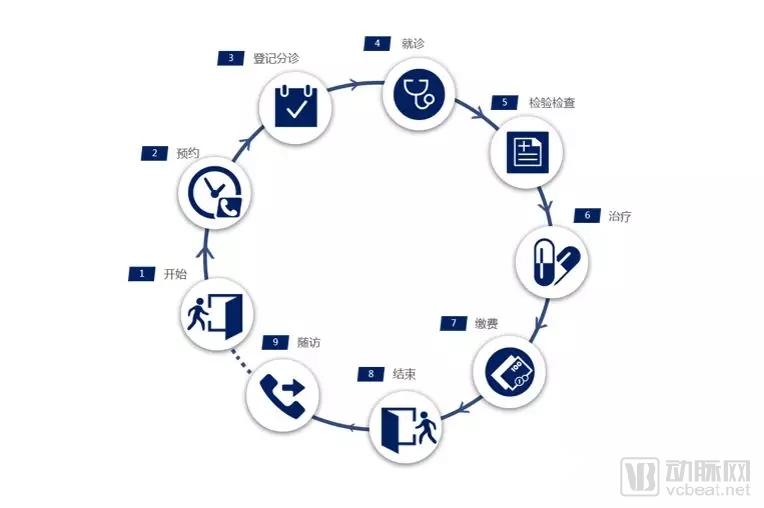
Image source: Provided by the company
For clinic operators, the system can provide scientifically analyzed data, known as the “Owner’s Report,” to help predict market and customer demand, thereby facilitating more scientific decision-making. Additionally, it establishes internal connectivity on an information platform, significantly enhancing team collaboration and improving the overall operational efficiency of the clinic.
For roles such as clinic receptionists, medical staff, finance personnel, and HR/administrative staff, the system platform enables comprehensive management of every task and operational workflow. This effectively assists clinics in implementing quality monitoring and efficient management of their operational systems, thereby correcting their operational trajectory to ensure sustainable development.
According to a survey of Chinese physicians conducted by Dexin Hong Kong, more than 50% of doctors spend an average of over four hours per day writing medical records. The “Voice-Enabled Medical Records” feature addresses the time-consuming and labor-intensive nature of handwritten entries or electronic medical record (EMR) input in conventional healthcare SaaS systems, thereby enhancing consultation efficiency. Meanwhile, during the diagnosis and treatment process, the Cloud Clinic System can automatically recognize EMR content and provide refined medication recommendations, offering targeted advice based on individual patient conditions to truly achieve paperless clinic operations. When prescribing medications, physicians can also leverage the system’s inventory management interface to professionally manage the procurement, sales, and stock levels of pharmaceuticals and medical consumables, receiving timely intelligent alerts on drug expiration dates and inventory levels, thus further improving clinic operational efficiency.
When the system is more than just an IT management tool, it can serve as an integrated portal for diverse services. As a strategic medical product under Ping An Wanjia’s healthcare strategy, Wanjia Cloud Clinic aggregates various services tailored to the needs of clinics at different stages of development. Clinics can access professional certification, talent recruitment, medical training, medical insurance, third-party laboratory testing, and more—all through a one-stop platform.
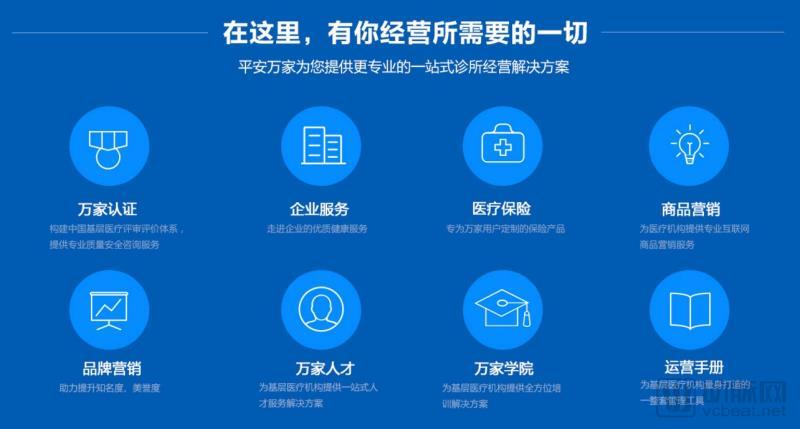
Image source: Provided by the company
Driven by the spontaneous forces of marketization and government policies promoting tiered diagnosis and treatment, more primary healthcare institutions are emerging with new development models. The combination of software-based resource management and internet-enabled models offers immense potential for medical informatization, targeted market expansion for clinics, improvement of professional standards among practitioners, and acceleration of operational efficiency.
How to Connect and Optimize the Allocation of Medical Resources Amidst the Convergence of the Internet and Healthcare? Leveraging the Wanjia Medical Cloud Platform, Ping An Wanjia Medical helps clinics comprehensively enhance their overall capabilities by integrating the clinic, patient, and payment ends. By providing holistic empowerment to clinics, it is paving a fast-track path for strengthening the competitiveness of primary healthcare institutions.