Ping An Good Doctor to List on HKEX on May 4; 2018 Primary Healthcare Summit 'New Structure' Now Open for Registration
For weekly industry updates, read the VCBeat Weekly.

Work | "Night"
Author | Michel Tossini
Medical History in Pictures | Issue 20180429
This painting is a renowned artistic depiction of cancer. The woman in the painting exhibits a medial bulge of the left nipple, dimpling around the areola and nipple, near-complete inversion of the nipple, and overall shrinkage of the left breast.Based on the details depicted in the oil painting, researchers have diagnosed a malignant tumor in the central region of the left breast accompanied by severe nipple retraction.
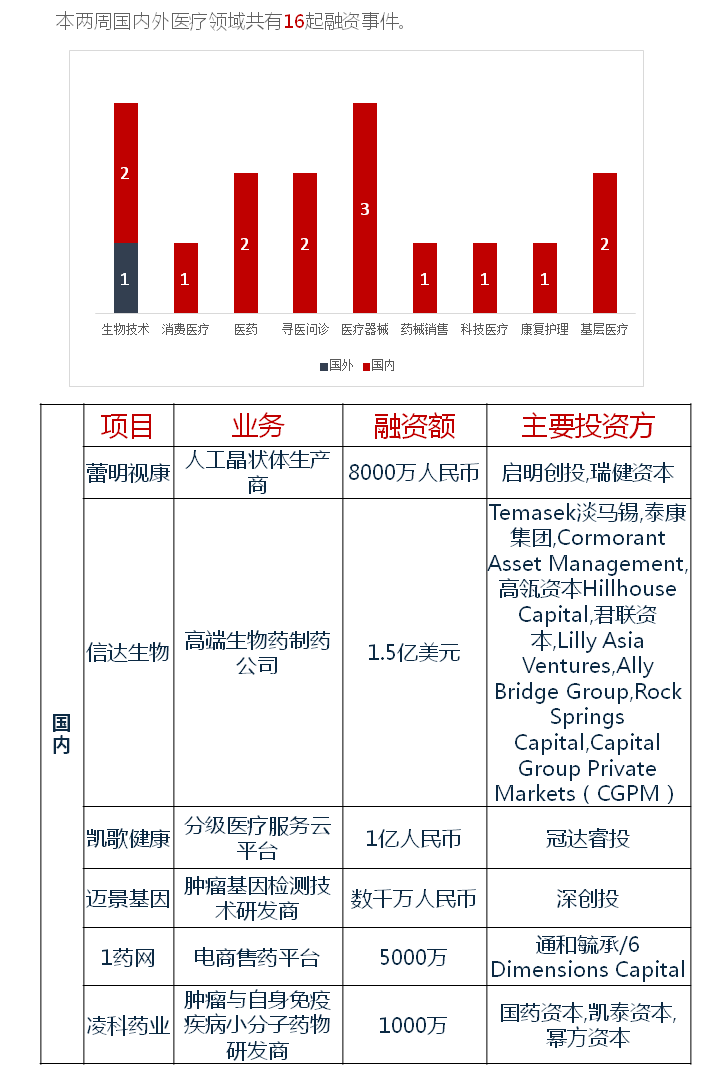
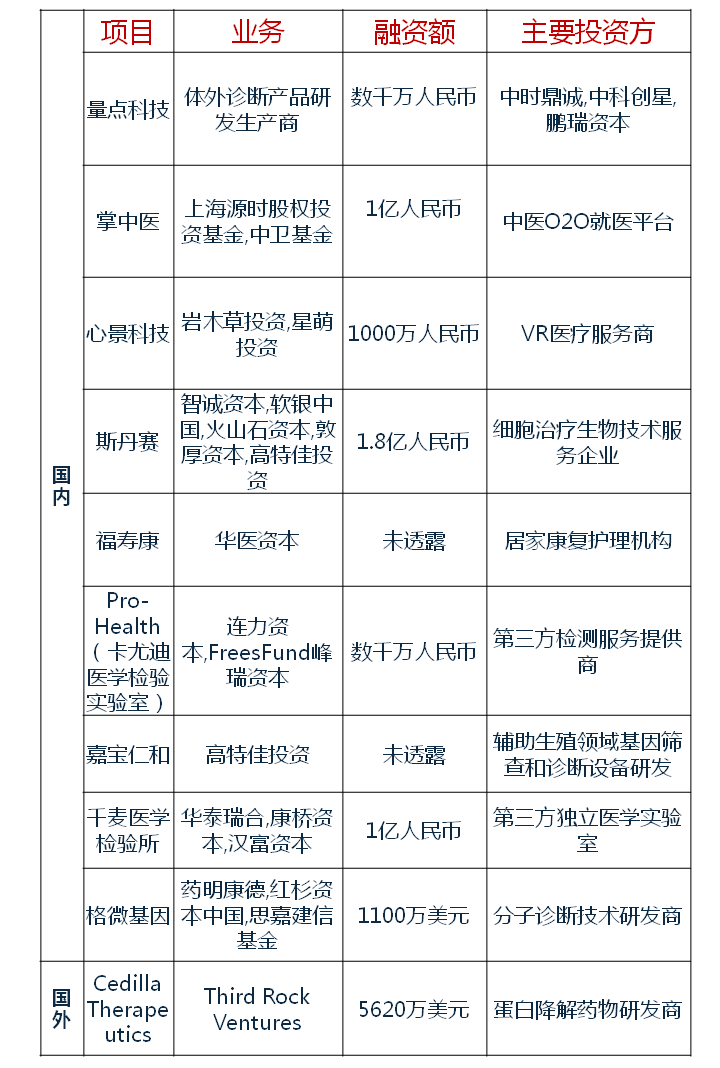
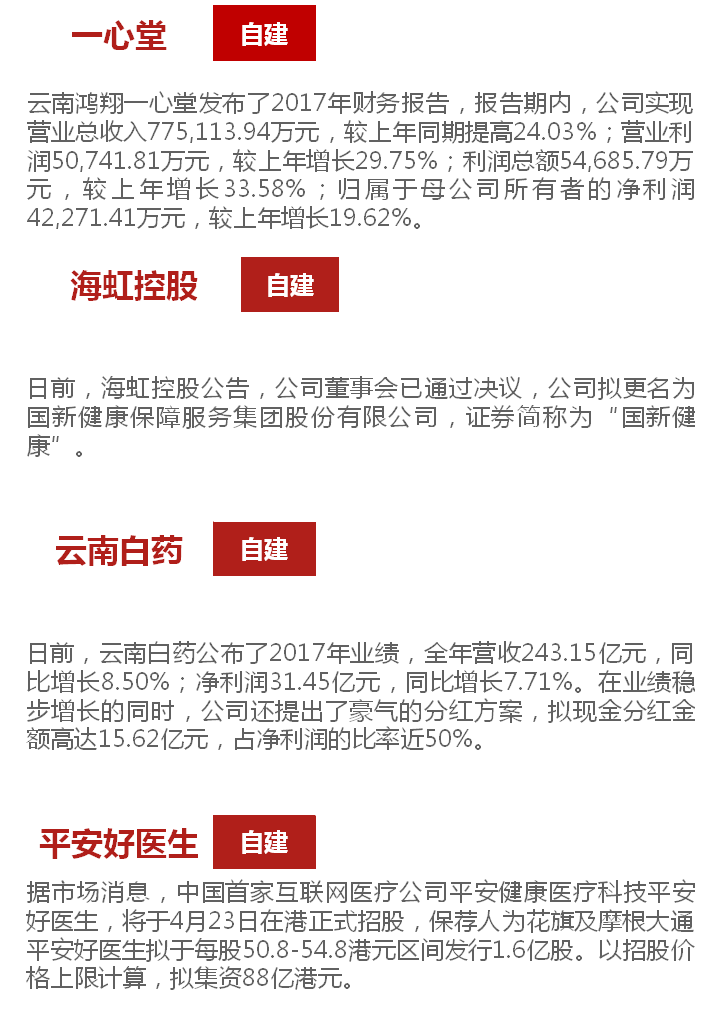
This week, the Ministry of Finance issued the "Notice on Value-Added Tax Policies for Anti-Cancer Drugs." Ping An Good Doctor will conduct a global IPO roadshow and is scheduled to officially list on the Hong Kong Stock Exchange at 9:00 a.m. on May 4. The University of Hong Kong announced the successful development of a new drug capable of preventing and eliminating HIV. Tongjitang plans to inject RMB 600 million in capital into its subsidiary to expand its presence in the greater health industry in East China. "111.com" has completed a new round of financing. Yunshi launched an AI-driven drug discovery system... Master the week's industry developments in ten minutes with the VCBeat Weekly Report.
The development of the mobile health industry is inseparable from the support of the capital market; securing financing enables continued growth, while failure to do so means being unable to proceed to the next stage. Ping An Good Doctor’s entry into the capital market reflects its expectation of further capital support.
Management of Ping An Good Doctor stated that 40% of the funds raised in this offering will be allocated to business expansion, including broadening product variety and coverage, as well as retaining sales and medical talent; 30% will be used for investing in and acquiring domestic companies and funding overseas expansion; 20% will be dedicated to developing information infrastructure and artificial intelligence technologies; and the remaining 10% will be reserved for corporate operations.
Amid the ongoing chip dispute, will the fallout extend to the artificial intelligence sector, particularly the medical AI industry that we closely monitor? If Sino-U.S. trade tensions escalate once again, could medical AI companies find themselves “strangled” in a manner similar to ZTE? To address this question, VCBeat consulted numerous industry experts.
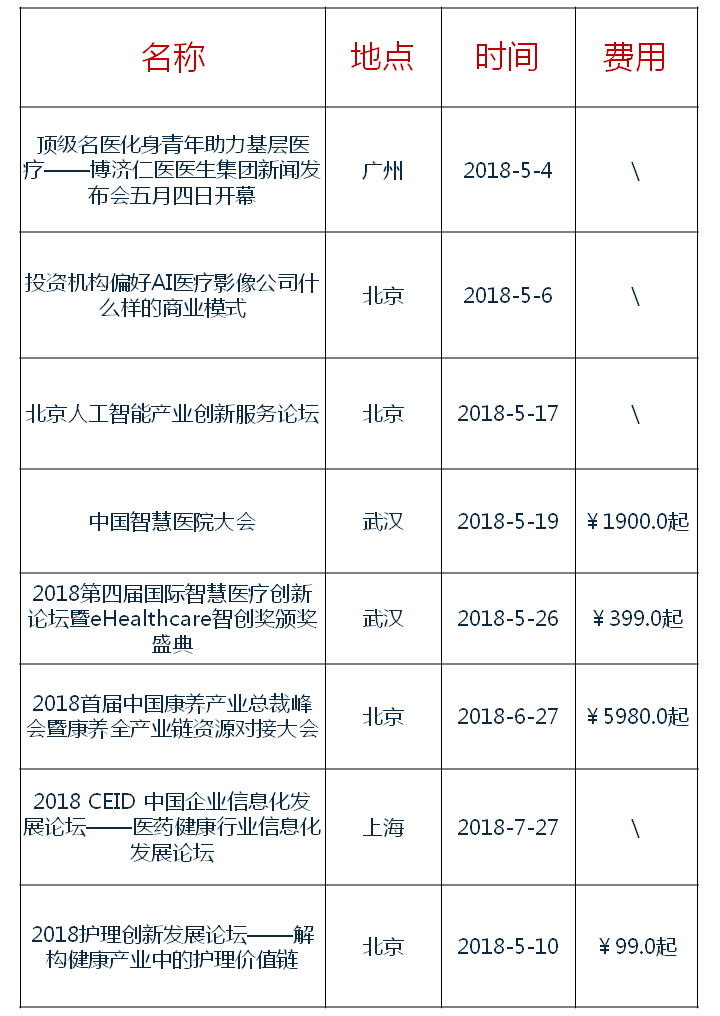
In 2018, VCBeat and VBInsight launched a case study solicitation campaign themed “Seeking Best Practices in China’s Primary Healthcare,” targeting the primary healthcare industry. The initiative focused on addressing prevalent challenges in primary care by selecting innovative practice cases in areas such as medical consortia, chain clinics, health management, pharmaceutical retail, and third-party services.
Outstanding cases will be featured in the “Grassroots Healthcare Innovation Practices” article series and promoted across VCBeat’s official website, official WeChat account, event website, and media matrix, reaching over 100,000 industry professionals, more than 1,000 investors, and over 2,000 industry stakeholders.
Outstanding case studies will also be invited to deliver speeches at our forum. To this end, we have partnered with Probe Capital to create a dedicated venture capital and private equity session, inviting 50 top-tier investment institutions deeply rooted in the primary healthcare sector to attentively listen to your insights. This provides you with opportunities to connect with industry capital and achieve multi-dimensional, multi-stage business collaborations. The call for case studies is currently open.Click here to learn more。
Thursday, Friday:No Next-Generation Medical AI Products Have Yet Received CNDA Approval in China: What Are the Six Core Issues the Industry Needs to Address?
In 2018, the medical artificial intelligence (AI) industry continued to experience rapid growth. In the first quarter, companies such as Huiyi Huiying, Infervision, Deepwise Medical, Airdoc, and Shijian Medical all announced the completion of new funding rounds, with amounts nearly all reaching the hundred-million-yuan level. United Imaging also launched its open intelligent AI platform, comprehensively penetrating the medical AI sector.
Why Are Medical AI Products Developed Using Deep Learning Technologies Failing to Obtain Certification? Where Do the Problems Lie, What Issues Remain to Be Resolved for Certification, What Preparations Have Medical AI Companies and Regulatory Agencies Made, and What Are the Differences Between Approval Processes in China and the United States? VCBeat Attempts to Unravel These Mysteries.
Saturday:Standards Set! Directions for Implementing AI, Big Data, and IoT in Tertiary Hospitals
Recently, to promote and standardize the development of hospital informatization, the National Health Commission of China formulated the "Standards and Specifications for National Hospital Informatization Construction (Trial)" (hereinafter referred to as the "Construction Standards"). The document comprises five chapters and 22 categories, encompassing a total of 262 specific items, and clearly defines the content and requirements for hospital informatization construction in the next phase.
By referencing the document content, enterprises can gain a clearer understanding of hospitals’ needs in information technology (IT) infrastructure development during future product research and development (R&D). This enables them to more accurately identify the specific niche segments for their products, assess the current stage of their products within the ongoing IT infrastructure development process, and facilitate deeper analysis of market demands and future development trends.
Consumer Healthcare:Glidewell Dental Laboratories: How the World’s Largest Denture Manufacturer Breaks Through with Digitalization?
Artificial Intelligence:Lepu Medical: The Path to Industrialization of AI-Powered ECG Analysis and Diagnostic Products
Blockchain:XCARE: Main Chain Construction Completed! Driving Progress in Medical Blockchain with Technology
Traditional Chinese Medicine:Zhangzhongyi Completes RMB 100 Million Series A Financing, Deploys Offline Chain with “1+N” Model, and Focuses on TCM Chronic Disease Management
For more content, please refer to the VCBeat Knowledge Base!