

China's 'National Team' Capital Unveils Strategic Healthcare Investment Blueprint: 15 Funds, Nearly 70 Projects Focused on Biopharma, Tech-Driven Medicine, and Genomics
Recently, VCBeat (WeChat ID: vcbeat) learned through discussions with investment professionals that state-backed capital has been actively investing in the healthcare sector in recent years. It has become an indispensable force among healthcare investors and is exerting a significant influence on the investment ecosystem in the medical and health fields.
In a sense, “state-backed” capital represents the will of the state. From their investment strategies, one can discern the direction of industrial development and the key priorities of industrial planning. VCBeat has compiled a list of “state-backed” investors with significant activity in the healthcare sector, along with the projects they have participated in, aiming to analyze the logic behind their healthcare investment strategies.
Overview: 15 funds, nearly 70 projects
Let us first define “national team” capital, which generally encompasses the following categories: investment companies registered and established with the State-owned Assets Supervision and Administration Commission (SASAC) fulfilling investor responsibilities on behalf of the State Council; investment companies formed with capital contributions from various ministries and directly affiliated institutions; investment companies established with capital contributions from central state-owned enterprises (SOEs); and government guidance funds or specialized industry funds set up with capital contributions from local governments and local governmental departments.
According to the above criteria, a representative of the first category of investment institutions is China Reform Holdings Corporation Ltd. (China Reform). China Reform is a wholly state-owned company and a state-authorized investment institution established with the approval of the State Council. The State-owned Assets Supervision and Administration Commission of the State Council (SASAC) performs the duties of the contributor on behalf of the State Council. It is a pilot enterprise for state-owned capital operation companies. As the initiator and controlling shareholder, China Reform launched the “China National Venture Capital Fund” (Guofengtou Fund), which has made investments in the healthcare sector, including Sinocelltech, United Imaging Healthcare, and Haihong Holdings.
Representatives of the second category of investment institutions include the National Fund for Technology Transfer and Commercialization (hereinafter referred to as the “Transfer Fund”), which was established by the Ministry of Science and Technology and the Ministry of Finance. The Transfer Fund has established and operates several sub-funds that invest across various industries. In the healthcare sector, sub-funds of the Transfer Fund have invested in companies such as Suzhou Mindray Microelectronics, Shanghai Dingjing Biopharmaceuticals, Henry Pharma, Huajian Future, and Nabai Bio.
Representative investment institutions in the third category include Sinopharm Capital, initiated by China National Pharmaceutical Group Corporation; Guoke Jiahe, initiated by CAS Holdings; and SDIC Innovation and SDIC Venture Capital, both initiated by State Development & Investment Corp. It should be noted that these investment institutions are not solely funded or managed by state-owned capital; rather, they feature joint funding and management by both state-owned and social capital.
There is a greater number of Category IV investment institutions. Their model involves collaboration between local governments, ministries, and other public entities with professional investment firms and large enterprises to establish industry-specific funds targeting particular sectors, operating under the mechanism of “policy guidance and market-based operations.”
Here, we have summarized the aforementioned types of “national team” capital and their investment portfolios.
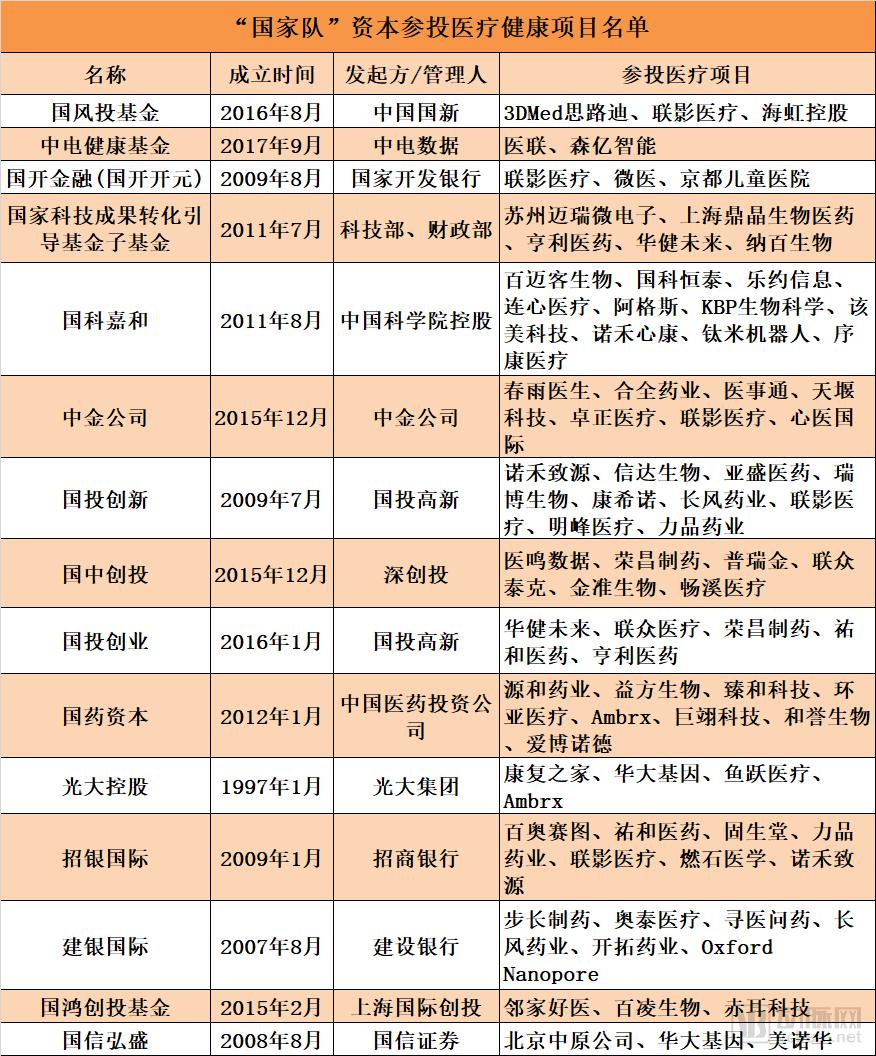
Data Source: VCBeat; Chart by VCBeat
According to incomplete statistics, a total of 15 “national team” investment institutions/funds have participated in investments in the healthcare sector in recent years, involving nearly 70 projects.
In terms of capital type, investment institutions initiated by ministries and state-owned enterprises are the mainstream, with a relatively large number of participated projects. For example, Guoke Jiahe, directly managed by China Academy of Sciences Holdings Co., Ltd. (referred to as CAS Holdings), several industrial funds under CICC, SDIC High-Tech and SDIC Venture Capital under the State Development & Investment Corp. (SDIC) Group. Ministries and state-owned enterprises have abundant financial and resource reserves, while their "national" background provides strong trust endorsement, enabling them to play a role in capital aggregation.
In terms of timing, “national team” investment institutions began allocating capital to the healthcare sector around 2011, with activity peaking around 2016. During that period, “national team” capital completed multiple investments in the healthcare field. For instance, in November 2016, CMB International and SDIC Innovation invested in Novogene; in December 2016, CMB International further invested in Burning Rock Biotech; while SDIC Innovation invested in Innovent Biologics and Ascentage Pharma in November and December of the same year.
From an investment perspective, the target companies of “national team” capital are mainly distributed in fields such as biopharmaceuticals, medical devices, genomics, and medical AI, with few investments in the “Internet + Healthcare” sector. This is closely related to the investment logic of “national team” capital, which tends to focus on long-term, sustained investment and industrial guidance or support. After emerging technologies or innovative models have been in the market for a period to validate their growth potential, “national team” capital will then enter the field.
From the perspective of investment rounds, state-backed capital is predominantly concentrated in Series A and later stages. In other words, “state-backed” investors tend to favor companies that have already been validated by the market and other investors. Another characteristic is that the investment scale of state-backed capital is relatively large, typically ranging from tens of millions to hundreds of millions of yuan. This is closely related to the sectors they target; innovation in fields such as biopharmaceuticals, medical devices, and genomics requires substantial capital outlays and long-term investment horizons, thereby driving higher demand for funding.
Introduction to Select “National Team” Capital
The above outlines the participation of “national team” capital in the healthcare sector. To facilitate a better understanding of investment activities by the “national team,” we further introduce selected “national team” investors and innovative enterprises, thereby providing deeper insights into their investment logic and industrial innovation trends. The selected investors are: China National Cultural Industry Investment Fund, CAS Star, and SDIC Innovation.
China National Venture Capital Fund
China State-Owned Capital Venture Investment Fund Co., Ltd. (hereinafter referred to as “Guofengtou Fund”) was registered and established in Qianhai, Shenzhen, in August 2016. Initiated and controlled by China Reform Holdings Corporation Ltd., the fund was jointly launched by Postal Savings Bank of China, China Construction Bank, Shenzhen Investment Holdings Co., Ltd., and other institutions. With an initial scale of RMB 100 billion, its total size is expected to reach RMB 200 billion in the future. The fund will primarily support technological innovation and industrial upgrading projects of central state-owned enterprises (SOEs), leveraging the radiating and driving role of state-owned capital to amplify its function and stimulate social investment.
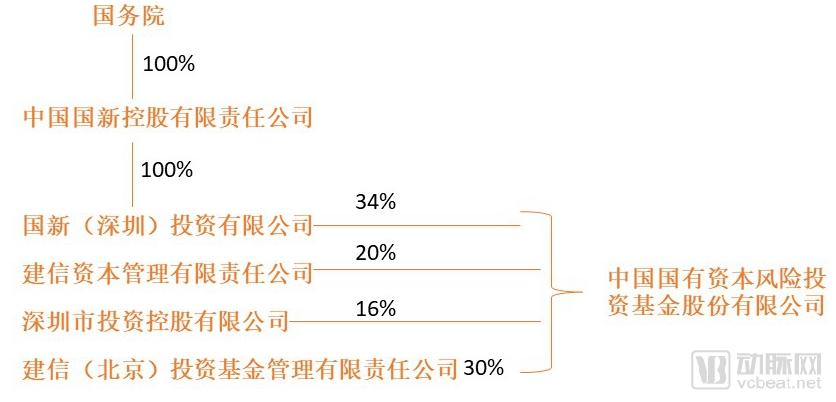
Equity Structure of China State-owned Venture Capital Fund
Since its establishment, China National Capital Venture Capital Fund has completed several major investments, with portfolio companies including United Imaging Healthcare, Megvii (Face++), 3DMed (Simcere Diagnostics), Cambricon, and Hailink Holdings.
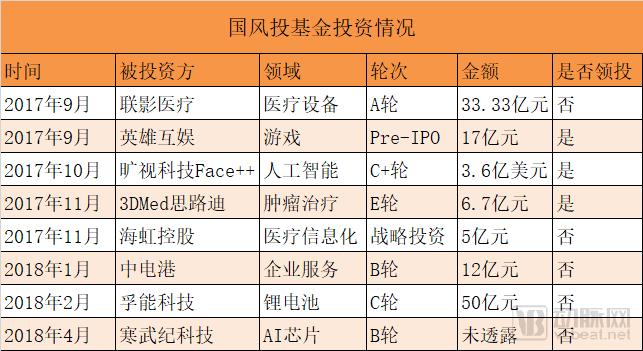
Data source: VCBeat, chart by VCBeat
Guoke Jiahe
Guoke Jiahe Fund was established in 2011. It is an equity investment fund manager initiated by Chinese Academy of Sciences Holdings Co., Ltd. (hereinafter referred to as “CAS Holdings”) as the cornerstone investor, in joint venture with several large domestic enterprise groups, and is a first-tier enterprise directly managed by CAS Holdings.
Guoke Jiahe leverages the Chinese Academy of Sciences’ world-class technical capabilities, extensive portfolio of high-tech commercialization achievements, and government and industry resources. With rich investment management experience and a professional investment team, it focuses on emerging sectors such as Information Technology (TMT) and life sciences, prioritizing investments in early-stage and growth-stage high-tech innovative enterprises with strong technological barriers.
Since its establishment, Guoke Jiahe has invested in the healthcare sector in companies such as Biocytogen, Guoke Hengtai, Leyue Information, Lianxin Medical, Argus, KBP Biosciences, Gaimei Technology, Novogene Xinkang, Timi Robot, and Xukang Medical.
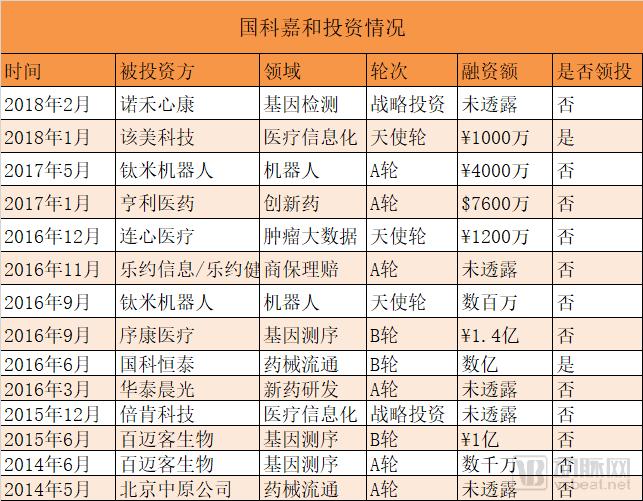
Data source: VBInsight; chart by VCBeat
SDIC Innovation & SDIC Venture Capital
SDIC Innovation Investment Management Co., Ltd. was established in 2009 as a professional private equity management firm operating independently in accordance with market-oriented principles. SDIC Innovation currently manages fund assets exceeding RMB 50 billion, either directly or indirectly. Its managed capital encompasses financial institutions, the National Social Security Fund, as well as state-owned and private capital, making it one of the largest professional private equity management firms in China.
The controlling shareholder of SDIC Innovation is China SDIC High-Tech Industry Investment Co., Ltd., a wholly-owned subsidiary of State Development & Investment Corp. (SDIC). As SDIC’s investment platform for forward-looking strategic emerging industries, the company is primarily engaged in direct controlling investments and equity fund businesses.
SDIC High-Tech Industry Investment Co., Ltd. owns five fund management companies, including SDIC Innovation, SDIC Chuanghe, SDIC Venture Capital, SDIC Chuangyi, and Haixia Huifu, forming a diversified landscape covering venture capital (VC), private equity (PE), funds of funds (FOF), policy-oriented special funds, and regional funds. As of the end of December 2017, the assets under management by SDIC High-Tech reached RMB 150 billion.
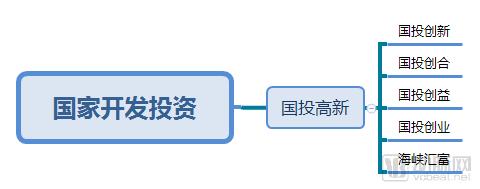
SDIC Venture Capital Management Co., Ltd. (hereinafter referred to as "SDIC Venture Capital") was established in 2016. It is a fund management company independently operated by SDIC Group on a market-oriented basis. Currently, it manages three funds with a total scale of RMB 12 billion.
Both SDIC Innovation and SDIC Venture Capital have made investments in the healthcare sector, albeit in different target companies. In addition, other funds under SDIC High-Tech have also established a presence in healthcare; for instance, SDIC Chuangyi has invested in Hubei Shennong Bencao Traditional Chinese Medicine Decoction Pieces and Hubei Xingtian Biotechnology, while SDIC Chuanghe has invested in Xidian Pharmaceutical, Changshan Pharmaceutical, Rongchang Pharmaceutical, and others.
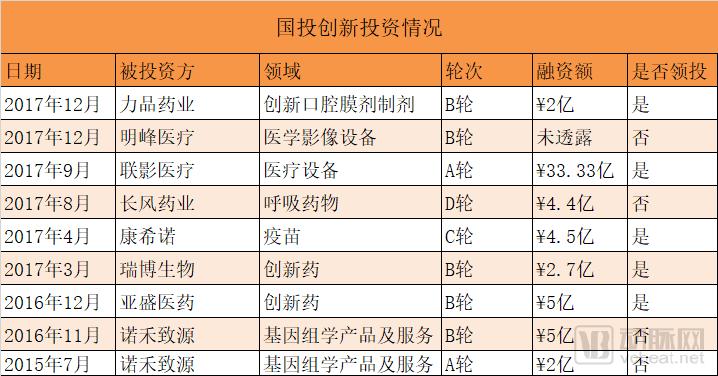
Source: VCBeat; Chart by VCBeat
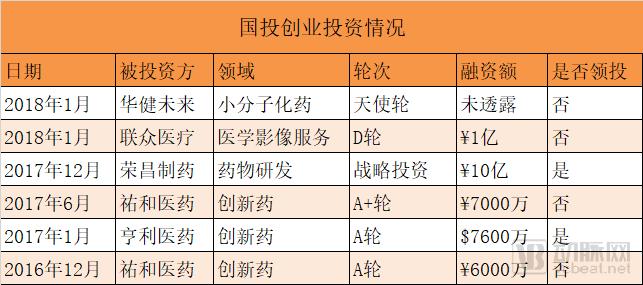
Data source: VCBeat; chart by VCBeat.
“The National Team” Will Become a Key Driver of Industrial Development
“The national team” of capital has stirred up the healthcare investment ecosystem with a series of major investments in the medical and health sector. For different industry players, perceptions of the “national team” vary due to differing perspectives and interests.
A source from the aforementioned investment firm told VCBeat that some private capital holds a pessimistic view regarding the entry of “state-backed” capital. He stated that while the involvement of state-backed capital in the healthcare sector is inherently positive—signaling state attention to the field and fostering a more dynamic investment ecosystem with greater participation and activity—certain state-backed funds, being newly established and lacking extensive market experience, employ evaluation metrics that differ from those of private investors. Consequently, these state-backed entities have offered higher prices for certain projects, thereby driving up valuations.
Furthermore, some state-backed investment institutions operate under performance metrics that require them to deploy capital within specific timeframes, making them more proactive in sourcing projects and potentially competing with private capital. However, broadly speaking, the entry of state-backed investors into the healthcare sector is an established fact, and their operational models are increasingly aligning with those of private capital.
A head of a “national team” investment fund once told VCBeat that the rationale for entering the healthcare sector lies in its critical role in national livelihood, economic lifelines, and national security, necessitating guidance by the “visible hand.” Furthermore, many niche segments within healthcare require the impetus of state-owned enterprises (SOEs) and firms with state-capital backing. Their stronger credit endorsement helps break down barriers among different players across industry chains and between companies, thereby enabling resources, information, and capital to better serve industrial development.
“National will” is not only manifested through capital participation; another important implementation method involves relevant ministries or competent authorities designating, commissioning, or authorizing third parties to carry out tasks, as seen with the “national teams” for health and medical big data and artificial intelligence.
"National Team" for Health and Medical Big Data
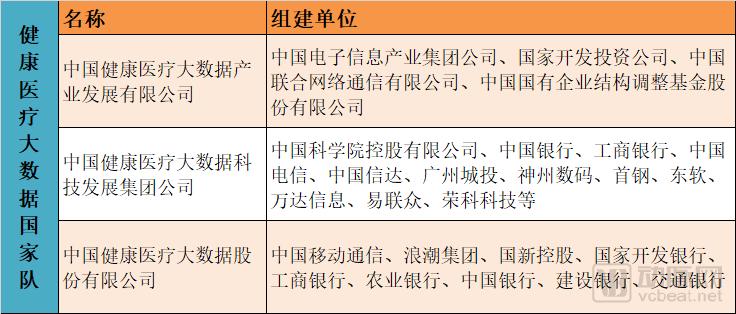
Taking the “National Team” of health and medical big data as an example, it is uniformly led and organized by the National Health and Family Planning Commission (now the National Health Commission), with state-owned capital as the main body, and is under the unified supervision of the National Health and Medical Big Data Security Management Committee (Big Data Office). The mission of the three major group companies is to undertake the construction of national health and medical big data centers, regional centers, and application development centers, as well as the economic development and operational work of health and medical technology and cultural industrial parks. The establishment of the “National Team” for health and medical big data is the joint result of administrative approval and capital guidance; in other words, it is also a manifestation of “national will.” Of course, the national team in health and medicine, backed by ministerial endorsement and state-owned capital participation, enjoys greater convenience in data integration.
Another example is the AI “national team.” Last November, the Ministry of Science and Technology announced the first batch of national open innovation platforms for next-generation artificial intelligence, including those relying onBaiduCompany DevelopmentAutonomous DrivingNational New Generation Artificial Intelligence Open Innovation Platform; Relies onAlibaba CloudCorporate DevelopmentCity BrainNational New Generation Artificial Intelligence Open Innovation Platform; relying onTencentCorporate DevelopmentMedical ImagingNational Open Innovation Platform for Next-Generation Artificial Intelligence; relying oniFlytekCorporate DevelopmentSmart VoiceNational Open Innovation Platform for Next-Generation Artificial Intelligence. The establishment of the AI “national team” also represents, to some extent, the “national will.”
In certain niche sectors—such as genomics, healthcare big data, innovative drugs, pharmaceutical distribution, and health insurance fund management—the “national team” is strategically positioning itself not only because these are industrial priorities but also to address data security concerns and drive industrial upgrading. These areas will become the focal points of the “national team’s” strategic layout.
In the healthcare sector, there are various types of “national teams.” Their emergence reflects the efforts of functional departments to participate in the development of healthcare and promote industrial innovation through capital investment, policy support, administrative approvals, and other means. For companies operating within this landscape, state-owned enterprises (SOEs) and state-backed investment institutions have become significant forces driving industrial development, with the “national team” poised to play an even more critical role in the industry’s growth.